Post View Unavailable »
New Website Launched »

Behind the Balance: Anthony Wilkerson ’28 — Keydet Track and Field

Virginia Military Institute’s cadet-athletes have to juggle cadet life, heavy academic course loads, and their NCAA Division I sport. Committed to both academic and athletic pursuits, balancing their rigorous schedule in both sports and school requires a certain level of commitment and discipline. Behind the Balance is a series that focuses on those cadet-athletes and how they handle the hurdles of the day-to-day. 

Anthony Wilkerson ’28 was looking for connection when he came to Virginia Military Institute. Initially, it was a mix of track and field and a scholarship through the U.S. Army that got him through the door, but it was the bonds he formed with his brother rats that made him want to stay.  

“I came here for track and field. But being here, making connections with my brother rats — people older than me, younger — just made me want to stay here even more,” he said.

Wilkerson hopes to attend medical school, so he’s devoted a lot of his time at VMI to his studies and keeping up his GPA. It’s also the reason he joined the cadet emergency medical technicians (EMT). 

“I wanted to become an EMT because I wanted more medical field experience, something I could put on my resume for medical school,” he commented. “I think everyone needs to learn emergency medicine, because you never know when someone might pass out right beside you and it might be your best friend suffering. Instead of sitting there in a panic, you know what to do.” 

The biology major is going into the semester with 18 credits, which he must balance with his track and field schedule while also being an EMT corporal. With days starting early at 6 a.m. and classes throughout, mixed in with practice, and the need to keep up with assignments, he’s usually up until nearly midnight. His responsibilities are plentiful and well spread, but he’s learned that time management and determination are his best friends. 

“I think I have a pretty good sense of time management, because I’m the type of person that has to get all my work done before I lie down,” he explained. “I don’t think about doing something late. I don’t even look at that as an option, to be honest.” 

Cadet-athletes at VMI not only have their responsibilities with their selected sport but cadet duties on top of that. Cadets are also required to take physical fitness classes twice a week, participate in ROTC all four years, prepare for room and uniform inspections, practice for parade, guard duty, and more. 

Wilkerson shared there is a shift on the team as upper-class cadets graduate. 

“Last year we had a lot of 1st Class cadets, and you had someone to look up to. But this year, it’s like me and my friends are the ones the rats are looking up to,” he stated. “Last year, my brother rats and I would go to our dykes’ rooms, but now all the rats are coming to our rooms. It’s a cool change in dynamic being able to give those people advice on things that they’re looking for. They come to you for literally anything.” 

He aims to be an example for others.

“I want to make sure with my rat, and the people younger than me, that I’m always there for them, and they feel like they can come talk to me whenever they want,” he said. “I can have a stronger bond with them.” 

Stress can be a big factor in Wilkerson’s daily life at VMI, but he combats it by decompressing in his room after hours.  
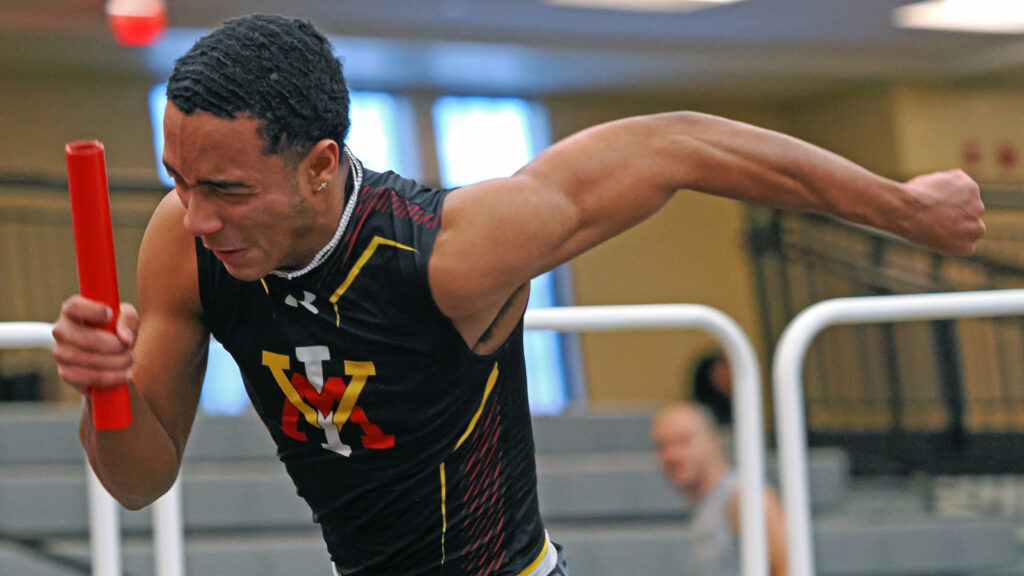
Cadet Anthony Wilkerson running an indoor track race.
VMI Team Challenge track and field meet at the Corps Physical Training Facility in Lexington, VA January 11, 2025. (Randall K. Wolf)

“I just handle the stress of the day by coming back to my room and just talking to all my roommates,” he said.  

Having people to talk to with is a good outlet, especially since there isn’t much time in the day to dwell or complain. 

The regimented schedule works to his benefit, allowing him to get shorter class assignments done between things.  

“If I have a break between classes, I’ll do those assignments,” he said. 

Whether he’s eating lunch in his room to catch up on work or spending a chunk of time between practice and dinner, Wilkerson is hammering away on assignments to stay on top of things. He says VMI has kept his life structured and allowed him to not procrastinate, compared to life at home. 

“When I come here, it’s just so much different, where I have to be here at this time. I can’t be late or this, I need to show up looking a certain way. Being here and then going home, two completely different realms,” he explained. “I think being here, it honestly helped me more than going to a different college. There are still opportunities to have fun here, just your priorities, they come first.” 
Behind the Balance: Isabelle Haer ’28 — Keydet Swim and Dive

Virginia Military Institute’s cadet-athletes have to juggle cadet life, heavy academic course loads, and their NCAA Division I sport. Committed to both academic and athletic pursuits, balancing their rigorous schedule in both sports and school requires a certain level of commitment and discipline. Behind the Balance is a series that focuses on those cadet-athletes and how they handle the hurdles of the day-to-day. 

Balancing 20 credit hours, Division I athletics, and the demands of ROTC is no small task, but for Isabelle Haer ’28, that challenge is exactly the point. 

“I’m a big fan of the structure — the formations, waking up, having set things to do. Then being with people who are very focused on their future,” she said. 

Haer was drawn to Virginia Military Institute for its framework, closeknit environment, along with the opportunity to pursue both athletics and a potential commission. She found VMI as a place that matched her focus and drive.  

Her father was a graduate of The Citadel and she’s had many family members who have taken the military path. She wasn’t a stranger to what VMI could offer.  

“It was kind of the perfect fit, because it had the swim and dive team. It had the level of academics I was looking for, and a great alumni network,” the international studies major admitted.  

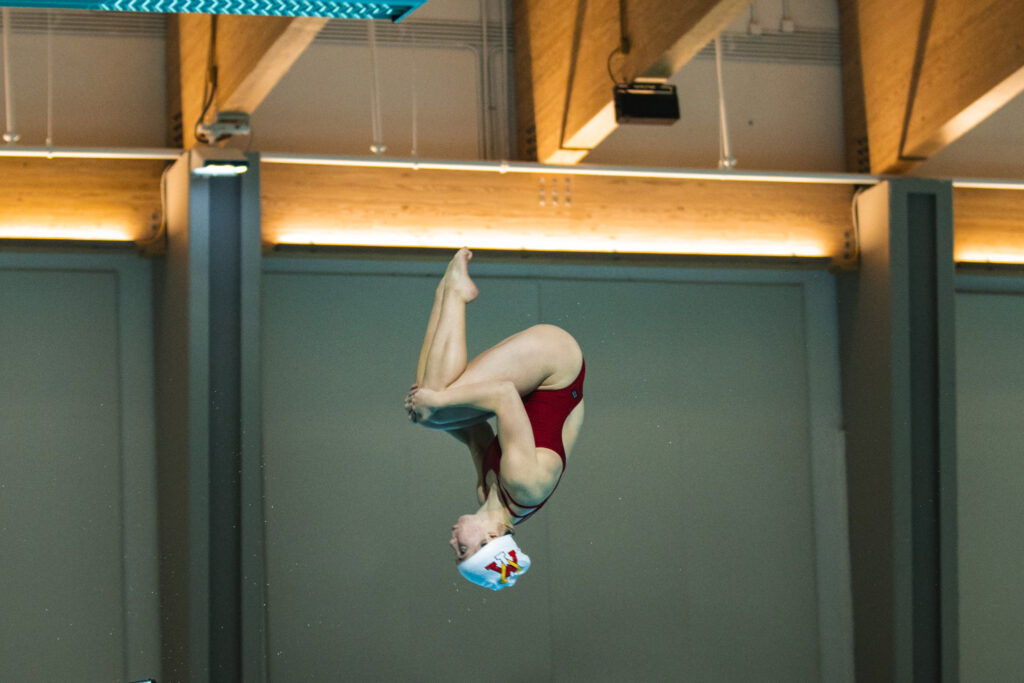
As a diver on VMI’s swim and dive team, she competes in the one-meter and three-meter springboard. Haer started out as a gymnast, though. When COVID-19 hit while she was in high school, she decided to make a switch. By her junior year, she was diving for her high school team. 

“I’m a big fan of always being able to learn something new and striving to be better,” she said. “For me, it’s very skill based so, as a gymnast, there was always a better skill you could get. Now with diving, I can always add another flip. I can always add another twist. You improve your technique somehow, point your toes, straighten your legs, switch positions. There’s always something that I can add on to my diving, so it’s never a boring practice.” 

She’s sometimes not as experienced as others in terms of certain dives, which can get in her head, but, she goes back to her foundation — she’s trained and worked hard. 

“I have to trust myself, my body, and my muscle memory,” she said. “When I get up there, I know that I can do it. At the end of the day, it is just a sport. It’s just a portion of my experience here at VMI. One dive isn’t the end of the world.”

If she ever overanalyzes before a competition, she has a plan. She has keywords she repeats to herself: “stand up straight, point your toes, keep your chest up on the board.”  

“I just say it’s a dive, it’s okay, just try your best,” she admits. “As long as you do your best … whatever happens, happens. I like to trust my practice that I’ve put in, and know that when it’s time to perform, I’m ready, because I’ve put in the hours and put in the work.” 

Isabelle Haer dives into the pool at Virginia Military Institute.
VMI Swim & Dive vs. WLU Action Shot

Cadet-athletes at VMI not only have their responsibilities with their selected sport but cadet duties on top of that. Cadets are also required to take physical fitness classes twice a week, participate in ROTC all four years, prepare for room and uniform inspections, practice for parade, guard duty, and more. 

On top of her general cadet duties, she also serves as a math tutor for the Miller Academic Center, where she helps with several 4th Class classes. She is an S5 corporal, where she helps lead public relations, counseling, and recruiting programs for the Corps of Cadets. 

With 5:30 a.m. wakeups, Haer has morning practice several days a week. After thate, she’ll often have some time to get classwork done before a block of classes.  

“That’s when I like to do a lot of my homework, right after practice when I have the blood flowing,” she commented. “It helps me. I like to get stuff done more in the mornings.” 

She goes from class straight to afternoon practice, which lasts until nearly 7 p.m. some days. This type of schedule follows her throughout the year — the season for swim and dive is from August to February.  

“I think the rigor is the main thing here. The strict schedule and being with like-minded individuals, always having something to do, but always being pushed to better myself and held to a higher standard will set me up,” she stated.  

Behind the Balance: Ray Cmil ’26 — Keydet Wrestling

Virginia Military Institute’s cadet-athletes have to juggle cadet life, heavy academic course loads, and their NCAA Division I sport. Committed to both academic and athletic pursuits, balancing their rigorous schedule in both sports and school requires a certain level of commitment and discipline. Behind the Balance is a series that focuses on those cadet-athletes and how they handle the hurdles of the day-to-day. 

Wrestling brought Ray Cmil ’26 to Virginia Military Institute, but it was the people that made him stay. He was drawn to the community and the relationships he started building at VMI and what that would mean for him later in life.

“After considering all the schools I was looking at, I decided VMI would be the best place for my future and to develop myself as a person,” he said. 

He’s made close friends at the Institute, especially his teammates. 

“We’ve spent so much time together, and it would be weird without them. We eat every meal together, practice together all day, and we’re hanging out in the room together,” he explained.  

The English major has a heavy load of 17 credits his last semester while being in season with wrestling. Most days he’s up at 5:30 a.m. for a morning weightlifting session before heading off to breakfast and class. He has about four classes a day, breaks for lunch and then heads down to practice an hour early to get some extra work in.  

“I don’t really write it down that much. It’s kind of just in my head — my day-to-day routine,” he said. “I think the easiest part for me is just taking the first step. Starting all my homework, or just doing whatever ever I need to do and not procrastinate.” 

Cadet-athletes at VMI not only have their responsibilities with their selected sport but cadet duties on top of that. Cadets are also required to take physical fitness classes twice a week, participate in ROTC all four years, prepare for room and uniform inspections, practice for parade, guard duty, and more.

“I’ve been forced to step out of my comfort zone a lot,” Cmil admitted. “With communication and leadership, just stepping up and forcing yourself to do things you don’t want to do. Especially this year, seeing all the 4th Class cadets coming in and trying to be a mentor for them. I had so many important older guys when I was coming up that I want to be a positive impact on the [incoming class].”

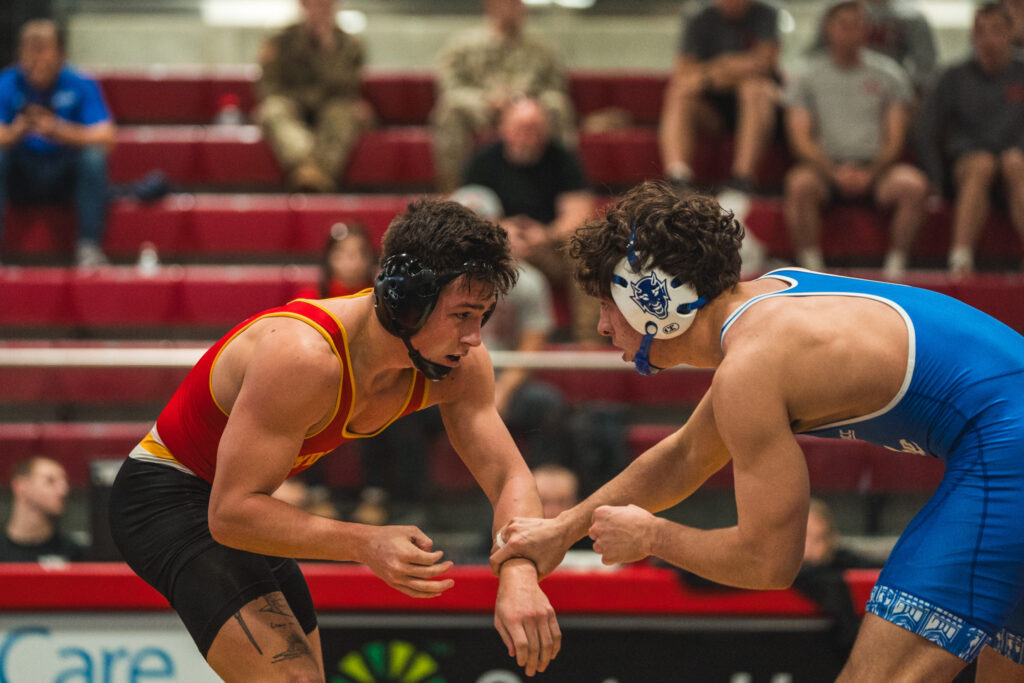
Ray Cmil during a wrestling match at Virginia Military Institute.
VMI Wrestling vs. Duke Action Shot

Cmil started wrestling in the third grade, but he grew up hearing stories from his father who wrestled. The thing he enjoys the most is that it’s one-on-one. 

“The work you put in is a direct representation of the output you get,” he stated. “If you put in the work and dedicate yourself to it, you’ll get results.” 

Being at VMI has forced him to crack down on his responsibilities and time management for his demanding schedule.  

“I think the fact that you have so many responsibilities, and there’s so much asked of you, you get used to it here,” he said. “From a broader perspective, you realize that other people haven’t done what you’ve been doing for the past four years. I think being in that mode and mindset, VMI builds prepares you for what’s to come.” 

Behind the Balance: Tazewell Rae ’28 — Keydet Track and Field

Virginia Military Institute’s cadet-athletes have to juggle cadet life, heavy academic course loads, and their NCAA Division I sport. Committed to both academic and athletic pursuits, balancing their rigorous schedule in both sports and school requires a certain level of commitment and discipline. Behind the Balance is a series that focuses on those cadet-athletes and how they handle the hurdles of the day-to-day. 

Originally, Tazewell Rae wasn’t thinking of attending a military school. It was a high school coach that put him in touch with Virginia Military Institute’s head track and field coach and set up a visit. 

“Every other school I visited, I kept comparing to VMI,” he said. The students he saw on other campuses didn’t match up to the caliber VMI presented. 

“The other academic departments don’t compare to VMI. I really enjoyed the civil engineering department here. The classes are about 20 people or 25 people at the most. It just felt like a good environment,” he continued.  

Rae comes from Middlesex, Virginia, where his high school was tiny and had a graduating class of about 65 people.  

“I’m the only person out of my school in the past two years who’s committed for any sport,” he stated.” 

He came to VMI for track and field. Although in high school, he played several sports, including soccer, football, basketball, and indoor track and outdoor track. He stuck with track and field, where he throws the shot put.  

“Throwing is that nice break where you’re one-on-one with yourself, and you’re just focusing on that,” he explained. “You have control of that.” 

During his first two years of high school, he didn’t have a track and field coach. Then in his junior year, a friend’s father came to coach. That coach had a daughter who attended VMI, which gave Rae the connection to the Institute.  

Cadet-athletes at VMI not only have their responsibilities with their selected sport but cadet duties on top of that. Cadets are also required to take physical fitness classes twice a week, participate in ROTC all four years, prepare for room and uniform inspections, practice for parade, guard duty, and more. 

The civil engineering major has 17 credits this semester, while also serving as the 3rd squad Bravo cadre corporal. He is also seeking a commissioning route with the U.S. Army. 

Some days he has up to five classes, so balancing all his responsibilities can be challenging.  

“There are a couple of long nights a week. I’ve had my fair share of three-in-the-morning Nichols Engineering study sessions with my roommates,” he admitted. “I’m one of three civil engineering cadets in my room, so it’s nice. We’re all athletes, so we’re used to the same load.” 

To distract himself, he tries to pick up hobbies. 

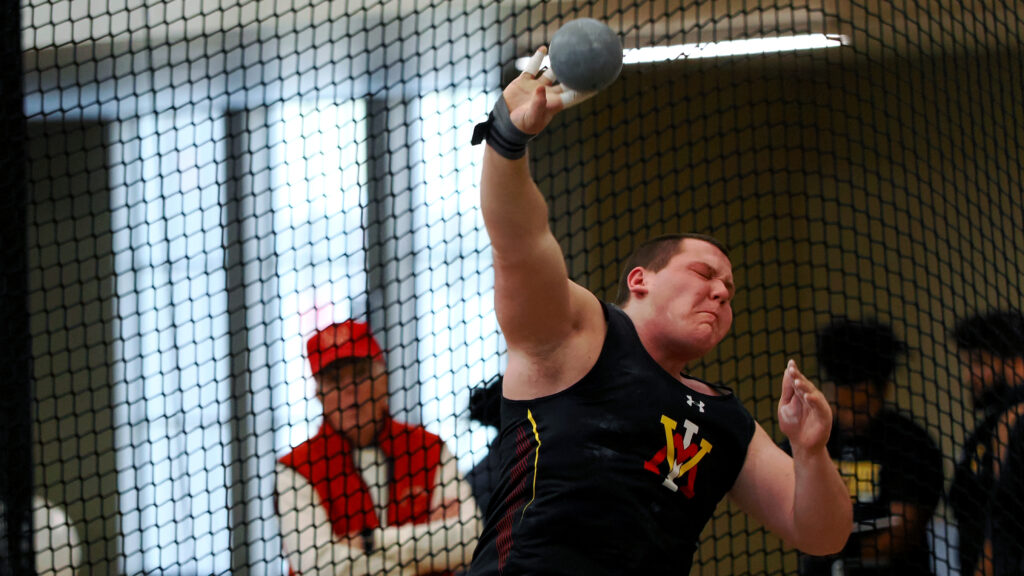
Tazewell Rae shoots the shot put during a track and field event at Virginia Military Institute.
VMI Team Challenge track and field meet at the Corps Physical Training Facility in Lexington, VA January 11, 2025. (Randall K. Wolf)

“I’m trying really hard to learn the banjo,” he said. “I try to stay busy, it’s usually how I avoid stress. Idle hands are not good.” 

He also finds reprieve in throwing, which serves as an escape for him. 

Rae takes his training seriously, weightlifting up to four days a week during the season. Even in the off season and over the summer, he said he’s throwing nearly every day. 

“It’s just a lot of rinse and repeat, focusing on one thing. It’s never perfect, so there’s always something to work on,” he stated. “It’s kind of methodical. A lot of people call it poetry in motion. It’s just something you can focus on.” 

In high school, he had the mindset of doing things on his own. At the Institute, he realized there’s more team effort. 

“I got close with all the people in cadre, I’ve learned how to find my place in an organization,” he said. “Here I’m able to I’m around like-minded people, where they want to stay in shape and they want to push you. I thrive in that environment.” 

Behind the Balance: Pedro Robertson ’27 — Keydet Swim and Dive

Virginia Military Institute’s cadet-athletes have to juggle cadet life, heavy academic course loads, and their NCAA Division I sport. Committed to both academic and athletic pursuits, balancing their rigorous schedule in both sports and school requires a certain level of commitment and discipline. Behind the Balance is a series that focuses on those cadet-athletes and how they handle the hurdles of the day-to-day. 

Pedro Robertson ’27 may have been a little hesitant about attending Virginia Military Institute, but talking with the swim and dive coach coupled with a visit, he began to warm up to the idea.  

“I think seeing the challenge of it all … it looked difficult,” he admitted. “The ‘don’t do ordinary’ of it all was something different.” 

He could see a future for himself at the Institute where he could do something he hadn’t seen many do before. He also wasn’t planning to commission. Instead, he signed up for Air Force ROTC to feel it out. 

“I started to enjoy it a lot. I think it was a good decision, I really enjoy Air Force,” he said. Now, he’s on track to commission into the Air Force.  

This past summer, Robertson attended field training at Maxwell Air Force Base in Montgomery, Alabama.  

“We experienced types of simulated leadership, so it’s similar to VMI,” he explained. “I think that helped me a bit. I’ve already been in that simulated stress.” 

As time continued at VMI, he’s grown to accept more responsibility, like becoming a platoon sergeant in the Old Corps. 

Cadet-athletes at VMI not only have their responsibilities with their selected sport but cadet duties on top of that. Cadets are also required to take physical fitness classes twice a week, participate in ROTC all four years, prepare for room and uniform inspections, practice for parade, guard duty, and more. 

The civil engineering major has 18.5 credits this semester, while he’s in season for swimming. His days can start as early as 5:30 a.m., even after staying up until midnight the night before finishing work. He has class all day then heads to practice around 4 p.m., which lasts until 7 or 7:30 p.m. He said during swim conference weeks, the practice times dwindle a bit in order to reset for the upcoming competition.  

“I try to get classwork done in between things as much as I can,” he commented. “I try to find a happy medium — I can do one assignment and give myself some rest. I’m trying to find those little pockets in my day where I can do something productive.”

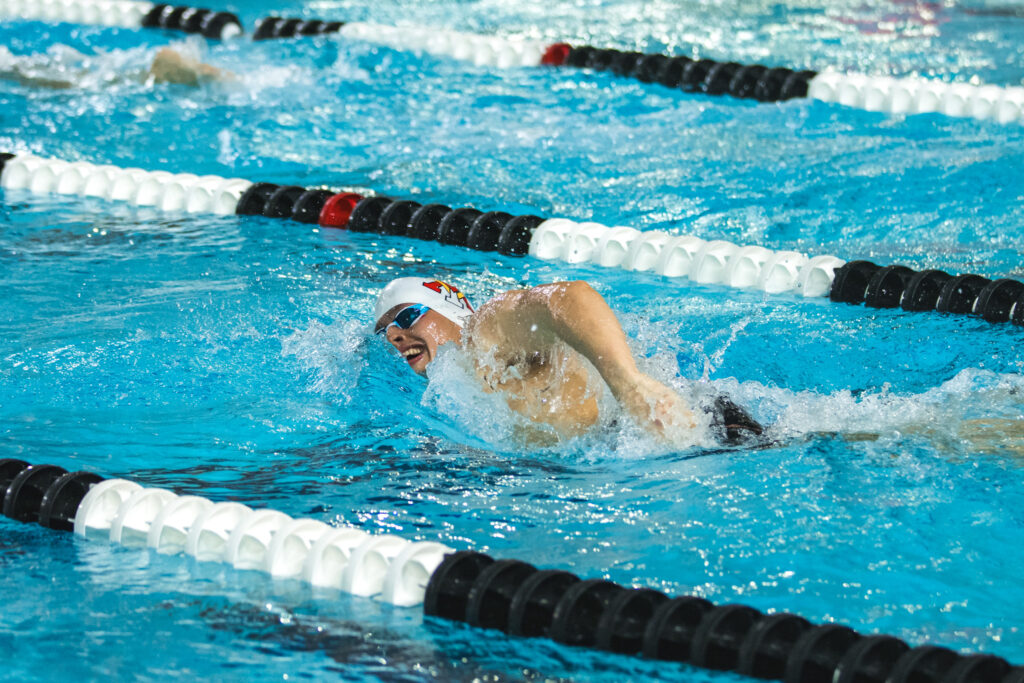
Pedro Robertson swimming for Virginia Military Institute.
VMI Swim & Dive vs. Howard & Saint Francis Action Shot

Preparing for races doesn’t always mean spending time in the pool. Robertson spends time researching other swimmers he’s set to face off with. That way, he’s able to set goals for himself or see which swimmers to watch out for or pace with.  

“Having some sort of race plan helps it go by faster,” he said. Since Robertson is a long-distance swimmer — the mile, the 500 meter, and the 200 meter — he’s in the water for a long time. “I like singing a little song, too. I’ll have something playing in my head while I’m swimming.” 

Those songs can range anywhere from Frank Sinatra to Ice Spice.  

He knew coming to VMI he would be in a competitive environment, in and out of the pool. 

“I’m very competitive, and I want to be in a place where I’m competing not only with swimming, but with academics or the Rat Line, or on the hill. I’m trying to be the best version of myself,” he said. 

Experiencing different leadership styles has also been beneficial for him.  

“It’s how to respond to these different leadership styles and develop your own,” he said. “You’re leading in some way and you’re leading yourself.” 

Behind the Balance: Evelyn Anderson ’27 — Keydet Track and Field

Virginia Military Institute’s cadet-athletes have to juggle cadet life, heavy academic course loads, and their NCAA Division I sport. Committed to both academic and athletic pursuits, balancing their rigorous schedule in both sports and school requires a certain level of commitment and discipline. Behind the Balance is a series that focuses on those cadet-athletes and how they handle the hurdles of the day-to-day. 

Evelyn Anderson ’27 thrives on structure. The international studies major has 17.5 credits this semester, while holding rank as regimental sergeant major for the Corps, and balancing a Division I sport. With a hefty academic load, she’s fitting schoolwork in whenever she can. Her regimental duties can range from cadet leadership meetings to Honor Court trials, which also take up a chunk of her time and effort. She is also planning on commissioning into the U.S. Marines Corps, so she has ROTC responsibilities. 

Originally, she wanted to relieve her parents of the burden of paying for college. Even though Anderson had never heard of Virginia Military Institute, she was recruited for track and field, resulting in a full ride. 

“I have three younger siblings, so I figured I’d take the load off a little bit, and I did a visit here, and I really enjoyed it,” she said. “I needed the structure, so that’s really what led my decision.” 

Anderson started out as a soccer player when she was younger, then joined cross country and track to stay active leading up to soccer season.  

“With track, you see the time, and it’s a reflection of you every single time,” she said. “There’s no denying that if you didn’t do well, it’s because of your own actions leading up to the meet. I think it has more accountability of whether or not you’re actually putting in the effort. I like seeing my gains and/or losses based off the effort that I put in.” 

Cadet-athletes at VMI not only have their responsibilities with their selected sport but cadet duties on top of that. Cadets are also required to take physical fitness classes twice a week, participate in ROTC all four years, prepare for room and uniform inspections, practice for parade, guard duty, and more. 

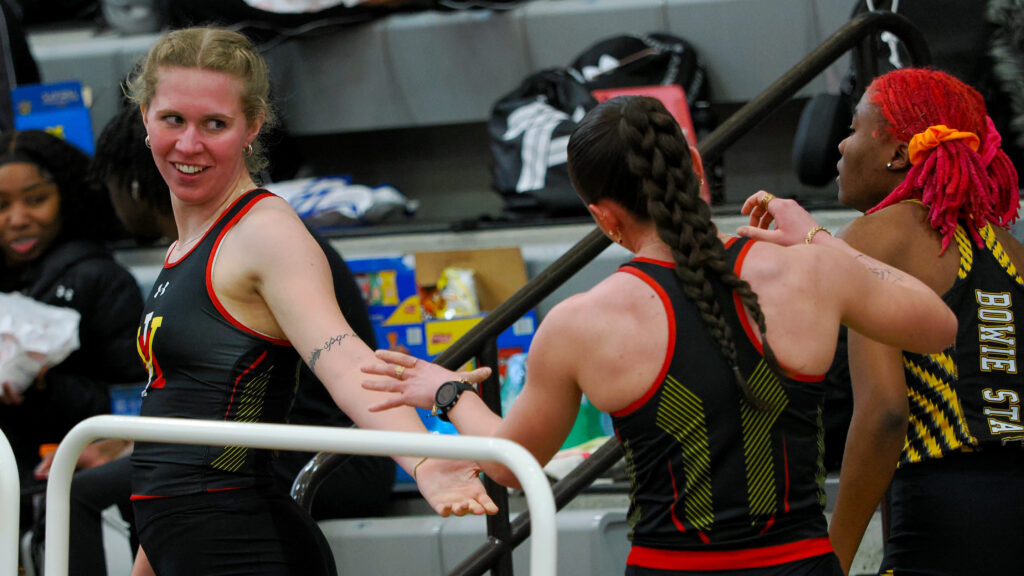
Evelyn Anderson, part of the VMI Team Challenge track and field meet at the Corps Physical Training Facility in Lexington, VA January 11, 2025.

She’ll go straight from class to practice some days, which results in some late nights finishing schoolwork.  

“I’m big on the Google calendar schedule. I have everything that I’m ever doing in Google calendar, so I try to plan it out ahead of time,” she explains.  

Even when it becomes overwhelming, Anderson reminds herself that there’s been so many before her that have been able to tackle the tasks that VMI puts forth.  

“This isn’t new. It’s just overwhelming for me because I haven’t been in that situation,” she admitted. “If other people can do it, you can as well. If you’re uncomfortable, everyone else is also uncomfortable. I’m not the only person with responsibilities. Everyone at VMI is pretty much invested in some aspects of the school. I just try to tell myself not to be dramatic.”Sometimes, you just have to call it a day. 

“My biggest life hack is knowing when to give up. And that sounds so bad, but I think that there comes a time where you realize going to bed is worth more and will do more for your mental health than trying to push out an assignment or complete last-minute things,” she explained. “You can’t operate on fumes.” 

The challenges are worth it, she said. Anderson credits VMI with improving her interpersonal skills. In high school, she moved and then went through COVID-19 where she wasn’t around people, and her life revolved around school, track, and being at home. 

“Coming to VMI, I feel uncomfortable kind of all the time, but it’s in a good way. I’m growing skills, learning how to interact with different people from different backgrounds,” she explained. “I come from a more rural area that has one high school. It’s a lot different for me, dealing with all different people, especially in stressful ways. I have to orchestrate and hit deadlines. I think that that’s really helping prepare me for the professional world.” 

Behind the Balance: Miller Tatum ’28 — Keydet Lacrosse

Virginia Military Institute’s cadet-athletes have to juggle cadet life, heavy academic course loads, and their NCAA Division I sport. Committed to both academic and athletic pursuits, balancing their rigorous schedule in both sports and school requires a certain level of commitment and discipline. Behind the Balance is a series that focuses on those cadet-athletes and how they handle the hurdles of the day-to-day. 

Growing up in Richmond, Virginia Military Institute was never a mystery to Miller Tatum ’28. Between family stories passed down from his grandfather — an alumnus himself — and a reputation that carried weight back home, the Institute was always somewhere in the background.  

Choosing VMI meant stepping away from the “normal” college path and diving into something harder. Tatum also held onto the belief that four demanding years could shape the next 40. That challenge combined with the chance to compete at the Division I level in lacrosse made the decision feel worth it.

In high school, Tatum wasn’t even sure lacrosse would be the avenue he’d pursue in college. He started playing around 8 years old in a recreational league and ended up playing all the way up to high school.  

“I transferred to a private high school in Richmond for my freshman year, and at that point I was really small and not good at lacrosse, and I hated it for a few years,” he admitted. “Freshman through junior year, I did not enjoy it, I didn’t want to play in college, and had no aspirations of doing it.” 

By his junior year, Tatum ended up filling out and hitting a growth spurt putting him in line with everyone else. From there, his mentality towards the game improved, as well as his skill. At that point, the former VMI head lacrosse coach had seen Tatum and invited him to a game day.  

It took some convincing from Tatum’s father, but he ended up attending the game day. He was then offered a spot on the team and knew it was too good of an opportunity to give up. 

Cadet-athletes at VMI not only have their responsibilities with their selected sport but cadet duties on top of that. Cadets are also required to take physical fitness classes twice a week, participate in ROTC all four years, prepare for room and uniform inspections, practice for parade, guard duty, and more. 

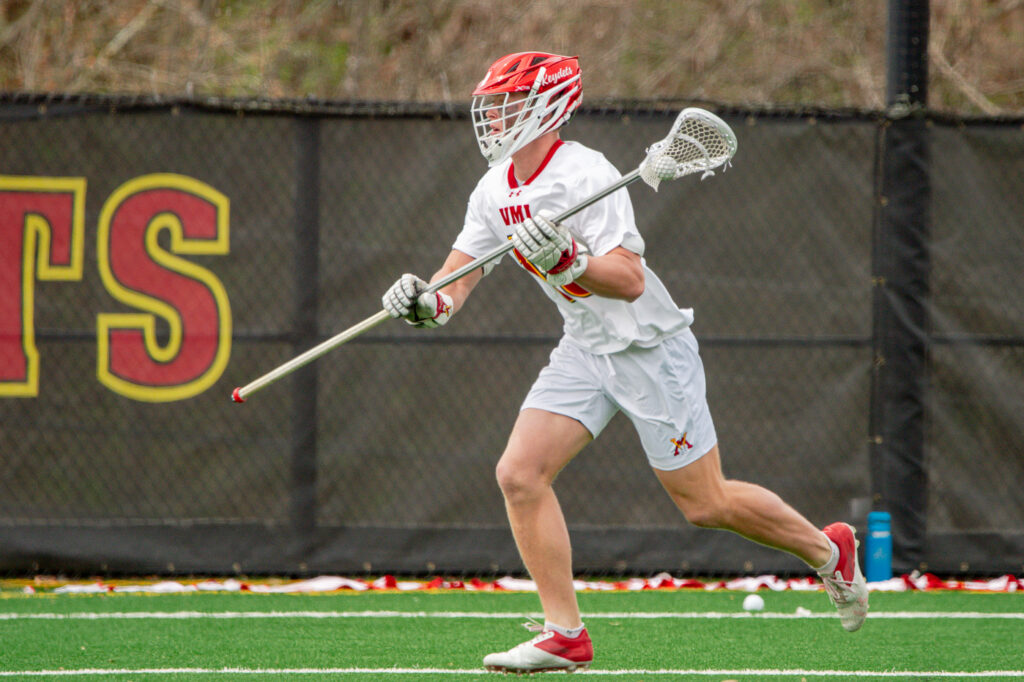
Miller Tatum playing lacrosse for Virginia Military Institute.

His days start early at 5:30 a.m. for weightlifting, then it’s a constant flood of one thing after the other until the afternoon. The economics and business major has 17.5 credits this semester, while in season. To stay on top of things, he’s completing assignments between all his other commitments.  

Luckily, his away games happen mostly on weekends. He and his teammates tend to front load their schedules to have classes earlier in the week.  

“I only have two classes on Friday, so I’m not actually missing that much class,” he said.

Having the initiative to utilize the small breaks during the day to get a head start on assignments will end up in your favor, he said.  

 “When you come back to do it at 7:30 or 8 p.m. after eating and going to practice, you’ve already put a dent in it.” 

During away trips, he and his teammates are dedicated to doing work while on the road.  

“You’ll see people with makeshift desks on the bus doing homework or on their computers or reading something for a class,” he explained. 

Their academic dedication can be seen, especially with the announcement last season that they earned Team All-Academic honors by the United States Intercollegiate Lacrosse Association. In order to achieve this status, the program must hold a team cumulative GPA of 3.0, which the team surpassed with a 3.2 for the 2024-25 academic year. 

“A lot of guys are pretty motivated in class. When you’re on the bus and everyone around you is doing homework, you almost feel like you’re getting left behind if you’re not trying to do something productive with that time,” he said. 

Despite a busy schedule, Tatum said being able to practice with his best friends daily is his favorite part of the Institute.  

“Doing something that you have a common shared joy of doing … I think there’s not a lot of opportunities to do that anymore,” he said. 

Motivation and time management have been big factors in how VMI is shaping Tatum.  

“I think having the opportunity to lead and be in the spotlight in front of other people is something a lot of college students don’t get at other schools and VMI prepares you well for,” Tatum stated. “I think that you have to use VMI as a foot in the door and then use the skills that VMI has taught you to be successful.” 

Behind the Balance: TJ Johnson ’28 — Keydet Basketball

Virginia Military Institute’s cadet-athletes have to juggle cadet life, heavy academic course loads, and their NCAA Division I sport. Committed to both academic and athletic pursuits, balancing their rigorous schedule in both sports and school requires a certain level of commitment and discipline. Behind the Balance is a series that focuses on those cadet-athletes and how they handle the hurdles of the day-to-day. 

TJ Johnson ’28 has been shooting a basketball ever since he can remember. He comes from a basketball family — both his parents played, and now he and his younger brothers have joined the family tradition.  

The economics and business major saw attending Virginia Military Institute as a great opportunity from the standpoint of being an athlete and also a cadet.  

“My dad played basketball at West Point, so the idea of a military institute wasn’t foreign to me. I grew up hearing his stories about West Point,” he said. “I knew it was going to be challenging, but at the same time, I knew there were a lot of benefits that would come with it as well. It wasn’t something I was afraid of. I thought it was a great opportunity for me, both on the court and off the court.”

Johnson is a second-year transfer, so there was an adjustment period entering the Rat Line.  

“Everything is stripped away. I’m getting yelled at by guys who are my age or younger. It was challenging for me to accept,” Johnson admitted. “There were times when I was really frustrated and angry and questioned a lot of things. I think the transition from last year to this year; I’ve learned a lot about myself.” 

He said he’s been able to adapt to different situations well. The Rat Line definitely tested that, but he came out stronger.   

“I’m a very calm person. I try not to get too high or too down. I’d say, my ability to handle stress and pressure has improved,” he said. 

The way he’s able to traverse a busy schedule as a cadet-athlete and taking 14 credits is also something he works on daily. Cadet-athletes at VMI not only have their responsibilities with their selected sport but cadet duties on top of that. Cadets are also required to take physical fitness classes twice a week, participate in ROTC all four years, prepare for room and uniform inspections, practice for parade, guard duty, and more. 

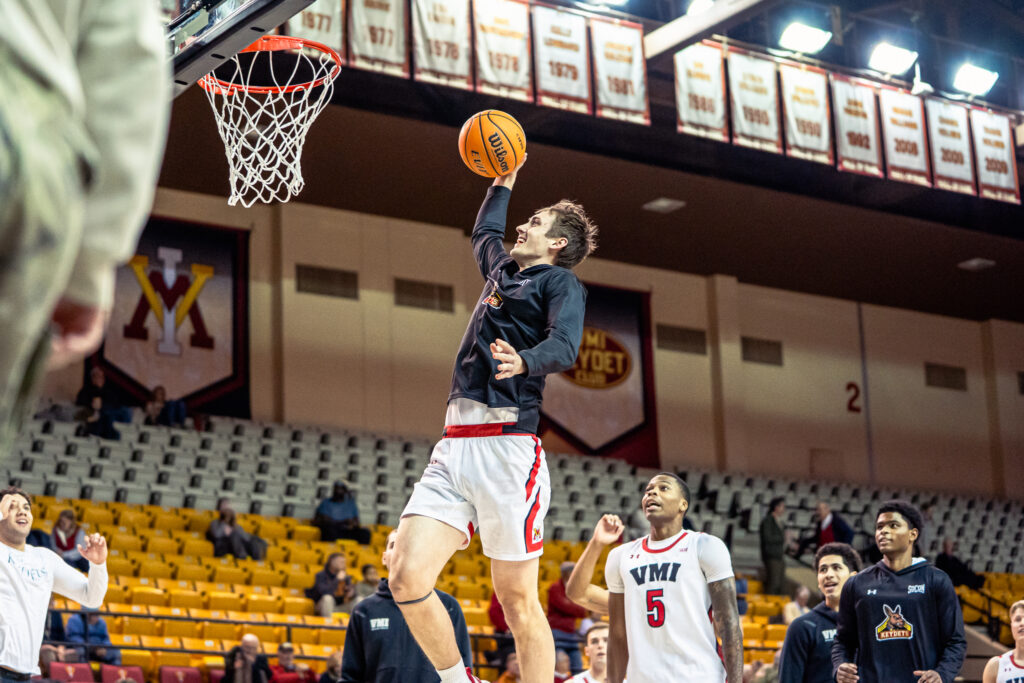
TJ Johnson dunking a basketball during a game for Virginia Military Institute.

The weeks when the team has two away games, they’ll leave on a Tuesday and return late Saturday night, for example. 

“It makes it difficult. We just have to communicate with our instructors and tell them what days we’re going to be missing, and then they’ll let us know what work we need to make up,” he explained. “So many things are digital now that you can just do it on your computer in the hotel room or on the bus. I spend a lot of time on the bus working on schoolwork, writing papers, that kind of thing.” 

His days while on post start early at 6:30 a.m. to review film footage at 7 a.m. Then, it’s onto breakfast and classes. He tries to work in weightlifting between classes and his daily practices, too, along with an individual workout with an assistant coach. Practice is at 4 p.m., which can last up to an hour or longer. He eats dinner, heads back to his room and it’s homework for the rest of the night. He says he’s up until about midnight some nights finishing assignments. Then, the cycle repeats.  

“I really don’t get too overwhelmed. I try to put things in God’s hands and know He’s going to take care of me,” Johnson said. “He’s gotten me this far. So why wouldn’t He help me get through an essay or an exam? I try to not stress about it too much. It is difficult trying to fit everything in and get everything done and turned in on time with quality work. You make it work.”

Johnson has also proved his responsibility to the team and to the Institute. He was recently selected to serve as one of three student-athletes nationwide to serve on the NCAA Division I Board of Directors. As a student-athlete on the committee, Johnson will be tasked with giving an athlete’s perspective of everything happening in the current collegiate sports landscape such as NIL, the transfer portal and many other areas. 

He finds comfort in talking with his family as much as possible. He calls his parents multiple times a week and tries to catch up with his brothers — one who’s away at college on the West Coast and the other still in high school. 

“I’m really close with both my parents, and don’t get to see them often either. But, you know, it’s something I’ve gotten used to.” 

Johnson said that VM offers the tools to face any of his challenges. 

“There’s a lot of adversity, and you learn to adapt to adversity and overcome it,” he said. “The way the Institute is set up, it will help me whenever life starts to hit in the future, I will have already been through an extended period of time of adversity and learned how to how to face it.” 

Plus, the bonds he’s made with his teammates help push him. Last year, the team had eight players going through the Rat Line at the same time.  

“We were all going through the same challenges, same adversity, and we were able to  lean on each other.” 

Behind the Balance: Sydney Smith ’26 — Keydet Water Polo

Virginia Military Institute’s cadet-athletes have to juggle cadet life, heavy academic course loads, and their NCAA Division I sport. Committed to both academic and athletic pursuits, balancing their rigorous schedule in both sports and school requires a certain level of commitment and discipline. Behind the Balance is a series that focuses on those cadet-athletes and how they handle the hurdles of the day-to-day. 

Sydney Smith ’26 had her sights set on attending the Air Force Academy after high school. Both of her parents were athletes there and she wanted to follow in their footsteps. One thing made her hesitate; Smith played water polo and there was no NCAA women’s water polo team at the academy. Instead, she forged her own path that led her to Virginia Military Institute.  

“I started to look at schools with ROTC programs where I could also play water polo. Coach [Danielle] Montenegro found me, and I came on my official visit, and I was like, this is it.”

Smith swam her entire life but picked up the sport of water polo because her father played. 

“I like the physicality. I like the aggression. It’s more interactive,” she explained. “I also like that it is a team sport. Swimming, it’s a team sport, but you’re still competing against your teammates for points. Whereas water polo, you can’t do it without each other. I like being on a team, it’s more fun.” 

The biology major will be commissioning into the United States Air Force come May when she graduates. From there, she will head to Pensacola, Florida, to be a combat systems officer at the Naval Navigation School in July. Her time at VMI has helped her prepare for her upcoming post.  

She is one of the three 1st Class cadets on the water polo team who holds rank. Her position as S6 lieutenant gives her firsthand experience with communications, standard operating procedures, radios, and writing — all things she will need to know in the Air Force.  

Holding a leadership position also embodies the four core values the water polo team has — support, pride, energy, and focus. Nearly everyone on the team holds rank. 

“We make it a point to support each other, even if it does get challenging,” she said. “We’ve created these four core values on our team, and we actually say each one of them when we’re doing our cool down at practice and before every lap.” 

The structure of VMI was appealing to Smith, as well as the option to commission. But the bonds she’s made with her brother rats and those on her team have really stood out. 

“We definitely have one of the best team dynamics, but I’m probably a little biased,” she admitted.  

She said it was kind of surreal to see what good friends everyone is on the team. It’s more like a family. They even established a rule that none of them would live together in barracks, just so they wouldn’t get sick of each other. 

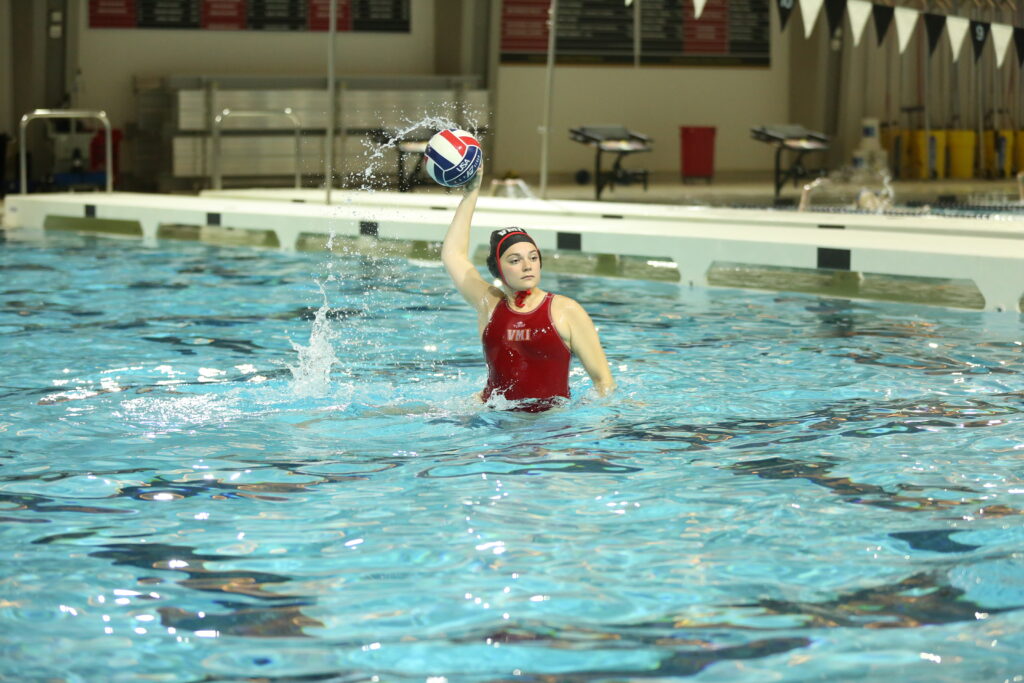
Sydney Smith in the pool playing water polo for Virginia Military Institute.

“It played out very well. None of us were in the same company, so we never lived together, but we’ve never had any issues,” she said. “Through our years here, we’ve told the 4th Class cadets that same thing: try not to live together. That can cause problems. And they’ve all made that a rule, too. And all of them are super close, too. We all hang out, and we do team dinners all the time, especially after practice in season. We make a point to all just go eat together and hang out all the time. A few of us are all the same majors. We have class together.” 

She said those on the team strive to be overachievers. From holding rank to other activities, Smith has a booked schedule.  

Cadet-athletes at VMI not only have their responsibilities with their selected sport but cadet duties on top of that. Cadets are also required to take physical fitness classes twice a week, participate in ROTC all four years, prepare for room and uniform inspections, practice for parade, guard duty, and more. 

Growing up, Smith and her sister, who is at the Naval Academy, were always told they needed to have diverse activities.  

“We’ve both been told you’re going to do other things. You are each going to play a sport, and you are going to play an instrument, and you’re also going to find a leadership role,” she said. 

Smith is also on the Glee Club, while spending two to three hours in the pool a day. That doesn’t include early morning practices or weightlifting. She’s thought ahead though, by taking summer classes every year she’s been here to lighten her academic load while she’s in season. Hence, her last semester is 13.5 credits.  

In order to keep everything straight, Smith has a large calendar she keeps in her room that’s color coded with all her activities and assignments. She said that VMI has prepared her in terms of how to handle a busy schedule. 

“Everything that I’ve had to do and manage with stress, school, and water polo, I’ve kind of compartmentalized all of it,” she said. “I think it has been the most beneficial thing. If I can handle being this busy, I can handle anything.” 

Behind the Balance: Destin Moore ’27 — Keydet Football

Virginia Military Institute’s cadet-athletes have to juggle cadet life, heavy academic course loads, and their NCAA Division I sport. Committed to both academic and athletic pursuits, balancing their rigorous schedule in both sports and school requires a certain level of commitment and discipline. Behind the Balance is a series that focuses on those cadet-athletes and how they handle the hurdles of the day-to-day. 

Virginia Military Institute offered a path to success, Destin Moore ’27 explained. The psychology major from Georgia wasn’t familiar with VMI at first, but after talking to several football coaches, he was inspired.  

“I really fell in love with the culture they were trying to build and what the school offered,” he said. “I don’t like to fail. So, I know the challenge wasn’t something people look for … normally people take the easy route. To know that I could be amongst the few that got through this — it was desirable to me.”

Moore isn’t a stranger to a packed schedule. As a dual sport athlete, his entire year is figuring out how to balance his schedule with both football and track and field.  

“I try to configure my schedule, I try to have a middle block where I can have two classes and then I’ll have a dead period after lunch so I could do any homework that I need to do, or do any homework that I’ve just received to get ahead,” he said. 

This became a challenge last spring when Moore was participating in the SoCon Track and Field Championships. He went directly from football practice to track practice. For the championship, he placed second, pushing him into the finals the following day.  

“I came right off the track, with my track jersey and my compression shorts, and I ran from the Corps Physical Training Facility to the football field,” he recounted. “I got done with that the football practice, went to sleep and had to wake up at 8 a.m. to run in the championship.” 

Cadet-athletes at VMI not only have their responsibilities with their selected sport but cadet duties on top of that. Cadets are also required to take physical fitness classes twice a week, participate in ROTC all four years, prepare for room and uniform inspections, practice for parade, guard duty, and more. 

He explained that coming to VMI and being a cadet-athlete, he had to change his mindset. He couldn’t look at the tasks he had to accomplish as something he had to do, but instead something he got to do.  

“If I didn’t, I probably wouldn’t have competed like I did or did it at all. Since I wanted to do it, I had to find a way,” he said.  

It’s all about prioritizing. He figures out the thing he’s least enthusiastic about and finishes that first, allowing him to do the things he wants to do. He said that’s something that will transfer to what he can accomplish later in life.  

“If that’s me waking up for my job at seven in the morning, like I have done for BRC [breakfast roll call], I can get my whole schedule done, have everything planned out, do what I need to do. So, in two months, I can go on vacation or something.”

Moore plays wide receiver, point return and kick return. But he wasn’t one for paying much attention to football when he was on the field in his younger days.  

“I was always one of those kids who was at practice, but wasn’t in the practices,” he stated. “I’d be crisscross applesauce on the floor, playing with the dandelion grass.” 

Destin Moore on the football field running a play for Virginia Military Institute.

He said that he got bored with that and started to put in more effort.  

“I was always pretty fast, so I would run. And the coaches saw that one day, and they were like, let’s see what this guy can do,” Moore said. “I ended up playing and being slightly good at it.” 

He started to take it more seriously in his sophomore year of high school and decided he wanted to go to college for it.  

As for the stressful times at VMI, Moore leans on his friends and teammates. 

“Within my friend group, we try to motivate each other and hold each other accountable, whether that be in football or in school, because being at VMI we can have the hardest workers. We need to control what we can control and be the best at it,” he explained. 

The way Moore accomplishes this is by not looking at the big picture. He needs to take it piece-by-piece.  

“You can’t eat a sandwich all in one bite. You have to take it bite-by-bite. Break it off. Have little sections. Complete that section. Reward yourself forward so you can do the next thing.”