Post View Unavailable »
New Website Launched »

The Vanguard — Owen Johns ’28

The Vanguard series highlights cadets of Virginia Military Institute who exemplify promise, perseverance, and the true spirit of leadership. While they may not be the top-ranking students or those in prestigious positions, these individuals’ dedication, resilience, and growth embody the essence of being a VMI cadet. By sharing their stories, including the challenges they’ve faced and overcome, we shine a spotlight on the diverse paths to success at the Institute, proving that leadership and excellence come in many forms.  

Owen Johns ’28 has always been interested in how the world works, which is what drew him to an international studies major at Virginia Military Institute.  

“I like to see how things in the past affect current outcomes,” he explained. 

Johns knew he wanted to commission in the U.S. Army, so VMI was the best choice for him. Once he got to VMI and chose his direction, he discovered a whole new world of opportunities. He is a VMI emergency medical technician (EMT), a volunteer firefighter with the City of Lexington, and an S1 corporal. 

Maj. Mattie Webb, assistant professor in the Department of History, said Johns is highly respected amongst his peers.  

“I could always count on him to ask difficult but well-reasoned questions, something that showed me he was genuinely curious and eager to connect course material to larger themes and debates,” Webb explained.  

From taking on leadership roles in the classroom to always engaging in discussion, Johns has impressed Webb since he was in her U.S. Constitutional History course. That course is challenging and requires cadets to learn the material and also communicate it effectively to each other. 

“Johns consistently demonstrated a commitment to uplifting those around him, especially during group activities. He was eager to improve and regularly took advantage of opportunities outside the classroom, including attending guest speaker events,” she said. “This attitude reflected his enthusiasm to learn, openness to feedback, and genuine enthusiasm for U.S. constitutional history.” 

Johns admits being a cadet at VMI is difficult, but he’s been able to be proactive with time management to keep things in order.  

“I was not really that organized before I came here,” he said. “It was a bit of a gut check of needing to learn how to prioritize.” 

One word can easily describe Johns — busy. Not only is he balancing a course load of 16 credits and his S1 duties, which includes responsibilities for personnel and administrative actions for the Corps of Cadets, plus various EMT duties throughout the week, he’s also spending his weekend running calls with Lexington Fire Department or with VMI EMS.  

“I try to keep my time full between academics, extracurriculars, and EMT,” he said. 

When he saw his uncle dyke (his upper-class mentor’s roommate) was an EMT, he was inspired to check it out. Johns attended an interest meeting, then ended up interviewing for the course, which only accepts around 25 cadets for a summer session. The course is completed in four weeks, teaching EMT skills in the classroom, then running calls with local stations in the area — anywhere between Rockbridge and Alleghany counties. The minimum number of runs needed to complete the course is 10. Johns completed around 18 in his time.  

“It was fun, but it was stressful, too. It’s one of those things where you learn the subject quickly and you have to go out the next day and see it in person,” he admitted. 
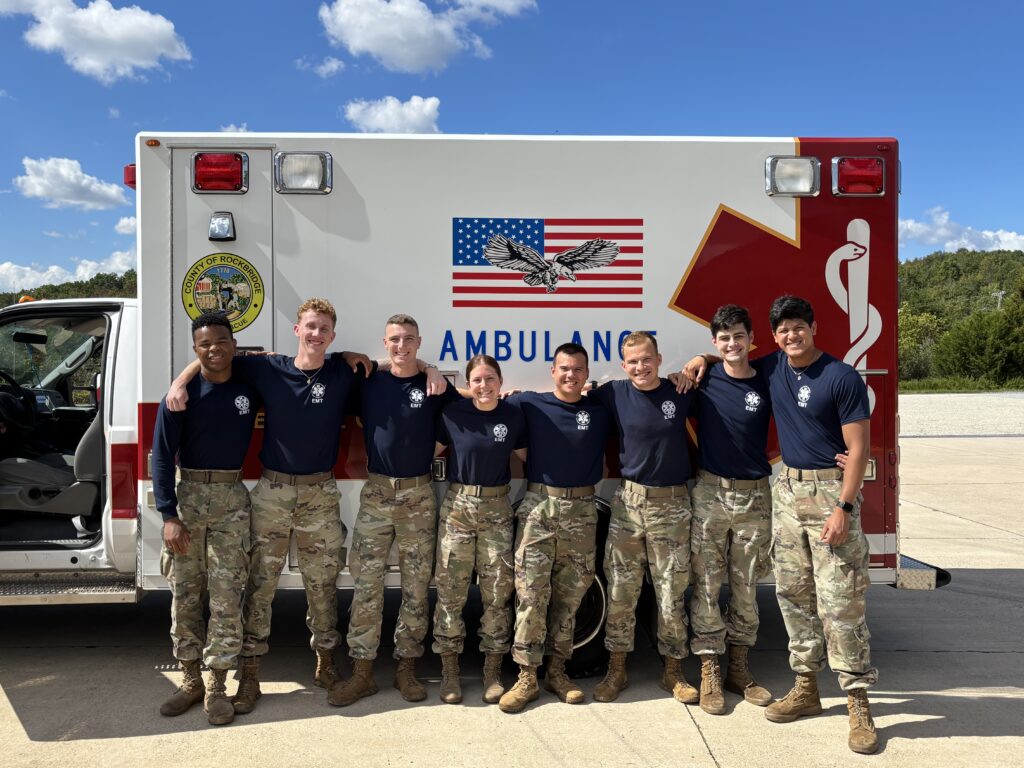
Cadet EMTs at Virginia Military Institute in front of an ambulance.

Since receiving his certification last summer, Johns has been working as an EMT at VMI. During that time, another EMT got him interested in running calls with the fire department in Lexington. Around five cadets toggle between VMI EMT work and the Lexington Fire Department on a regular basis.  

“I’m running calls almost every or every other weekend — either on the ambulance or fire,” he said.  

Donnie McBrayer, VMI EMS advisor, said although Johns is a newer EMT, he’s gained a lot of experience in that short time. He said he’s committed to learning. 

“Johns has shown a willingness to learn and assist in teaching other new cadet EMTs as related to patient interaction,” McBrayer said. “Like with any new EMT, initially Johns was not confident in his skills. Over the past year, he has become more confident with handling medical emergencies. He has a very good future in fire and EMS.”

Johns is currently working on his Firefighter 1 certification, which requires two nights a week with the department and some skill days. That will allow him to be an entry-level firefighter where he can go into the interiors of buildings during calls.  

“I found as an EMT, I still was getting the experience, still giving back, but I just want to take it one step further,” he commented. “I might be working on the ambulance, but I want to jump and help with the other aspects too.” 

By taking leadership roles and working as an EMT and with the fire department, Johns said he’s gained knowledge on how to take an active approach to leadership.  

“I’m able to know what needs to be done, and help coordinate other people I’m working with, like junior members, and help teach and get the job done at the same time,” he said. 

He’s found the most challenging part to be the balance of it all.  

“You really have to prioritize your time, always keeping a planner and notes in your phone for when I have a meeting, when I have training, when I have to go anywhere,” he stated. “Sometimes it gets a little rough and overlapping, but keeping on top of a schedule is probably the best way I found to manage that balance.” 

Webb noted Johns’ involvement outside the classroom showcases his ability to balance EMT responsibilities with academic work.  

“What stood out to me most was his maturity and sense of responsibility, approaching both his academic coursework and his service commitments with a high degree of professionalism,” she stated. 
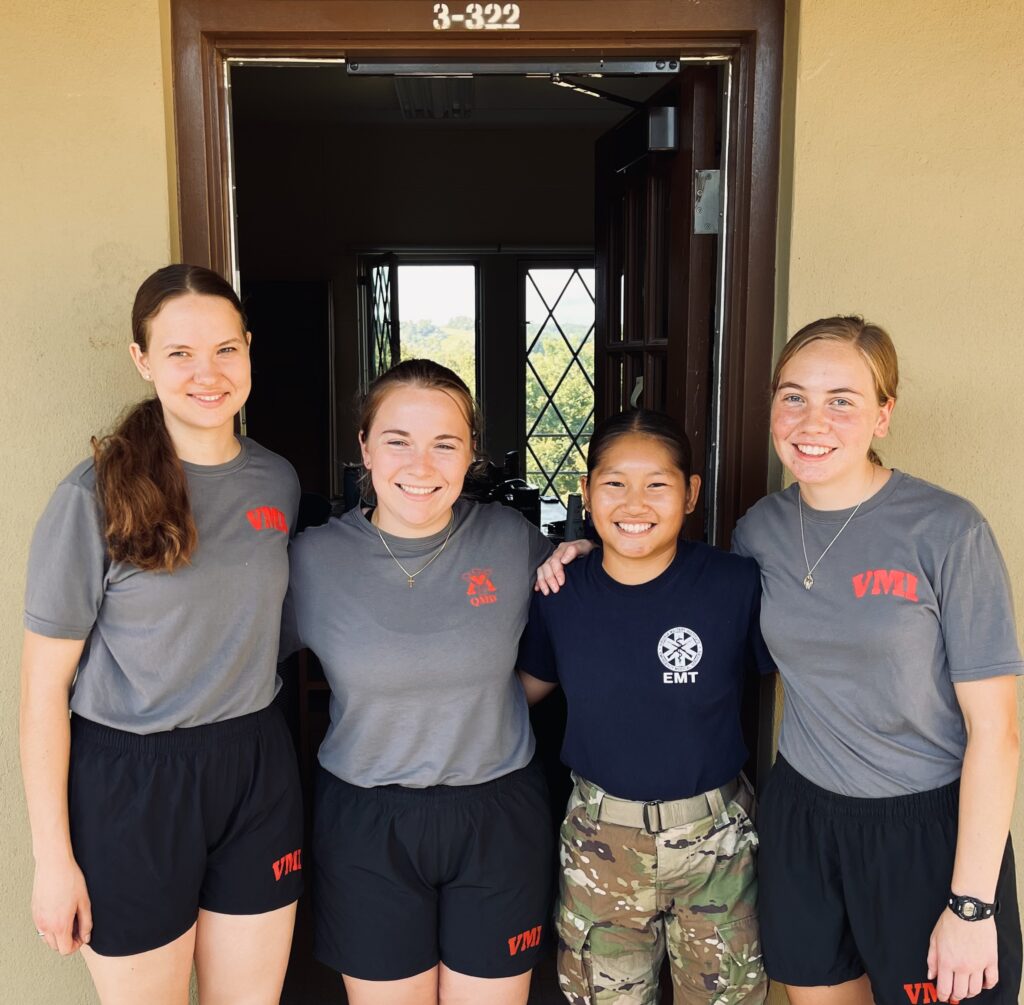
The Vanguard — Sofia Fleming ’28

The Vanguard series highlights cadets of Virginia Military Institute who exemplify promise, perseverance, and the true spirit of leadership. While they may not be the top-ranking students or those in prestigious positions, these individuals’ dedication, resilience, and growth embody the essence of being a VMI cadet. By sharing their stories, including the challenges they’ve faced and overcome, we shine a spotlight on the diverse paths to success at the Institute, proving that leadership and excellence come in many forms.  

Sofia Fleming ’28 describes her older sister as a trailblazer. It just so happens a big part of that is because she graduated from Virginia Military Institute. Although it was before Fleming was born, she grew up idolizing her. 

“She was very goal-oriented, very driven,” she said. “I have looked up to her my entire life, so it really inspired me to follow her path here.” 

Fleming wasn’t sure what her plans would be after high school — if she would attend community college or a four-year institution. She was faced with a big decision.  

“I wanted to get the most out of school. I looked into some other four-year colleges, and I wanted a school that would define me or be a defining experience in my life that set me up for a future career,” she explained. “I saw that in VMI. I saw it could give me more than any other school that I looked into could. And it really has … I’ve seen the changes it’s made.” 

She compromised though. Before coming to the Institute, she did a year at community college. This served as a good transition from high school — she was homeschooled — and allowed her to overcome any difficulties.  

“Going into classes and having to sit and listen to professors was one thing I wasn’t accustomed to,” she admitted. “I have met some really amazing professors here. I’ve enjoyed the experience of getting to know different professors, getting to have the experience of different teachers, which is something that I never had in high school. It’s shaped me and how I do academically.” 

The English major said the past year at VMI has made her more resilient.  

“It’s definitely pushed me beyond my limits. I feel like I have come so far and such a long way from when I first came here on Matriculation Day,” she said. “It’s given me better time management skills, self-discipline, and it’s testing me academically in so many ways.” 

She said that VMI’s most challenging part is academics. 

“Even though it’s something that I excel in, it’s also something I struggled to adjust to, but something I’ve been able to overcome as time has gone on at VMI,” she explained.

Despite VMI’s rigorous academic program, Fleming was able to achieve a 4.0 GPA as a 4th Class cadet. She credits her professors in pushing her academically and helping her improve her writing skills. She also began working at VMI’s Writing Center as a peer writing consultant.  

Sofia Fleming '28 with her brother rats outside of barracks at Virginia Military Institute.

As a disciplined student, Fleming likes to get her work done ahead of time, opting to get started on her work right away.  

“I’m very methodical about my work. I like to write it, let it sit for a while, come back to it, and then work on it again,” she stated. “In high school I’d always do it last minute. Here, I learned that it doesn’t work like that, especially since I want to get good grades. I have changed my style of how I write and how I work as a student.” 

Col. Steven Knepper, professor in the Department of English, Rhetoric, and Humanistic Studies, agreed on her dedication as a student. 

“Sofia is a diligent, high-achieving cadet who excels in the classroom and beyond. She is an excellent writer and an incisive thinker,” he said.  

Fleming does lean on her professors for extra help if she gets overwhelmed. To get over the first struggles and nervousness she faced while on the Rat Line, she wrote a poem and attached illustrations to it. It started out with lines like “this rat wants a protein shake,” with an illustration of a cartoon rat drinking a shake. She sent it to her parents and they suggested making a children’s book around it. 

“VMI’s funny title for freshman inspired me to write a children’s book on the VMI Rat Line called ‘This Rat … A Military College Story.’ I created each drawing as an actual rodent, completing different activities to add levity to the challenging VMI Rat Line,” Fleming explained. “Each drawing was based on a memory that I have about the Rat Line. It feels nostalgic since I broke out just a year ago. Every time I see one of my drawings, it makes me smile because it reminds me of all the funny moments and good times that I had during that challenge.” 

She’s self-publishing the book and is in talks with the VMI Museum for them to carry it.  

“Cadets lead busy lives, but Sofia found the time to write and illustrate a children’s book,” Knepper commented. “I expect it will be a hit. It’s very well done. Sofia continues to write fiction, poetry, and creative nonfiction beyond her coursework and Corps responsibilities. She has rare talent and skill, but she also consistently puts in the work.” 

Despite the difficulties she has faced and will continue to face at VMI, she likes the structure of her day-to-day.  

“There’s certain times for me to work out and rest. I’ve really found that helps me a lot in getting things done,” she said. “I was really amazed that the schedule and the structure that VMI has made such an impact on me, and that’s increased my productivity in so many ways.” 

She says she wouldn’t have been able to experience such a wide array of opportunities anywhere else. Last year, she was a member of the pistol team, where she competed in a national college level competition. She’s active in VMI’s Newman’s Society, the aviation club, and became a Matriculation Week corporal to train the next class of rats. 

Col. Mary “Polly” Stewart Atwell, associate professor in the Department of English, Rhetoric, and Humanistic Studies, described Fleming as extremely engaged, thoughtful, and conscientious. 

“She always goes the extra mile with her assignments on top of what is required. She’s willing to take constructive criticism and wants to learn and improve,” Atwell said. “Although Sofia is a 3rd Class cadet, she always holds her own in class discussions when she is one of the younger students in the class. I think she shows great promise as a writer and a scholar.” 

Behind the Balance: Anthony Wilkerson ’28 — Keydet Track and Field

Virginia Military Institute’s cadet-athletes have to juggle cadet life, heavy academic course loads, and their NCAA Division I sport. Committed to both academic and athletic pursuits, balancing their rigorous schedule in both sports and school requires a certain level of commitment and discipline. Behind the Balance is a series that focuses on those cadet-athletes and how they handle the hurdles of the day-to-day. 

Anthony Wilkerson ’28 was looking for connection when he came to Virginia Military Institute. Initially, it was a mix of track and field and a scholarship through the U.S. Army that got him through the door, but it was the bonds he formed with his brother rats that made him want to stay.  

“I came here for track and field. But being here, making connections with my brother rats — people older than me, younger — just made me want to stay here even more,” he said.

Wilkerson hopes to attend medical school, so he’s devoted a lot of his time at VMI to his studies and keeping up his GPA. It’s also the reason he joined the cadet emergency medical technicians (EMT). 

“I wanted to become an EMT because I wanted more medical field experience, something I could put on my resume for medical school,” he commented. “I think everyone needs to learn emergency medicine, because you never know when someone might pass out right beside you and it might be your best friend suffering. Instead of sitting there in a panic, you know what to do.” 

The biology major is going into the semester with 18 credits, which he must balance with his track and field schedule while also being an EMT corporal. With days starting early at 6 a.m. and classes throughout, mixed in with practice, and the need to keep up with assignments, he’s usually up until nearly midnight. His responsibilities are plentiful and well spread, but he’s learned that time management and determination are his best friends. 

“I think I have a pretty good sense of time management, because I’m the type of person that has to get all my work done before I lie down,” he explained. “I don’t think about doing something late. I don’t even look at that as an option, to be honest.” 

Cadet-athletes at VMI not only have their responsibilities with their selected sport but cadet duties on top of that. Cadets are also required to take physical fitness classes twice a week, participate in ROTC all four years, prepare for room and uniform inspections, practice for parade, guard duty, and more. 

Wilkerson shared there is a shift on the team as upper-class cadets graduate. 

“Last year we had a lot of 1st Class cadets, and you had someone to look up to. But this year, it’s like me and my friends are the ones the rats are looking up to,” he stated. “Last year, my brother rats and I would go to our dykes’ rooms, but now all the rats are coming to our rooms. It’s a cool change in dynamic being able to give those people advice on things that they’re looking for. They come to you for literally anything.” 

He aims to be an example for others.

“I want to make sure with my rat, and the people younger than me, that I’m always there for them, and they feel like they can come talk to me whenever they want,” he said. “I can have a stronger bond with them.” 

Stress can be a big factor in Wilkerson’s daily life at VMI, but he combats it by decompressing in his room after hours.  

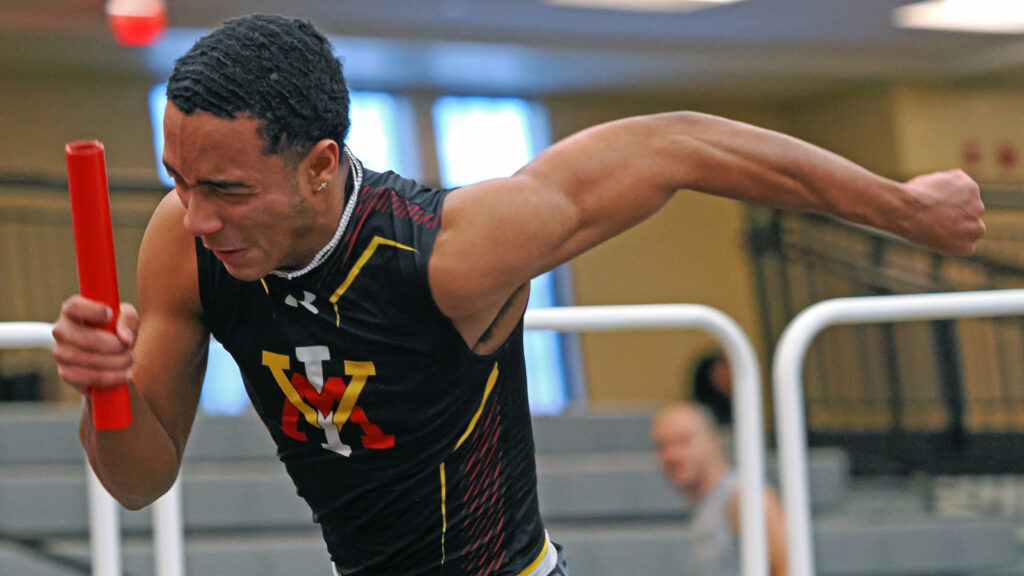
Cadet Anthony Wilkerson running an indoor track race.
VMI Team Challenge track and field meet at the Corps Physical Training Facility in Lexington, VA January 11, 2025. (Randall K. Wolf)

“I just handle the stress of the day by coming back to my room and just talking to all my roommates,” he said.  

Having people to talk to with is a good outlet, especially since there isn’t much time in the day to dwell or complain. 

The regimented schedule works to his benefit, allowing him to get shorter class assignments done between things.  

“If I have a break between classes, I’ll do those assignments,” he said. 

Whether he’s eating lunch in his room to catch up on work or spending a chunk of time between practice and dinner, Wilkerson is hammering away on assignments to stay on top of things. He says VMI has kept his life structured and allowed him to not procrastinate, compared to life at home. 

“When I come here, it’s just so much different, where I have to be here at this time. I can’t be late or this, I need to show up looking a certain way. Being here and then going home, two completely different realms,” he explained. “I think being here, it honestly helped me more than going to a different college. There are still opportunities to have fun here, just your priorities, they come first.” 

The Vanguard — Jackson Geisendaffer ’28

The Vanguard series highlights cadets of Virginia Military Institute who exemplify promise, perseverance, and the true spirit of leadership. While they may not be the top-ranking students or those in prestigious positions, these individuals’ dedication, resilience, and growth embody the essence of being a VMI cadet. By sharing their stories, including the challenges they’ve faced and overcome, we shine a spotlight on the diverse paths to success at the Institute, proving that leadership and excellence come in many forms.  

Playing a part in the bigger picture was one of Jackson Geisendaffer’s ’28 goals when he came to Virginia Military Institute. He wanted a school that would challenge him to be the best leader and prepare him to move forward, especially when those plans are to commission into the U.S. Army.  

“I saw that to become that leader of value, I would have to go through challenges and struggle with myself,” he said.  

His father was a VMI graduate. Growing up, he learned of his time at the Institute and said it was a big determining factor in attending versus enlisting. 

It’s also the reason he became a corporal in the Old Corps. Geisendaffer said he wanted to be part of the team and serve as a leader, while taking accountability and ensuring everyone is responsible and doing their best. 

“I take accountability for everybody that’s in my squad, make sure that their uniform appearance is up to standard and make sure that people are doing what they’re supposed to do in my company,” he explained. 

Originally entering the Institute on the cross country team, Geisendaffer switched to Ranger Challenge, which is described as an Army ROTC varsity sport. Teams form early in the semester and train nearly every morning of the week all the way up until the Sandhurst Military Skills Competition at the U.S. Military Academy (USMA) at West Point in mid-spring.  

“I think the biggest factor is being able to work within a team. When I was in high school, I was doing sports throughout. I had a hard time expressing my ideas and my thoughts within a group, and hearing out other people’s ideas,” he said. “But here, you have a job to do, so you must get along, and be able to communicate in a way other people understand. I think fundamentally, that’s probably one of the biggest things for officers to have. I think it sets me up for success.” 

The English major is forward thinking. He grew up reading and loved literature, especially classics like Charles Dickens’ novels. It was something he was naturally good at and was drawn to. He also saw the merit of choosing that major. 

“I feel like having an English degree is going to give me the skills to be an effective communicator as an officer and as a team leader in general,” he said.  

Maj. Adam Cody, assistant professor in the Department of English, Rhetoric, and Humanistic Studies, describes Geisendaffer as insightful and inventive, with a strong work ethic, precise attention to detail, and a productive rapport with peers. 

During an in-class peer review workshop, Cody said Geisendaffer showed great promise in his leadership skills. He had a constructive and conscientious approach to peer mentorship, where he was patient and attentive with his classmates and his instructor, and his feedback on his peers’ writing reflected a diligent commitment to helping others improve their writing skills.

“Cadet Geisendaffer may consistently be relied upon for his keen understanding and thoughtful judgment,” Cody said. “In class, he displays a tendency to notice key details that other students overlook, and his critical and lateral thinking skills enable him to make connections between ideas and to integrate unfamiliar concepts into a coherent system of knowledge.” 

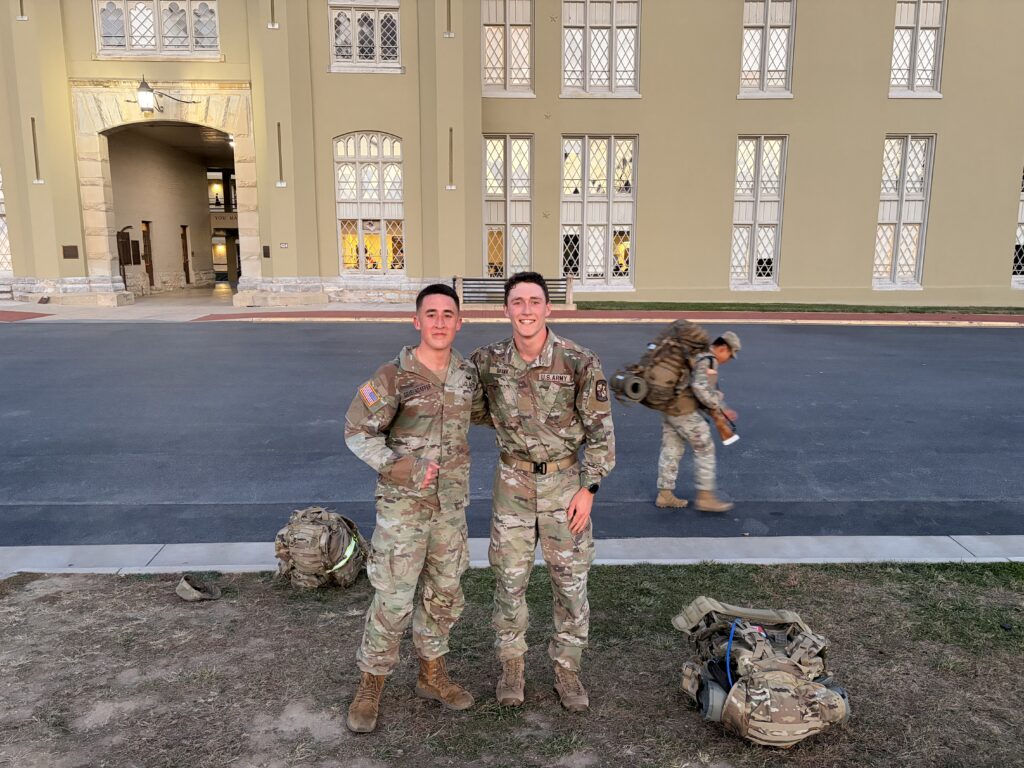
Cadet Jackson Geisendaffer with his brother rat outside of barracks at Virginia Military Institute.

Geisendaffer prefers not to procrastinate, which is a complete departure from his days in high school. Admitting that he was below average in high school, he didn’t take pride in his grades or think he was going to college. He decided he needed to make a change. Since coming to VMI, he’s disciplined and on the ball. 

“I kind of blew a lot of the stuff off and went by doing the bare minimum,” he stated. “Then I got here, and I realized that there’s more opportunities that come when you actually dedicate yourself to the grades and to these challenges. I found when I applied myself and I studied hard, I got the results that I wanted and the results that I deserved because of the changes that I made. 

 “I stayed on top of everything, especially during rat year, and I saw results, so I just kept sticking with it,” he continued. “I keep a detailed schedule of where I need to be, when I need to be there. I ask questions. I don’t waste time.” 

Lt. Col. Jochen Arndt, associate professor in the Department of History, has known Geisendaffer since he was a rat and enrolled in his world history course. He was impressed with his vigor for learning and his ability to earn high marks.  

“Cadet Geisendaffer navigated the Rat Line with aplomb and performed in the top ten percent of my course, earning an ‘A’ for that semester — far above the average grade of a ‘C,’” he said. “He paid attention to detail, completed the assigned readings, came to class ready to participate, and took good notes. Given the amount of work required to perform well in this class, I am sure Cadet Geisendaffer had to work many late hours, especially in preparation for the course’s two research paper assignments and the 3-hour final exam, all of which he completed with superior grades.” 

Arndt also noted that he uses his skills well by becoming a writing center consultant, where he’s able to help his peers become better writers and students. It was something that set him apart from his classmates. 

“Cadet Geisendaffer struck me always as modest in spite of his superior performance. He went about his work in a professional manner, with seemingly no drama and no wasted energy,” he commented. “When he showed up at my door to discuss his paper assignments, for instance, I was pleasantly surprised to find that he came well prepared with completed drafts ready for my review. When I suggested changes, he listened carefully, asked good questions, and then implemented the required changes.” 

Dr. Luke McNulty, adjunct professor in the Department of English, Rhetoric, and Humanistic Studies, said of his 57 students in a course where the current average grade is a C, Geisendaffer is one of 12 currently sitting at an A.  

“I can rely upon Cadet Geisendaffer to have read and understood these difficult materials before our class meetings, and to share his thoughts as a leading participant in our group discussions,” he said. “He has served me as a valuable interlocutor, and he has served his peers as a model of clear, careful thinking and speaking. I hasten to add that he has also been a model of character in his willingness publicly to express and defend his ethical principles.” 

Behind the Balance: Isabelle Haer ’28 — Keydet Swim and Dive

Virginia Military Institute’s cadet-athletes have to juggle cadet life, heavy academic course loads, and their NCAA Division I sport. Committed to both academic and athletic pursuits, balancing their rigorous schedule in both sports and school requires a certain level of commitment and discipline. Behind the Balance is a series that focuses on those cadet-athletes and how they handle the hurdles of the day-to-day. 

Balancing 20 credit hours, Division I athletics, and the demands of ROTC is no small task, but for Isabelle Haer ’28, that challenge is exactly the point. 

“I’m a big fan of the structure — the formations, waking up, having set things to do. Then being with people who are very focused on their future,” she said. 

Haer was drawn to Virginia Military Institute for its framework, closeknit environment, along with the opportunity to pursue both athletics and a potential commission. She found VMI as a place that matched her focus and drive.  

Her father was a graduate of The Citadel and she’s had many family members who have taken the military path. She wasn’t a stranger to what VMI could offer.  

“It was kind of the perfect fit, because it had the swim and dive team. It had the level of academics I was looking for, and a great alumni network,” the international studies major admitted.  

As a diver on VMI’s swim and dive team, she competes in the one-meter and three-meter springboard. Haer started out as a gymnast, though. When COVID-19 hit while she was in high school, she decided to make a switch. By her junior year, she was diving for her high school team. 

“I’m a big fan of always being able to learn something new and striving to be better,” she said. “For me, it’s very skill based so, as a gymnast, there was always a better skill you could get. Now with diving, I can always add another flip. I can always add another twist. You improve your technique somehow, point your toes, straighten your legs, switch positions. There’s always something that I can add on to my diving, so it’s never a boring practice.” 

She’s sometimes not as experienced as others in terms of certain dives, which can get in her head, but, she goes back to her foundation — she’s trained and worked hard. 

“I have to trust myself, my body, and my muscle memory,” she said. “When I get up there, I know that I can do it. At the end of the day, it is just a sport. It’s just a portion of my experience here at VMI. One dive isn’t the end of the world.”

If she ever overanalyzes before a competition, she has a plan. She has keywords she repeats to herself: “stand up straight, point your toes, keep your chest up on the board.”  

“I just say it’s a dive, it’s okay, just try your best,” she admits. “As long as you do your best … whatever happens, happens. I like to trust my practice that I’ve put in, and know that when it’s time to perform, I’m ready, because I’ve put in the hours and put in the work.” 

Isabelle Haer dives into the pool at Virginia Military Institute.
VMI Swim & Dive vs. WLU Action Shot

Cadet-athletes at VMI not only have their responsibilities with their selected sport but cadet duties on top of that. Cadets are also required to take physical fitness classes twice a week, participate in ROTC all four years, prepare for room and uniform inspections, practice for parade, guard duty, and more. 

On top of her general cadet duties, she also serves as a math tutor for the Miller Academic Center, where she helps with several 4th Class classes. She is an S5 corporal, where she helps lead public relations, counseling, and recruiting programs for the Corps of Cadets. 

With 5:30 a.m. wakeups, Haer has morning practice several days a week. After thate, she’ll often have some time to get classwork done before a block of classes.  

“That’s when I like to do a lot of my homework, right after practice when I have the blood flowing,” she commented. “It helps me. I like to get stuff done more in the mornings.” 

She goes from class straight to afternoon practice, which lasts until nearly 7 p.m. some days. This type of schedule follows her throughout the year — the season for swim and dive is from August to February.  

“I think the rigor is the main thing here. The strict schedule and being with like-minded individuals, always having something to do, but always being pushed to better myself and held to a higher standard will set me up,” she stated.  

Behind the Balance: Tazewell Rae ’28 — Keydet Track and Field

Virginia Military Institute’s cadet-athletes have to juggle cadet life, heavy academic course loads, and their NCAA Division I sport. Committed to both academic and athletic pursuits, balancing their rigorous schedule in both sports and school requires a certain level of commitment and discipline. Behind the Balance is a series that focuses on those cadet-athletes and how they handle the hurdles of the day-to-day. 

Originally, Tazewell Rae wasn’t thinking of attending a military school. It was a high school coach that put him in touch with Virginia Military Institute’s head track and field coach and set up a visit. 

“Every other school I visited, I kept comparing to VMI,” he said. The students he saw on other campuses didn’t match up to the caliber VMI presented. 

“The other academic departments don’t compare to VMI. I really enjoyed the civil engineering department here. The classes are about 20 people or 25 people at the most. It just felt like a good environment,” he continued.  

Rae comes from Middlesex, Virginia, where his high school was tiny and had a graduating class of about 65 people.  

“I’m the only person out of my school in the past two years who’s committed for any sport,” he stated.” 

He came to VMI for track and field. Although in high school, he played several sports, including soccer, football, basketball, and indoor track and outdoor track. He stuck with track and field, where he throws the shot put.  

“Throwing is that nice break where you’re one-on-one with yourself, and you’re just focusing on that,” he explained. “You have control of that.” 

During his first two years of high school, he didn’t have a track and field coach. Then in his junior year, a friend’s father came to coach. That coach had a daughter who attended VMI, which gave Rae the connection to the Institute.  

Cadet-athletes at VMI not only have their responsibilities with their selected sport but cadet duties on top of that. Cadets are also required to take physical fitness classes twice a week, participate in ROTC all four years, prepare for room and uniform inspections, practice for parade, guard duty, and more. 

The civil engineering major has 17 credits this semester, while also serving as the 3rd squad Bravo cadre corporal. He is also seeking a commissioning route with the U.S. Army. 

Some days he has up to five classes, so balancing all his responsibilities can be challenging.  

“There are a couple of long nights a week. I’ve had my fair share of three-in-the-morning Nichols Engineering study sessions with my roommates,” he admitted. “I’m one of three civil engineering cadets in my room, so it’s nice. We’re all athletes, so we’re used to the same load.” 

To distract himself, he tries to pick up hobbies. 

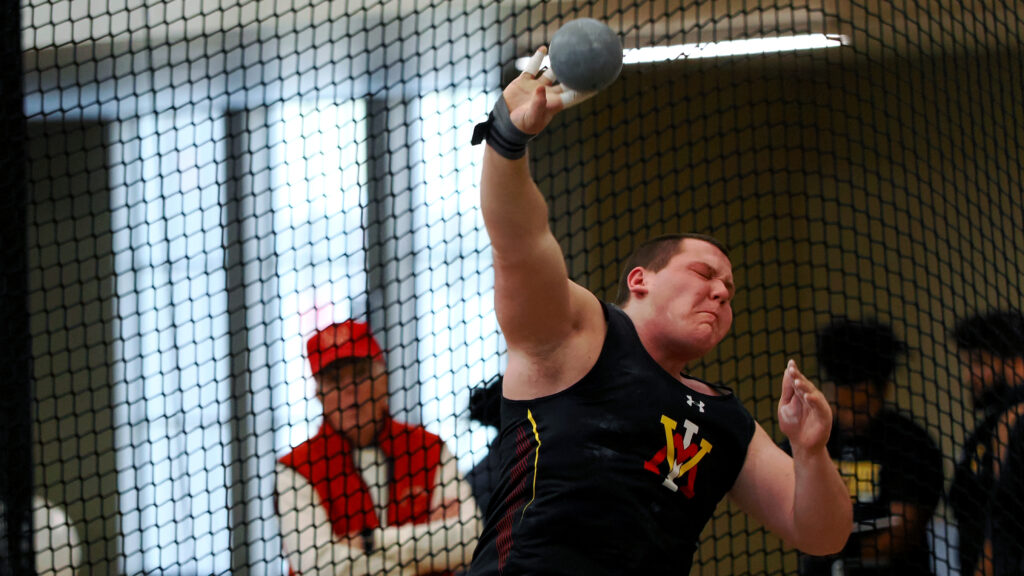
Tazewell Rae shoots the shot put during a track and field event at Virginia Military Institute.
VMI Team Challenge track and field meet at the Corps Physical Training Facility in Lexington, VA January 11, 2025. (Randall K. Wolf)

“I’m trying really hard to learn the banjo,” he said. “I try to stay busy, it’s usually how I avoid stress. Idle hands are not good.” 

He also finds reprieve in throwing, which serves as an escape for him. 

Rae takes his training seriously, weightlifting up to four days a week during the season. Even in the off season and over the summer, he said he’s throwing nearly every day. 

“It’s just a lot of rinse and repeat, focusing on one thing. It’s never perfect, so there’s always something to work on,” he stated. “It’s kind of methodical. A lot of people call it poetry in motion. It’s just something you can focus on.” 

In high school, he had the mindset of doing things on his own. At the Institute, he realized there’s more team effort. 

“I got close with all the people in cadre, I’ve learned how to find my place in an organization,” he said. “Here I’m able to I’m around like-minded people, where they want to stay in shape and they want to push you. I thrive in that environment.” 

Study Abroad Ambassadors: Josiah Farrell ’28

At Virginia Military Institute’s Office of Global Education, more than 10% of cadets each year choose an international learning experience. Through semester or summer programs, cadets not only widen their global perspectives — but build critical thinking, resilience, independence, and the ability to communicate across cultures. Learn more about these first-hand experiences through our Study Abroad Ambassadors.

Name: Josiah Farrell 

Year: 2028  

Majors: International Studies with a Chinese minor 

Which program did you do?  National Chengchi University (NCCU) Huayu BEST Chinese program 

What made you decide to participate in this program? 

I knew coming to VMI that I wanted to study abroad at some point, so getting to spend the summer in Taiwan seemed like the perfect fit. My aim is to someday speak Mandarin Chinese fluently enough to serve as a U.S. diplomat, so I saw this trip as a perfect opportunity to get speaking experience in a native setting which is close to unachievable in the U.S. Being able to travel with my friends was also a huge draw for me to this program. 

How did you balance this program with VMI’s unique educational approach?  

Being in this program was my first time experiencing a normal college lifestyle, so it was a learning curve at first figuring out how to utilize all the free time I had. However, I found that establishing a routine much like that at VMI was an effective strategy for ensuring I stayed on task.  

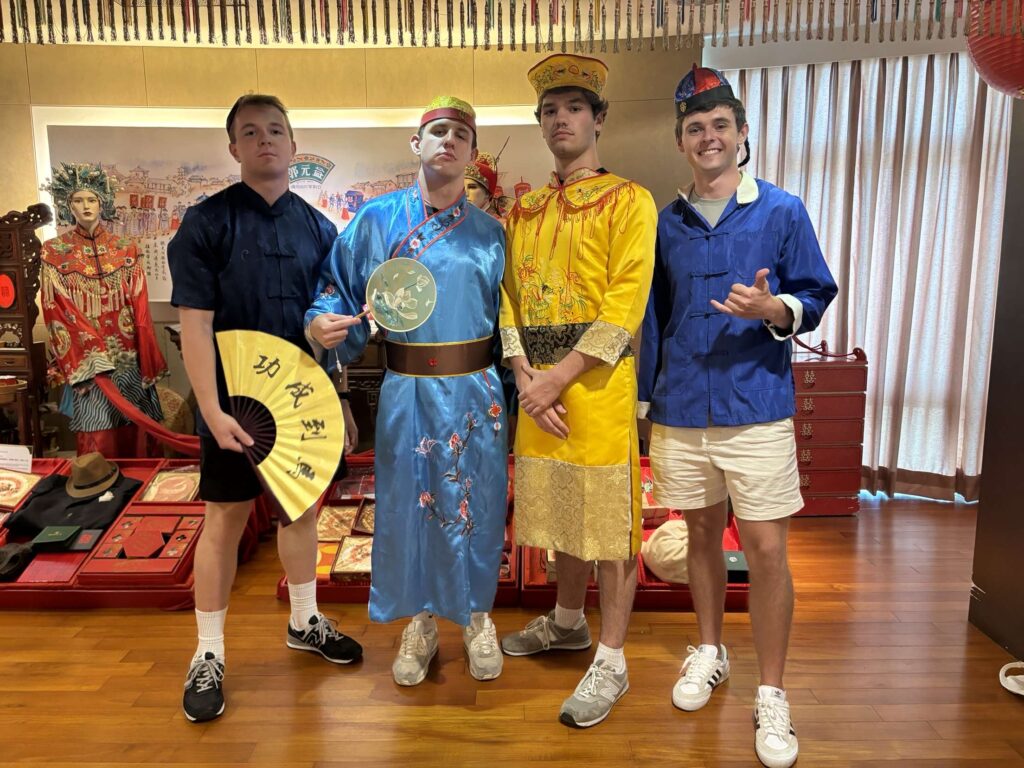
Josiah Farrell during his Huayu BEST Chinese study abroad program through National Chengchi University (NCCU).

What were your keys to success?  

I found that establishing a routine for balancing work and free time was critical for success. However, outside of that, I found that going out and seeking natural speaking experiences was extremely beneficial for practicing the content that we learned in the classroom. These everyday interactions, such as going to the convenience store, attending a concert, or exploring the city with friends all provided practical speaking experience which in turn allowed for better performance in the classroom. 

How do you think participating in this program will aid you in your future? 

I believe this program affirmed my ambitions to serve as a diplomat in Eastern Asia and that the speaking and comprehension skills I learned while abroad gave me a better understanding of colloquially spoken Chinese. I believe that these experiences will allow me to better understand both the people of Taiwan and the Mandarin speaking world as a whole in my future career. 

What was the best part of the program? 

The best part of the program by far was the ability to explore the city of Taipei with friends and make new connections with both Taiwanese locals and other foreign students. The free time we had allowed us to embark on a new adventure every day such as visiting temples, picking and brewing local tea, and participating in traditional games like dragon boat racing. 

What was the most surprising thing about the county you visited?  

By far the most surprising aspect of Taiwan was how exceptionally clean it was. The Taiwanese culture of sustainability and personal responsibility for the environment meant that, despite Taipei being a massive and densely populated city, the streets were spotless and the surroundings were luscious and green. I was extremely impressed by just how carefully the Taiwanese cared for their community.  

Favorite memory? 

My favorite memory in Taiwan by far was our first morning, where I climbed to the very top of a nearby mountain and visited a temple. From there I was able to take in the amazing views of Taipei’s metropolitan area and dense forests alike, and the reality of being on a once in a lifetime trip finally set in. 

Behind the Balance: Miller Tatum ’28 — Keydet Lacrosse

Virginia Military Institute’s cadet-athletes have to juggle cadet life, heavy academic course loads, and their NCAA Division I sport. Committed to both academic and athletic pursuits, balancing their rigorous schedule in both sports and school requires a certain level of commitment and discipline. Behind the Balance is a series that focuses on those cadet-athletes and how they handle the hurdles of the day-to-day. 

Growing up in Richmond, Virginia Military Institute was never a mystery to Miller Tatum ’28. Between family stories passed down from his grandfather — an alumnus himself — and a reputation that carried weight back home, the Institute was always somewhere in the background.  

Choosing VMI meant stepping away from the “normal” college path and diving into something harder. Tatum also held onto the belief that four demanding years could shape the next 40. That challenge combined with the chance to compete at the Division I level in lacrosse made the decision feel worth it.

In high school, Tatum wasn’t even sure lacrosse would be the avenue he’d pursue in college. He started playing around 8 years old in a recreational league and ended up playing all the way up to high school.  

“I transferred to a private high school in Richmond for my freshman year, and at that point I was really small and not good at lacrosse, and I hated it for a few years,” he admitted. “Freshman through junior year, I did not enjoy it, I didn’t want to play in college, and had no aspirations of doing it.” 

By his junior year, Tatum ended up filling out and hitting a growth spurt putting him in line with everyone else. From there, his mentality towards the game improved, as well as his skill. At that point, the former VMI head lacrosse coach had seen Tatum and invited him to a game day.  

It took some convincing from Tatum’s father, but he ended up attending the game day. He was then offered a spot on the team and knew it was too good of an opportunity to give up. 

Cadet-athletes at VMI not only have their responsibilities with their selected sport but cadet duties on top of that. Cadets are also required to take physical fitness classes twice a week, participate in ROTC all four years, prepare for room and uniform inspections, practice for parade, guard duty, and more. 

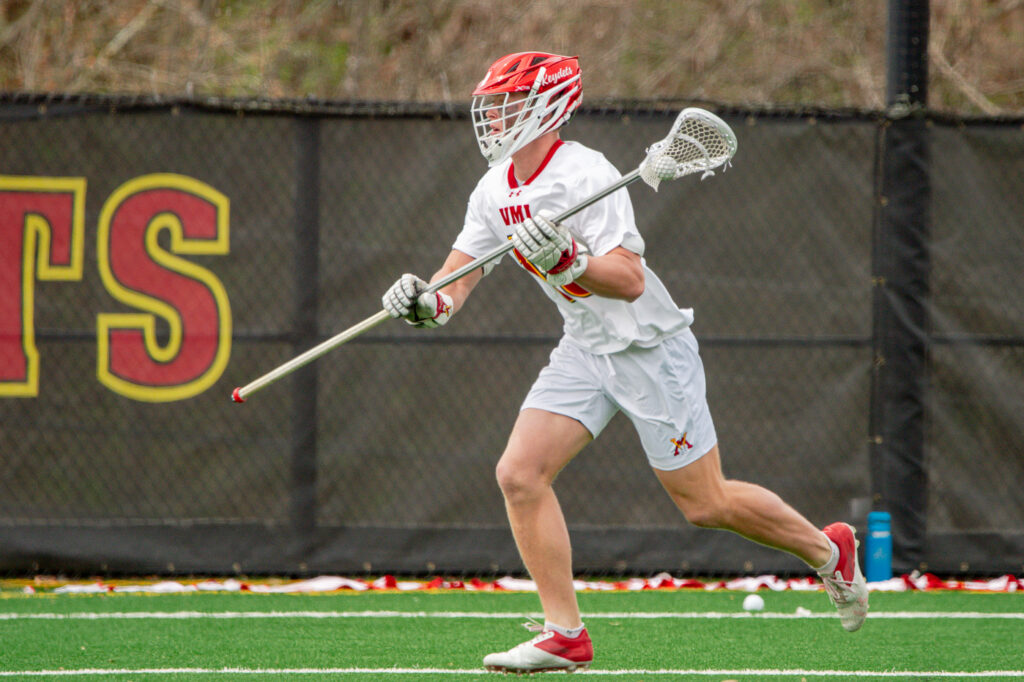
Miller Tatum playing lacrosse for Virginia Military Institute.

His days start early at 5:30 a.m. for weightlifting, then it’s a constant flood of one thing after the other until the afternoon. The economics and business major has 17.5 credits this semester, while in season. To stay on top of things, he’s completing assignments between all his other commitments.  

Luckily, his away games happen mostly on weekends. He and his teammates tend to front load their schedules to have classes earlier in the week.  

“I only have two classes on Friday, so I’m not actually missing that much class,” he said.

Having the initiative to utilize the small breaks during the day to get a head start on assignments will end up in your favor, he said.  

 “When you come back to do it at 7:30 or 8 p.m. after eating and going to practice, you’ve already put a dent in it.” 

During away trips, he and his teammates are dedicated to doing work while on the road.  

“You’ll see people with makeshift desks on the bus doing homework or on their computers or reading something for a class,” he explained. 

Their academic dedication can be seen, especially with the announcement last season that they earned Team All-Academic honors by the United States Intercollegiate Lacrosse Association. In order to achieve this status, the program must hold a team cumulative GPA of 3.0, which the team surpassed with a 3.2 for the 2024-25 academic year. 

“A lot of guys are pretty motivated in class. When you’re on the bus and everyone around you is doing homework, you almost feel like you’re getting left behind if you’re not trying to do something productive with that time,” he said. 

Despite a busy schedule, Tatum said being able to practice with his best friends daily is his favorite part of the Institute.  

“Doing something that you have a common shared joy of doing … I think there’s not a lot of opportunities to do that anymore,” he said. 

Motivation and time management have been big factors in how VMI is shaping Tatum.  

“I think having the opportunity to lead and be in the spotlight in front of other people is something a lot of college students don’t get at other schools and VMI prepares you well for,” Tatum stated. “I think that you have to use VMI as a foot in the door and then use the skills that VMI has taught you to be successful.” 

The Vanguard — Diego Henao Ospina ’28

The Vanguard series highlights cadets of Virginia Military Institute who exemplify promise, perseverance, and the true spirit of leadership. While they may not be the top-ranking students or those in prestigious positions, these individuals’ dedication, resilience, and growth embody the essence of being a VMI cadet. By sharing their stories, including the challenges they’ve faced and overcome, we shine a spotlight on the diverse paths to success at the Institute, proving that leadership and excellence come in many forms.   

When Diego Henao Ospina ’28 first considered life after high school, he weighed several paths within the armed forces. Enlisting seemed like a possibility, but advice from others who knew Virginia Military Institute helped shift his focus.  

A former Navy pilot whose son attended VMI spoke highly of the Institute, and soon after, a graduate from his own high school — now a 2nd Class cadet — returned for a recruiting visit. The way that cadet carried himself, sharp in his uniform and confident, left a lasting impression on Henao Ospina. 

Entering the Institute, Henao Ospina began as a history major. He enjoyed his time in the history department but found more of an interest in economics and business. He also plans on commissioning into the United States Air Force.  

“I’m very thankful to the history department. I really enjoyed it. But ultimately, I want to do something in the management sector, whether it’s logistics in the military or in the civilian world,” he explained. “Once I get out, I want to get into the corporate world. And economics, in my opinion, has always had that right amount of math where it’s very applicable.” 

Choosing the Air Force as his branch was another intentional decision. Many of the service members he spoke with before VMI were Air Force officers and enlistees, and he admired the long-term career paths available.  

“The Air Force seems like the best career,” he said. 

Diego Henao Ospina with his brother rats at a football game at Virginia Military Institute.

At VMI, he describes himself as a steady student — disciplined in habits, punctual with work, and willing to seek help when needed. Asking for help wasn’t always easy. He said at first, he resisted asking for help, but by the end of high school, he had learned that leaning on others could make all the difference.  

“There’s nothing shameful in that,” he said. “My main advice that I would give others is to seek help when they need it.”

As a cadet, he holds himself to high standards, striving to lead by example and instruct others. In Hotel Company, he serves as an alternate cadre corporal, managing an Old Corps squad during inspections and accountability checks, and assisting with rat training events. For him, the role was about belonging and contributing to the company that gave him his first sense of identity at VMI. A conversation with one of his own cadre corporals during the Rat Line solidified that calling.  

“That sense of belonging really impacted me,” he said.  

The journey hasn’t been without challenges. He admits that time management has been one of the steepest learning curves. Balancing academics, military duties, and the personal tasks of daily life, from making phone calls home to working through difficulties outside of VMI.  

“It can be overwhelming,” he shared. To cope, he leans on his mother for advice and strength, and grounds himself in his faith. 

Over the years, he says he’s grown vastly as a cadet. From struggling with basic drill movements on Matriculation Day to embracing the philosophy that “you get out what you put in,” he’s learned to see VMI as a system that rewards effort and resilience. Each duty — academic, military, or personal — has become an opportunity for improvement. 

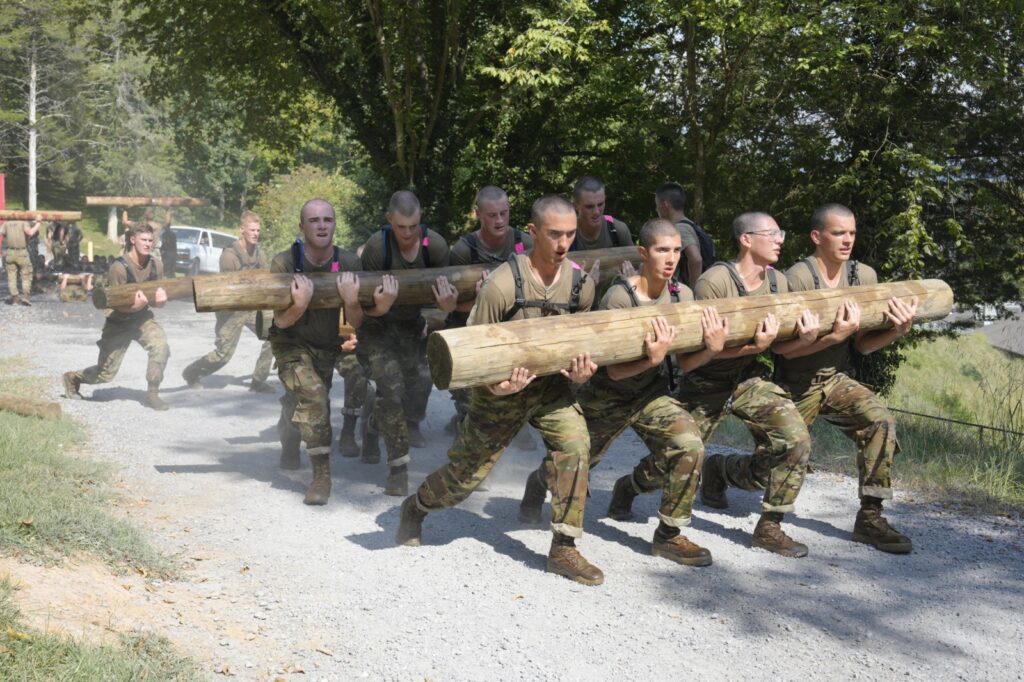
Cadets perform physical training activities on post at Virginia Military Institute.

Mentorship has also shaped his time. Col. John Cerkey from the Department of Modern Languages and Cultures has been a guiding influence since his rat year, both in the classroom and in supporting his ambitions to pursue a summer research project.  

Cerkey said he first had Henao Ospina in a literature class that focuses on Medieval and Renaissance Periods. 

“This was his first semester, rat year. These two literary periods are very challenging, and for most students, it was the first time that they had been introduced to literary and/or analytical techniques,” Cerkey explained. “With all the pressures that rats already have, Diego was outstanding. He, as well as the others, had to absorb and implement these new ways of thinking— he accomplished this to a superlative degree. He demonstrated originality of thought and clearly invested the effort to strive for excellence in this process. The result was that he was far and above, the best student in the class.” 

Born in Colombia, Henao Ospina eventually moved to the U.S. with his mother. He has faced several challenges, but Cerkey pointed out that Henao Ospina was able to overcome a lot.  

“Diego has remained focused and dedicated to achieving the goals that his education is making available to him. He doesn’t complain; he embraces all his challenges, crosses, and trials, with a good heart,” Cerkey said. “And at the center of his good heart, is his unwavering dedication to his Catholic faith, which strengthens him in his daily challenges, and keeps him Christ-centered.” 

Looking back, Henao Ospina sees VMI not as a finished process, but as a constant evolution.  

“You get out of the system what you put into it, and then you’re growing every day,” he said. “From the way I see it, it doesn’t end. It evolves. And it’s an opportunity to just continue learning, continue growing, despite the difficulties. The system is going to push you through difficulties, because there’s room for improvement.” 

Behind the Balance: Natalia Dias ’28 — Keydet Cross Country

Virginia Military Institute’s cadet-athletes have to juggle cadet life, heavy academic course loads, and their NCAA Division I sport. Committed to both academic and athletic pursuits, balancing their rigorous schedule in both sports and school requires a certain level of commitment and discipline. Behind the Balance is a series that focuses on those cadet-athletes and how they handle the hurdles of the day-to-day. 

Natalia Dias ’28 wanted to be set up success, and that meant finding a way to pay for college or leave her with minimal debt. She had three clear goals in school: an engineering program, U.S. Army ROTC, and cross country and track. 

Although she made the switch to economics and business, she found that Virginia Military Institute could offer her what she was looking for. 

“I always knew that I wanted a college that would take me further in my career, and VMI does that in every aspect,” she said. 

Thanks to an Army scholarship, she’s able to afford tuition, and will be commissioning into the Army upon graduation.  

The 3rd Class cadet is currently enrolled in 18 credit hours, which takes a lot of planning.  

Cadet-athletes at VMI not only have their responsibilities with their selected sport but cadet duties on top of that. Cadets are also required to take physical fitness classes twice a week, participate in ROTC all four years, prepare for room and uniform inspections, practice for parade, guard duty, and more. 

How does she handle it? Carefully. 

“I think my whole day is planned out in my planner,” she admits.  

Yes, a real physical planner. Inside is a carefully written schedule that soon becomes overloaded with extra sticky notes and highlights.  

“There are some days I have morning practice, and I don’t stop moving until dinner that evening,” she explains. “Then I go straight to the library, and get my homework done. If it’s an early night, I get excited because I get to go to bed.” 

Her days start sometimes as early as 5:30 a.m. and continue straight through until past 10 p.m. Then, it starts all over again.  

She also holds rank — as a corporal in the Old Corps, which means she’s in charge of upperclassmen and to make sure they’re there for formation and do things like rifle checks. She says she dedicates about an hour or two a day to that role.  

“I wanted a role more than what I already was responsible for,” she explained. “Because as a rat you don’t really have any choices. I wanted to be in charge of something.” 

She said since she wasn’t chosen for cadre, the Old Corps allows her to balance that role with her responsibilities with athletics, academics, and other cadet duties.  

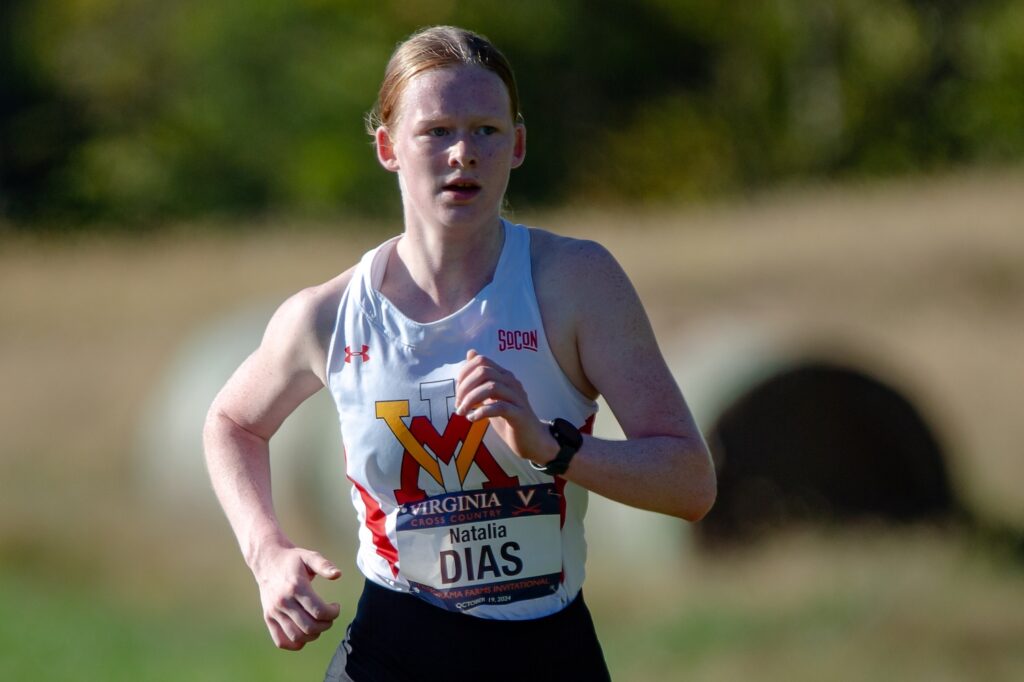
Natalia Dias running cross country for Virginia Military Institute.

“It doesn’t take up as much of my time, which is probably a good thing,” she said. “This is a good introduction to holding rank. It’s really important because these men and women that are in my squad depend on me to make sure they don’t get in trouble, every single day.” 

As for running — it’s her escape. She’s been running track and cross country since middle school. 

“I love my team,” she stated “It’s one of my favorite parts of my day to go down to even just practice. It’s a good escape. It’s away from the Institute, in a way, and makes me feel a little more normal, but it’s very freeing. It’s my time where all I have to do is run. All I have to do is workout. All I have to do is lift and that feels good sometimes, because a lot of things get overwhelming here. It’s just like a freedom where I don’t have to worry about anything else.” 

Dias describes herself as a big planner with a very Type A personality. 

“I write down the things I can control, and I try not to worry about the things I can’t, because there’s a lot of things you can’t control,” she said. “We have really good resources here. We have the Cadet Counseling Center and everything. If I ever need some help, I can go there, or I can talk to my teammates, my coaches, or my classmates. There’s a lot of great support systems here with how the school is set up.” 

Although her family was a little skeptical of her attending VMI, Dias knows she made the right decision. It was confirmed after an overnight visit where she learned how many opportunities there were for people — especially female cadets. She could feel how close-knit everyone was.  

“To me, it’s not just to further my life, but it’s to experience all of this with my classmates, to get the military experience, to be able to pursue my dreams,” she said.