Lou Ferrigno, bodybuilder and actor known best for his role in “The Incredible Hulk,” has been profoundly deaf most of his life. He once remarked, “I think my hearing loss helped create a determination within me to be all I can be, and gave me a certain strength of character too.”
Determined and strong of character are two descriptors of a successful cadet at Virginia Military Institute, so when Andrew Kiddie ’29, who was diagnosed with deafness just before his second birthday, chose to come to arguably the hardest senior military college in the country, he, like Ferrigno, used his disability as a motivator.
Kiddie has worn a cochlear implant (CI) for most of his life. It is a small, complex electronic device that helps people who are profoundly deaf perceive sound. The implant consists of an external portion that sits behind the ear and a second portion that is surgically placed under the skin. CI technology has improved since Kiddie was first fitted for one when he was a toddler. The CI he currently wears is sweat proof — crucial for a cadet — and uses Bluetooth technology, which Kiddie controls via an app on his phone.
“They are always finding ways to make the design better. With Bluetooth, I can have private phone calls and listen to music on my phone without anyone else hearing it,” he laughed.
Kiddie also knows American Sign Language (ASL) and can masterfully read lips.
When Kiddie began the application process to VMI, the Office of Admissions was cautious.
“Before they met me, they were hesitant. They didn’t know if I could handle the Rat Line with all the physical challenges constantly thrown at me.” When Kiddie finally met with members of the admissions office at an open house, they had him talk with the Institute physician, Dr. Melissa S. Krawiec ’01. She learned he successfully participated in JROTC and cross country during high school. She also had a phone conversation with the surgeon who implanted his CI, got a clear medical understanding of his condition, and discussed any reasonable accommodations he might need in order to participate safely and fully in the VMI experience.
“With that information,” explained Krawiec, “I was able to have meaningful discussion with Col. Lawrence Havird ’90, commandant, and Col. Jack Johnson Jr., head of the Department of Human Performance and Wellness (HPW), both members of the fitness review panel that makes recommendations to the superintendent, and felt confident recommending him for admission.”
Kiddie’s father, Norman Kiddie, remembers when his son was accepted to VMI. “Andrew has worked incredibly hard for everything he has achieved. His dream was to attend VMI, and I will never forget the look on his face when he found out he had been accepted as the first cadet with a cochlear implant.”
Kiddie attended the Summer Transition Program, a curriculum designed to enhance the academic and physical fitness of incoming cadets, then officially matriculated last August. He confessed the most challenging part of VMI life was the Rat Line, not the physicality of it, but determining from which person the commanding voices were originating.
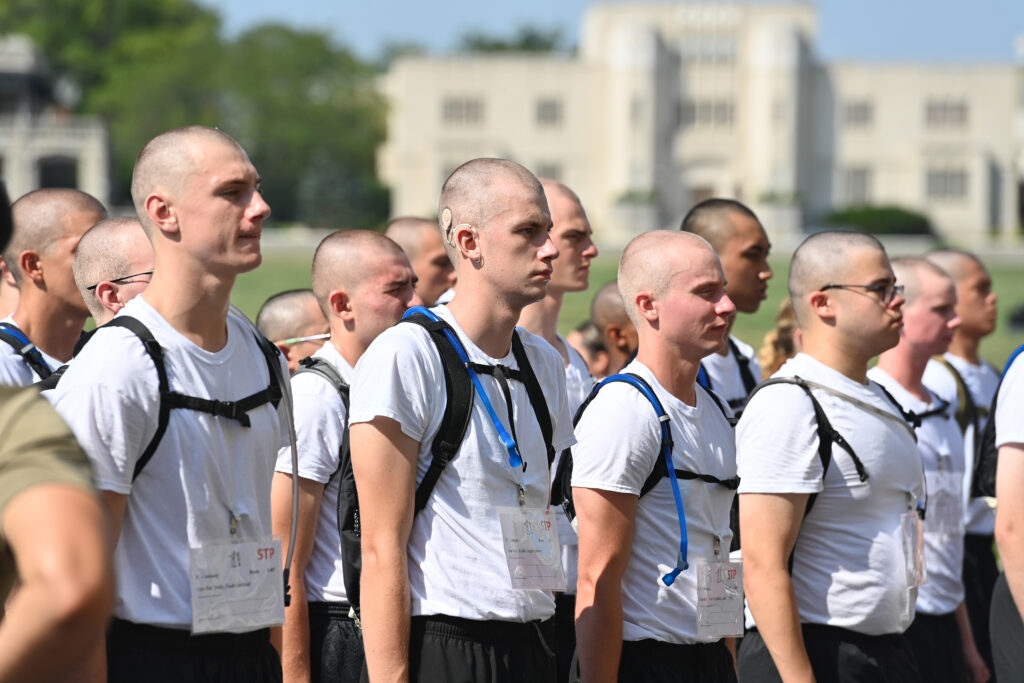
“It was hard to figure out who was shouting at me when they were behind my ears. I couldn’t tell if it was the first sergeant, or master sergeant, or who else it might have been, so when I responded, I would usually get it wrong.”
Kiddie is majoring in biology. His academic advisor, Lt. Col. Mary Beth Manjerovic, associate professor of biology, reported he is an excellent student who has never let his deafness define him. “He is a great example of the VMI spirit because he holds himself to the same standards as his brother rats, meeting every expectation with focus and determination.”
His boxing class coach, Capt. Jim Whitten, instructor in HPW, agrees with Manjerovic. “Andrew’s hearing impairment is not an issue. He gives great effort and is constantly trying to improve.”
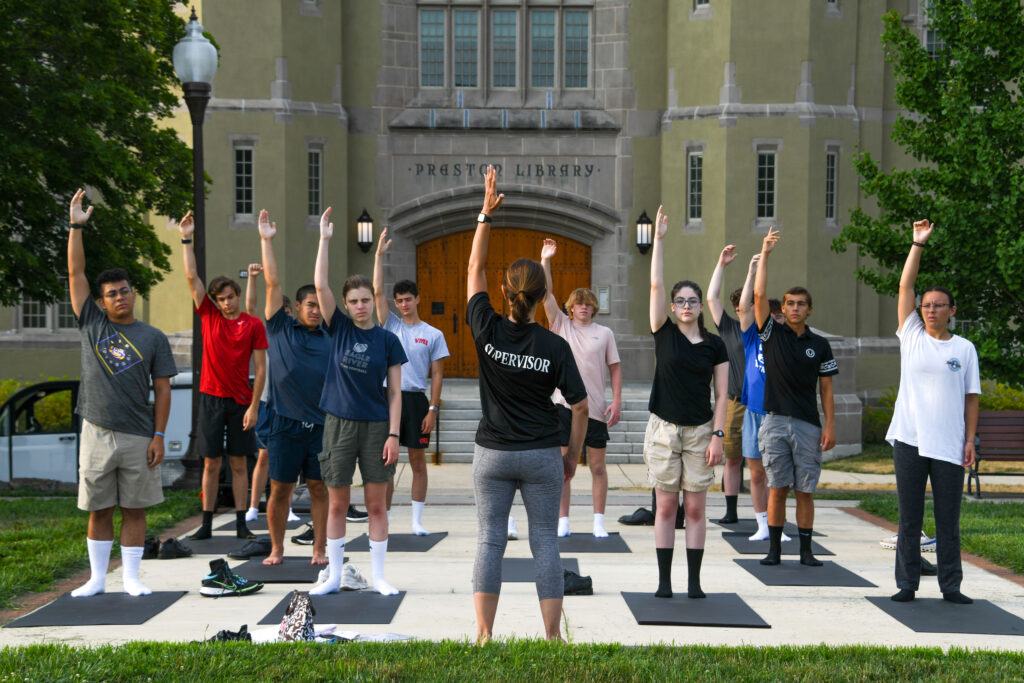
Extracurricular activities Kiddie engages in at VMI include the Glee Club, VMI Theatre, and the mixed martial arts club.
Kiddie’s mother, Anzelle Kiddie, shared raising a child who is deaf has been a learning curve filled with tears, laughter, blessings, and grace. “It was very hard in the beginning, but we received assistance from wonderful people — speech therapists, special education teachers, and ASL interpreters—who all helped him become who he is today. We all had to believe, pray, and put in the work.”
A native of Chesterfield, Virginia, Kiddie is an alumnus of Manchester High School in Midlothian. He aspires to be the first deaf cadet to graduate from VMI and to be an inspiration to others with hearing loss. He hopes to commission into the Air Force. If he does not commission, he plans to attend medical school or veterinary school.