Post View Unavailable:
Post View is currently unavailable due to technical difficulties. More information.Last Updated: 01-08-2026 09:42 AM»
Notice:
VMI.edu has recently been updated and upgraded. Please note that some URLs may have changed. Visitors are encouraged to use the new, expanded site menu and site search to navigate through these changes.
New Website Launched»
“Fiction does not spring into the world fully grown, like Athena. It is the process of writing and rewriting that makes a fiction original, if not profound.” —John Gardner.
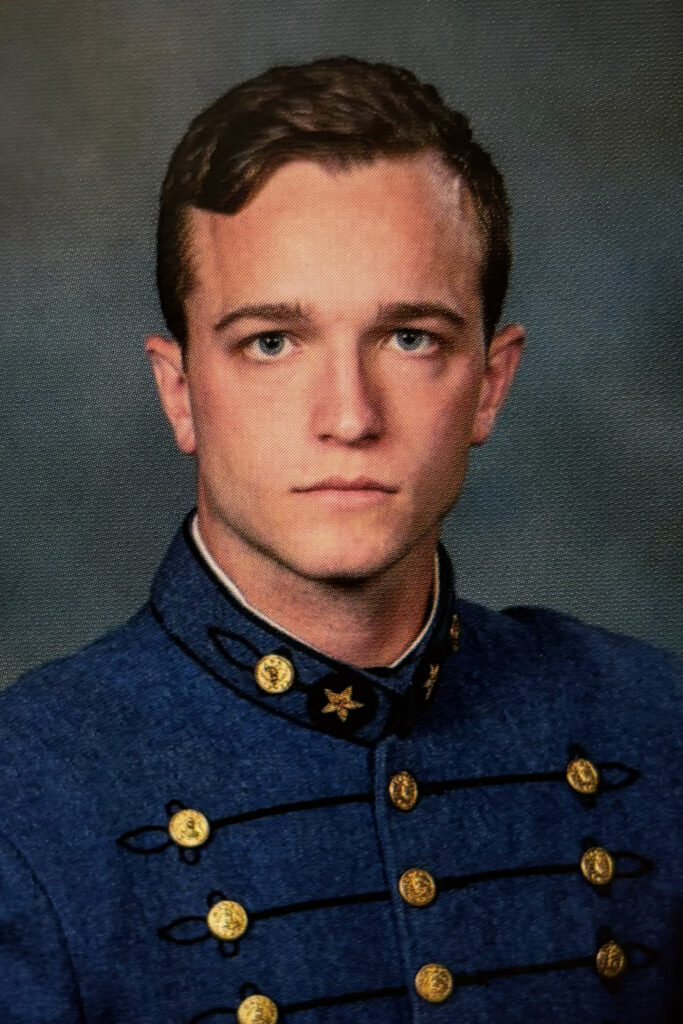
Ben Bowen ’26, an English major at Virginia Military Institute, introduced his honors presentation by disclosing that it is not intended to prove an esthetic point or make a literary argument. Rather “Writing Happy Endings: Practice and Theory” is a work of literature. “I’m simply trying to write a story and tell you why I wrote it,” he stated.
Bowen confessed that because he has a deep love for reading, he did not think creative writing would be hard for him. “And then I started writing, and I found it to be extremely difficult and painful. I didn’t want to turn in any assignments. I wanted to keep revising.” To help overcome his struggles, he sought to discover why people read books, and the elements of a good story. He examined the underlying driving principles of two of his favorite authors: Edgar Allen Poe, who evoked emotion — especially melancholy — to grip the reader; and John Gardner, who believed good literature should have a moral aim and should have staying power and keep the reader engaged.
To illustrate the two writers differing points of view, Bowen used examples in his own creative writing. In both his short story, “Starbs Run,” and his novella, “Wild Turkey,” Bowen applies Poe’s principle of using strong emotional language, which he confessed was a great effort to write. He explained the purpose in writing the difficult scenes was to make the story real and not overly sentimental. “Nobody wants to read about a protagonist who is perfect. They want to read about a real person,” he explained. Bowen also wanted to genuinely represent trauma in his work, and make the reader question what they would do if placed in the character’s position.
Additionally, Bowen applies Gardner’s principle of using staying power. “No one is going to read a story for pleasure that doesn’t entertain them or isn’t interesting. So, I had to constantly think about using devices to keep the reader interested. I was constantly trying to use stories or little side tangents of action or of comedy to keep the reader entertained.”
Bowen concluded his presentation by sharing with the audience that his novella is not yet complete, and in keeping with the title of his honors presentation, he anticipates a happy ending. “There are a lot of good things coming, like hope and romance.”
Bowen’s advisor, Col. Polly Atwell, professor in the Department of English, Rhetoric, and Humanistic Studies, shared that what has impressed her most about Bowen is his enthusiasm and curiosity. “He’s one of the only students I’ve ever had who actually seeks out the work of his professors, not to get points, but just because he’s genuinely interested in what interests them. When I first read Ben’s fiction, I found he was a very talented and dedicated writer, and advising him on his novella has been incredibly fun and rewarding for me. His work ethic, his genuine desire to learn, his humor, and the connection he’s found between his writing and his personal ethics have all made him a true pleasure to work with.”
Bowen’s concentrations under his English major are writing and rhetoric, philosophy, and literary studies. He is the son of Floyd and Lisa Bowen of Forty Fort, Pennsylvania, and attended Wyoming Valley West High School. Following graduation, he will commission into the Marine Corps.
What truly defines Virginia Military Institute are the people. Cadets, faculty, and staff, both past and present, are what make it “No Ordinary College.” I AM VMI will showcase the outstanding individuals who have accepted the challenges and embraced the spirit of VMI. Their perspectives provide authentic insights into life at the Institute and the value of this unique military college.
Other Clubs/Societies/Activities: VMI Class President of 2026, Emergency Medical Technician, Former Cadre Instructor
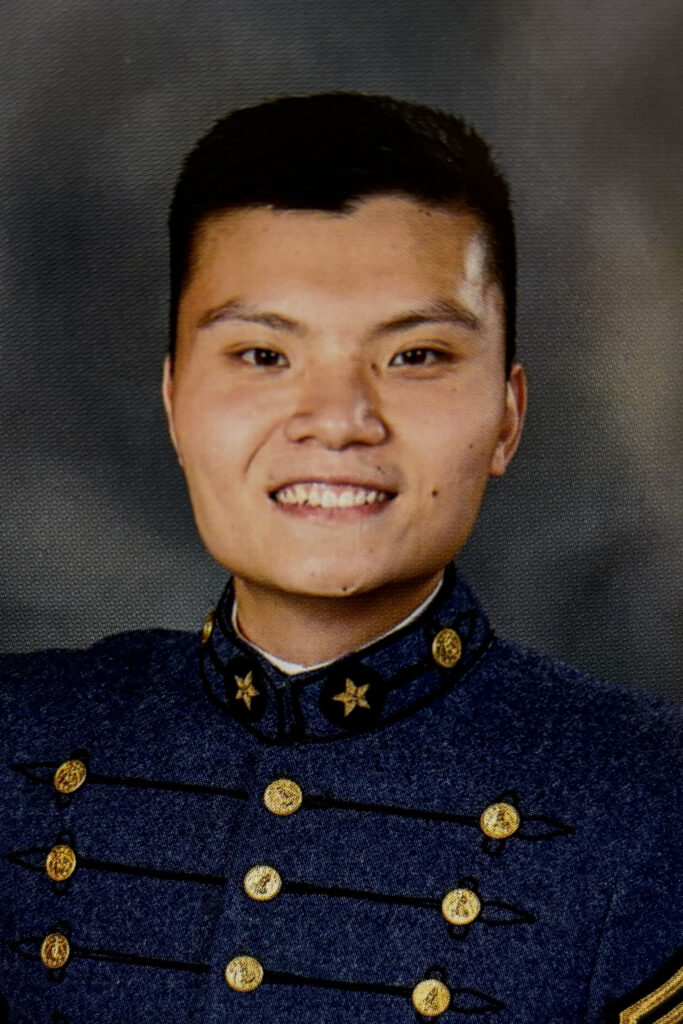
The choice of attending Virginia Military Institute was a chance for Maximus Ankrah ’26 to obtain a clean slate.
“Every accomplishment and accolade I could achieve was earned, not given; I really wanted to deserve what was given to me,” he explained.
The biology major also serves as the president of the VMI Class of 2026, an emergency medical technician (EMT), and a former cadre instructor. Ankrah chose biology because he wants to be a medical doctor in the U.S. Air Force, which he is commissioning into.
Every accomplishment and accolade I could achieve was earned, not given.
“The biology department has been excellent, and I’ve enjoyed the extensive curriculum,” he said. “I want to go through the medical route. Hopefully go across the world, do humanitarian work, and help out those in need. My family is from Ghana, so I want to go to a developing country like Ghana and be able to help other kids, help other parents, help other people.”
It comes down to the people, Ankrah said. There are struggles that come with attending VMI, but he says the people he’s encountered and formed bonds with have made it worth it.
“I’ve met some of the most admirable and motivating people at VMI, and it’s my friends here, my brother rats, that keep me going every day,” he said. “What I enjoy most about VMI is it’s not the place necessarily, but the people. There are some amazing people who I would never have come across if I didn’t choose to come to VMI. Lots of hardworking people, lots of compassionate people in whatever field it is that they decide to do. It definitely pushes me to be better. I’m always constantly looking for the next best thing; what I can do to improve from yesterday. “
Ankrah’s experience at VMI can be compared to work in a laboratory, he said.
“It’s the challenges you face at VMI that help you build resilience, grit, and integrity.”
“The mistakes, the successes, the wins, and losses; VMI is a place where you learn so much about yourself and other people that it forces you to mature as a person,” he commented. “It reveals your potential, and it’s up to you to make the most of it.”
He said it’s helped him grow in the realization that he’s bound to fail — except he’s failing forward.
“It’s the challenges you face at VMI that help you build resilience, grit, and integrity.”
His time at VMI will translate into his future seamlessly.
“Academically, it will translate into giving my absolute best and knowing that I did everything honorably and to the best of my knowledge,” he said. “Leadership-wise, influencing people is achieved through trust and reputation; your example is your most effective tool. Lastly, knowing I attended the hardest school in the nation gives me pride and confidence that I can overcome anything life throws at me.”
He’s done some difficult things and overcome challenges that others may not see, but that shared suffering and battling adversity make Ankrah proud to be a VMI cadet.
“This place is difficult, but if you justify the space you occupy, prove why you belong here, and buy into the system, you’ll get so much more out of VMI than you expect,” he stated.
Virginia Military Institute welcomes Michael Neiberg, Ph.D., professor of history at the U.S. Army War College and award-winning author, for a talk entitled, “Whole, Free, and at Peace? Why History Won’t Let Europe Go,” Thursday, April 16 at 8 p.m. in the Hall of Valor in Marshall Hall. The event is free and open to the public.
Neiberg is a renowned historian who specializes in 20th century military history. He has written multiple books including “Making Citizen-Soldiers: ROTC and the Ideology of American Military Service;” “Fighting the Great War: A Global History;” “The Second Battle of the Marne;” “The Blood of Free Men: The Liberation of Paris, 1944,” winner of the Madigan Award; and “Dance of the Furies: Europe and the Outbreak of World War I,” which was named one of the five best books on WWI by the Wall Street Journal.
The event is sponsored by the John A. Adams ’71 Center for Military History and Strategic Analysis and the John Biggs ’30 Cincinnati Endowment in Military History.
Jack Rogers ’26, a psychology major at Virginia Military Institute, will be taking his interests developed through his major with him as he heads to Mercer University School of Law after graduation. There are a number of elements related to mind and behavior that can come into play in the legal realm, including the practice and effects of solitary confinement, leading to Rogers’ senior thesis, “Is Solitary Confinement Cruel and Unusual Punishment?” which he presented April 3 as part of VMI Honors Week.
He worked closely with his advisor, Col. Glenn Sullivan, professor in the Department of Psychology, on his research. Analyzing articles and legal cases, he learned a lot about what solitary confinement looks like and how it can greatly impact one’s well-being, especially those already facing serious mental illness.
In defining solitary confinement, he reminded his audience not only of the small space, often the size of a parking space with no social interaction, but also of the unnatural light that could remain on for up to 24 hours a day, which can greatly impact sleep and sanity. Originally designed in the late 18th century to be humane and provoke reflection and repentance, Rogers’ research shows the practice of solitary confinement today often lacks oversight and pushes the legal boundaries of medical neglect. One key detail Rogers noted was that prisoners are not normally told the length of time they’d be placed in solitary confinement, basically another “version of torture,” he explained.
Many countries and groups have focused on solitary confinement reform, aiming to lessen the cruelty inflicted on inmates. While countries like Norway, Germany, and Turkey have taken strides in this, the United States is behind. Countless bills have been proposed, but rarely move forward. One such bill stated that the prison system has lost its vision to reform an individual. While Rogers acknowledges that some in decision-making positions identify solitary confinement as something that needs to be reviewed, he believes many of those decision makers only focus on issues that impact them.
While Rogers determines he’s not against solitary confinement as a practice, he does conclude in this thesis that prolonged solitary confinement of those with serious mental illness is cruel and unusual punishment.
“Jack Rogers’ thesis sits right at the fault line between psychology and the Constitution. He shows that what prisons call ‘management’ often exacerbates the symptoms of serious mental illness,” shared Sullivan. “What’s especially impressive is that he doesn’t just summarize the law—he anticipates it. His analysis of past Supreme Court cases suggests that the Court is slowly moving toward recognizing prolonged and indefinite solitary confinement of the seriously mentally ill as incompatible with the Eighth Amendment. He makes a compelling case that solitary confinement has become a kind of shadow on the mental health system—one that isolates rather than treats—and that the legal framework is struggling to catch up with what psychologists have known for decades.”
Rogers, an NCAA lacrosse player, came to VMI from Suwanee, Georgia, after graduating from North Gwinnett High School. His parents, John and Rebecca, attended his presentation and note that he has thrived in the VMI environment. Once Rogers completes law school, he hopes to go into the U.S. Army JAG Corps.
Two Virginia Military Institute alumni, Allen Xu ’21 and Thaddeus Wegrzyn ’22, returned to the Institute in late March for two weeks as part of their medical education with a family medicine rotation at the VMI Infirmary.
Xu and Wegrzyn, who are fourth-year medical students at the Edward Via College of Osteopathic Medicine (VCOM) in Blacksburg, chose to serve one of their medical rotations alongside Institute physician, Dr. Melissa S. Krawiec ’01 and family nurse practitioner, Jenny Crance, DNP, FNP-C.
Medical rotations, also known as clinicals, are required hands-on patient care experiences for medical students, and consist of two years of back-to-back four-week durations of training under the supervision of a medical professional in various specialties at many medical facilities. Xu and Wegrzyn have completed about 20 clinicals, with VMI being the last for Xu. Wegrzyn has an additional obligation of two weeks of physical medicine and rehabilitation to complete for Carilion Clinic in Radford.
According to Krawiec, this is the first time alumni have returned to VMI for their clinicals.
“We were delighted to have Allen and Thad with us for two weeks. They were able to closely relate to the cadets and understand the pressures they are under, because they have been cadets themselves. They have come full circle. I trust it was a rewarding experience for them, and I hope they learned some valuable clinical ‘pearls’ in our unique environment. We saw some interesting cases over their time with us,” she said.
Though they arrived to VMI with no set of expectations on what medical conditions they would see during their visit, Xu and Wegrzyn treated a variety of family practice conditions for the cadets including colds, allergies, rashes, burns, dental pain, soft tissue wounds, and orthopedic injuries. They assessed patients and discussed treatment plans with Krawiec and Crance. They also met with cadets who are considering going to medical school. Wegrzyn stated that cadet outreach is important to them. “There is no formal pre-med program at VMI, but there are many cadets who are interested in going into health care. We had many conversations with them and advised them on their options of making that dream a reality.”Xu, a biology major from Ringoes, New Jersey, began his love for healing as a high school student when he became an emergency medical technician (EMT), a skill he continued at VMI. As EMT chief, he would often deliver cadet patients to the infirmary, but was never able to observe their treatment there.
“It’s gratifying to see what happens on this side of the infirmary door,” he observed.
Xu’s chosen medical field of study is psychiatry. Initially entering medical school, he wanted to go into emergency medicine, but changed his mind after witnessing family members facing emotional trials. He noted that returning to VMI at this stage of his training has given him a different perspective on the environment that helped shape him.
“VMI and the military are built on a culture that values discipline, resilience, and composure under pressure. Those are qualities I continue to respect and carry with me. At the same time, my training has reinforced that the reality of life and leadership includes navigating stress, loss, and uncertainty. What I have come to appreciate is that supporting behavioral health does not take away from those core values. If anything, it strengthens them. The ability to reflect, seek support when needed, and maintain personal well-being allows individuals to sustain performance and lead more effectively over time.
Returning in this role has been especially meaningful, and I hope conversations like these continue to evolve in a way that supports both excellence and well-being.” He eventually wants to work with veterans with post-traumatic stress disorder and trauma.
Wegrzyn, a biology major with an exercise science minor from Lincoln, Nebraska, served as a cadre member as a cadet. He originally wanted to go into combat in the military. He changed his mind though when he started to enjoy his academic studies at VMI.
“It all started to click with me. My advisor was great, and my interest in going into medicine bloomed. I chose primary care medicine as a specialty, so I’d be in a position to teach patients a better understanding of taking care of their bodies. I feel a strong obligation to educate and mentor patients, so they take control of their health and prevent illnesses and accidents.”
The two originally met in a public speaking class when Wegrzyn was a rat. Since both were biology majors, they shared several more classes, and served on the Honor Court together.
Xu confessed VMI prepared them well for medical school.
“The resiliency we learned at VMI has paid dividends. Cadets are taught how to find out what needs done and to create a plan. They learn good time management skills. And believe it or not, we get more sleep at VCOM than we ever got at VMI,” he laughed.
Wegrzyn agreed and shared that VMI graduates are highly thought of at VCOM.
“VCOM’s mission is to prepare globally-minded, community-focused physicians, which is similar to that of VMI’s mission of producing citizen-soldiers with a high sense of public service. In fact, there are currently five VMI alumni who are in their first year at VCOM. There is a strong pipeline from VMI to VCOM.”
He added there is a chapter of the Student Association of Military Osteopathic Physicians & Surgeons at VCOM in which he served as president and Xu served as vice president last year. This year, the reins of the two leadership positions are held by two other VMI graduates.
Following graduation from medical school in May, Xu and Wegrzyn will begin their residencies. Xu will serve his for four years in psychiatry at Camp Lejuene, North Carolina, and Wegrzyn, who has commissioned into the Army, will serve his for three years in family medicine at Fort Bragg, North Carolina.
Jai Vijayan ’26, an economics and business major at Virginia Military Institute, researched military logistics during World War II for his honors project, “Move and Maintain: American Last-Mile Logistics in the Solomon Islands Campaign, 1942-1944.”
Vijayan, who will commission into the U.S. Army as a logistics officer after he graduates in May, explained the definition of military logistics as the practice of moving armies, including transporting military forces, keeping them supplied, planning and road building, and the administrative work carrying out those activities. The focus of his thesis was the final, crucial step of the supply chain; moving supplies from friendly, established bases to contested front lines, known as “the last mile,” specifically, to the Solomon Islands following the Japanese attacks on Pearl Harbor, Southeast Asia, and the South Pacific in 1941.
The Solomon Islands are a chain of islands in the South Pacific, northeast of Australia, and include Guadalcanal, New Georgia, and Bougainville, all locations of significant WWII battles. The Japanese attacks threatened the American supply lines to Australia and New Zealand. For that reason, the Solomons became decisive in ensuring those supply lines remained open and the Japanese advance was halted.
“Guadalcanal is widely regarded as an allied tactical victory, but a logistics disaster. Initially, isolated Marines were forced to subsist on two rations per day and captured Japanese rice. Aircraft sat idle because there was not enough fuel. Gradually, the allied forces were able to sustain their offenses in New Georgia and Bougainville, thanks to the idea of ‘island hopping,’ taking control of the islands one by one, and turning them into support bases,” explained Vijayan.
He went on to report that most historians agree that the U.S. logistics system was a big factor in winning the war for the allies, but they differ on what part of that logistics system was significant. To that end, Vijayan sought to answer the research question, “How and why did last-mile logistics improve past the crises at Guadalcanal?”
To answer his question, Vijayan examined the various logistics methods the military incorporated during the three operations to secure the islands. He discovered the successes, the failures, and how the methods progressively improved throughout the “island hopping.” The first, the Battle of Guadalcanal, codenamed Operation Watchtower, took place from August 1942 to February 1943; followed by the invasion of the New Georgia, codenamed Operation Toenails, from June to October 1943; then the Battle of Bougainville, codenamed Operation Dipper, from November 1943 to May 1944.
He concluded by confirming that circumstances improved with each new operation due to improved access to military facilities, shortened supply lines, absence of time pressure, and diminished enemy capabilities. “It’s easy to understand why the last model was much more effective. Improvements helped the allied forces avoid the crises that took place on Guadalcanal. There was better unloading coordination, supply lines were deliberately planned and proactively built inland, and supply dumps were deliberately placed for a more effective system. All these decisions improved last-mile logistics. There was definitely a learning curve that moved past the mistakes at Guadalcanal,” closed Vijayan.
Vijayan’s advisor, Lt. Col. Joel Christenson ’99, associate professor in the Department of History and director of the John A. Adams ’71 Center for Military History & Strategic Analysis, said it was a pleasure working with Vijayan. “Jai’s project is thoughtful, innovative, timely, and applicable, and I think his investigation into logistics and the Solomon Islands campaign in the Second World War proves that there is new information even in the most studied of conflicts.”
Vijayan is minoring in military history and Chinese. He is an alumnus of the Canadian International School in Singapore and the son of Bharat Vijayan and Archana Velukutty of Tully, New York.
The Jackson House Museum will host a hands-on kitchen garden workshop Sunday, April 19 at 2 p.m. led by Rockbridge Area Master Gardeners Association (RAMGA).
This interactive session is for both beginners and advanced gardeners. RAMGA will provide participants with planting tips, seed saving ideas, and instruction on growing seasons. Guests will leave with the knowledge as well as a few items to start their own kitchen garden.
Thanks to RAMGA, there is no charge, but space is limited. Early registration is encouraged by calling 540-464-7704. Participants will also enjoy a 15% discount on all purchases in the museum store on the day of the workshop. The Jackson House Museum is located at 8 E. Washington St. in Lexington.
For more information and to register online visit, www.vmi.edu/jhm.
The VMI Community Theatre presents the Tony Award-winning musical, “1776,” Friday, April 17 and Saturday, April 18 at 7:30 p.m., and Sunday, April 19 at 2:00 p.m. in Gillis Theater.
“1776” follows John Adams of Massachusetts, Benjamin Franklin of Pennsylvania, and Thomas Jefferson of Virginia, as they attempt to convince the members of the Second Continental Congress to vote for independence from the shackles of the British monarchy by signing the Declaration of Independence. It features music and lyrics by Sherman Edwards, including the iconic songs, “For God’s Sake, John, Sit Down,” “But, Mr. Adams,” and “The Egg.” The script was written by Peter Stone.
Included in the cast are VMI cadets Ethan Aldridge ’26 as Thomas Jefferson, John Gorman ’26 as Charles Thomson, Nicole Samella ’26 as a painter, Michael Colin ’27 as Roger Sherman, Carla Feaster ’27 as John Hancock, Thomas Sasso ’27 as John Dickinson, George Sullivan ’27 as John Adams, Hayden Talbott ’27 as Martha Jefferson, Sophia Heinlein ’28 as Abigail Adams, Aadil Pattada ’28 as George Read, Keye Warren ’28 as James Wilson, Nicolas Colletti ’29 as Josiah Bartlett, Iagan Andrew Kiddie ’29 as Col. Thomas McKean, Jamie Pacheco ’29 as Jonathan Witherspoon, and William Shable ’29 as Lyman Hall. Community cast members include Mark Anderson as Robert Livingston and Joseph Hewes, Emilie Davis as Lewis Morris, Micah Fishbein as Caesar Rodney and a leather apron, James Heilpern as Richard Henry Lee, Jaxon Johnson as a courier, Woody Johnson as Samuel Chase, Dallin Lewis as Andrew McNair, Peter Lipsett as Edward Rutledge, Rob Mish as Benjamin Franklin, and Tom Oxendine as Stephen Hopkins.
The play is directed by Tim Price, assisted by Andrew Hartless. Stage crew includes Fabiana Sofia Pajaro ’26, Laura Canaday ’27, Dusand Barrow ’28, Tamara Jimenez ’29, An Nguyen ’29, and William Shable ’29. The light and sound booth is run by Timothy Persons ’27. Rechnna Sok ’26 serves as tech director.
Admission is $10 for adults and $5 for students and senior citizens ages 65 and over, payable by cash or check at the door. Cadets and children ages six and under are free. Reservations are not required. Gillis Theater is located in Marshall Hall on VMI post. For additional information, email Tim Price at pricetr@vmi.edu.
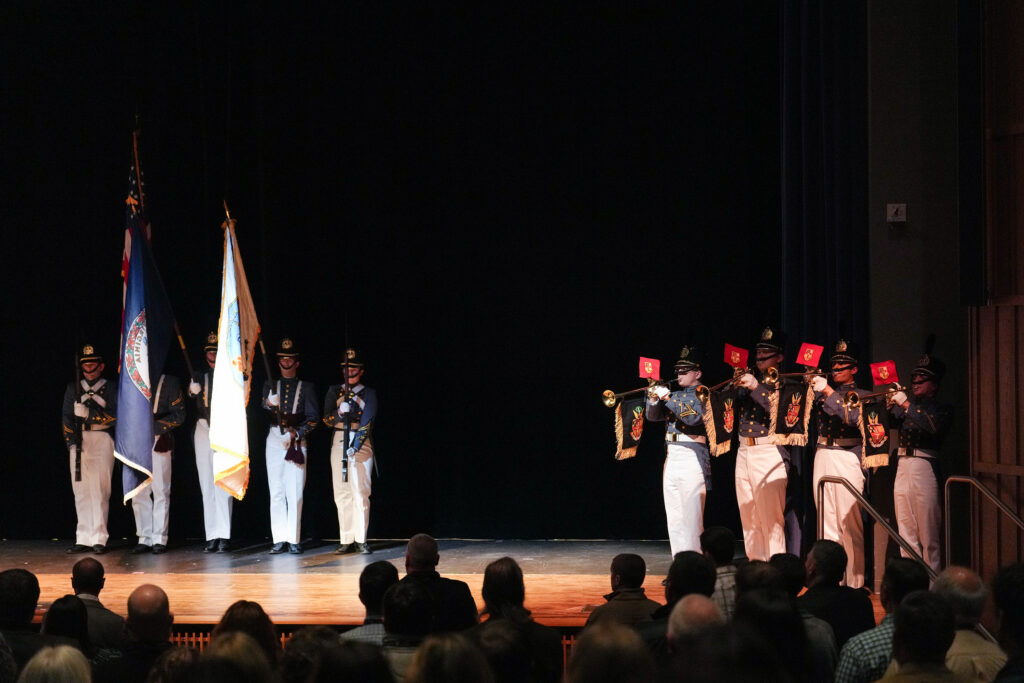
Over 570 representatives from state and local governments, nonprofit organizations, higher education, and the private sector converged at Virginia Military Institute for the 36th annual Environment Virginia Symposium March 24-26. The conference was organized and co-hosted by VMI’s Center for Leadership & Ethics (CLE). Col. Dave Gray, executive director of the CLE, served as master of ceremonies. The event opened in Marshall Hall with the Corps of Cadets color guard posting the colors as the herald trumpets played “The Star Spangled Banner” in four-part harmony.
Superintendent Lt. Gen. David Furness ’87 formally welcomed the participants.
“This conference is organized to allow leaders to exchange ideas, regulators to converse with those they regulate, and nonprofits to collaborate with businesses and governmental agencies. No person or group has all the right answers or can solve every issue that we are presented with today. Everyone has a vested interest, however, in a great and thriving environment where it affects every citizen of the commonwealth. This conference is for every one of you, the environmental professionals who work to protect and preserve Virginia’s environment. The wealth of knowledge and experience for many attendees makes this a wonderful training ground for those who are new to this profession. This serves as a great opportunity to hear about the goals and challenges of our commonwealth’s environmental sector. VMI is proud of our engineering and science programs. We encourage you to learn more about our highly ranked and accredited STEM programs, visit our departments and hire our cadets to serve in your organizations. I’m confident VMI graduates will continue to be leaders and problem solvers ready to join your ranks and become productive contributors to the environment of the commonwealth,” he said.
Opening remarks were offered by David Bulova, secretary of Natural and Historic Resources, who brought greetings from Gov. Abigail Spanberger, who was unable to attend.
He stated, “We as Virginians are truly blessed. From the Chesapeake Bay to the Piedmont to the Shenandoah, and the great Southwest, the natural beauty that is the commonwealth is truly unsurpassed. These natural resources sustain us. They support millions of jobs, and they give us a special sense of place that is Virginia. It’s a privilege to serve as the secretary of Natural and Historic Resources, as together we protect, conserve and restore these resources for future generations. Protecting our environment depends on fostering a new generation of leaders who will take up that charge. For all of the young professionals and students who are here with us today, thank you, and for those who have been around here for a while, please take up the time to lift up the next generation of leaders. Our planet is depending on it.”
A panel discussion featuring the directors of the conference’s five state government co-host agencies was moderated by Tanya Denckla Cobb, director of the University of Virginia’s Institute for Engagement & Negotiation. Held in Gillis Theater, the panel included Ryan Brown, executive director of the Department of Wildlife Resources (DWR); Terry Lasher, state forester and director of the Department of Forestry; Joe Grist, acting commissioner of the Virginia Marine Resources Commission; Mike Rolband, director of the Department of Environmental Quality; and Nikki Rovner, director of the Department of Conservation and Recreation. They talked of budget cuts, grants, and values that guide them including transparency, collaboration, common sense, the Golden Rule, making good decisions, strong leadership traits, being transformative, and innovation. They also conversed on the use of artificial intelligence (AI), supporting and sustaining the forestry industry, mediating conflicts, and managing public lands and parks.
The Corps of Cadets color guard posts the colors as the herald trumpets play “The Star Spangled Banner” in Gillis Theater.
Breakout educational sessions were offered by experts from all over the commonwealth including Maj. Peter Neofotis, lecturer in VMI’s biology department. Topics of the sessions included achieving the Chesapeake Bay Agreement commitments, water quality, flood resilience, food waste, invasive plants and landscape restoration, freshwater conservation, silt, algae and ecosystems, soil health, the wetlands, solar energy, pollutants, wildlife corridors, urban agriculture, challenges for data centers, a guided flora walk, and more.
The plenary speaker was Alejandra Parra-Orlandoni, chief operations officer of Pasteur Labs. Her talk titled, “Neither Savior nor Villain: A Practitioner’s Guide to AI and the Environment,” examined getting better use from AI as a tool. “When you ask an AI system a question, you often get back a really confident, agreeable answer. This is called sycophantic AI, and it validates your perspective. The way you frame the question steers the answer toward agreement,” which she conceded in not always a good thing. She encouraged her audience to be more specific in the questions they put to AI, and to understand the actual problem before they seek a solution. “Three questions you must ask and answer before even thinking about using AI: What specific decision are you trying to make better, easier, faster? What data do you actually have, and is it clean, consistent, accessible, reliable? What does failure look like, and who’s accountable for it? Answering these three questions with integrity takes work, and many AI projects that fail do so because these questions weren’t asked and answered upfront.” She gave an example of a question that didn’t work for her colleague in water management. “The question posed was, ‘How can AI improve water management?’ That led to a lot of wasted money and time. My colleague shifted the framing of the question to one that did help, ‘We know water is being lost, but customers can’t pinpoint where, and physical investigations are expensive and disruptive. Can we find a better way to identify where losses are actually occurring?’ The specific question forced that company to look at what data they already had, and it made clear patterns existing in their data. AI technology could finally identify not just that the water was being lost, but where, in what quantities and exactly from which buildings, without any excavation, or guesswork.”
She concluded by telling her audience, “AI is not an oracle. Used without discipline, it’s really a very convincing mirror for your own assumptions, and that’s a very risky prospect. But when used well, AI doesn’t replace your judgment, it amplifies the reach at a scale that’s finally going to match the complexity of the problems that this field is up against.”
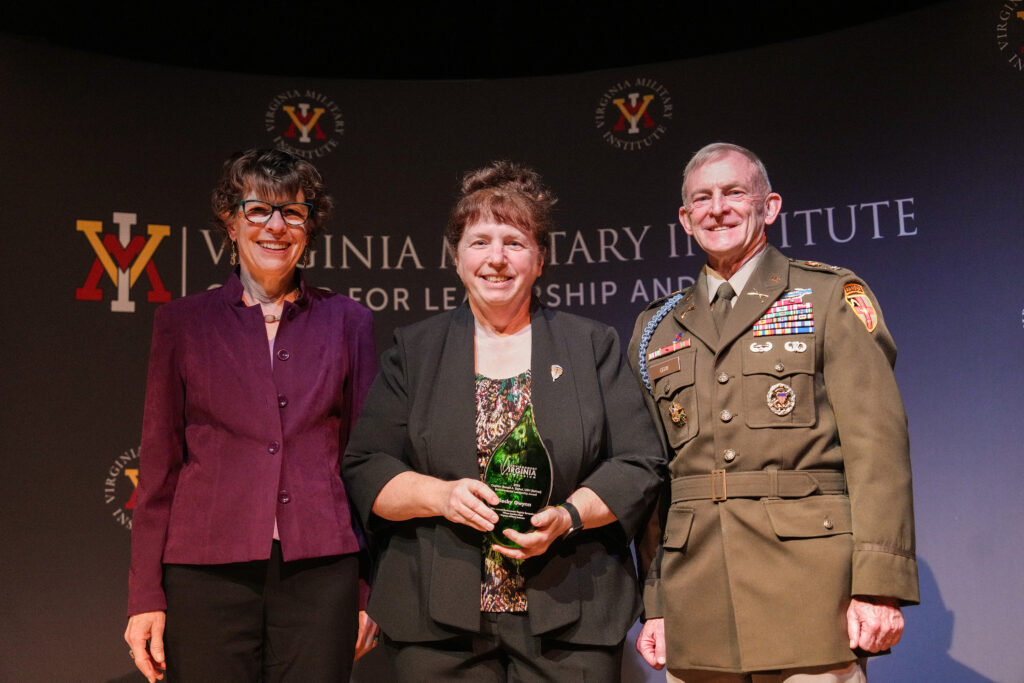
A momentous part of the symposium is the presentation of the Erchul Environmental Leadership Award, named for the late VMI professor Capt. Ronald A. Erchul, Ph.D., founder of the Environment Virginia Symposium. The award recognizes a Virginian who has made significant individual efforts to improve the environment. Members of Virginia’s environmental community nominate candidates who are judged based on their vision, expertise, commitment, integrity, communication skills, accomplishments, and diplomacy. This year’s winner was Becky Gwynn, executive deputy director of DWR.
Denckla Cobb, who received the award last year, introduced Gwynn. “For nearly 40 years with DWR, Becky has established a reputation for conservation leadership, professional diligence and innovation, and personal integrity. Her leadership has helped shape the department’s vision and mission. Her career highlights include development of Virginia’s first wildlife action plan, initiating the commonwealth’s first wildlife viewing plan, creation of the Virginia birding and wildlife trail, coordinating land acquisition efforts that have safeguarded and restored habitat for threatened species, as well as providing public access to recreational opportunities for all Virginians. Her leadership enabled Virginia’s largest conservation easement in the coalfields, securing 65,000 acres of recreational access and habitat for Virginia’s only elk herd. Becky was also responsible for a $44.5 million EPA grant, the largest in the agency’s history to protect and restore coastal wetlands and forests for carbon capture and storage,” said Denckla Cobb.
After accepting the award with gratitude, Gwynn shared that she loves her job and the agency for which she works. “Across the country, state fish and wildlife agencies serve as trustees for the fish and wildlife populations as a public trust resource. I take that responsibility really seriously. It motivates me to get up and go to work every day. When I have opportunities like holding the first nestlings of red cockaded woodpeckers that were born on the Big Woods Wildlife Management Area, that’s a lifetime experience I will never have again. The work done by state fish and wildlife agencies is something that we do because we’re passionate about the work. Many in my profession enjoy in their off time, the same things they do during their day job, so we have become a large family. We spend our time together, and the birds don’t wait until the sun comes up, so we have to be out before they are. The wildlife that’s out at night doesn’t really care that it’s after dark and we might have to be out late. So, we spend a lot of time together. It’s an enriching experience. I’m privileged to work with so many dedicated, committed professionals.”
Becky Gwynn accepts the Erchul Environmental Leadership Award from Tanya Denckla Cobb and Col. Dave Gray in Gillis Theater.
Each year, VMI donates $1,500 to a nonprofit environmental organization of the recipient’s choice in their honor. Gwynn requested the donation go to the Virginia Herpetological Society.
Other awards presented at the symposium are the Governor’s Environmental Excellence Awards, which recognize successful and innovative efforts that improve Virginia’s environment. This year’s gold medal winners were: The Conservation Fund for their work preserving James Monroe’s Oak Hill Farm in Loudoun County; Four Mile Run Conservancy for Water Access for All at Four Mile Run, the region’s first ADA-compliant kayak and canoe launch; Lancaster County for Windmill Point County Maritime Recreational Campus, a project that transformed a severely eroded shoreline into a premier public recreational campus; Piedmont Housing Alliance for Kindlewood Community Redevelopment, a transformative resident-led project converting a 12-acre Section 8 community into a climate-resilient, net-zero-ready affordable housing development; Prince William County Public Schools for their Energy, Sustainability, and Environmental Program, contributing to healthier learning environments and long-term cost savings; Rappahannock Tribe Inv. for Rappahannock Tribe Return to the River Restoration Initiative, which successfully reclaimed 964 acres of ancestral homelands along the Rappahannock River at Fones Cliffs; and Rockfish Valley Foundation for ENLIT (Environmental Literacy), an innovative, interactive, and accessible outdoor learning system that connects visitors to the regions natural and cultural resources.
Silver medal winners were: Fairfax County Park Authority for Spring Hill Rec Center energy upgrades; InBio for Environmental Sustainability Program; and Prince William Soil and Water Conservation District for Water Quality Program.
Bronze medal awards were: Sewing Lab LLC for Circular Fashion Education & Textile Waste Reduction Program.
Receiving honorable mention were: Fairfax County Public Library Department of Procurement and Material Management for Library Book Reuse & Recycling Project; and Tree Fredericksburg for canopy restoration in the City of Fredericksburg.
Next year’s Environment Virginia Symposium is scheduled for March 23-25 at VMI.
Two years after he set multiple powerlifting records, Col. Dan Barr ’74, professor emeritus of electrical and computer engineering at Virginia Military Institute, has once again achieved new heights.
Since 2023, Barr has received training and competition advice from Rebecca Owen, assistant coach with VMI’s powerlifting club. In February 2024, he competed in his age bracket at the United States Powerlifting Coalition (USPC) meet held in Cocke Hall. It was there that he set both state and national records in squat with 249.1 pounds, bench press with 238 pounds, and deadlift with 319.6 pounds, for a total of 806.7 pounds.
During the recent 2026 USPC meet Barr, who is now 73 years old, broke his own record in squat with 275.5 pounds, bench press with 253.5 pounds, and deadlift with 365.9 pounds, for a total of 894.9 pounds, improving his overall total by 88 pounds.
According to Barr, the USPC does not normally issue a certificate for each attempt that breaks a record. “So, I set three records in 2024, then this year on my first attempts, set three more, and on second attempts, broke those, and received the four national records certificate,” he shared proudly.
Additionally, last summer Barr was inducted into the hall of fame at his alma mater, Cabrillo High School in Lompoc, California, for being an athlete, warrior, patriot, educator, and inspirational leader. Barr joins his sister, Sharon Spalding, an athlete in her own right and already in the school’s hall of fame, making them the sole brother-sister pair holding the honor.