Post View Unavailable »
New Website Launched »

Stealing a Moe-ment With VMI’s Mascot

Atop the kangaroo head, there’s a small vent and a fan. Bowlman “Tee” Bowles IV ’26 says it gets hot under there. The fan helps, but it’s often sweltering inside the faux kangaroo costume.  

He also needs a handler walking him around — he can barely see.  

Bowles is one of two cadets who serve as the mascot, Moe, during functions at Virginia Military Institute. The history major, who will be commissioning into the U.S. Army following his time at VMI, joined the Corps of Cadets S9 regimental staff his 3rd Class year. S9 staff are responsible for all issues related to NCAA athletics and club sport events. 

He chose S9 because he had similar duties in high school — working with the sports team, commentating on games, doing social media, and so on. A big draw was the opportunity to become Moe.  

“Every time I watched basketball games, I saw mascots doing stupid things and fooling around with other teams and stuff. I got inspired by seeing those mascots on TV, which gave me interest to do the Moe costume,” he said.  

Moe is a staple around post. He’s present for home football games, pep rally, and other home sporting events. The mascot is around for pictures and overall, a boost in morale.  

“We’re there for the rats,” Bowles said.  

Moe is a key part of the Keydets, specifically with family, friends, alumni, and other guests in attendance at events, Bowles said. That means a lot of pictures being taken — aided specifically by Moe’s handler — and overall hyping of the crowd. This year features a new costume for the mascot. Bowles said the previous suit was falling apart and needed to be replaced. He came in this year and a new suit was there. 

“In the Moe costume, you have to look down when taking pictures. The eyes are looking up. Whenever I’m taking pictures, I’m literally looking at the ground,” explained Bowles, hence the need for the handler.  

Bowles says the handler will tap him on the shoulder when people ask for photos and help him maneuver around the crowd, especially at Foster Stadium.  

“The steps are really steep and hard to get up in those big feet,” he said. 
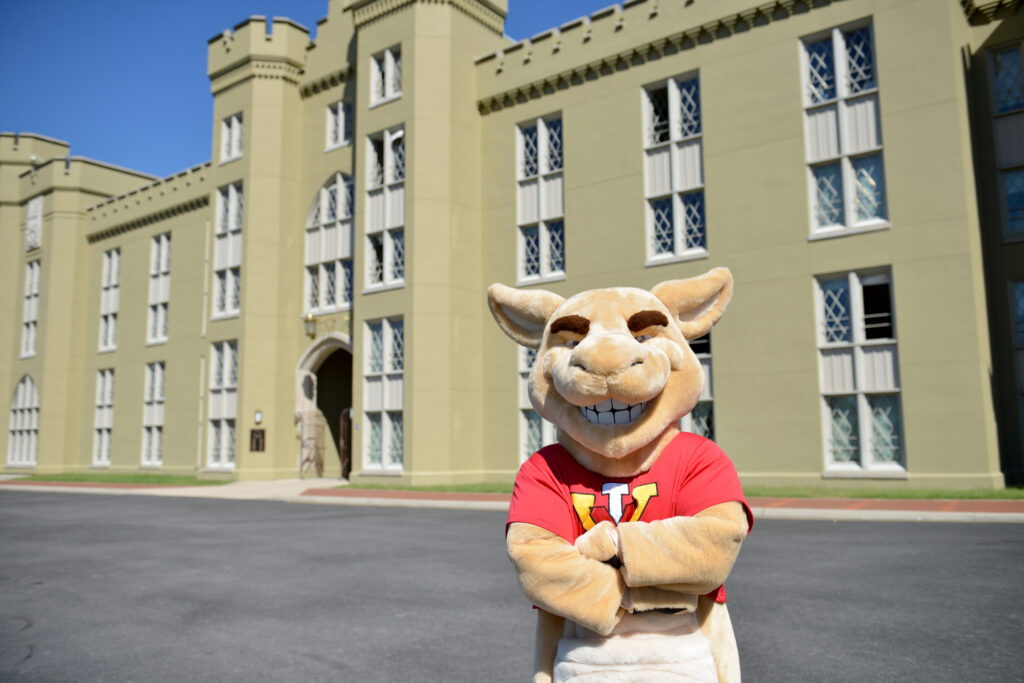
Moe, VMI's mascot, outside of barracks.

Bowles shares the responsibility with Carter Rees ’27. Rees just started as Moe at the start of the 2024-25 academic year.  

“I love feeling the energy of a crowd, so the opportunity to be at the center of creating that energy was an easy decision for me,” Rees said. “My favorite part of being Moe is making people happy. Whether that’s getting the Corps hyped up or taking pictures with people, I love seeing smiles on people’s faces.” 

Bowles said he tries to break some of the tension during the games, especially any stresses that the rats are facing.  

“It’s super easy to interact with the rats,” he said. “I love going up there and messing with them. Like I’d sit down next to rats and take their drinks and stuff, act like I’m drinking it.” 

He’s also trying to bridge the divide that can sometimes be seen between the Corps and athletics. 

“There’s this stigma that the Corps is detached from athletics, that athlete, non-athlete divide,” he said. “I think Moe can definitely help unlock that by interacting with them as rats, because I can help them unlock interest in athletics.” 

The history behind Moe 

The history behind Moe and the Keydets is a little complicated.  

Keydets have been the term to describe VMI’s athletic teams, although where it originated isn’t clear. While a Keydet is not a kangaroo, the animal was chosen as the mascot in 1947, when two VMI cheerleaders saw a picture of a kangaroo on the front of a magazine and realized how uncommon the animal was as a mascot. Originally named TD Bound, the mascot was renamed Moe later, to appeal to all VMI athletics, not just football. 

It’s said that the term Keydet could have come from the United States Military Academy’s term used to denote the gray of the standard uniform of a cadet. Another definition, one that hasn’t been factually substantiated, due to the Southern drawl of some members of the Corps, the pronunciation of cadet morphed into Keydet.  

VMI has been associated with several nicknames, one of the longest was the Flying Squadron, which referred to the football team. The Flying Squadron nickname started in 1917 at a football game between VMI and North Carolina and it stuck, becoming most popular during the 1920 season. It wasn’t until the 1930s that the term Keydet became associated with VMI athletic teams.  

Learn more here.
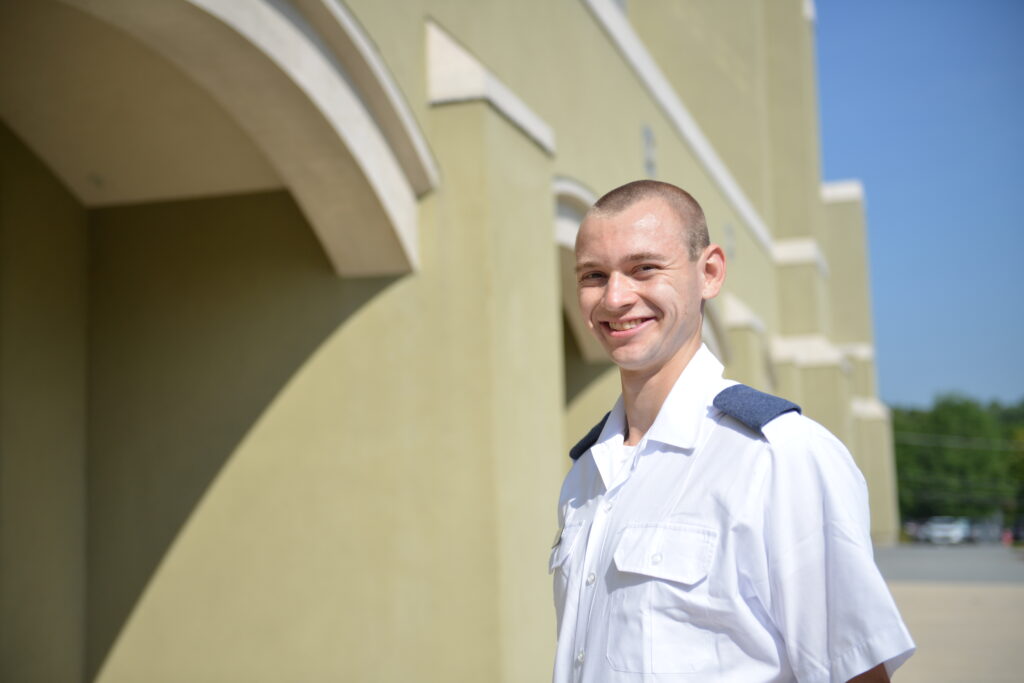
Summer Transition Program Helps Matriculants Ease In

They say nothing can prepare you for the Rat Line, but there are ways to ease into the rigors of Virginia Military Institute. One option is for incoming rats to participate in the Summer Transition Program (STP). You’re able to get a class under your belt while familiarizing yourself with post. 

Held the summer before rats matriculate, STP gives the opportunities to get a head start on academics and physical fitness. The four-week voluntary program allows participants to earn credits for one academic class and become familiar with VMI — living in barracks, physical training, eating in Crozet Hall, and taking classes.  

Zachary Richardson ’28 wanted to knock out a biology class. He was drawn to VMI for its Army ROTC program, plus the size of the school was a huge deciding factor for him. 

“I was blown away by everything offered here, the small class sizes, the integrity, and the Honor Code was really admiring,” the history major said. 

Once he was accepted, he figured STP would be a good first step.  

“Those four weeks were good for me mentally, adjusting and getting ready for what was coming in August,” he said. “Meeting a lot of my brother rats in the summer was really cool, because on Matriculation Day, I recognized so many people. It was a big advantage and a big motivator. Like, I can make it through this, I’ve got already friends here.”

Cadet Zachary Richardson, Class of 2028
Zachary Richardson ’28

He said getting a class out of the way over the summer will help with his academic load this semester. Also being on post for those weeks allowed him to gain some overall knowledge about the Institute and free access to places before facing more restrictions as a rat. He knows where his classes are, he’s familiar with faculty and staff on post, plus he even met some cadre. He was also able to meet with the regimental band commander and join band company.  

“I basically joined band company and knew what company was going to be in before Matriculation Day,” he said. “That was a cool thing to learn and figure out.”

The physical aspect of STP was unmatchable of what he endured during Matriculation Week. But, participating in STP and getting used to working out daily helped introduce him to that routine. The intensity was elevated once he joined the Rat Line. It was a bit of a shock to Richardson.  

“I was here in STP walking around like I owned the place, and now I’m the lowest form, not even in existence. I’m a rat, right?” he said. “I think I was motivated to come here. I had prepared, so physically I didn’t feel too challenged by Matriculation Week. It was more the lack of sleep and just the big shift in lifestyle. It was a big shock to be woken up by a big loudspeaker and your cadre coming in and banging on the door … the stress level was something I was not used to. I was kind of just like taking it one meal at a time.”

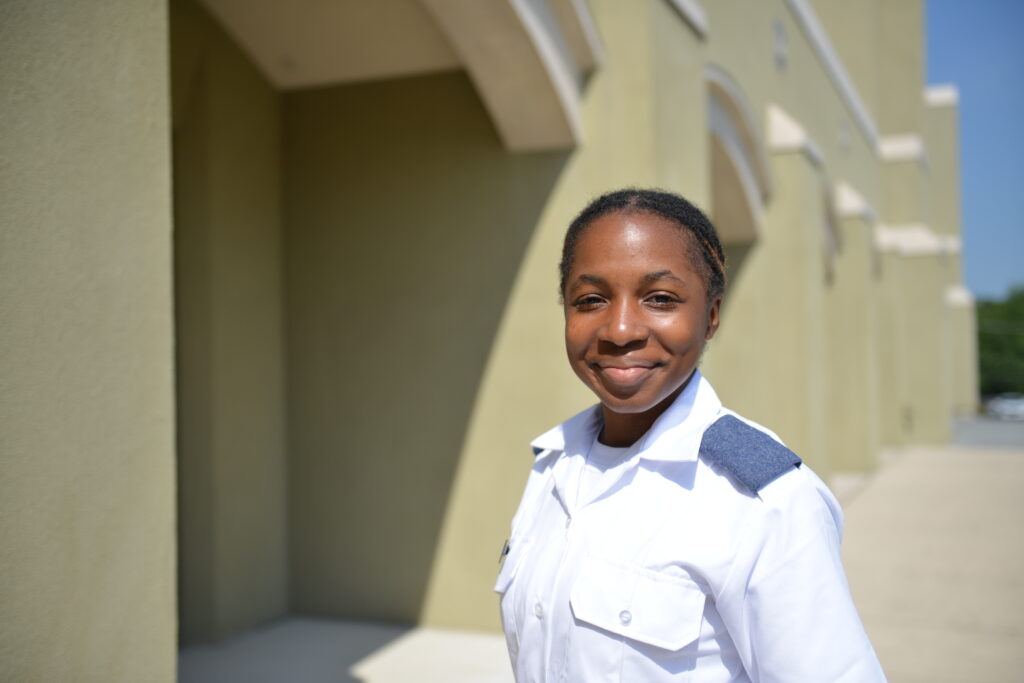
Cadet Denasia Owens, Class of 2028
Denasia Owens ’28

Denasia Owens ’28 took precalculus during STP. VMI appealed to her because it was a more structured learning environment that incorporated the military aspect. Owens, a mechanical engineering major, felt like STP helped with the physical aspect, especially walking around post up and down hills. But it didn’t prepare her mentally as much. STP was a little less formal, she said. 

“One part that is excluded is the yelling, having someone in your face,” she said.

Owens said that the staff from STP can now serve as a safe place for her since she’s familiar with them. 

“There are still some people that I can be like, ‘Hey, I know you,’ even though you’re an upperclassman, I can still come talk to you, because we already know each other outside of Matriculation Day,” she said. 

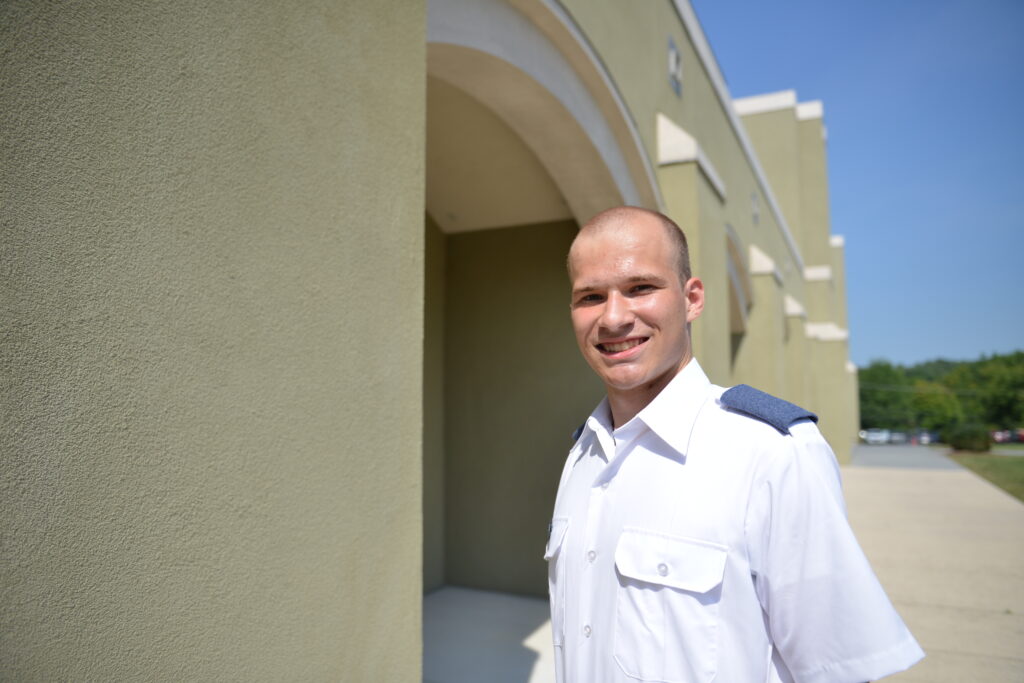
Cadet Owen Johns, Class of 2028
Owen Johns’ ’28

It was Owen Johns’ ’28 father’s idea to do STP. The international studies major said he wanted to get more conditioning over the summer and take a math class. 

“The course really helped, because it took one course off my schedule, so it gives me more time to focus on other classes that I have,” he said. “Along with that, the fitness, even though it was very relaxed, it still helped, like getting used to the VMI Fitness Test and all the other components that we have to do as rats.”

Modern languages major Bailey Pellegrini ’28 liked VMI’s commitment to having a focused program. She didn’t attend an open house prior to being accepted into the Institute, so she thought STP would be the proper way to get an introduction. She said it allowed her to get to know people coming in. Pellegrini did echo what other rats said in terms of the physical demands; STP doesn’t dive full force into the physicality of what Matriculation Week will be like. 

“I’m not an athlete, and I’m not here for the physical aspect of it. I know that I’m going to shine in my academics,” she said. “I feel like it was a lot more challenging because I’m not used to the repetitive things.”

Maj. Katie Baur, associate professor for the Department of Human Performance and Wellness, said the STP program is distinctly positive and focuses on personal growth. 

“While nothing can truly prepare incoming rats for the VMI experience, I do believe that our STP-ers come into matriculation with a bit more confidence and familiarity with their surroundings. I look forward to being involved with this program each summer,” she said. 

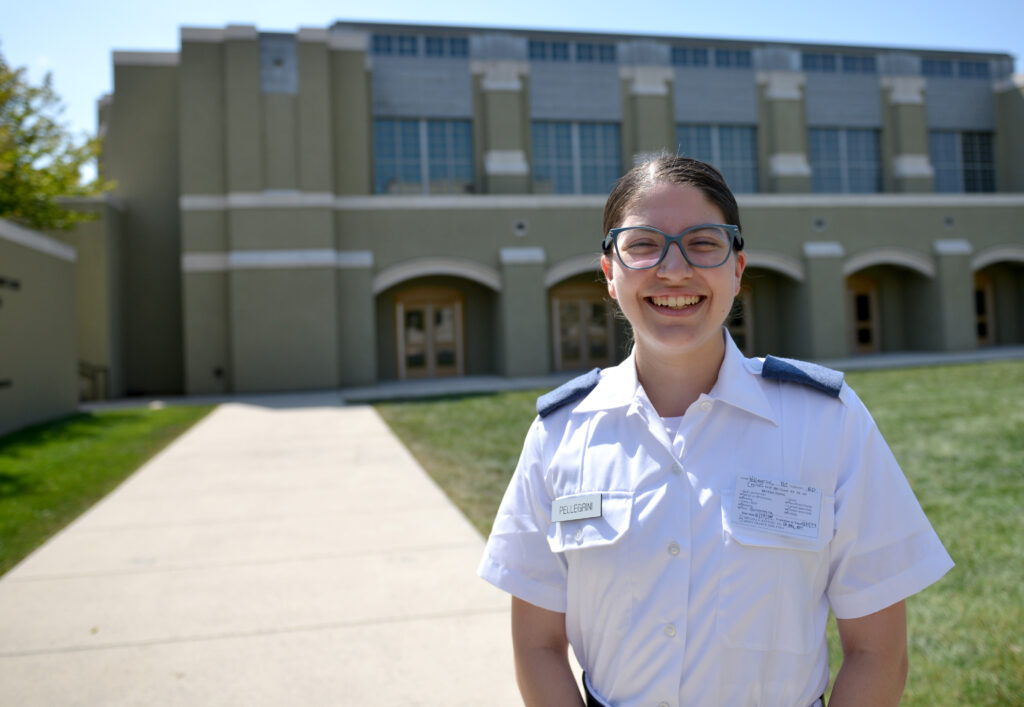
Cadet Bailey Pellegrini, Class of 2028
Bailey Pellegrini ’28

With STP and Matriculation Week under their belts, these rats feel like they’re moving forward. 

“The days feel long, but the weeks go by fast. It wasn’t too bad, if I am 100% honest,” Richardson said. “It’s definitely an experience I’ll never forget.” 

The Cadet Collective: Antonio Ahanj

Virginia Military Institute requires structure and dedication. It also becomes a place where bonds are created that can last a lifetime. Maybe it’s a professor, a coach, or a fellow cadet. No one makes it through VMI alone. The Cadet Collective tells the stories of those relationships that help pave the way for success.

Antonio Ahanj ’24 speaks Spanish and Arabic and has visited nine countries while participating in study abroad programs at VMI. Ahanj’s multiple study abroad programs and intensive language learning opportunities have shaped his perspectives and skill set as an international studies major. He attributes much of his growth and success to the unique environment fostered at VMI, where supportive relationships and a culture of mentorship have played a crucial role for him. 

“VMI has been incredible in introducing me to so many people who have been instrumental in getting me to where I’m currently at,” said Ahanj.” Two individuals that come to mind are Mr. Todd Goen and Mrs. Patricia Hardin of the Office of Global Education.”  

Ahanj described instances where Hardei’s support and advice greatly impacted his academic career, especially during challenging times such as the height of the coronavirus pandemic. 

“I remember one night I started sending emails to her and, she responded saying, just keep it down, get through this, and then we’ll start talking about things going on,” said Ahanj. “But from every step of the way in my VMI journey, she has helped me learn to be punctual with the things that I wanted to do, to be articulate in how I want, to road map things for myself and overall, she helped me understand what’s the best way to take this experience that’s already unique.” 

Ahanj described developing stress tolerance as another interpersonal skill during his time with VMI. 

“Through being abroad, I saw how much VMI benefited me, mainly in terms of  stress tolerance, things like that. You know, there’s people from other schools there that are freaking out about, for lack of a better term, minor things,” said Ahanj about the stressors of study abroad programs such as police visits for visas and interactions made difficult by language barriers.  

Looking back, Ahanj credited Goen with his ability to plan for the success of his study abroad trips. 

“Especially beforehand, Mr. Goen really stressed to me about kind of looking back how I spent my experiences before and understanding what I did wrong,” said Ahanj. “Maybe I didn’t do this enough, maybe I didn’t interact with locals enough or participate in extracurriculars, things like that.”  

Ahanj went on to further detail how Goen introduced him to opportunities such as prestigious scholarships.  

“He helped me receive the CLS and Boren Awards, which are some of the best awards the Department of State can offer for language learning,” said Ahanj. “And recently he’s been helping me navigate opportunities like Fulbright and other ones.” 

Ahanj said he used the skills and resources Geon and Hardin have provided him to prepare for his graduation in spring of 2024.  

“The lessons that they taught me are something that I’m going to take to heart and something I’m going to kind of carry with me through each thing that I do,” said Ahanj.  

When asked what his plans were for post-graduation, Ahanj said he is pursuing his aspirations of applying to the Department of State Foreign Service. He expressed deep gratitude for the guidance he received, and the sacrifices made by the faculty, highlighting the importance of being prepared. 

“That has been one of the biggest lessons that I’ve taken away from them, and I think that’s going to be something that helps me years down, decades away, I’m still going to be drawing back on a lot of the things that I learned from them in terms of being able to kind of have that right mentality when approaching tasks, and furthermore, having the right mentality when approaching people to ask for help,” said Ahanj. 

Ahanj also credited VMI for instilling in him a sense of organization, confidence, and other valuable attributes that have proven highly effective in his daily life. 

“I owe so much of that to VMI, just in terms of entering this, you know, very stringent environment and being put in a position to find a way to thrive into that,” said Ahanj. “I do not think that even if I had the same opportunities at a different school, that I would have been able to get nearly as much out of it as I would if I did not go to VMI.” 

Exploring Cost-Efficient Exercise Programs for the Elderly Through SURI

VMI cadet Hai-Hsin Huang ’25, an applied mathematics major with a minor in physics, is evaluating cost-efficient exercise programs for the elderly as part of the Summer Undergraduate Research Institute (SURI) at the Virginia Military Institute. 

Huang has a keen interest in mathematical modeling and its applications across scientific fields and has previously undertaken independent studies and research projects in biological mathematical modeling and operations research. 

This summer, he is combining his mathematical expertise with a meta-analysis of existing studies to determine which types of exercises. These include aerobic, strength training, or balance exercises that offer the best health outcomes for the elderly while remaining economically viable. 

“SURI is a great opportunity that allows me to focus on my research without distractions,” said Huang. “The environment here at VMI is conducive to academic exploration and provides the resources necessary for thorough research.” 

Huang’s research, supervised by Col. Mike Krackow, professor of human performance and wellness, aims to generate recommendations for healthcare providers and policymakers. These recommendations will help optimize aging and reduce healthcare costs.  

Krackow, whose background includes healthcare and strength conditioning focusing on fall prevention for the elderly, has guided Huang through the research process. 

“My role is to advise him on the process, provide resources, and ensure he produces a high-quality paper that could potentially be published or presented at a conference,” said Krackow. 

Huang is optimistic about the potential impact of his work. 

“Eventually, I hope this research can inform healthcare providers and policymakers about which exercise programs are most beneficial for the elderly while being cost-effective,” Huang explained. 

Both Huang and Krackow agree on the importance of the SURI program for cadets, noting the development of critical thinking and problem-solving skills that are invaluable for future academic and professional endeavors. 

“SURI helps cadets gain research experience that is beneficial for graduate school and professional fields,” Krackow said. “It allows them to disseminate relevant information and develop expertise in their specific areas of interest.” 

Huang encourages future cadets to participate in SURI, advising them to take full advantage of available resources, seek guidance, stay organized, and choose research topics they are passionate about. 

“SURI is a fantastic program that offers a unique opportunity to engage in academic research beyond regular coursework,” Huang said. “I highly recommend it to anyone interested in expanding their academic horizons.” 

The Cadet Collective: Conner Felts ’24

Virginia Military Institute requires structure and dedication. It also becomes a place where bonds are created that can last a lifetime. Maybe it’s a professor, a coach, or a fellow cadet. No one makes it through VMI alone. The Cadet Collective tells the stories of those relationships that help pave the way for success.

For many cadets at Virginia Military Institute, the journey through rigorous academic and physical challenges is not a solitary endeavor. Conner Felts ’24, an English major, experienced the profound impact of mentorship and networking that defines the VMI experience with alumni during his time as a cadet.

Felts’ interest in the athletic communications field began with his involvement in photography and social media management for the VMI basketball team. 

It was through these roles that Felts connected with Maj. Gen. Cedric T. Wins ’85, superintendent, ultimately leading to an introduction to Conor Powell ’99, an alumnus of VMI renowned for his extensive career in news reporting.  

“The reason he wanted to connect us is because I want to be a reporter when I graduate VMI,” said Felts. “I want to be a news broadcaster, sports journalist, anything like that. Conor Powell agreed to be my mentor going forward and help me get a job.” 

The mentorship evolved into a weekly phone call routine. “The first time I called him, I addressed him as ‘sir.’ He immediately corrected me, insisting that I just call him Conor. It was like talking to another brother rat,” Felts shared. 

The mentorship was more than just professional advice; it provided an emotional and psychological support system. 

“He understood the VMI life – the lack of sleep, the heavy workload,” explained Felts. “Talking to someone who had been through it made a huge difference.” 

This mentorship greatly enriched Felts’s VMI experience and prepared him for the future.  

“I worked with ESPN on live broadcasts, and Powell’s guidance helped me find my voice and remain calm on air,” he said. 

Felts said he felt confident about his next steps, thanks to the network Powell had helped him build. Powell introduced Felts to prominent figures in the journalism industry, including other VMI alumni. Felts believes these connections have opened doors to opportunities to navigate post-graduation job prospects. 

“I applied for jobs, and through Powell, I connected with prominent figures like Scott Thuman, head news anchor at Channel 7 in DC, and Scott Heilman from NBCUniversal,” said Felts. 

Felts hopes to pay the mentorship he received forward.  

“Powell mentioned he wished he had someone to guide him when he was in my shoes. I want to offer the same support to future cadets,” said Felts. “This relationship showed me that you can’t start at the top. You have to find glory in the work it takes to get there.” 

Powell’s guidance prepared Felts to embark on a promising journalism career grounded in resilience, mentorship, and the indomitable spirit of the VMI legacy as of his graduation in May 2024. 

Summer Transition Program Presents Workshops for Participants

Entering college is often stressful, but entering the Rat Line can be daunting.  

At Virginia Military Institute, incoming rats can ease into the experience to get a better idea of what’s to come thanks to the Summer Transition Program (STP) during the summer before Matriculation. STP gives those matriculating the opportunities to improve on academics and physical fitness.

The four-week program allows participants to take one academic class and become familiar with VMI — living in barracks, physical training, eating in Crozet Hall, and taking classes.  

STP is voluntary; incoming rats aren’t required to do it, but Tricia Fry, the director of the Cadet Counseling Center at VMI, said it’s a good introduction to the rigors of VMI, without being as intense as the first year. 

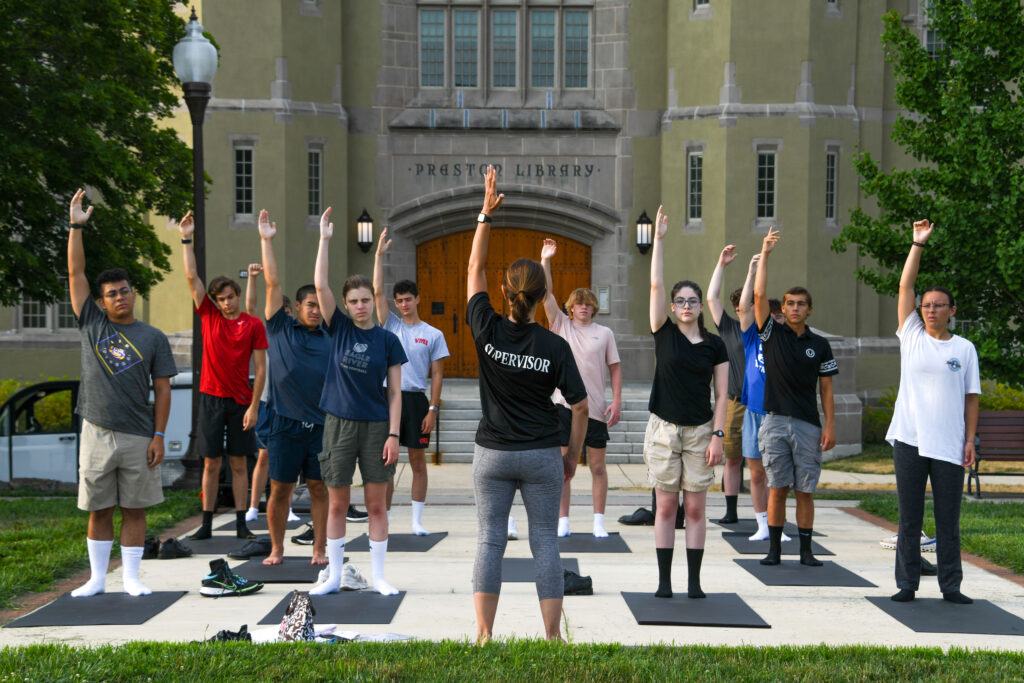
Fry said those at STP can also participate in resilience workshops, which started in 2017. Each year, the workshops have evolved, based on the feedback from previous years. This year, there were three workshops: Rat Rhythm, Stress Less, and Mental Fitness. There were also multiple yoga sessions called Stretch-n-Release students could attend. 

“Overall, the resilience workshops discuss a variety of topics that help enhance resilience in the Rat Line and beyond,” Fry said. “The tips in the Rat Rhythm workshop range from helping transition to VMI, the Rat Line, starting college, or being away from home. We also focus on stress management and practice simple strategies to regulate emotions such as grounding techniques, deep breathing, and brief body scans. We focus on having a growth mind-set and a mind-set of optimism.” 

The Rat Rhythm workshop has significantly grown, Fry said. This year, they had 52 participants, which is 28% of those in STP. Other workshops had higher attendance than previous years, she said.  

Cadets participate in a yoga class during the Summer Transition Program.

The workshops are meant to provide a fun atmosphere while still helping participants, Fry said. This year, she introduced new slides into the Rat Rhythm presentation to take polls, which helped participants answer tough questions in a more inviting and engaging way.   

“Everyone comes to VMI from different backgrounds, and different experiences and I hope the workshops provide additional internal resources to help students on their journey,” she said.  

In 2021, yoga was offered as part of the initiative, initially partnering with the Department of Human Performance and Wellness.  

“It was Captain Katie Baur who was willing to partner with us and together we created themes for each yoga session. Katie created the flow that we use, and I integrated mindfulness into each flow. It was a great partnership,” Fry said. 

The yoga sessions are only 20 minutes long, to accommodate the STP schedule.  

“As a licensed professional counselor, I integrate mind-body connection into counseling sessions and yoga is a great way to help individuals not only connect with their body, but it also helps to ‘build the muscle’ of being present,” Fry said. “There is a stigma related to mental health and seeking help at VMI, and engaging cadets during the STP program through the workshops and yoga has been a wonderful way for them to engage with someone from Cadet Counseling outside of the office.”  

Study Abroad: A Spanish Summer for VMI Cadets

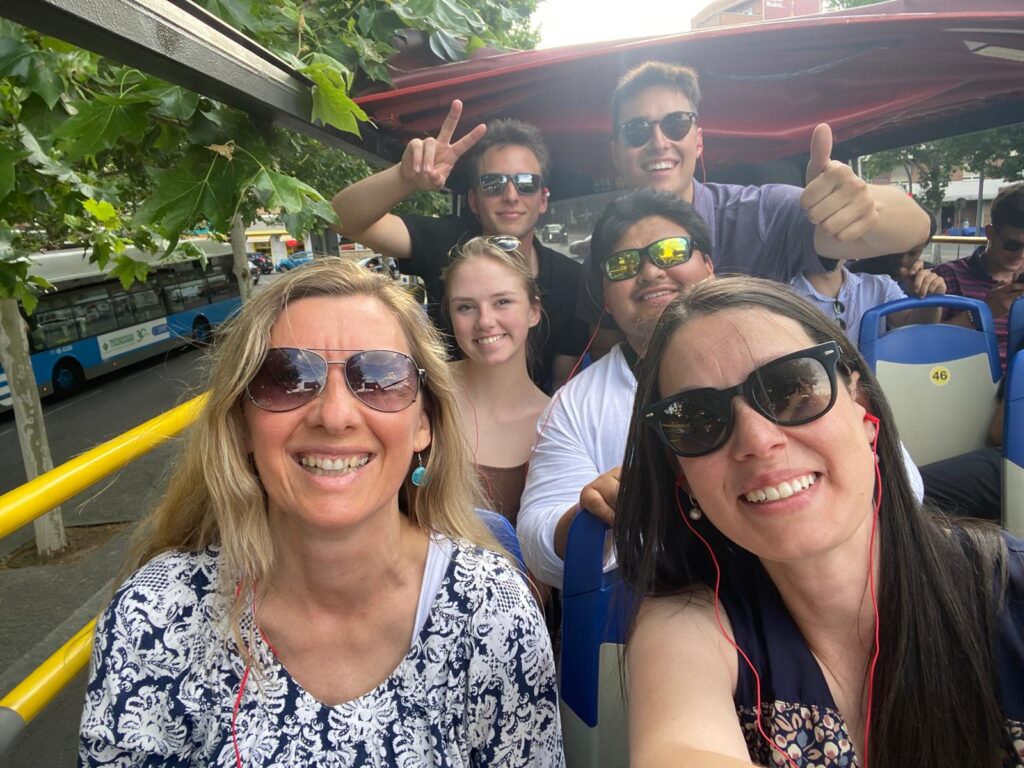
Trips to Barcelona, Granada, Madrid, and more were just the perks for a group of Virginia Military Institute cadets this summer. 

Nearly two dozen traveled to Spain this summer for a study abroad program, with varying majors and minors represented, from economics and business, modern languages, history, computer science, engineering, and more.  

The five-week program allowed cadets to take three classes at the Universidad de Alcalá in Alcalá de Henares near Madrid. They were enrolled in two Spanish classes taught by the university professors and an economics elective class, which was taught by VMI’s Col. Valentina Dimitrova-Grajzl, professor of economics and business.

“Study abroad programs are important because they humanize the rest of the world and introduce the students to new ideas and different ways of living, working, and interacting,” she said. “In a world of so much polarization, such programs can be a bridge for better understanding and cooperation.” 

Dimitrova-Grajzl said cadets are able to develop an open-mindedness about the world by participating in study abroad programs like this one. She said it was rewarding to see how each cadet’s knowledge and worldviews were expanding and changing organically.  

“Students experienced how the definition of economic and social well-being can differ across countries and cultures, how the architecture and design of cities can incentivize people to be active and socially integrated, and how the structure of a workday varies based on geography and climate,” she said.  

The program was put together by Dr. Sabrina Laroussi, associate professor of Spanish in the Department of Modern Languages and Cultures, who has led the program for the past six sessions. Laroussi said she gets immense satisfaction seeing her students’ Spanish language skills progress.  

“Every student has his or her own strategies to overcome language barriers as they go from being shy to order food in a restaurant or a coffee shop, or purchase something in a store, to making every effort to speak some of the local language to get around, connect with locals, and make friends,” she said. “Even if it is through using plain language or basic Spanish phrases such as ‘Hola’ (hello), ‘Gracias’ (thank you), ‘Un café con hielo, por favor’ (iced coffee, please).” 

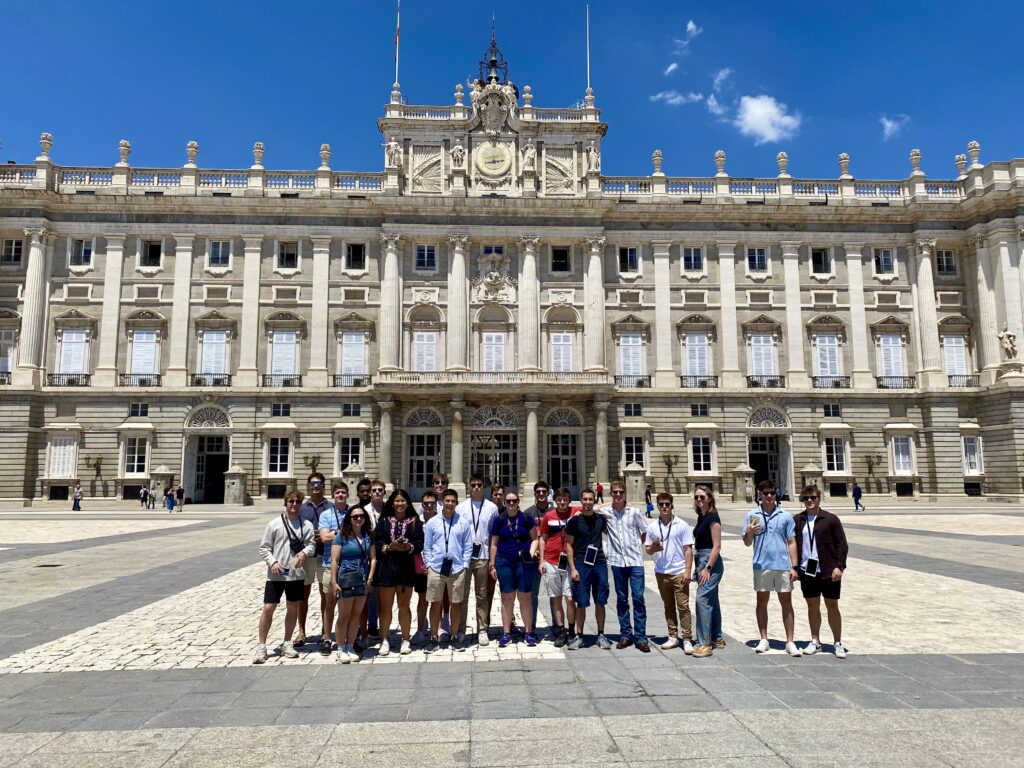
Students participate in a study abroad program in Spain.

Firsthand experience and gaining credits 

Connor Franklin ’26 decided to sign up for the Spain study abroad program because he and a friend both needed six more credit hours of Spanish language, plus it was his first time traveling to Europe for school. The economics and business major said the classes were very laid back but interactive. He was able to meander between classes, check out cafes, and enjoy the culture. 

“The experience was awesome; it was the most fun I have had. I learned so much about the culture of Spain and a lot about the European Union,” he said. “It was very interesting to see how people operated throughout their day and also to see how different their priorities were from people from the U.S.” 

Franklin said surrounding himself in the Spanish culture gave him a different way to learn the language.  

“You are surrounded by the language, so you are forced to learn it. To me it is one of the best ways to learn a language,” he said. 

This program allowed Cadlee Jarvis ’26, a history major, to travel abroad for the first time. Taking classes in a foreign country did take some adjusting, he said, especially compared to the structure that VMI has.  

“I think this program is important to have at VMI because it gives cadets the opportunity to travel abroad and learn new information about different cultures,” he said. “It also helps cadets gain new experiences and memories that will last a lifetime.” 

In addition to class time, cadets took trips to Southern Spain (Granada and Sevilla), to Northern Spain (Barcelona), and several day or half-day trips to Madrid to the U.S. Embassy, the Royal Palace, the Prado Museum, and several tours of the city. 

Laroussi said she enjoyed seeing everyone embrace new experiences and step out of their culinary comfort zones.  

“When we visit very touristy cities such as Seville, Barcelona, or Toledo, I always emphasize to students to avoid tourist traps: restaurants on big, popular squares or near major tourist attractions, or restaurants with a menu featuring multiple languages,” she said. “So, at the end of the day, when they tell me that they went to a restaurant where there were only locals, the waiters did not speak English, the menu was entirely in Spanish, and they ordered a local specialty… that is my greatest satisfaction.” 

The students lived in a dorm at the Universidad de Alcalá along with Spanish students and other international students who were taking summer classes in Alcalá. They got to practice their Spanish language regularly since it is a town that is less touristy and provides a very authentic experience of living in a Spanish town. 

Students participate in a study abroad program in Spain.

Suzanne J.P. Leaptrot ’25, an English major, decided on the study abroad program so she could lighten her course load in her final year at VMI. This is her second study abroad opportunity. In the spring of 2023, she did a semester at Oxford. Spending a month in Spain, taking three classes was also the most cost-effective opportunity, she and others said. For nine credits, she only spent $5,400 on the classes, plus the flight to get to Spain. 

“Part of what makes this trip so valuable is the weekend trips we took. One thing I kicked myself for when I was in England was not traveling more and seeing the major England things. This trip took all the planning and energy out of my hands and took me to the major Spanish sites, and I’m so glad it did,” she said. “Alone, I never would have gone to the Picasso Museum in Barcelona, which was my favorite of all the places we visited.” 

Thanks to taking an immersive language class, Leaptrot was forced to figure out ways to describe things when the vocabulary in the other language is limited.  

“For example, toward the end of my trip, I was looking for Post-it notes at a grocery store and I did not know the word, so I asked a worker if they had sticky papers to take notes in books, the worker understood and told me where to go to find them. Three hours a week in a classroom just does not compare to an immersion class,” she said. 

Colton Jones ’26, an international studies and political science major with a minor in national security, was intrigued by the program after seeing posters about it around post. A driving factor in going was so he could knock out his Spanish requirements, while being able to apply what he’s learning in real-time situations. 

“It gives cadets a chance to really focus on their Spanish studies in a way that are unable to when they are at VMI,” he said. “They also get to experience a different culture and it may open their eyes to new experiences and new things that they otherwise never would have seen.” 

Onto Law School: Recent International Studies Grad to Take on Notre Dame

This article is part of The Next Step series. While the four years at VMI are designed for cadets to push themselves academically, physically, and mentally to tackle the demands of life at a premiere military college, they also prepare cadets for life after graduation. Whether that life be one in the military or one in the private sector, VMI faculty and staff provide guidance to cadets along their journeys. One department specifically dedicated to that endeavor of post-Institute success is the Office of Career Services. In The Next Step series, we highlight cadets preparing to enter the workforce after graduation, as well as those still in the midst of their cadetship preparing for internships over the summer. 

From legislative intern to Virginia Military Institute graduate, the next step for Jimmy Murphy ’24 is law school. 

After spending several summers working in the U.S. Capitol, in both the U.S. House of Representatives and the U.S. Senate, Murphy will be heading to Notre Dame Law School in the fall. 

The international studies major and national security minor from Golden Valley, Minnesota, took his first internship the summer of 2021 as a legislative intern with the Office of Congressman Jim Hagedorn (R-Minnesota). 

After that, he spent his summer as a committee intern with the Senate Committee on Homeland Security and Governmental Affairs. Last summer he was an intern with Van Scoyoc Associates, a government affairs team based in Washington, D.C.   

He credits his internships to setting him up for success. 

“My internships prepared me for my next step of becoming a lawyer because they gave me invaluable experience and confirmed what career I wanted to pursue” he said. “The experiences of serving the constituents of Minnesota’s 1st District, Sen. Rob Portman in the U.S. Senate, and a distinguished list of veteran/defense clients exposed me to the fulfillment of a career of serving others. In addition, working for so many accomplished legislative staffers, lawyers, and government officials gifted me with an amazing support network through my journey. None of my success would be possible without them.” 

Murphy was admitted to several top 20 law schools but accepted an offer to Notre Dame Law School. 

In his last year at VMI, Murphy was awarded the International Studies Award, which is given to the top graduate in the Department of International Studies and Political Science. He said that his time at VMI has benefitted and shaped him in many ways including sharpening his time-management skills, instilling the importance of a strong work ethic, and showing him the value of being a servant leader. 

“These skills are going to serve me greatly as I pursue my career as a lawyer and public servant,” he said. “Future clients and employers of mine will know that no matter what pressure, hurdle, or trial I am faced with,; they can take solace in the fact that they are getting a tested individual who gladly embraces pressure and relishes in being the hardest worker in the room.” 

As a 1st Class cadet, he led a seminar in partnership with the Pre-Law Society on the law school application process, served as vice president for the Education on the Cadet Equity Association, and finished up his final year on the VMI football team.  

Murphy also finished his senior thesis, “Money Talks? Lobbying, Ideology, and Issue Salience in the United States Senate,” in his national security minor. 

“The major takeaway I had from my last year at VMI was while work is certainly important, you should not allow the pressures of a career or outside expectations to steal your joy,” he said. “Life on Earth is short, and the Bible speaks often about the importance of loving others. Simply put, there will always be an assignment to do, a paper to write, a Zoom call to take, etcetera. But do not pursue life compromising the relationships you have built or thinking that your worth is built on a salary or title.” 

For the summer, Murphy will be working at a boutique law firm in Minneapolis before starting law school in the fall. He hopes his story can inspire others to chase their dreams.  

“I do not come from a wealthy family, I am a first-generation law student, and for many years I sometimes questioned whether I had the abilities to achieve my ambitious goals,” he said. “I want to be an example for anyone who might’ve gotten knocked down. Not even just in academics, but in life — anyone who might be feeling like they came up short, or who might be getting pegged as somebody who can’t achieve certain things. Maybe they can look at me and see how I never gave up, never stopped believing in myself, and found my strength in the Lord to triumph over every hurdle life placed in my path.” 

After Notre Dame Law, Murphy wants to join the Navy or Air Force JAG Corps, clerk for a federal judge, and eventually return to his home state of Minnesota to continue a career in public service and politics. 

From VMI to Private Equity: Warner Collier ’24

This article is part of The Next Step series. While the four years at VMI are designed for cadets to push themselves academically, physically, and mentally to tackle the demands of life at a premiere military college, they also prepare cadets for life after graduation. Whether that life be one in the military or one in the private sector, VMI faculty and staff provide guidance to cadets along their journeys. One department specifically dedicated to that endeavor of post-Institute success is the Office of Career Services. In The Next Step series, we highlight cadets preparing to enter the workforce after graduation, as well as those still in the midst of their cadetship preparing for internships over the summer. 

Business and computer science were two industries that Warner Collier ’24 saw opportunity in. Coming to Virginia Military Institute, he wanted to cast as wide of a net as possible, which brought him to major in economics and business, with concentrations in decision analytics and financial analysis, along with computer science and cybersecurity minors.  

“As I progressed through rat year, I knew I wanted to work in finance after joining the Cadet Investment Group,” he said. “I did more research on careers in finance and gravitated towards private equity.”

Hailing from Midlothian, Virginia, recent graduate Collier is now set to work for Civitas Growth Partners as an analyst.  

“I will be involved in all aspects of the deal sourcing process,” he said. “This will include identifying and reaching out to potential investment opportunities. Also, I will analyze company financials, KPIs, build out financial models, and communicate key insights. Lastly, I will sit in on portfolio company board meetings and monitor the financial and operating performance of the portfolio companies.” 

Coincidentally, Collier said this was the first job he applied for.   

 ”I wanted to work for an organization which aligns with my moral values. For the same reason I chose VMI, I wanted to be a part of a firm which believes in doing things the right way,” he said.  

Working for a small company like Civitas was what was most attractive to Collier. He said it would allow him to have more learning opportunities and contributions.  

“I was drawn to private equity as I enjoy analyzing companies, figuring out what makes them work, and implementing strategies which yield real results,” he said.  

He believes that having VMI on his resume aided him in landing this job.  

“The number one reason Civitas hired me is because they know they can trust me. The foundation of VMI, honor, is the competitive edge I have over others,” he said.  

VMI has taught him to be comfortable in the uncomfortable. 

“VMI puts you in high stress situations which give you valuable tools that translate to the workplace. I’m confident in my abilities and work ethic due to VMI,” he said.  

Becoming a Research Technician at Johns Hopkins Neurosurgical Lab: Jackson Miller ’24

This article is part of The Next Step series. While the four years at VMI are designed for cadets to push themselves academically, physically, and mentally to tackle the demands of life at a premiere military college, they also prepare cadets for life after graduation. Whether that life be one in the military or one in the private sector, VMI faculty and staff provide guidance to cadets along their journeys. One department specifically dedicated to that endeavor of post-Institute success is the Office of Career Services. In The Next Step series, we highlight cadets preparing to enter the workforce after graduation, as well as those still in the midst of their cadetship preparing for internships over the summer. 

Jackson Miller ’24 has aspirations of becoming a doctor. The recent graduate from Rockville, Maryland, will be taking a step in that direction as a research technician at the Johns Hopkins Hunterian Neurosurgical Laboratory starting this summer. 

The Johns Hopkins Hunterian Neurosurgical Laboratory is the nation’s first experimental surgery laboratory, according to its website. The lab houses research groups representing multiple specialties and interests in the neurosurgical community, with a facility fully equipped with a microsurgical laboratory, cell culture and microscopy facilities, quantitative image analysis, certified operating rooms, and radiologic equipment. 

The English major will be working at Hopkins to perform research and earn money before going to medical school.

“I want to practice medicine because it is important work and I like to help others,” he said. 

His duties will include performing cancer research and experimenting with new types of chemotherapy and cancer treatments. As for his future goals, he sees himself as an emergency medicine doctor in the U.S. Army, which is a nod to his mother’s profession.  

“My mom was a surgeon in the Navy for 25 years, and she’s the one who inspired me to think about medicine as a way to serve my country, and to serve others,” he said.  

Miller credits VMI for preparing him for the future.  

“VMI prepared me to embark on this difficult journey by challenging me with academics, the Rat Line, and with my experiences on the boxing team here at the Institute,” he said. “In particular, boxing taught me how to fight hard through adversity and push my limits.” 

But the VMI alumni network gave him a competitive edge, he said.  

 “I would not have the opportunities that I am currently taking full advantage of without the help of VMI alumni. The alumni network here is incredibly strong, and they look out for members of the VMI family by helping them look for jobs as well as through exceptional mentorship,” he said.