Post View Unavailable »
New Website Launched »

Behind the Balance: Destin Moore ’27 — Keydet Football

Virginia Military Institute’s cadet-athletes have to juggle cadet life, heavy academic course loads, and their NCAA Division I sport. Committed to both academic and athletic pursuits, balancing their rigorous schedule in both sports and school requires a certain level of commitment and discipline. Behind the Balance is a series that focuses on those cadet-athletes and how they handle the hurdles of the day-to-day. 

Virginia Military Institute offered a path to success, Destin Moore ’27 explained. The psychology major from Georgia wasn’t familiar with VMI at first, but after talking to several football coaches, he was inspired.  

“I really fell in love with the culture they were trying to build and what the school offered,” he said. “I don’t like to fail. So, I know the challenge wasn’t something people look for … normally people take the easy route. To know that I could be amongst the few that got through this — it was desirable to me.”

Moore isn’t a stranger to a packed schedule. As a dual sport athlete, his entire year is figuring out how to balance his schedule with both football and track and field.  

“I try to configure my schedule, I try to have a middle block where I can have two classes and then I’ll have a dead period after lunch so I could do any homework that I need to do, or do any homework that I’ve just received to get ahead,” he said. 

This became a challenge last spring when Moore was participating in the SoCon Track and Field Championships. He went directly from football practice to track practice. For the championship, he placed second, pushing him into the finals the following day.  

“I came right off the track, with my track jersey and my compression shorts, and I ran from the Corps Physical Training Facility to the football field,” he recounted. “I got done with that the football practice, went to sleep and had to wake up at 8 a.m. to run in the championship.” 

Cadet-athletes at VMI not only have their responsibilities with their selected sport but cadet duties on top of that. Cadets are also required to take physical fitness classes twice a week, participate in ROTC all four years, prepare for room and uniform inspections, practice for parade, guard duty, and more. 

He explained that coming to VMI and being a cadet-athlete, he had to change his mindset. He couldn’t look at the tasks he had to accomplish as something he had to do, but instead something he got to do.  

“If I didn’t, I probably wouldn’t have competed like I did or did it at all. Since I wanted to do it, I had to find a way,” he said.  

It’s all about prioritizing. He figures out the thing he’s least enthusiastic about and finishes that first, allowing him to do the things he wants to do. He said that’s something that will transfer to what he can accomplish later in life.  

“If that’s me waking up for my job at seven in the morning, like I have done for BRC [breakfast roll call], I can get my whole schedule done, have everything planned out, do what I need to do. So, in two months, I can go on vacation or something.”

Moore plays wide receiver, point return and kick return. But he wasn’t one for paying much attention to football when he was on the field in his younger days.  

“I was always one of those kids who was at practice, but wasn’t in the practices,” he stated. “I’d be crisscross applesauce on the floor, playing with the dandelion grass.” 

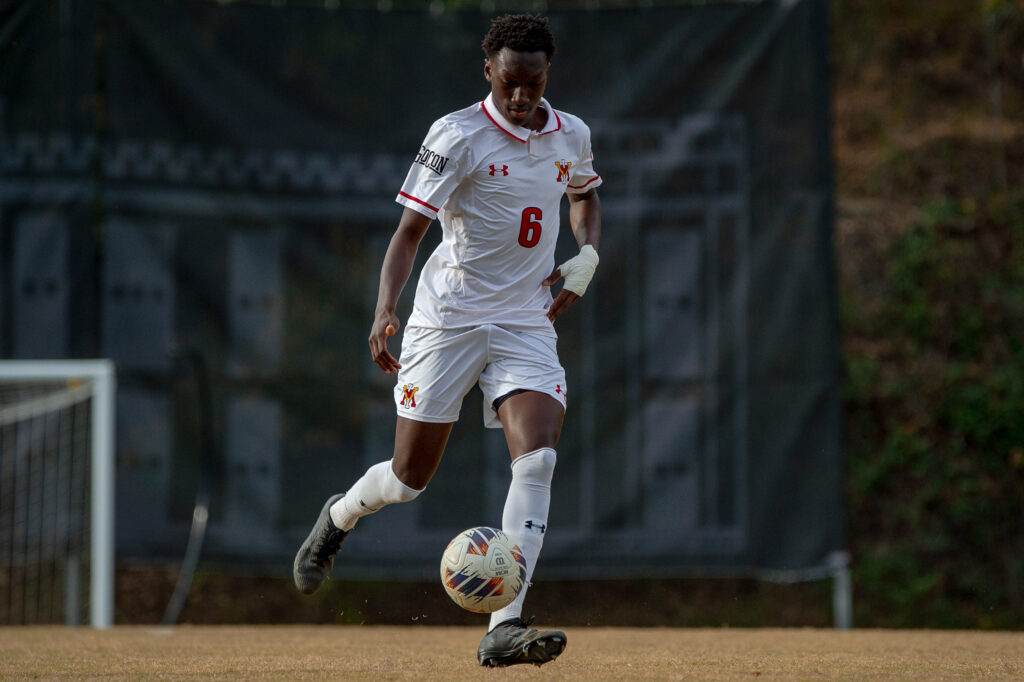
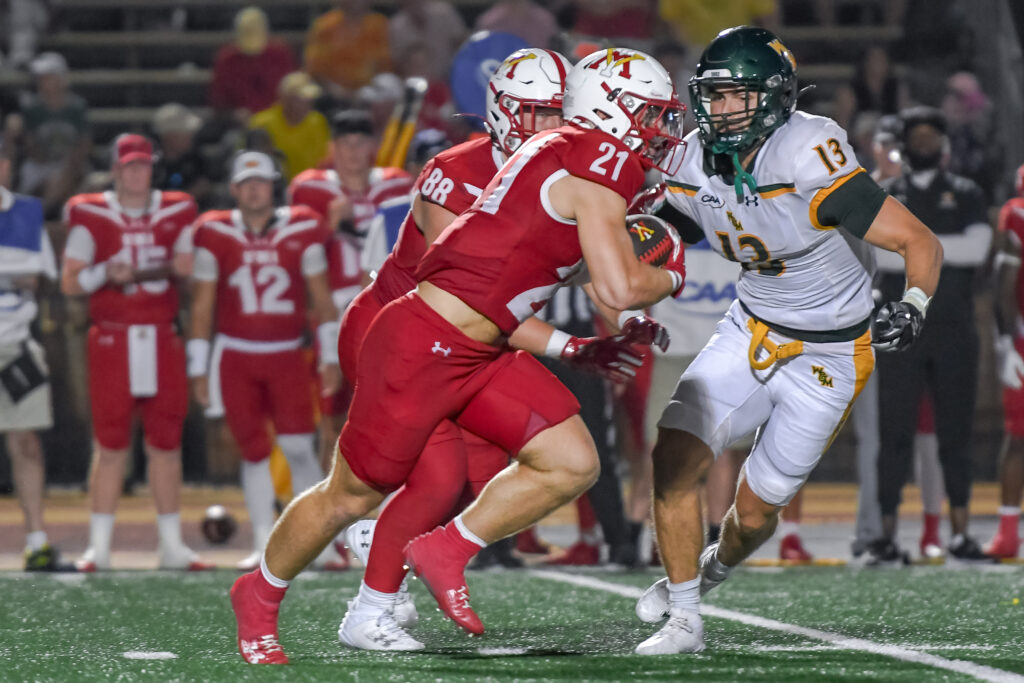
Destin Moore on the football field running a play for Virginia Military Institute.

He said that he got bored with that and started to put in more effort.  

“I was always pretty fast, so I would run. And the coaches saw that one day, and they were like, let’s see what this guy can do,” Moore said. “I ended up playing and being slightly good at it.” 

He started to take it more seriously in his sophomore year of high school and decided he wanted to go to college for it.  

As for the stressful times at VMI, Moore leans on his friends and teammates. 

“Within my friend group, we try to motivate each other and hold each other accountable, whether that be in football or in school, because being at VMI we can have the hardest workers. We need to control what we can control and be the best at it,” he explained. 

The way Moore accomplishes this is by not looking at the big picture. He needs to take it piece-by-piece.  

“You can’t eat a sandwich all in one bite. You have to take it bite-by-bite. Break it off. Have little sections. Complete that section. Reward yourself forward so you can do the next thing.” 
Behind the Balance: Colin Crenshaw ’27 — Keydet Cross Country

Virginia Military Institute’s cadet-athletes have to juggle cadet life, heavy academic course loads, and their NCAA Division I sport. Committed to both academic and athletic pursuits, balancing their rigorous schedule in both sports and school requires a certain level of commitment and discipline. Behind the Balance is a series that focuses on those cadet-athletes and how they handle the hurdles of the day-to-day. 

Uncertainty after high school is normal and something Colin Crenshaw ’27 faced upon graduation. It’s one of the reasons he decided to attend Virginia Military Institute. 

“I didn’t really know what I wanted to do after high school, but I knew if I came here, there would be lots of doors that would be open,” he admitted.  

The chemistry major also had the opportunity to run cross country and track at VMI, something he fell in love with at a young age. 

“I started running cross country in middle school because my mom convinced me to, because she told me I’d get faster for basketball,” he said. “I ended up not being that good at basketball. I fell in love with running. I had a good coach when I first started, and he kind of helped me fall in love with the sport and just pushed me to see how good I could be.” 

He likes how cross country makes him more accountable. 

“I like that it’s all on me,” he commented. “I don’t have to rely on other people. If I do bad, it’s on me. I think it really tests what you’re made of when you’re out there by yourself.” 

The 2nd Class cadet has a heavy load this semester with 19.5 credit hours. 

“Especially here at VMI, there are not a lot of moments where you get to sit back and think,” Crenshaw commented. “I use running to do that.” 

Cadet-athletes at VMI not only have their responsibilities with their selected sport but cadet duties on top of that. Cadets are also required to take physical fitness classes twice a week, participate in ROTC all four years, prepare for room and uniform inspections, practice for parade, guard duty, and more. 

He’s up before 6 a.m. most days for morning runs. His weekly mileage is between 55 and 60 miles. He’s then in class from 8 a.m. until 3:30 p.m., then he’s off to a 4 p.m. practice.  

“I just take it one thing at a time and try not to get overwhelmed,” he said. “I know it’s just going to prepare me well for the future.” 

Crenshaw said he tries to fit in schoolwork between classes, so he’s not staying up late to finish assignments.  

The workload he has at VMI — with academics, athletics, and cadet responsibilities — will help him later in life. Something he is looking to pursue after graduating is attending medical school. Crenshaw is currently a cadet EMT.

“I think the biggest thing is time management. That’s something I really learned here that I didn’t have to focus on before,” he stated. “I also think VMI teaches you that you’ve got to be doing what you’re supposed to be doing. I think that just that discipline will help me in the future.” 

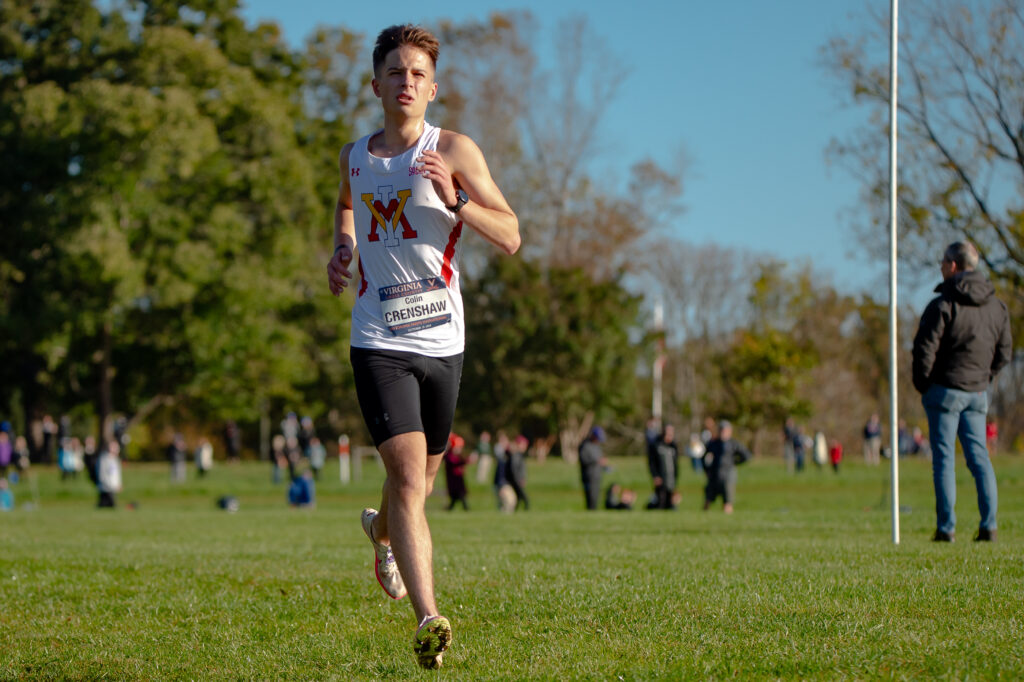
Colin Crenshaw running cross country for Virginia Military Institute.

He tries to take victories where he can and start with the small things.  

“One thing I like to do when I’m working is if I have something small or not that significant, that’s not going to take me very long, I like to do that thing first, so I can get one thing done,” he explained. “Rather than trying to do an overwhelming project first.” 

As a cadet EMT, Crenshaw is able to pick and choose what events he’s able to cover. It all has to fit into his sports and academic schedule.  

“I always knew that I wanted to do something where I actually made a difference and helped people,” he said. “I didn’t want to just sit behind a desk and click around in Excel files. That’s something I’ve always known about myself.” 

The busyness of life at VMI is something Crenshaw enjoys and thrives on.  

“That’s the one reason I thought I would do well here,” he said. “I don’t like sitting around being bored. That’s when I get myself into trouble. It’s not good for me to be bored.” 

Behind the Balance: Amari Benjamin ’27 — Keydet Men’s Soccer

Virginia Military Institute’s cadet-athletes have to juggle cadet life, heavy academic course loads, and their NCAA Division I sport. Committed to both academic and athletic pursuits, balancing their rigorous schedule in both sports and school requires a certain level of commitment and discipline. Behind the Balance is a series that focuses on those cadet-athletes and how they handle the hurdles of the day-to-day. 

A sense of discipline is what drew Amari Benjamin ’27 to Virginia Military Institute.  

“I knew that I wanted that in my life, and I knew that would set me up forever,” he said. “I also wanted the option to commission, because I was on the fence and I got the opportunity to play soccer here as well.”

Benjamin, an economics and business major, plans on commissioning into the U.S. Army. Having the option to play soccer at VMI was a big draw for Benjamin. After a soccer camp with the VMI soccer coach, Nick Regan, his interest was piqued.  

“I wasn’t originally interested in VMI. I didn’t really know what it was, either,” Benjamin admitted. “But then Coach Regan reached out to me saying, we’re interested. He gave me a little breakdown on the school and then did my own research. My dad was in the Navy, so I’ve always been in that military setting at home too … it wasn’t that big of an adjustment.” 

Cadet-athletes at VMI not only have their responsibilities with their selected sport but cadet duties on top of that. Cadets are also required to take physical fitness classes twice a week, participate in ROTC all four years, prepare for room and uniform inspections, practice for parade, guard duty, and more. 

Benjamin has a packed schedule with 17.5 credits as well as serving as an S9 Sergeant. With that comes a multitude of duties including preparing for pep rallies, company athletics activities, and creating permits and Concept of Operations (CONOPS) documents. S9 is primarily made up of athletes, so cadets involved must pick up where it’s needed when those on the staff are in season. 

“S9 is an amazing staff because we all know how much we put in on the field or court, so we are always quick to have each other backs and help when help is needed,” he said. “When it’s S9 time, it’s S9 time. Allowing me to segment my day with school, soccer, and rank allows me to stay on top of things and not get burnt out.” 

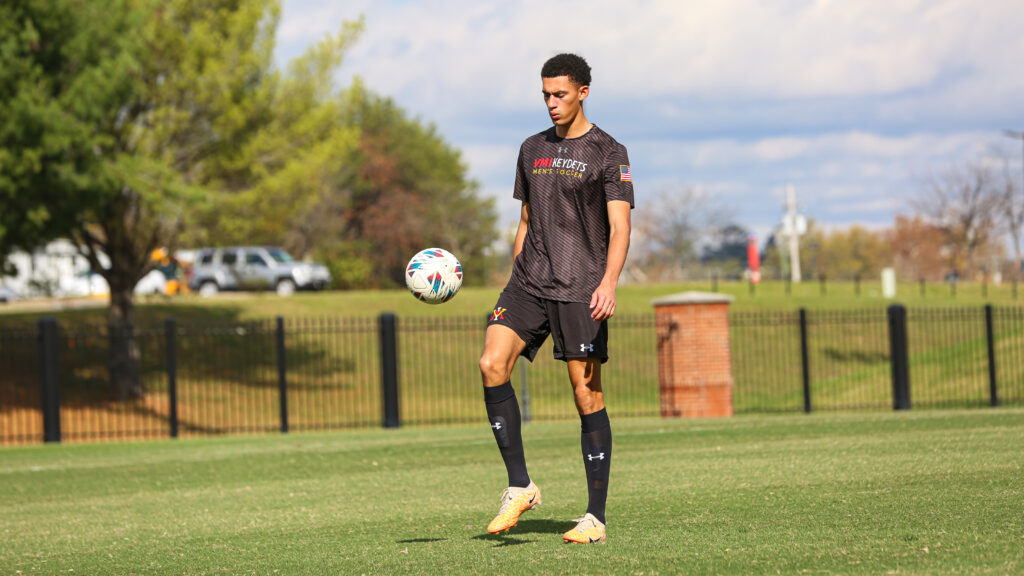
Amari Benjamin playing soccer for Virginia Military Institute.
VMI Men’s Soccer Action Shot vs. Queens

His days start early while he’s in season — around 6 a.m. for a team run or a quick session on the field before breakfast. Then it’s classes until the afternoon and straight to practice, which lasts until after 6:30 p.m. Then he’s back to studying and class assignments.  

“I like to get a lot of my work done out the way early. I don’t want to stay up late because I wake up in the morning feeling groggy,” he explained. “Usually throughout the day, from whenever we finish that first training until before practice, it’s only school. That way, at least at night, I can only focus on whether I have an exam the next day or I can focus on one thing and not have to over stretch myself.”

Benjamin has had to find a balance in structuring all his tasks. In the beginning, he found it tough to do so.  

“My first year playing Division I soccer, all of that was overwhelming. It wasn’t until my sophomore year that I really was able to crack down on it and build good habits and get into a routine,” he stated.  

He especially must plan with traveling for games, which they have a packed schedule of nearly 20 games during a season.  

“When I know I have an away game coming, I try to overly stress the fact that I need to finish all this, because I go into the game with just the game in mind, and not have to worry about an assignment due at 11:59 p.m.,” he explained. “Usually, I try to plan out my days well. I feel like every assignment I get or every reading I’m assigned, I always put in my notes, and I try to get it done that day, if possible. That way, later in the week, when the games do come around, it’s just straight soccer.” 

Benjamin said the skills he’s learned at VMI will translate into his life, no matter what he does. He says the ability to multitask and prioritize has helped him plan his days properly.  

“I feel like one piece of advice that my dyke [senior mentor] also told me was, at the end of the day, you’re going to go to bed, and the next morning you’re going to wake up,” he commented. “You’ve just got to get through the rest of the day, and nothing can really hinder you. At the end of the day, if you just do what you need to do and get through it, there’s a whole new day waiting for you.” 

Behind the Balance: Barrett Callejo ’27 — Keydet Women’s Soccer

Virginia Military Institute’s cadet-athletes have to juggle cadet life, heavy academic course loads, and their NCAA Division I sport. Committed to both academic and athletic pursuits, balancing their rigorous schedule in both sports and school requires a certain level of commitment and discipline. Behind the Balance is a series that focuses on those cadet-athletes and how they handle the hurdles of the day-to-day. 

When Barrett Callejo ’27 arrived for her brother’s matriculation at Virginia Military Institute several years ago, she was still in high school. But the cadets asked her upon arrival if she had a dyke, or senior mentor. Callejo said she was taken aback, and explained it wasn’t her that was matriculating, but instead her brother.  

That moment stuck with her, along with how welcoming and excited the cadets were. “There were these strong, independent women. They were coming up to me and super excited that another female was trying to come to VMI. To me, that was cool seeing that in person,” she explained. 

She was then inspired when she was recruited for soccer to come to VMI to be that example. 

“Being on the soccer team and meeting everybody, it has pushed me to emulate what those other strong, independent women have done as well,” she said.  

Callejo knew she wanted to attend a military college, but it wasn’t until she had a visit with the soccer team that it solidified her decision. 

“The thing that really stuck out the most about VMI, overall, that led me to coming to this team, was their culture on the team,” she admitted. “When I was a recruit and I came in, I remember the team being so incredibly welcoming to me. Even though I wasn’t part of the team yet, they still treated me like I was one of them already, and that was really special to me. I already felt like I was a part of that family.” 

As her time continues at VMI, so does her growth in duties. Shouldering more responsibility, Callejo said it’s been rewarding. She currently serves as part of cadre, specifically a guide sergeant with Foxtrot Company, where she serves as a mentor to those in her company. 

“Being an upperclassman, you take on a lot more responsibilities,” she said. “You look up to all those upperclassmen and all those independent women, but now you are one of them. You’re going to be that person that the freshmen can look up to, whether it be on the team or even up on the hill, because I’m a part of the cadre team. I have a couple girls in my company, and I’m hoping to be a role model for them as well.” 

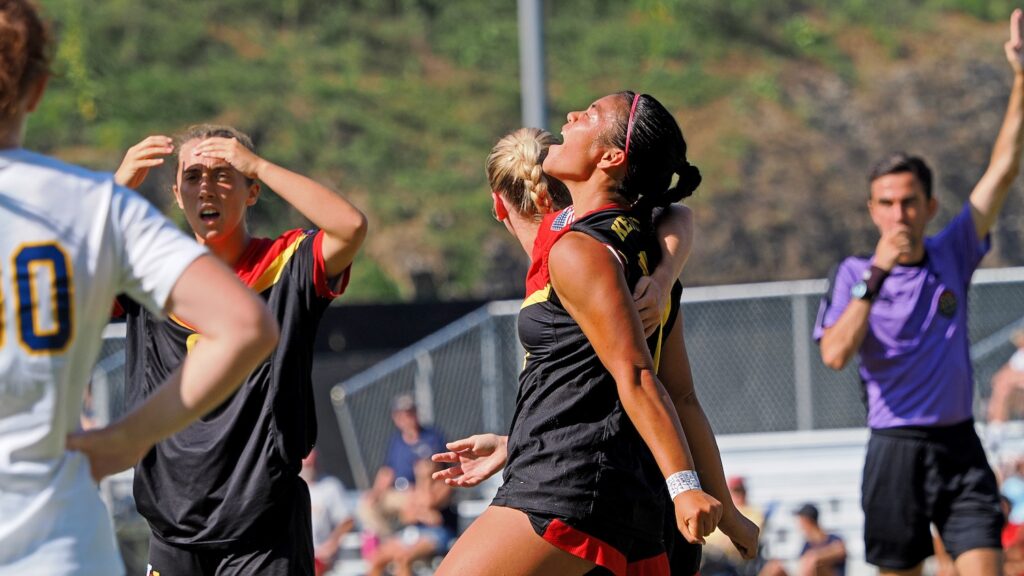
Barrett Callejo rejoicing on the soccer field while playing for Virginia Military Institute.
VMI’s women’s soccer team hosts Emory & Henry University at Patchin Field in Lexington, VA August 24, 2024. First half, VMI up 1-0. (Randall K. Wolf/VMI)

Cadet-athletes at VMI not only have their responsibilities with their selected sport but cadet duties on top of that. Cadets are also required to take physical fitness classes twice a week, participate in ROTC all four years, prepare for room and uniform inspections, practice for parade, guard duty, and more. 

Last year, Callejo served as a corporal on cadre. Serving as a corporal, she found she had a lot of influence on those below her, allowing her to lead while she was being led. She found another female guide sergeant while she was serving as a corporal, who was a big influence on her to continue being on cadre.  

“When you’re a corporal as a 3rd Class cadet, you have a lot of influence upon the rats just because you’re with them so much as a corporal,” she said. 

Having a packed day, Callejo, a biology major, has had to prioritize a couple things this year. With her role on cadre, being on the soccer team, keeping up with athletics, and more, it caused her to drop a class from 19 credit hours to 16 credit hours — primarily because she will be studying for the MCAT (Medical College Admission Test) this semester.  

“I just kept putting a lot of things onto my plate, plus being in season and the traveling,” she explained.  

The way she handles it is by writing everything down at the beginning of the week. Her Sundays consist of coming up with a game plan for her week and how she will tackle it. Whenever she gets overwhelmed, she goes for a run or hangs out with her teammates or friends.  

“Everybody on the team is one of my closest friends,” she commented. “I never thought I would make friends this tight. I’m closer with all of these girls I’ve known for three years now than I have other people that I’ve known for my entire life. But it’s not only just a team. I have some friends that I’ve met just being a cadet here, and they’re my closest friends.” 

She’s not only created bonds with her peers, but also with her professors.  

“Having professors on your side and having good relationships with professors has really helped me and has given me a lot of cool opportunities and positions at school as well,” she said.  

“I’ve had some good bonds with a lot of the professors in the chemistry and biology departments, and they’ve asked me for the past two years to help tutor for their classes. That not only helps the underclassmen who I tutor, but also, it’s helped me personally to go over all the basic stuff.” 

Those opportunities include being part of Tri Beta, a biology honor society and working on Summer Undergraduate Research Institute projects with the potential of being published. 

Her piece of advice: don’t study in barracks, there’s too much distraction. 

“I think studying is the best way to escape from all of the hectic stuff that happens up on the hill,” she said. 

Behind the Balance: Ben Hagerich ’26 — Keydet Cross Country

Virginia Military Institute’s cadet-athletes have to juggle cadet life, heavy academic course loads, and their NCAA Division I sport. Committed to both academic and athletic pursuits, balancing their rigorous schedule in both sports and school requires a certain level of commitment and discipline. Behind the Balance is a series that focuses on those cadet-athletes and how they handle the hurdles of the day-to-day. 

Prestigious people attend Virginia Military Institute, claims Ben Hagerich ’26 — and he was determined to be one of them. That drive, along with the chance to run cross country and track, drew him to the Institute. 

After being offered a scholarship, the computer science major attended an official visit and got to stay in barracks. He said it was an exciting night and got to see a lot of the inner workings of VMI. 

Although coming in as a rat, he said his biggest critic was himself. He wasn’t hitting the times he thought he would while running. He said it was challenging, physically and mentally.  

“As a rat I was, I was probably pretty scared to do a lot of things, whereas now there’s like no cowardice behind anything,” Hagerich admitted. “I would beat myself up a lot as a rat because I wasn’t performing the way I wanted to. It’s hard to expect yourself to do good. Something that’s changed is how I look at performance going to VMI. I’m going have to go through some tough stuff, so you have to be able to balance that with also being able to be an athlete.” 

Cadet-athletes at VMI not only have their responsibilities with their selected sport but cadet duties on top of that. Cadets are also required to take physical fitness classes twice a week, participate in ROTC all four years, prepare for room and uniform inspections, practice for parade, guard duty, and more. 

On top of his responsibilities with athletics, he is also the cadet in charge for the VMI Programming Club and a cyber captain.  

“The number one thing for me when it comes to balancing all that is probably that I’m passionate about all of them, so I really enjoy them,” he explained. “It allows me to sort of cultivate my own schedule. I love doing all these things. I know programming club is always on Wednesday, so I’ll know I’ll be able to lead that and create a lesson for that. While also knowing I’ve got to perform in track or cross country over the weekend. I know I need to eat right on top of that. I take things one step at a time.” 

As a mid-distance runner, he’s averaging about 35-40 miles a week. He got into running at the age of 8. He and his twin brother played baseball. While his twin stayed with baseball, Hagerich found more joy in running the bases. 

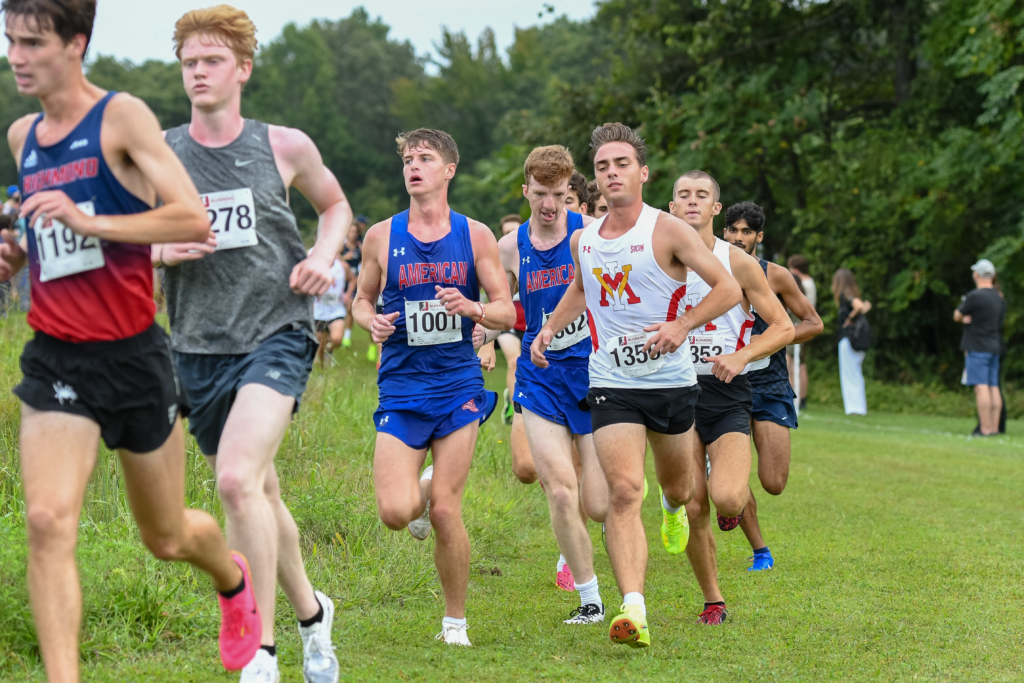
Ben Hagerich running at a cross country meet for Virginia Military Institute.

“I think your teammates make it everything. It’s so much fun. Then the competitiveness … I love the feeling of crossing that line first and scoring points for my team. It makes it so much fun competing against the best people, and being able to say that you gave 100% in a race that lasts for cross country about 25 minutes, and on the track upwards of two minutes … it’s pretty crazy how all that is all tied together,” he said. “Giving your all every single time you step out there and you get one shot at it.” 

He runs by leading by example for his teammates. He tends to be one of the stronger runners on the team, so he hopes he’s able to push others.  

“I always think that everyone behind me … if I can be a good example for everyone ahead of me then I know my teammates behind me are going to be encouraged to either try to keep up with me, or know that if I’m pushing strong, then they can do it as well,” he said.  

Although his days are long and he has a lot of responsibilities, he’s about to juggle it all knowing he has a strong support system around him. He also tends to go with the flow and not let the stresses of the everyday get to him.  

“In high school over four years, I barely knew the other events. I barely knew the sprinters, the jumpers, hurdlers or the throwers,” he admitted. “When I was a rat, in the first four months, I knew basically everyone on the team, and everyone was buddy-buddy. I’d never seen something like that before. Seeing us all at the event groups, we were always rooting for each other. It was so cool to see that everyone was like an actual team and helping each other out. And whether that’s a college thing or a VMI thing, I’m not sure, but I love it.” 

His hope after VMI is to secure a cybersecurity analyst role or go into network engineering with possibly the Department of Defense or another company that branches off the government. He is set to graduate in May.  

Behind the Balance: Conner Reid ’27 — Keydet Men’s Soccer

Virginia Military Institute’s cadet-athletes have to juggle cadet life, heavy academic course loads, and their NCAA Division I sport. Committed to both academic and athletic pursuits, balancing their rigorous schedule in both sports and school requires a certain level of commitment and discipline. Behind the Balance is a series that focuses on those cadet-athletes and how they handle the hurdles of the day-to-day. 

A different college experience was what Conner Reid ’27 was searching for. He said that Virginia Military Institute offered that and it’s what attracted him.  

He was looking at the University of Virginia, but he didn’t make it into the soccer program there. So, he broadened his search. 

“I started looking at other schools, and VMI really stood out to me,” he said. “It’s not the typical college experience.” 

But when he started reaching out, he found that the alumni network was exuberant.  

“I’m from Richmond, so the second I brought up VMI, people started coming from everywhere,” he admitted. “I think that really stuck it to me.” 

The economics and business major said VMI has helped shape him for the future.  

I think VMI sets you up best for life compared to other colleges,” he explained. “Regardless of when your classes start, you’re waking up at 6 a.m. and you’re getting your day started just like you would in the real world. Here you have to do a lot of things that you don’t necessarily want to do, but that’s kind of how life is. I’d say mastering discipline and doing things I don’t want to do along with time management here, especially while playing a sport, is a skill I’ve almost perfected. Those are the skills that I’ve really gained from VMI that have prepared me for life.” 

Cadet-athletes at VMI not only have their responsibilities with their selected sport but cadet duties on top of that. Cadets are also required to take physical fitness classes twice a week, participate in ROTC all four years, prepare for room and uniform inspections, practice for parade, guard duty, and more. 

He was used to balancing multiple things in high school by playing two sports — basketball and soccer — while keeping up with his studies.  

“Here I’ve really been able to put it on full display, adding the military aspect on top it,” he said. “I’ve never really traveled for sports, but here you’re on the road half the week during the soccer season, so I’ve honed that in and perfected that here. It’s something I plan to continue to carry on.” 

With an 18-credit hour semester and early mornings and practices bookending his school time, he likes to tackle things the minute he gets them.  

“If I can just knock out assignments as soon as possible, that’s best. I don’t typically do work on the bus just because I get motion sickness really badly. So, whether it’s in the hotel or on weekends, when I can finally catch up or get ahead, that’s where I knock out most of my work. I’ve been able to find a good rhythm,” Reid said. “I just roll with it and take it as it comes. Unless I know I have a test coming up, I’ll try to get ahead so I can just study that week and not have to worry about assignments. Most of the week, I just roll with the punches.” 

Reid also holds rank as an S2 sergeant, which is a front facing person for academics in the Corps. 

“So anytime rats need reminding of what their academic standards are or pairing them up with a tutor, we do a lot of that,” he explained.  

Conner Reid on the soccer field with a ball, playing for Virginia Military Institute.
VMI Men’s Soccer vs. Wofford at SoCon Championship

They also have Miller Academic Center Saturdays, where they meet up with rats and teach them study habits and how to do better in college, to help with the transition from high school. 

“I feel like academics is a strong suit for me, and I want to do my best to help other people succeed in college,” Reid commented. “I know it can be very different moving from high school to college. The workload and the difficulty of the work pick up. I’m trying to help people succeed.”

He’s a part of the Cadet Investment Group, which helps manage part of the school’s endowment. He says as a group of select individuals, they are able to manage real money and pitch stocks to the group and invest.  

“It’s pretty cool getting to actively manage real money and make investment decisions.” 

He jokes that he got a free group of friends when he started at VMI, especially with his teammates.  

“College can be a very daunting place; you meet new people and start all over. But the soccer team coming in from day one, we have these three weeks to a month of pre-season. You just get to meet people and then spend so much time with them during the Rat Line,” he said. “I’ve grown really close with my class. It’s a brotherhood. You’re closest with everybody on your team more than you are probably anybody else in the Corps.” 

His advice coming in? School should be the focus.  

“I know a lot of people here they’ll focus on the Rat Line, or they’ll spend their free time playing video games or something like that. To me, soccer is going to end one day. School is the most important,” he stated. “Prioritize getting your assignments done. Put in as much effort as you would on the soccer field in the classroom.” 

Behind the Balance: Cadee Hegarty ’26 — Keydet Women’s Soccer

Virginia Military Institute’s cadet-athletes have to juggle cadet life, heavy academic course loads, and their NCAA Division I sport. Committed to both academic and athletic pursuits, balancing their rigorous schedule in both sports and school requires a certain level of commitment and discipline. Behind the Balance is a series that focuses on those cadet-athletes and how they handle the hurdles of the day-to-day. 

Cadee Hegarty ’26 wanted to compete at a high level but also was drawn to the organization and discipline that Virginia Military Institute offered. Getting a soccer scholarship to the school allowed her to form a future at VMI.  

Her recruitment was a little different since it was when the coronavirus pandemic was limiting how sports were played. Instead, she attended a soccer camp, which was hosted by former women’s soccer coach Chris Haught-Thompson. From there, all it took was a visit to VMI. 

“I always wanted a team that had girls that were so close and had a bond that wasn’t like anything else,” she explained. “At VMI, it’s something else no one will understand except the people who go here. I was drawn to the school because of them.” 

The biology major is now in her last year and serving as the S9 captain, which includes preparing for pep rallies, company athletics activities, and creating permits. S9 is primarily made up of athletes, so cadets involved must pick up the slack when those on the staff are in season. As the S9 captain, she’s fully responsible for NCAA athletes, especially the rats — moving them around, making sure they’re able to do practice, but also participate in the Rat Line.  

“When it’s S9 time, it’s S9 time, and100% of my energy goes into that,” she said. “But when I’m at practice, or when we’re traveling, or when it’s game day, 100% goes to game day. Then schoolwork or in class, I’m fully dedicated to school. If I have free time during the day before soccer starts, I try to always get my work done early, because getting behind really catches up to you.” 

She was drawn to holding leadership in S9 because of her love of sports.  

“Being an athlete at this school is very different, and one of the biggest reasons of why I wanted this position was to show athletes that we can do it too, and we are just as part of the school as everybody else,” she commented. “Also to show everybody else that athletes can do it too, and I can do the same things that you guys can do. I have kind of one foot in both doors — athlete and non-athlete, with both my responsibilities, showing people there is a balance, it can happen, and everyone’s allowed to do everything.” 

Although she’s taking a lighter load, she’s previously been pulling nearly 19 credit hours per semester.  

“I try to take summer classes too, to kind of make up because in the fall we travel so much and we miss so much school, you can’t afford to get behind,” she said.  

Cadet-athletes at VMI not only have their responsibilities with their selected sport but cadet duties on top of that. Cadets are also required to take physical fitness classes twice a week, participate in ROTC all four years, prepare for room and uniform inspections, practice for parade, guard duty, and more.

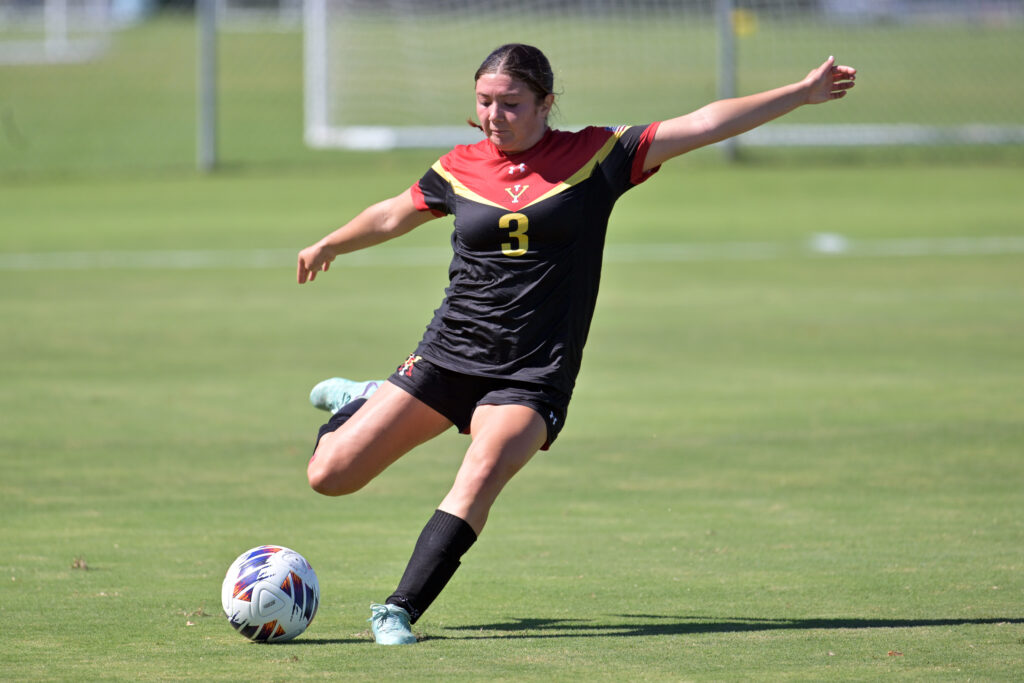
Cadee Hegarty kicking a soccer ball on the field, playing for Virginia Military Institute.
NCAA Women’s Soccer: Midshipmen prevail over VMI, 3-2

From early days to traveling each week, Hegarty works on taking each task as it comes. When the team is traveling, she could potentially miss up to three days of class — that means getting assignments ahead of time and working with her professors to make sure her work is done on time. She and her teammates spend a good amount of time while traveling dedicated to their studies. She struggled in her first year at VMI with balancing everything.  

“My rat year, I didn’t do well in school. That was hard for me. I never needed to study in high school. I never needed to, outside of soccer, go through film and read through plays and do stuff like that, but here you have to or else you’re not going to be able to just skate by,” she admitted. “I learned that sometimes you’ve got to cut out the naps. Sometimes you have to wake up a little earlier or stay up a little later to make sure everything you do gets done. I realized getting ahead is just being on time. I would try the best so I could to stay ahead of all my work. So, if I did travel, or if there was a pep rally or a football game or something where I couldn’t dedicate all my time to school, and I fell back a little bit, I was still on track.” 

The discipline that Hegarty has experienced at VMI is something she can take and build for the rest of her life.  

“If something is given to me, I’m one of those people who can’t sleep until it’s done,” she commented. “Prioritizing what’s most important and getting that done first, and putting all your time, all your energy into that … just one task at a time. I feel like a big part of the real world is priorities and discipline with any type of task. Also, integrity. I feel like a lot of workplaces look for someone who they can trust, who they know will get the job done, and who  lives by their word. And that is something VMI just drills into you.” 

Behind the Balance: Luke Schalow ’26 — Keydet Football

Virginia Military Institute’s cadet-athletes have to juggle cadet life, heavy academic course loads, and their NCAA Division I sport. Committed to both academic and athletic pursuits, balancing their rigorous schedule in both sports and school requires a certain level of commitment and discipline. Behind the Balance is a series that focuses on those cadet-athletes and how they handle the hurdles of the day-to-day. 

It was a goal of Luke Schalow ‘26 to play college football. But he also knew, if he could never play football again, he wanted to go to a school he would be proud to have attended.  

“This was a school that when I visited it was nothing like the high school I had gone through, and I certainly didn’t want to go through high school again,” the economics and business major admitted. 

Cadet-athletes at Virginia Military Institute not only have their responsibilities with their selected sport but cadet duties on top of that. Cadets are also required to take physical fitness classes twice a week, participate in ROTC all four years, prepare for room and uniform inspections, practice for parade, guard duty, and more. 

Schalow is also on the S9 staff, which includes preparing for pep rallies, company athletics activities, and creating permits. S9 is primarily made up of athletes, so cadets involved must pick up the slack when those on the staff are in season. For Schalow, that could mean an early morning remedial PT session or fitness tests. Each morning would be dedicated to S9 or football, he said.  

“Football is always a priority, that’s what I came here to do,” he explained. “S9 can complement that, and it really intertwines with it a lot.” 

He said his duties with football and S9 really go together during Matriculation Week, when he and others on the S9 staff get rats up in the morning, bring them to breakfast and then to train. But sometimes, he will have to choose.  

He’s also part of the Fellowship of Christian Athletes, which meets every Monday, as well as Navigators Bible Study, which meets on Tuesdays.  

His days are planned down to the minute to meet all his obligations. That’s where his time management skills come into play. 

“I really take stuff as it comes. I see kind of what to do and I try to work at what’s in front of me,” he said. “You certainly want to look ahead, but you can’t look too far ahead. I really just handle what’s in front of me and solve that problem. Then we’re moving on to the next.” 

Schalow is usually up at 5 a.m. to weightlift for football. Then it’s on to breakfast and classes. He’s in class from 8 a.m. to 3 p.m. This semester he’s enrolled in 17.5 credits.  

By 3:50 p.m. he’s off to team meetings. That’s followed by a whole slew of different sections of practice that last until 6:45 p.m. He was also elected as captain by his teammates, which means he’s there to lead the team.  

Luke Schalow playing football for Virginia Military Institute.
VMI Football vs. William & Mary Action Shot

“It doesn’t look like just wearing the title and being able to give commands to anybody. That’s not what it is. Instead, it’s to be a servant to them, to figure out what the team needs, and to know the guys on the team and to know what they’re going through, so that you can properly tend to that,” Schalow stated. “Wherever there are problems within the team, or wherever there are problems from the team, to on the hill, that’s where we’re really the liaison.” 

He said he acts as the bridge from the team to other parts of VMI.  

“It’s to solve problems for the team and to keep ourselves to a high standard so that we can be successful on the field. That translates to every aspect of VMI, because how you do anything is how you do everything. As a captain, your job is to set the standard and to encourage others to do the same … to be with them and to help them when they’re struggling to meet that standard,” he said.  

He credits his foundation with God to get him through the day. 

“I’m just not that strong on my own,” he commented. “It’s just the personal relationship with Him that’s really what’s carried me through it all. And then with that as the foundation, I would say that you just need grit. Things are never convenient.” 

Schalow explained that everything at VMI is regimented — time is sectioned off, but there’s always some give and take to be had.  

“You’ve got to be early for things,” he admitted. “There’s no excuse to not be there. There’s no excuse to not make it to something, or to not be in the right uniform or something like that. What you have to do is just manage that. Sometimes you just have to take a deep breath and recognize this is VMI, and it’s just what you have to do.” 

He also leans on his brother rats to get by. 

“The guys on the team are my brothers, especially the guys in my class, we’ve been through everything together,” he said. “The guys on the team, the fellow believers, it’s the bond that we have. Being a Christian, going through VMI, being an athlete at VMI, we understand what each other are going through. 

“Having those guys to carry my burdens and to being able to hopefully carry theirs as well, that’s the way to manage it. That’s been the lifeblood, having fellowship with those guys and leaning on them,” he continued.  

Schalow is set to graduate in December but walk in the May ceremony. He plans to work for Whiting-Turner Contracting Company out of Chesapeake, Virginia. 

I Am VMI: Sadie Smith ’26

What truly defines Virginia Military Institute are the people. Cadets, faculty, and staff, both past and present, are what make it “No Ordinary College.” I Am VMI showcases the outstanding individuals who have accepted the challenges and embraced the spirit of VMI. Their perspectives provide authentic insights into life at the Institute and the value of this unique military college.

Role at VMI: 2nd Class Cadet (Junior), VMI Class of 2026
Major: 
International Studies
Hometown:
 Ontario, California
Featured Activities: 
NCAA Division 1 Water Polo | Hotel Co. Commander 2025-26 | Honors Program
Post-Graduation Plans: 
Government Intelligence

Sadie Smith ’26 was looking for a college that could prepare her for a successful career and life. She said Virginia Military Institute is a place like no other and it offered the kind of lifestyle she was striving for.

“I am a cadet-athlete and VMI makes it possible to balance intense academics, sports, and rigorous military obligations,” she said. “VMI has given me so many tools to succeed and incredible leadership opportunities within the Corps and on the water polo team. I knew I would face many challenges here, but I was looking for that and it has made me into who I am today. VMI has provided me with unique opportunities to build good discipline, honor, and incredible character while putting service before self.”

As an international studies major, she has discovered a passion for national security.

“I enjoy seeing various viewpoints on topics, as well as the variety of skills political science knowledge helps build like writing, reading, debating, and organization. I added a computer science and national security minor because it is very applicable to the field of work that I would like to pursue,” she explained.

Smith went on to highlight the growth her professors encourage. “I especially value the academic challenge here and how well I have gotten to know the professors in the international studies department, they are incredible and always looking to help me succeed.”

She said her experience at VMI has been transformational — for both herself and for her water polo team. VMI has served as a place where she can balance Division I athletics, a challenging major, ROTC, and the opportunity to partake in rank positions within the Corps of Cadets.

“VMI is an environment that fosters professionalism and accountability on a daily basis, which maintains a structured military lifestyle,” she said.

With the opportunity to hold rank, she’s been able to train new cadets by establishing a good culture and spirit. Smith has also been able to balance her responsibilities by practicing good time management skills that have made her a proficient worker, team member, and friend.

“There are very few schools that make it possible to do this, and regardless if you are commissioning or not, you can be involved in incredible leadership opportunities,” she said. “I am involved in training incoming rats at VMI, and have developed so much as a leader and feel that being on a team doing this we give back to VMI by helping to form the incoming rats into a class and setting individuals up to live a successful life here. This all boils down to the connection VMI cadets have with each other and alumni that are long lasting and unlike any other.”

She said she’s proud to be a VMI cadet because she’s been able to embody honor and discipline.

“There is an incredible culture here of hard work and dedication, and I feel that I can rely on anyone to be supportive in the VMI community,” she commented. “The honor system instilled and the ability to sustain it makes VMI special. Discipline and hard work are highly valuable here and will pay off due to all of the incredible opportunities VMI has to offer.”

Although she believes that everyone has the potential to be a leader, she credits VMI for giving her the confidence and support to grow as one.

“This requires facing challenges that are not always pretty or fun in the moment, but they have really shaped me into a well-rounded individual and given me resilience and confidence to attack any challenge with effort and perseverance,” she admitted. “VMI has shown me that when you put your mind to something and are purpose driven, then you can accomplish your goals in all aspects of life.”

Her future hopes include working for the Defense Intelligence Agency. This summer, she is well on her way to that goal with an internship with the agency.

“I feel that VMI has prepared me as a well-versed leader to be able to succeed at this internship and to go out of my comfort zone,” she said. “I feel excited to work in a team environment and hope to receive further opportunities with this agency later after graduation. VMI has also taught me to be prepared for the unexpected and that not everything goes your way all the time. I like to keep an open mind and know that the skills I have learned here will aid me if I receive a job, go to graduate school, or take time to travel after VMI.”

Overall, VMI has given her relationships she knows will last for life.

“I have made so many amazing friends and have had the opportunity to interact with and work with incredible people, teammates, coaches, and professors,” she explained. “VMI, being a small community built on integrity and resilience, allows people to form long lasting bonds and relate significantly on a personal level. Everyone here is on their own path and working at their own goals, however, I love how cadets still feel very connected. VMI also has an amazing support system and resources to succeed in athletics, academic, and military.”

I Am VMI: Woongchan Oh ’25

What truly defines Virginia Military Institute are the people. Cadets, faculty, and staff, both past and present, are what make it “No Ordinary College.” I Am VMI will showcase the outstanding individuals who have accepted the challenges and embraced the spirit of VMI. Their perspectives provide authentic insights into life at the Institute and the value of this unique military college.

Major: Civil Engineering
Hometown: Seoul, South Korea | Harrisonburg, Virginia
Featured Activities: NCAA Division 1 Soccer | Tau Beta Pi Honors Society
Post-Graduation Plans: Commission, U.S. Army

Woongchan Oh ’25 had considered a military path during high school. But it was a soccer scholarship to Virginia Military Institute that solidified his decision.

“The opportunity to continue both my academic and athletic career ultimately led me to choose VMI,” he explained.

Oh wanted to pursue an engineering degree and among the three engineering programs at VMI, civil engineering offered the most hands-on experience and fieldwork, he said.

His experience at VMI has been crucial in his personal and professional growth. The demanding environment has helped him develop strong time management skills and perseverance.

Balancing academics, athletics, and military training has been a continual challenge for him and has encouraged him to step outside his comfort zone. VMI has shaped him into a more adaptable and confident individual, one who is ready to take on any future challenges with determination, he admitted.

“My experience at VMI has been unique compared to other cadets. I sought out every opportunity available to me, and I took full advantage of them,” he said. “I played NCAA soccer for all four years while balancing my engineering degree. In addition to my academic and athletic commitments, I enlisted in the Army as a combat engineer, studied abroad at Korea University, conducted summer research, and completed a summer internship with the Virginia Department of Transportation. None of this would have been possible without the support of my friends, faculty, and VMI alumni. I am always thankful for them and grateful for the opportunities I have had.”

Oh credits the one-of-a-kind environment of VMI to his successes — in the classroom, on the soccer field, in his personal life, and more.

“I enjoy hanging out with my roommates, who are also my teammates and classmates,” he said. “VMI is a unique place where you share every experience with your friends, strengthening your bond and creating lifelong friendships.”

Oh has also been equipped with discipline and resilience at VMI.

“The ability to manage time effectively, adapt to challenges, and perform under pressure will be invaluable in my future career,” he commented. “Whether in the military, engineering, or any other field, the leadership, teamwork, and problem-solving skills I developed at VMI will help me succeed. Additionally, the strong network of alumni, faculty, and friends who have supported me throughout my journey will continue to be a valuable resource as I move forward.”

He said he’s proud to be from VMI and revels in the fact that he has experienced the same school life as generations before him.

“In today’s world, fewer young people are willing to challenge themselves or embrace pressure and stressful situations. I am grateful that I chose a different path that pushed me beyond my comfort zone,” he said. “VMI, like any other place, does not guarantee success, but I can assure you that everyone in the VMI community wants you to succeed. They will guide and support you along the way. With an open mind and determination, you will find countless opportunities to grow and excel.”