Post View Unavailable »
New Website Launched »

Behind the Balance: Caden Plummer ’25 — Keydet Baseball

Virginia Military Institute’s cadet-athletes have to juggle cadet life, heavy academic course loads, and their NCAA Division I sport. Committed to both academic and athletic pursuits, balancing their rigorous schedule in both sports and school requires a certain level of commitment and discipline. Behind the Balance is a series that focuses on those cadet-athletes and how they handle the hurdles of the day-to-day. 

Time management is a common theme for many cadets, especially as a cadet-athlete. Caden Plummer ’25 is no stranger to figuring out his time and schedule. 

“You get dealt certain inconveniences that you just have to figure out how to deal with,” he said. “You can feel sorry for yourself in the moment, but that doesn’t do anything. You’re weighing yourself down more. Having the ability to be able to turn the page and be like, alright, I’m just going to deal with this, I’m going to figure out how to get it done and then you go in and just do it.”

Determination is what Plummer has in spades. His goal heading to college was to play baseball. Not only that, he wanted to play as a pitcher and a hitter, which can be difficult to be offered. Part of choosing Virginia Military Institute was that he was offered to do both. Now, just a pitcher, he’s glad he chose the Institute. He’s a civil engineering major — another draw to the school was its robust engineering program.  

What really sealed the deal was after an overnight from a VMI open house, he could feel the brotherhood and camaraderie that came with it.  

“That really drew me to it,” he admitted.  

Now in his final semester, he’s taking his lowest credit hours of 14 and a half, but previously he was tacking on 18-19 credits a semester. The lighter load has allowed him to head down to the baseball field early for some individual practice.  

Cadet-athletes at VMI not only have their responsibilities with their selected sport but cadet duties on top of that. Cadets are also required to take physical fitness classes twice a week, participate in ROTC all four years, prepare for room and uniform inspections, practice for parade, guard duty, and more. 

He’s down on the field around 1 or 2:30 p.m. for practice daily, while in season. 

“Pitchers, then hitters will hit in small groups. It’s more individualized work with the coaches,” he explained.  

Practice, while in season, runs until about 6 p.m., while out of season it can go as late as 8 p.m. Plummer said the practices are shorter while in season to conserve energy due to the number of games they’re playing.  
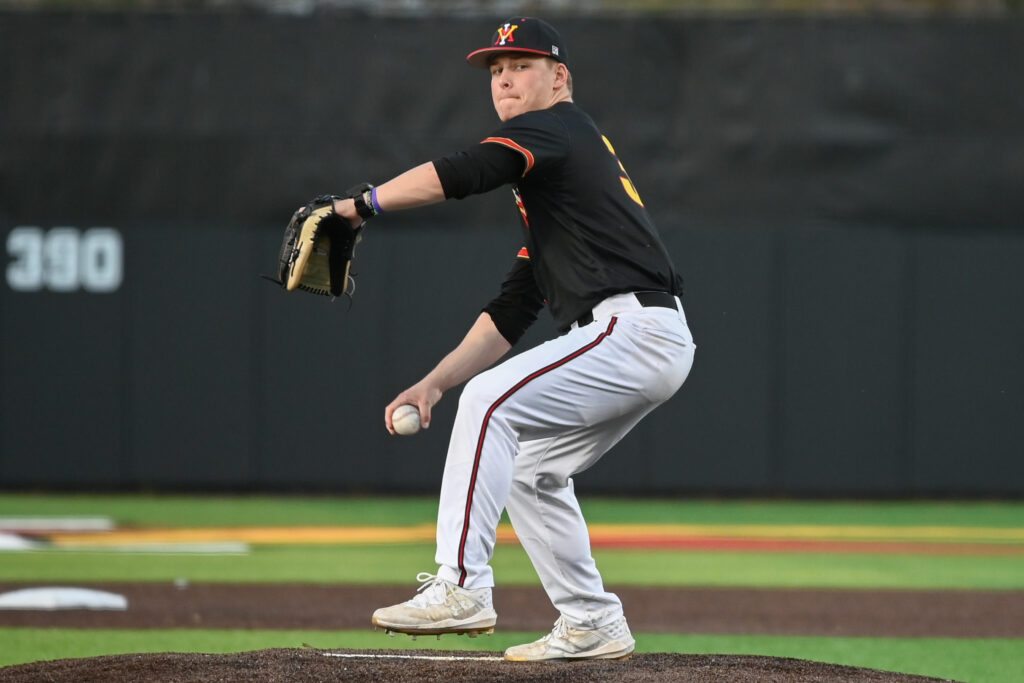
Caden Plummer throwing a baseball during a Virginia Military game.

“It’s to try and give us a little bit of rest.” 

His time at VMI has given him the fortitude to get things done efficiently. 

“People can get lazy and if you do that here, then there are a lot of consequences,” he said. “It’s important to stay on top of your stuff, if you can have the mental fortitude to do it.” 

Plummer said that type of attitude will help in the real world with project deadlines or work responsibilities. Considering he has already landed a job for post-graduation, he knows he can’t slack off. He has accepted a position with Kimley-Horn in Richmond as an engineer.  

He credits his faith in keeping him strong and pulling him out of tough times. Keeping a positive mindset has also created a strong foundation for himself. He also doesn’t take his experience at VMI for granted. 

“That’s a huge thing for me, my relationship with the Lord,” he commented. “I’m just lucky to be able to get to experience these things, because there’s plenty of people that would like to be in my spot or would like to go to college.”  
Behind the Balance: Jillian Sisk ’27 — Keydet Women’s Track and Field

Virginia Military Institute’s cadet-athletes have to juggle cadet life, heavy academic course loads, and their NCAA Division I sport. Committed to both academic and athletic pursuits, balancing their rigorous schedule in both sports and school requires a certain level of commitment and discipline. Behind the Balance is a series that focuses on those cadet-athletes and how they handle the hurdles of the day-to-day. 

Her love of math and science propelled Jillian Sisk ’27 to pursue a STEM major. At first, she thought veterinary school would be the right path, but found it wasn’t the right fit for her. Instead, she discovered engineering, which pointed her to Virginia Military Institute.  

“I started out as a mechanical engineering major my first semester and realized that was not for me, and I switched to civil and I loved it,” she explained. “I love the teachers. They are so nice and they’re always making sure that you’ll succeed. They know your name. They know your face. And civil engineering is just so interesting because it’s you’re directly working with people.” 

She said choosing civil engineering as her major allowed her to see the direct effect her work could have on the community. She’d be working with the infrastructure of the state, for example. 

“I’m doing things for people — the water, the bridges, the roadways,” she said. “It’s a serious job, because if you build something and it breaks, that would be bad.” 

Sisk was recruited to VMI for track and field as a long-distance runner. She hadn’t heard of the Institute until then.  

“Everyone was welcoming and kind, and they answered all my questions,” she said about her first visit. “I met so many people that seemed like they’d be the type to uplift you if you’re having a hard day or a bad day. And I just felt like it was a family.”

She’s also found that family within her teammates, who offer her support on and off the track. Sisk, who runs the 3K, 5K, the mile, and the steeplechase race, got into track and field in middle school when she was looking for a sport to play. She said the minimal equipment was an incentive, especially for a new sport to try out. Turns out, she was a natural. 

“I just loved it. I love the competition. I love the discipline it requires to get out there and do it every day,” she admitted. “I love the process of training.” 

She’s dedicated to training, which takes up a good portion of her day.  

Cadet-athletes at VMI not only have their responsibilities with their selected sport but cadet duties on top of that. Cadets are also required to take physical fitness classes twice a week, participate in ROTC all four years, prepare for room and uniform inspections, practice for parade, guard duty, and more. 

She’s up just after 6 a.m. when she grabs breakfast to-go and heads back to her room.  

“I’ll check to see what type of homework I have for that day, and I’ll make myself a list of things I want to get done,” she said.  

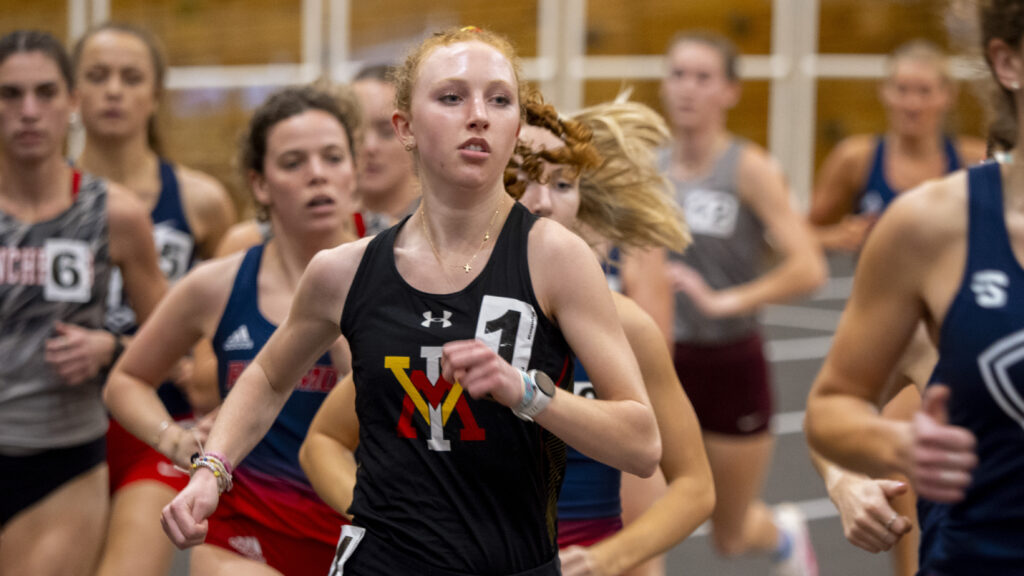
Jillian Sisk runs track during a meet for Virginia Military Institute.
VMI’s Jillian Sisk during the 3000 meter run. The VMI Invitational indoor track and field meet at the Corps Physical Training Facility in Lexington VA January 27, 2024. (Randall K. Wolf / VMI)

With class until just after noon, she has time to tidy up her quarters, check-in with teachers, and catch up on work before she heads to practice at 3:30 p.m. By 7:30 p.m. it’s dinner time and the more studying. Her days usually wrap up around 10 or 11 p.m. 

With 18 and a half credits, it can get overwhelming at times. During her rat year, Sisk admitted she struggled to stay on top of her studies and saw her grades slip.  

“School always came really easy for me in high school, I never really studied or anything, but you have to study here,” she stated. 

Talking with her mom, her roommates, classmates, and teammates offers good stress relief for Sisk. She said if there’s any time she feels overwhelmed or needs to talk, they’re there. Running offers solace for Sisk.  

“If I’m ever having a really bad day, usually going out for a run helps that a lot. I love running. It makes me feel happy that at the end of the day, no matter what, I have running,” she said. “I can run and that’s one of my strengths and it makes me feel good about myself. I can go out there and just run eight miles and it feels like nothing.” 

She has the mental fortitude thanks to enduring long distances, which can be applicable to her life at VMI and after. 

“I think that they are really preparing me for the future, with the busyness and the strict deadlines,” Sisk explained. “I’m way better at planning things.” 

From last year alone, she’s seen a difference within herself in how she is able to use time wisely. 

“It’s made me have to be more of a self-advocate,” she stated. “If I’m struggling with something in class, I have to be brave enough to ask for help or go to office hours. You have to be able to stand up for yourself. Because at the end of the day, it’s your education … you’ve got to be able to do that for yourself.” 

Behind the Balance: Dyson Dunham ’26 — Keydet Wrestling

Virginia Military Institute’s cadet-athletes have to juggle cadet life, heavy academic course loads, and their NCAA Division I sport. Committed to both academic and athletic pursuits, balancing their rigorous schedule in both sports and school requires a certain level of commitment and discipline. Behind the Balance is a series that focuses on those cadet-athletes and how they handle the hurdles of the day-to-day. 

It’s a mental game for Dyson Dunham ’26, not just while he’s wrestling, but during his day-to-day. He sacrifices a lot when cutting weight for matches, staying on top of assignments, and fitting in his cadet duties. On the mat, he says he’s doing it for himself.  

“It’s kind of like a pride thing,” he admitted. “I want to prove something to myself.” 

Wrestling wasn’t his first choice of sport. It took his older cousin doing it and getting stronger that pushed him to try it.  

“I would go to my cousin’s wrestling tournaments, but then my cousin would beat me up,” he joked.  

The sport became something he enjoyed. It also introduced him to a coach he became close to, who became a mentor. It was his high school coach who suggested Virginia Military Institute to Dunham because he was an alumnus.  

“I wanted to know what connections I could build here and what network I could grow,” he said. 

Sometimes, he struggles with compartmentalizing things, often going on autopilot to get through the day. He’s a big proponent of just pushing forward, especially when stressed.  

“I kind of found ways to shut my brain down and just kind of deal with it.” 

He says he has a high stress tolerance. It pushes him to work harder. It’s paid off, last year, he competed in the NCAA Wrestling Championships in 2024 and secured a win over a Big 10 opponent. He also came in third in the SoCon Championships in 2024.

“I believe that I thrive on that pressure,” he said. “Going into wrestling, I’m a little antsy, a little anxious. That makes me better, makes me get stuff done faster, get to what I want to do.” 

This year, he’s proved that hard work pays off. Dyson was the top wrestler at 133 pounds and earned one SoCon win, to name a few. 

With 18 and a half credits and a being a DI athlete, communication and organization are top priorities for Dunham.  

“I make sure I turn in all my work, coordinate with professors on how I can make things up,” he explained. “Usually, they’re pretty understanding.” 

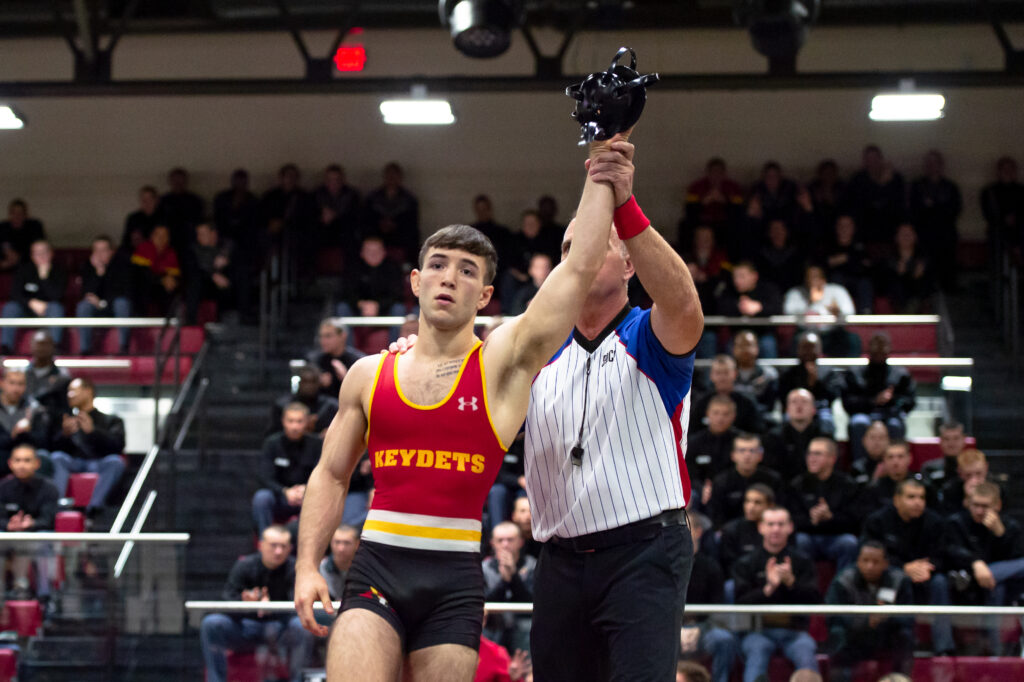
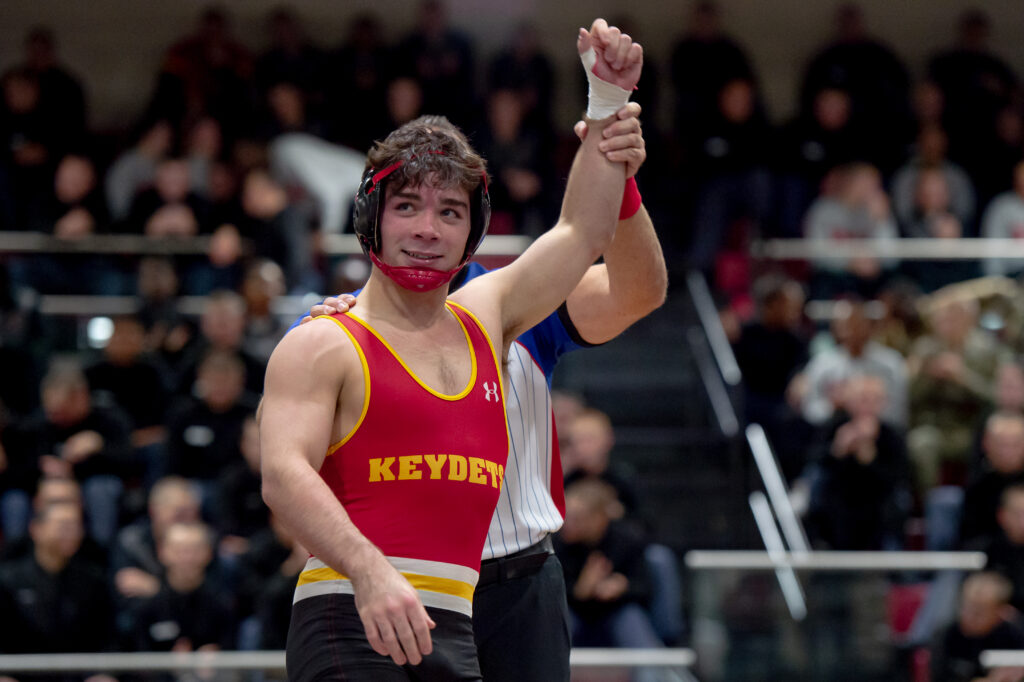
Dyson Dunham during a wresting match at Virginia Military Institute.
VMI Wrestling vs. Seton Hill Action Shot

Cadet-athletes at VMI not only have their responsibilities with their selected sport but cadet duties on top of that. Cadets are also required to take physical fitness classes twice a week, participate in ROTC all four years, prepare for room and uniform inspections, practice for parade, guard duty, and more. 

His days can start early with morning workouts, then onto class until the afternoon, and then back to practice. Since his days are so filled, he sometimes has to take the losses — a lower grade on an assignment — to find some downtime to reset. 

“I find relaxing times very important,” he commented. “They’re hard to come by for me. So anytime that I can push something off and give myself time to just take a break from either wrestling or academics, I do it.” 

It doesn’t mean he’s not committed to his studies or sport; he emphasizes the need to find time for yourself to prevent burnout. Luckily, as a civil engineering major, he stays engaged in class.

“I really enjoy engineering, so I find it easy to pay attention in class. I kind of figure that time is already allotted to class, I’m already using that time anyway. I might as well absorb and pay attention,” he stated. “I just make sure I’m staying engaged in my classes, talking to my professors so they know that I know what I’m doing.” 

The pressures of VMI will serve him well in the future, he stated. The balancing act he performs daily can be applied to his future work environment, especially after graduation when he commissions into the U.S. Army. Even if his daily life isn’t as busy, he has the tools to succeed.  

“I’m learning how to juggle a lot of things at once, like stress management, being able to work under that sort of pressure, and being able to deal with it,” he said. 

Behind the Balance: Val Tonnu ’26 — Keydet Women’s Swim and Dive

Virginia Military Institute’s cadet-athletes have to juggle cadet life, heavy academic course loads, and their NCAA Division I sport. Committed to both academic and athletic pursuits, balancing their rigorous schedule in both sports and school requires a certain level of commitment and discipline. Behind the Balance is a series that focuses on those cadet-athletes and how they handle the hurdles of the day-to-day. 

With dreams of commissioning into the United States Air Force, Val Tonnu ’26 was aiming for a military college experience. She knew if she deviated from that, her drive to continue the path to the Air Force could diminish, along with her grades potentially suffering. 

Despite not being accepted into the Air Force Academy, she pushed on and decided Virginia Military Institute was the right choice.  

“I think I need to be at this place, or else I’m going to go a little crazy,” she said. 

As a civil engineering major, she’s enrolled in 18.5 credits this semester, while also swimming on VMI’s swim and dive team. 

Val Tonnu swims in the pool during a meet for Virginia Military Institute.

“Originally, I wasn’t going to swim, because I really did not enjoy swimming my senior year of high school. I kind of just fell out of love with it,” she admitted. It was much like being burnt out over the sport. 

When she attended the Summer Transition Program before she matriculated at VMI, someone from the team urged her to contact Coach Scott Thacker. Now, she feels like she’s found her purpose on the team, as well as a newfound love of the sport.  

She said she values the effort she and others put in on the team — character is something she respects.  

“I’m never going care about your competitiveness or your performance level, but I’m going to care about the effort and the type of person you are,” she said. “I want to help the younger kids understand that it’s really your character that helps make you.” 

Tonnu is just mirroring what she experienced her first year on the team: a level of leadership that pushed her to succeed. She said the outgoing 1st Class members were caring towards the rats on the team. 

“No matter what, they just wanted us to succeed,” she explained. “And not just in the pool, but they’d always ask us how we were doing in school and how our day was. That’s something I want to carry on throughout the team.” 

It can be a struggle to keep up with the day-to-day outside of the pool. As a long-distance swimmer — swimming the 500-, 1000-, and 1650-meter — she knows about endurance.  

Cadet-athletes at VMI not only have their responsibilities with their selected sport but cadet duties on top of that. Cadets are also required to take physical fitness classes twice a week, participate in ROTC all four years, prepare for room and uniform inspections, practice for parade, guard duty, and more. 

She’s up during the week at 5:25 a.m. to prepare for morning swim, then breakfast and onto classes until lunch. After lunch she either has a lab or can get some schoolwork done. 

“I usually take a lot of the time in between classes to go do work,” she said. “Having a schedule, and the fact that at VMI, it’s a premade schedule for you, it helps a lot. I do prioritize that time in between classes, even if it’s just like the 10 minutes in between class, I can go to my teacher’s office and ask them for help.” 

She credits the engineering department for providing any help she needs to keep her grades in good standing or if she has any questions.  

Swimming allows her to be with herself, she said. She’s able to clear her mind, space out, or even go through what she did in class prior to practice. 

“If I’m upset or have a bad day, I get to practice and don’t think about it anymore,” Tonnu admitted. “It gives me a lot of time to think. During our long sets in the pool, I’m either singing a song, or I think about schoolwork a lot. My friends and I think about schoolwork, and we’ll think about a random problem that we had in class, and I’d be like, ‘oh my gosh, that’s how you do it.’” 

She said not only is the team gaining recruits that are faster and stronger, but they’re more positive and supportive.  

As one of the co-presidents of the Student Athletic Advisory Committee, she’s finding her voice more and more.  

“I think my leadership style is a lot different than it used to be like, because when I came in, obviously you’re a little scared and you don’t want to speak up as much. In high school, I didn’t speak up, I was a huge people pleaser,” she said. “It bled into the way I led, because I let people walk over me. But I think this place has helped me put my foot down. And people are a lot more encouraging and supporting of my ideas.” 

Behind the Balance: Cameron Thomas ’27 — Keydet Men’s Track and Field

Virginia Military Institute’s cadet-athletes have to juggle cadet life, heavy academic course loads, and their NCAA Division I sport. Committed to both academic and athletic pursuits, balancing their rigorous schedule in both sports and school requires a certain level of commitment and discipline. Behind the Balance is a series that focuses on those cadet-athletes and how they handle the hurdles of the day-to-day. 

College was the last thing on Cameron Thomas’ ’27 radar in high school. Instead, he was looking to enlist in the military once he graduated. That was until he started track his junior year, specifically competing in pole vault. 

Thomas admits he used to fear heights, but now catapulting over the pole is no big deal. Instead it’s something he highly excels at. Recently, he broke a more than two decade old Virginia Military Institute record for pole vault for indoor track and broke the record last year for outdoor track. In 2024, he also won the pole vault individual title at the SoCon Championships for All-SoCon recognition. 

“Pole vaulting is a very mental sport so staying calm and focused is crucial to competing at this high of a level,” he explained. “Trusting the process on one day that you have practiced for the entire year can be very stressful, especially in front of a large audience.” 

To combat that, he’s come up with breathing techniques and nutrition plans for the days leading up to competition.  

“As long as you do as much as you can to prepare yourself, everything you do on that day during competition should feel easy and effortless,” he said. “My best days are ones where I’m not forcing anything. So, in a way pole vaulting on competition day should just feel like a run and jump; everything else is irrelevant.” 

Keeping stress down and staying organized are ways he stays in the zone.  

Cadet-athletes at VMI not only have their responsibilities with their selected sport but cadet duties on top of that. Cadets are also required to take physical fitness classes twice a week, participate in ROTC all four years, prepare for room and uniform inspections, practice for parade, guard duty, and more.

Taking 16 and a half credits as an economics and business major, Thomas says this is a lighter load than he had last year with over 18 credits. His days usually start at 6:30 a.m. when he gets up and heads to breakfast. This semester he has classes until noon, which allows him several hours to complete any class assignments.  

“The schedule I have right now is really nice because right after my classes, that’s what I’m the most focused,” he explained. “So, getting right into my homework, I can get pretty far ahead.” 

Sometimes, he can fit in a power nap before heading to practice at 4 p.m., which lasts until 7 p.m. He eats at 7:30 p.m. then studies until he’s ready for bed, which he has a pretty rough stop at 9:30 p.m. 

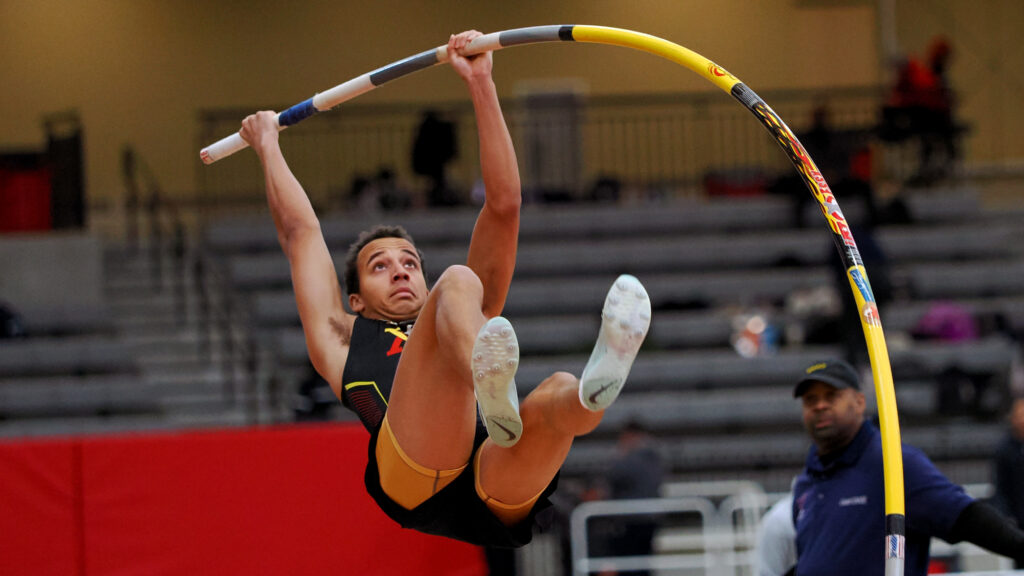
Cameron Thomas pole vaulting during a track and field meet for Virginia Military Institute.
VMI Team Challenge track and field meet at the Corps Physical Training Facility in Lexington, VA January 11, 2025. (Randall K. Wolf)

“I had a bad habit last year going to bed at like 10:30 p.m. because that’s when taps is, so it’s like the average bedtime. But I realize if I get way more sleep, I feel a lot happier,” he said.  

Originally, Thomas was a biology major. Enrolling in the Summer Transition Program prior to matriculating, he took a class with Col. Wade Bell, but instead of focusing on biology, Thomas was trading stocks.  

“He would always laugh at me because I’d be in the back of the class just yelling whenever I make money,” he said. “He really prompted me to go toward the economics and business major, because I didn’t even know that was the thing.” 

Thomas said he is interested in learning how the economy works, especially this year with his more major-centric classes that are focused on it. He said in high school he was stock trading.  

Cameron Thomas pole vaulting during a track and field meet for Virginia Military Institute.
VMI Team Challenge track and field meet at the Corps Physical Training Facility in Lexington, VA January 11, 2025. (Randall K. Wolf)

“I got really obsessed with stock trading and learning how numbers work. I’ve always been a math guy as well, way more than writing or reading,” he commented “I like making money or sometimes losing money. You know, it’s all process.” 

Coming to VMI was a process for him as well, especially learning how to adapt to a strict schedule. 

“I think I’m a lot more mature since I’ve been here. Before I was doing things like staying up late, and not really thinking about how my days coincide with each other on like a day-to-day basis,” he admitted. “I’d always wait to do my work until the last minute. Now I realize that getting it done early is going to be easier in the long run.” 

He’s also committed to his daily practices at track. 

“It was very difficult when I first got here during the Rat Line, because we also had the other stuff. Like last year, I kind of went down with my progression, because I was doing push-ups before the meets, I was marching in new boots and walking in low quarters. A lot of stuff to get used to.” 

He’s learned how to hold himself accountable. His growth in understanding responsibility will help him in the future, especially with dreams of joining the World Class Athlete program with the U.S. Army. Currently, he’s seeking to commission into the Army. The program enables athletes to train for the Olympics. If that doesn’t pan out, he’s looking to be part of the Finance Corps in the Army. 

Behind the Balance: Cole Jones ’26 — Keydet Lacrosse

Virginia Military Institute’s cadet-athletes have to juggle cadet life, heavy academic course loads, and their NCAA Division I sport. Committed to both academic and athletic pursuits, balancing their rigorous schedule in both sports and school requires a certain level of commitment and discipline. Behind the Balance is a series that focuses on those cadet-athletes and how they handle the hurdles of the day-to-day. 

Since the age of 5, Cole Jones ’26 has been playing lacrosse. It’s a good mix of several sports, he said.  

“It brings every other aspect of sports into one. I played football when I was little, which is super physical, but it’s not as fast paced. I always played basketball. It’s kind of a mix between those two … physical and fast paced.”

The constant go of the game is also like his fast pace in his everyday life at Virginia Military Institute.  

Cadet-athletes at VMI not only have their responsibilities with their selected sport but cadet duties on top of that. Cadets are also required to take physical fitness classes twice a week, participate in ROTC all four years, prepare for room and uniform inspections, practice for parade, guard duty, and more. 

His priorities have changed since coming to VMI. He finds that he is more focused, especially with the structure he’s had to maintain. Thankfully, during times of struggle in keeping up, he was able to lean on his dykes and brother rats for support.  

“If you have a ton of free time — something they told me — then you’re probably doing something wrong,” Jones said. “There’s always something that should be getting done, whether that’s just extra readings, catching up, getting ahead on work, or studying.” 

The international studies major is set to commission into U.S. Army once he graduates.  Jones explained that his duties with ROTC and lacrosse go hand-in-hand.”The physical fitness aspect of it, it’s good, so I don’t have to really work out as much on my own because of going to practice and doing team lifts. Then the ROTC cadre are pretty flexible and understanding that if you miss things for sports, they’ll give you times to make stuff up or extra instruction periods and things like that.” 

In high school, Jones was focused on lacrosse and hanging out with friends. Coming to VMI, he became more school focused.  

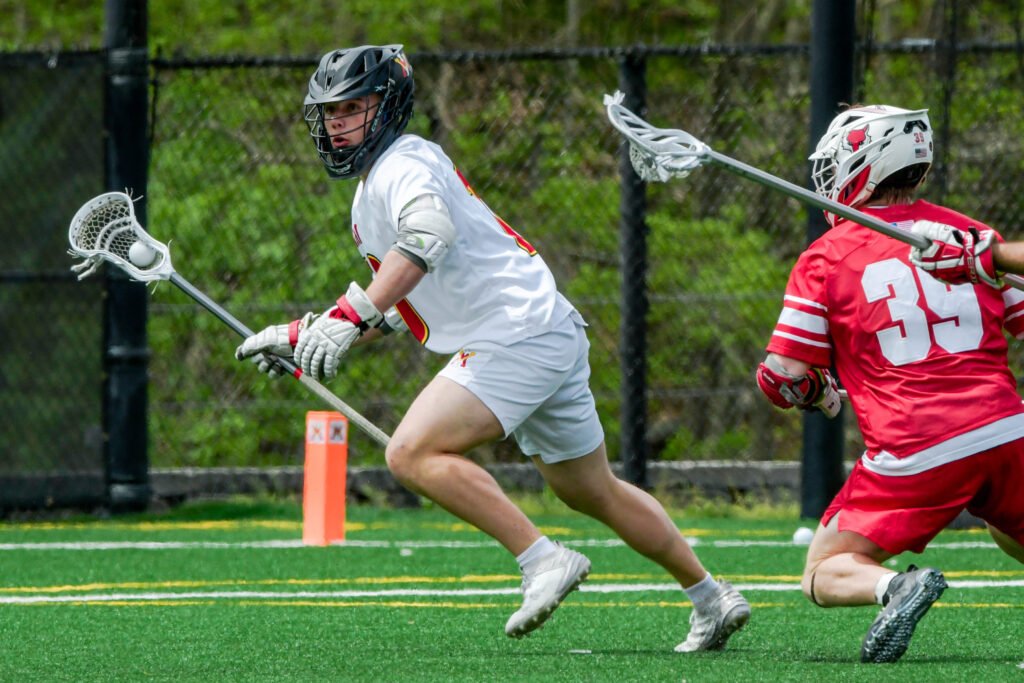
Cole Jones playing lacrosse for Virginia Military Institute.

“When I got here, my dad, who went to West Point, always told me school’s no joke. It’s not like high school. You actually spend time on it. I was really paranoid coming here about school work, and then I just kind of hit the ground running. I realized if I want good grades, you can’t slack, you have to devote at least a few hours a day to working on homework.” 

VMI is a different college experience, but it’s allowed him to see how a stacked schedule will be once he’s out of school. He’s learned how to maximize his time for what he needs to get done.  

“Our coach always says, once you get on the field, leave everything else up on the hill and just focus on the sport and practice that day,” Jones stated. “Everyone has their tough days and going down there with your whole group of guys, getting just to compete every day … it’s always awesome.” 

Being part of a team — on and off the field — has allowed Jones to understand prioritizing things. 

“Our coach also reminds us to control the things that you can control. There are definitely times where I get stressed out, and then I just kind of stop and lean back. It’s like, well, I have this thing that’s due tonight. Focus on that. And then, just one thing at a time. People here will say, just focus, especially as you’re a rat, it’s just one meal at a time. So, get to the next meal, get to the next day, the next assignment, whatever that is, just work one step at a time.” 

Behind the Balance: Matthew Picard ’27 — Keydet Men’s Swim and Dive

Virginia Military Institute’s cadet-athletes have to juggle cadet life, heavy academic course loads, and their NCAA Division I sport. Committed to both academic and athletic pursuits, balancing their rigorous schedule in both sports and school requires a certain level of commitment and discipline. Behind the Balance is a series that focuses on those cadet-athletes and how they handle the hurdles of the day-to-day. 

Matthew Picard ’27 vowed he would never attend a military college. One of his teammates in high school ended up going to Virginia Military Institute and he was encouraged to investigate it.

“He went to high school with me, and we both swam on the high school team. I asked where he was going to college, because he was the captain and a good role model. And he said, VMI,” Picard explained. “I was like, what is that military school? He then said I should look into it. I’m like, no, I’m never going to go. There is no reason for me to go into the military.” 

A conversation with his father got some gears turning for him. That’s when he started researching VMI.  

Picard was intrigued to see that a new aquatic center was being built at VMI and there was also a new swim coach. After a conversation with Coach Scott Thacker, Picard was more on board. Then he discovered the engineering program at the Institute, and he was sold.  

“It came down to the decision, and my dad told me, ‘If you’re going to pick four years of your life to put everything into and just get it done, it’s now,” he said. 

The mechanical engineering major is enrolled in 19 credits this semester, as well as being part of the swim and dive team.  

Cadet-athletes at VMI not only have their responsibilities with their selected sport but cadet duties on top of that. Cadets are also required to take physical fitness classes twice a week, participate in ROTC all four years, prepare for room and uniform inspections, practice for parade, guard duty, and more. 

Managing his time has been the hardest thing to get down. 

“I benefit from practicing and then eating,” He explained. “I find that I can lock in and get work done after that.” 

His days start early — 6 a.m. four times a week for morning practice. He’s in class starting at 8 or 9 a.m. then practice again at 4 p.m. until after 7 p.m. After grabbing a bite to eat, then he dedicates the rest of the night to studying and schoolwork.  

Swimming, although a demanding practice schedule, allows him to switch focus. He swims the 50-meter, 100-meter, and 200-meter relays, all freestyle.  

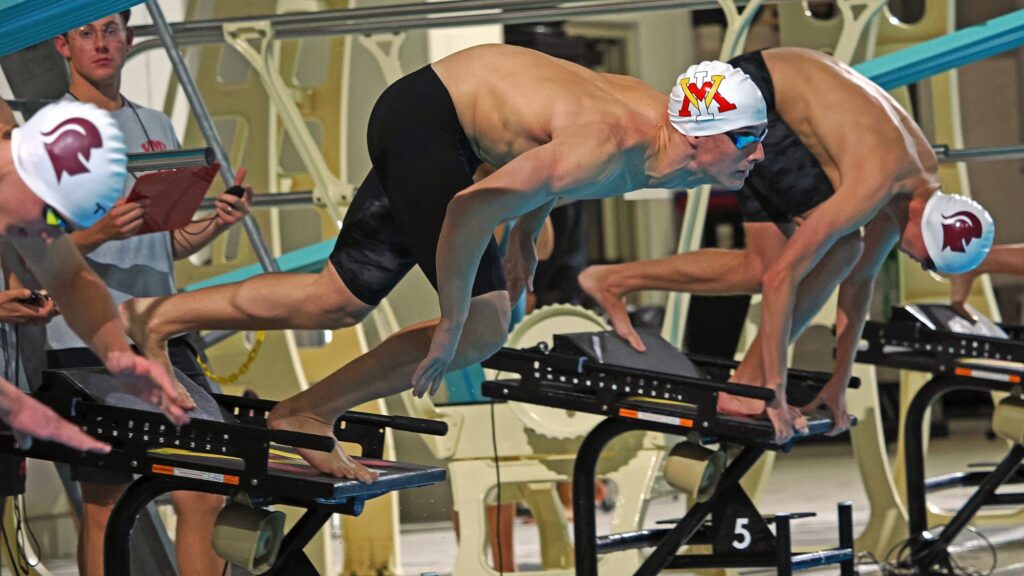
Matthew Picard diving into the pool during a Virginia Military Institute swim meet.

“I think it’s very power focused. I love moving quick, trying to get to the wall as fast as you can,” he stated. “I think it’s very competitive. I feel like with sprints, you’re a lot closer with other people, so it kind of pushes you to get that much faster.” 

He’s proven to be fast. Last year, he and others on the team broke several VMI records. He set a rat and team record in the 50-yard freestyle, a rat and team record in the 100-yard freestyle, a rat and team record in the 200-freestyle, as well as several other relay records. 

Picard has been interested in how things work since a young age. He likes taking things apart and putting them back together. 

“I used to take apart pens, radios, just all sorts of stuff. And my parents hated it, because I would just break things,” he joked. “I like to know why does that work the way it does. That’s the biggest thing: designing and then building, and then problem solving and going through the whole process to make things.” 

He feels like VMI prepared him to handle heavy course loads and his swim team responsibilities, as well as preparing him for whatever is next after he graduates.  

“I think I’ve definitely felt more qualified than some of my buddies that have come back from other places with the same major. I think it’s definitely taught some life skills, a lot of maturity. We grow up fast here.” 

Behind the Balance: Eleyah Armstrong ’25 — Keydet Women’s Track and Field

Virginia Military Institute’s cadet-athletes have to juggle cadet life, heavy academic course loads, and their NCAA Division I sport. Committed to both academic and athletic pursuits, balancing their rigorous schedule in both sports and school requires a certain level of commitment and discipline. Behind the Balance is a series that focuses on those cadet-athletes and how they handle the hurdles of the day-to-day. 

Adrenaline and nerves flow through Eleyah Armstong ’25 before she starts a race. As a captain and sprinter on Virginia Military Institute’s track and field team, the anxiety dissipates quickly as she runs. The downside to sprinting is that it’s over faster than it began. Then, she has to start all over.  

“Even though I’ve been running for so long, still, to this day, I get performance anxiety,” she admitted. “I try to calm myself. And the two words that I repeat to center my mind, to calm down, is ‘inner peace,’ because I meditate before I get into competition mode.”She doesn’t put a lot of emphasis on her anxiety, instead she puts a lot of her faith in God.  

“I also talk to God, and I just put it in his hands, because I know he’s got me through it before, he’ll get me through it again,” Armstrong explained. “The path that he has me walking, I know there’s success at the end, and I’m going to accomplish the goals that I have for myself.” 

She’s been running track for over 14 years. She said her parents put her in track after she raced a girl during her brother’s football practice when she was 7 years old. The girl she raced, who was just a year older, was known to be one of the fastest in the area and ran with a higher age group.  

“My dad decided to put me in it,” she said. “I like to compete a lot, and I like the adrenaline that comes behind it. I just stuck with it.” 

The psychology major is in her last year at VMI and plans on commissioning into the U.S. Army in May.  

Cadet-athletes at VMI not only have their responsibilities with their selected sport but cadet duties on top of that. Cadets are also required to take physical fitness classes twice a week, participate in ROTC all four years, prepare for room and uniform inspections, practice for parade, guard duty, and more. 

Eleyah Armstong jumping at a track and field event for Virginia Military Institute.
2022 SoCon Track and Field Championships

In her previous three years, Armstrong would have to get up early and split her day between practice, classes, and then practice again.  

“You have to shift your focus a lot. You have to start with this, and then go back into this, and then you have to get back into the rhythm,” she explained. 

Now, she’s able to have devoted afternoon practices, which leaves her mornings more open for studying and other obligations. Her role as captain has also allowed her to discover her own leadership style. She spent last year with a captain role under a 1st Class cadet, which gave her the opportunity to be able to shadow and learn. Last year, she qualified for the NCAA East Regional first round of the 2024 NCAA Track and Field Championships, making her the first women’s qualifier from VMI since 2011. 

“I already had a good communication system with the coaches, because I just like to make sure my team is on the same page. I like to have harmony,” Armstrong stated.  

Track served as an outlet of stress relief for Armstrong. Overall, VMI has also helped build her as a person. 

“I think VMI has prepared me for the future, as far as working with different people from different backgrounds and creating bonds with different people from different backgrounds,” she said. “You never know who people really are, or where they come from, until you get to know them and work with those people, whether that’s in the classroom or in the ROTC department or your teammate.” 

Behind the Balance: Patrick Jordon ’27 — Keydet Wrestling

Virginia Military Institute’s cadet-athletes have to juggle cadet life, heavy academic course loads, and their NCAA Division I sport. Committed to both academic and athletic pursuits, balancing their rigorous schedule in both sports and school requires a certain level of commitment and discipline. Behind the Balance is a series that focuses on those cadet-athletes and how they handle the hurdles of the day-to-day. 

At 5 years old, Patrick Jordon’s ’27 parents were urged to take him to wrestling practice. It started out as an appeasement to his parents’ friends, but in turn, he ended up loving it. 

“We went to practice just to tell them that we went and that we wouldn’t do it again. I really liked it, so I stuck with it,” he said. It’s an individual sport. You get out of it what you put in. I really like that part, because it’s up to me to get the results.”The civil engineering major initially wanted to commission but has devoted more time to wrestling and his major. He was drawn to Virginia Military Institute primarily for wrestling but was also interested in the engineering program. 

“I had heard that professors were super helpful. Civil engineering is hands on. You can see the work that you put in. I like solving problems,” Jordon explained. “Also, coming out of here, I would have a good setup.” 

As a wrestler, he has to think about his weight class, so it’s either gaining or losing weight. It can put some stress on Jordon, which can make him procrastinate.  

“Honestly, I just have to start, because the hardest part is starting,” he stated. “Whether it’s cutting weight or homework, I’d like to put it off, but once I start, it’s not that bad. You take it one step at a time, and it’s manageable.” 

Cadet-athletes at VMI not only have their responsibilities with their selected sport but cadet duties on top of that. Cadets are also required to take physical fitness classes twice a week, participate in ROTC all four years, prepare for room and uniform inspections, practice for parade, guard duty, and more.“Wrestling has taught me a lot of the same lessons that VMI has taught me, like time management and pushing through the hard times,” he said. “With wrestling, there’s a lot of weight management. Sometimes school was hard, even in high school, just because I was worrying about my weight.” 

VMI Wrestling vs. Seton Hill Action Shot

In times of struggle, he reaches out to those he’s close with at VMI, either on the wrestling team or his roommates, who are in the same major as him.  

“I talk to my friends a lot. We all go through the same stuff, whether that’s in the wrestling room or up on the hill,” he admitted. 

Jordon said last year he struggled both on and off the mat. He found his love for wrestling diminishing. This year, it took figuring out how to manage his time. When it’s school time, he focuses on that. At practice, wrestling is all that’s on his mind.  

“I really have a blast. And the people that I do it with are probably some of my best friends ever. Wrestling practice is the best part of my day,” he commented. “I fell in love with it again.” 

The mental and physical struggle is something Jordon is moving past or learning how to cope with. 

“As a rat, I really struggled with my weight and wrestling,” he admitted. “I didn’t really struggle in school too much, but learning how to balance my time, because between going to wrestling and coming back, you don’t have much to play around with. It’s like one thing after the other. Because I procrastinate a lot, and I know that once I start something, I pretty much finish it in one sitting.” 

Breaking Records, One Lift at a Time

The Institute hosted the 2025 United States Powerlifting Coalition (USPC) Virginia is for Lifters! powerlifting meet Saturday Feb. 1 in Cocke Hall, and it was a day of excellence for VMI Powerlifting, a club sport for cadets. Seven cadets from the club participated and closed out the day with six championships and one 2nd place finish.

Dakota Jones ’26 (ACIC) – 1st place Open, 82.5kg weight class, Total: 1,005 lbs.

Aidan Carman ’27 – 1st Place Juniors, 82.5kg weight class, Total: 760lbs

Chin-jen Hsiao ’26 – 1st Place Juniors, 75kg weight class, Total: 845lbs

Colton Shirk ’27 – 1st Place Juniors, 90kg weight class, Total: 1,237lbs

Zachary Rivera ’2 – 2nd Place Juniors, 90kg weight class, Total: 986lbs

Garrett Barber ’25 – 1st Place Juniors, 75kg weight class, Total: 1,242lbs

Heathe Hernandez ’25 – 1st Place Juniors, 100kg weight class, Total: 1,166lbs

The team also broke ten national and state records during the day, reflecting cadets’ home states and nation.

Garrett Barber ’25 (181 lbs.):

  • Bench Press, 337 lbs., State Record, Texas
  • Deadlift, 456 lbs., State Record, Texas
  • Best Lifter of the Meet

Chin-jen Hsiao ’26 (165 lbs.):

  • Squat, 308 lbs., National Record, Taiwan
  • Bench Press, 220 lbs., National Record, Taiwan
  • Deadlift, 326 lbs., National Record, Taiwan
  • Total Lift, 854 lbs., National Record, Taiwan

Aidan Carman  ’27 (181 lbs.):

  • Squat, 235 lbs., State Record, Georgia
  • Bench Press, 180 lbs., State Record, Georgia
  • Deadlift, 315 lbs., State Record, Georgia
  • Total Lift, 760 lbs., State Record, Georgia

VMI cadets, especially the S9 staff, and employees coordinated, staged, and worked at the event, making it not only a success, but also a showcase of the professionalism and esprit de Corps found at the Institute.

The event is available to view on the USPC YouTube channel.

– VMI –