Post View Unavailable »
New Website Launched »

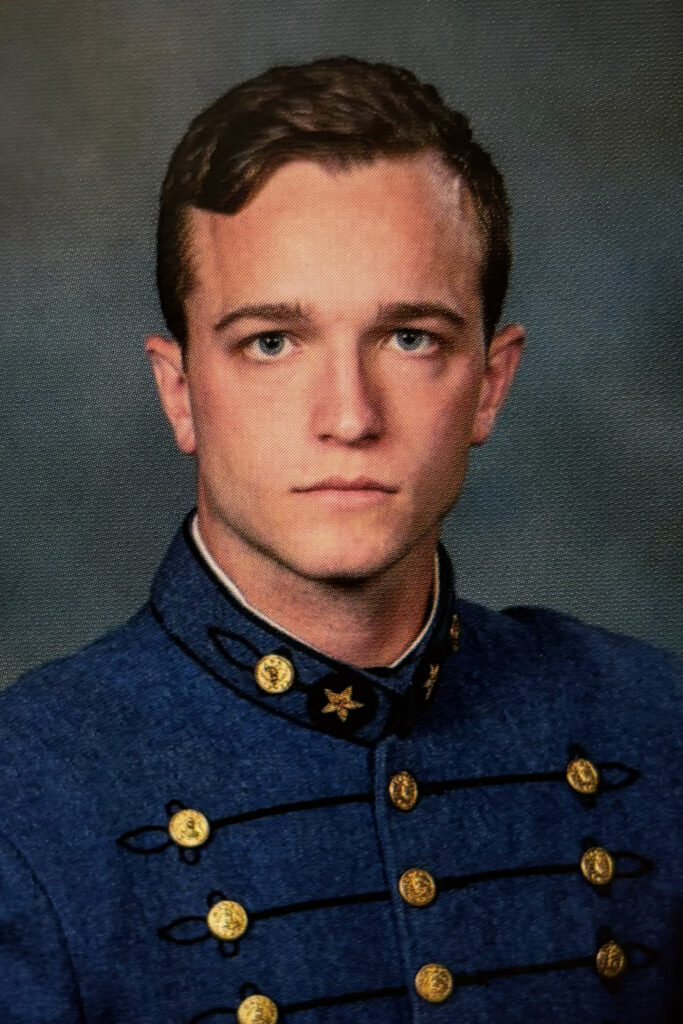
Cadet Uses Disability to Motivate

Lou Ferrigno, bodybuilder and actor known best for his role in “The Incredible Hulk,” has been profoundly deaf most of his life. He once remarked, “I think my hearing loss helped create a determination within me to be all I can be, and gave me a certain strength of character too.”

Determined and strong of character are two descriptors of a successful cadet at Virginia Military Institute, so when Andrew Kiddie ’29, who was diagnosed with deafness just before his second birthday, chose to come to arguably the hardest senior military college in the country, he, like Ferrigno, used his disability as a motivator.

Kiddie has worn a cochlear implant (CI) for most of his life. It is a small, complex electronic device that helps people who are profoundly deaf perceive sound. The implant consists of an external portion that sits behind the ear and a second portion that is surgically placed under the skin. CI technology has improved since Kiddie was first fitted for one when he was a toddler. The CI he currently wears is sweat proof — crucial for a cadet — and uses Bluetooth technology, which Kiddie controls via an app on his phone.

“They are always finding ways to make the design better. With Bluetooth, I can have private phone calls and listen to music on my phone without anyone else hearing it,” he laughed.

Kiddie also knows American Sign Language (ASL) and can masterfully read lips.

When Kiddie began the application process to VMI, the Office of Admissions was cautious.

“Before they met me, they were hesitant. They didn’t know if I could handle the Rat Line with all the physical challenges constantly thrown at me.” When Kiddie finally met with members of the admissions office at an open house, they had him talk with the Institute physician, Dr. Melissa S. Krawiec ’01. She learned he successfully participated in JROTC and cross country during high school. She also had a phone conversation with the surgeon who implanted his CI, got a clear medical understanding of his condition, and discussed any reasonable accommodations he might need in order to participate safely and fully in the VMI experience. 

“With that information,” explained Krawiec, “I was able to have meaningful discussion with Col. Lawrence Havird ’90, commandant, and Col. Jack Johnson Jr., head of the Department of Human Performance and Wellness (HPW), both members of the fitness review panel that makes recommendations to the superintendent, and felt confident recommending him for admission.”

Kiddie’s father, Norman Kiddie, remembers when his son was accepted to VMI. “Andrew has worked incredibly hard for everything he has achieved. His dream was to attend VMI, and I will never forget the look on his face when he found out he had been accepted as the first cadet with a cochlear implant.”

Kiddie attended the Summer Transition Program, a curriculum designed to enhance the academic and physical fitness of incoming cadets, then officially matriculated last August. He confessed the most challenging part of VMI life was the Rat Line, not the physicality of it, but determining from which person the commanding voices were originating.
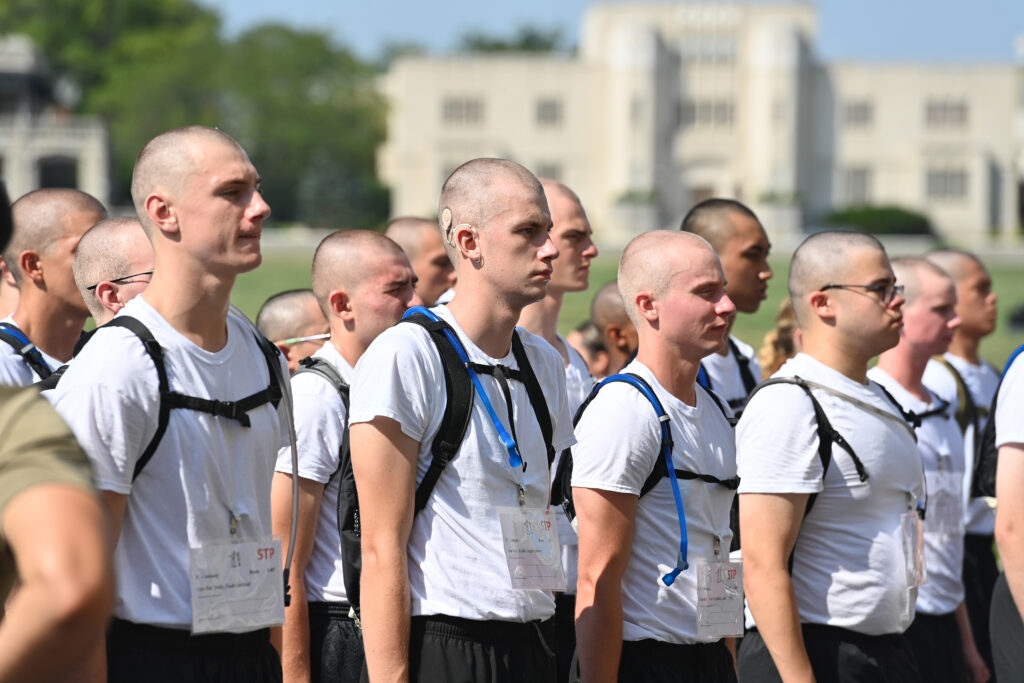
Andrew Kiddie ’29 and his brother rats wait outside the armory during Matriculation Week. –VMI File Photo by H. Lockwood McLaughlin.

“It was hard to figure out who was shouting at me when they were behind my ears. I couldn’t tell if it was the first sergeant, or master sergeant, or who else it might have been, so when I responded, I would usually get it wrong.”

Kiddie is majoring in biology. His academic advisor, Lt. Col. Mary Beth Manjerovic, associate professor of biology, reported he is an excellent student who has never let his deafness define him. “He is a great example of the VMI spirit because he holds himself to the same standards as his brother rats, meeting every expectation with focus and determination.”

His boxing class coach, Capt. Jim Whitten, instructor in HPW, agrees with Manjerovic. “Andrew’s hearing impairment is not an issue. He gives great effort and is constantly trying to improve.” 

Extracurricular activities Kiddie engages in at VMI include the Glee Club, VMI Theatre, and the mixed martial arts club.

Kiddie’s mother, Anzelle Kiddie, shared raising a child who is deaf has been a learning curve filled with tears, laughter, blessings, and grace. “It was very hard in the beginning, but we received assistance from wonderful people — speech therapists, special education teachers, and ASL interpreters—who all helped him become who he is today. We all had to believe, pray, and put in the work.”

A native of Chesterfield, Virginia, Kiddie is an alumnus of Manchester High School in Midlothian. He aspires to be the first deaf cadet to graduate from VMI and to be an inspiration to others with hearing loss. He hopes to commission into the Air Force. If he does not commission, he plans to attend medical school or veterinary school.
Cadets Present Research at NCUR

Eighteen Virginia Military Institute cadets joined approximately 5,000 participants at the National Conference on Undergraduate Research (NCUR) held at the Greater Richmond Convention Center in Richmond April 13-15.

NCUR is an organization dedicated to promoting undergraduate research, scholarship, and creative activity in all fields of study. It offers a unique environment for the celebration and promotion of undergraduate student achievement, as well as student career readiness development. The location for the conference changes each year, in various places across the country. In 2005, it was held at VMI and Washington and Lee University. 

Lt. Col. Molly Kent, director of the VMI Center for Undergraduate Research (VCUR) and associate professor in the Department of Biology, also attended the conference. She said this year’s group of cadets who applied and were accepted to present their work at NCUR was the largest since she assumed the role of VCUR director in 2024.

“We were pleased that the close proximity of this year’s conference allowed so many cadets to attend, and VCUR was able to fully fund the trip. Our cadets showcased the full breadth of the Institute’s academic excellence — from the arts and humanities to cutting‑edge engineering — through research conducted by cadets, alongside dedicated faculty mentors.”

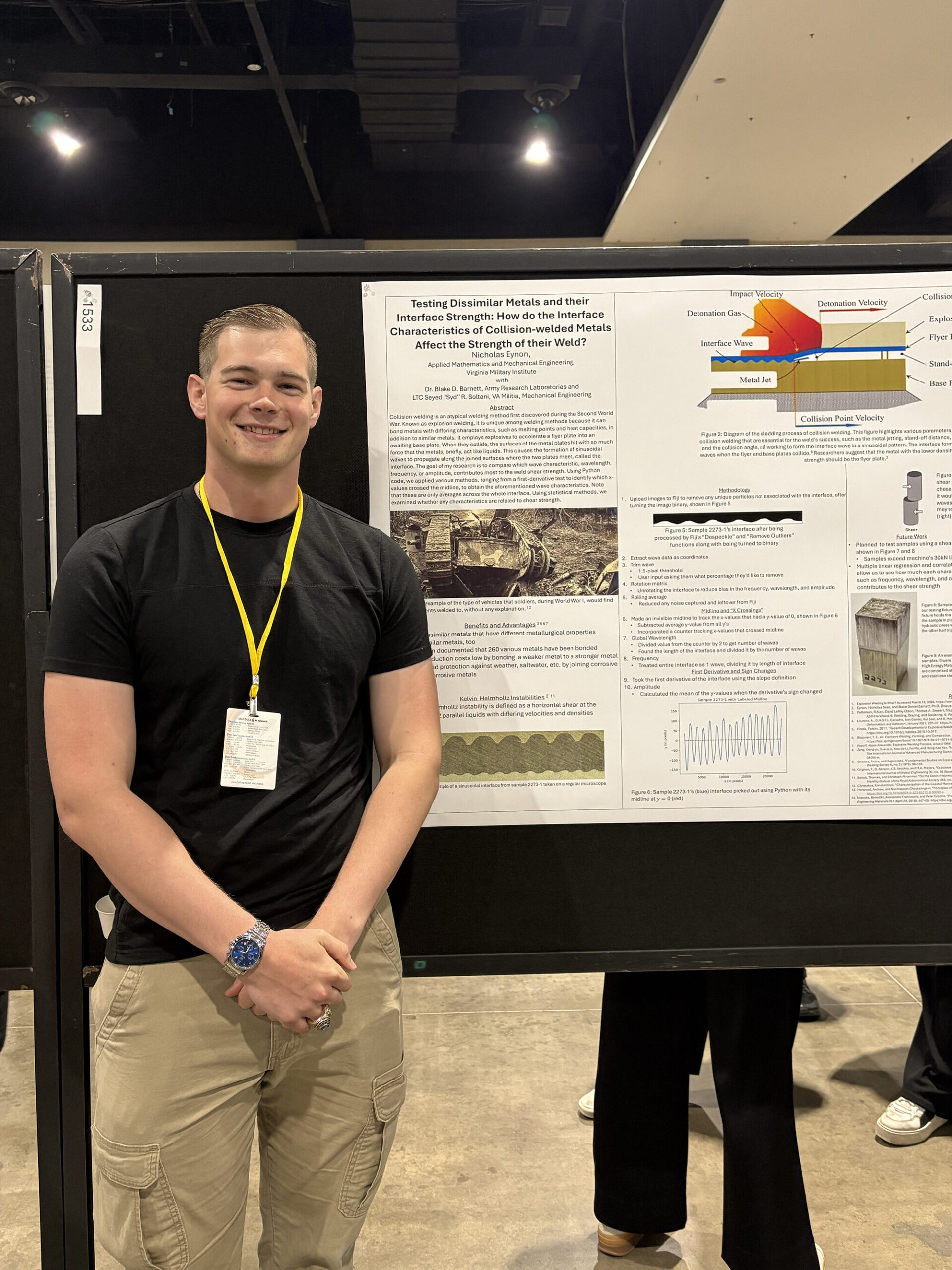
Nicholas Eynon ’26, an applied mathematics major minoring in philosophy, presented a poster based on his honors thesis, “Testing Dissimilar Metals and their Interface Strength: How do the Interface Characteristics of Collision-welded Metals Affect the Shear Strength of their Weld?”

Nicholas Eynon ’26 presents his poster at NCUR in Richmond. –Photo courtesy of Lt. Col. Molly Kent.

His research focused on collision welding, specifically its relationship between its shear strength and its interface characteristics. Eynon admitted he had fun at NCUR. “It was very enjoyable to present my work, not only as a reward, but to share the name and vision of VMI to other college students, show them the hard work I put into my research, and show them the same respect. It was interesting to hear about other students’ research, and in some instances, we discussed how our topics overlapped and could be used in tandem. Overall, I am very grateful for my time with NCUR.” Following graduation in May, Eynon will commission into the U.S. Army.

Nickole Chávez ’26, an English major minoring in Spanish, presented her project, “Bridging the Confidence Gap: ELL Mentorships and Narrative Exploration of the Mexican- American Student Experience.”

Her research involved an independent study working with an English Language Learner (ELL) student in Lexington, which led her to write a narrative of her own education using reflexive thematic analysis. “I used my experience of working in the school and my memories of growing up in a failing education system to corroborate articles I read about the lack of resources in schools for bilingual and immigrant students,” Chávez explained. She presented her findings in a crowded room, which she admitted was a little nerve wracking. “NCUR was an amazing experience. I was able to share a personal project that I worked on for two semesters. Sharing my story and experiences with a room full of students and professors from other schools was something I never thought I would do.” Chávez hopes to work for the Department of Homeland Security after graduating.

I Am VMI: Maximus Ankrah ’26 

What truly defines Virginia Military Institute are the people. Cadets, faculty, and staff, both past and present, are what make it “No Ordinary College.” I AM VMI will showcase the outstanding individuals who have accepted the challenges and embraced the spirit of VMI. Their perspectives provide authentic insights into life at the Institute and the value of this unique military college. 

I Am VMI: Maximus Ankrah ’26 

  • VMI Class: 2026  
  • MajorBiology, with a Psychology Minor
  • Hometown: Dumfries, Virginia
  • Club Sport: Brazilian Jiu Jitsu 
  • Commissioning PlansU.S. Air Force
  • Other Clubs/Societies/Activities: VMI Class President of 2026, Emergency Medical Technician, Former Cadre Instructor   

The choice of attending Virginia Military Institute was a chance for Maximus Ankrah ’26 to obtain a clean slate.

Every accomplishment and accolade I could achieve was earned, not given; I really wanted to deserve what was given to me,” he explained.

The biology major also serves as the president of the VMI Class of 2026, an emergency medical technician (EMT), and a former cadre instructor. Ankrah chose biology because he wants to be a medical doctor in the U.S. Air Force, which he is commissioning into.

Every accomplishment and accolade I could achieve was earned, not given.

“The biology department has been excellent, and I’ve enjoyed the extensive curriculum,” he said. “I want to go through the medical route. Hopefully go across the world, do humanitarian work, and help out those in need. My family is from Ghana, so I want to go to a developing country like Ghana and be able to help other kids, help other parents, help other people.”

It comes down to the people, Ankrah said. There are struggles that come with attending VMI, but he says the people he’s encountered and formed bonds with have made it worth it.

“I’ve met some of the most admirable and motivating people at VMI, and it’s my friends here, my brother rats, that keep me going every day,” he said. “What I enjoy most about VMI is it’s not the place necessarily, but the people. There are some amazing people who I would never have come across if I didn’t choose to come to VMI. Lots of hardworking people, lots of compassionate people in whatever field it is that they decide to do. It definitely pushes me to be better. I’m always constantly looking for the next best thing; what I can do to improve from yesterday. “

Ankrah’s experience at VMI can be compared to work in a laboratory, he said.

“It’s the challenges you face at VMI that help you build resilience, grit, and integrity.”

“The mistakes, the successes, the wins, and losses; VMI is a place where you learn so much about yourself and other people that it forces you to mature as a person,” he commented. “It reveals your potential, and it’s up to you to make the most of it.”

He said it’s helped him grow in the realization that he’s bound to fail — except he’s failing forward.

“It’s the challenges you face at VMI that help you build resilience, grit, and integrity.”

His time at VMI will translate into his future seamlessly.

“Academically, it will translate into giving my absolute best and knowing that I did everything honorably and to the best of my knowledge,” he said. “Leadership-wise, influencing people is achieved through trust and reputation; your example is your most effective tool. Lastly, knowing I attended the hardest school in the nation gives me pride and confidence that I can overcome anything life throws at me.”

He’s done some difficult things and overcome challenges that others may not see, but that shared suffering and battling adversity make Ankrah proud to be a VMI cadet.

This place is difficult, but if you justify the space you occupy, prove why you belong here, and buy into the system, you’ll get so much more out of VMI than you expect,” he stated.

VMI Alums Return for Medical Rotation

Two Virginia Military Institute alumni, Allen Xu ’21 and Thaddeus Wegrzyn ’22, returned to the Institute in late March for two weeks as part of their medical education with a family medicine rotation at the VMI Infirmary.

Xu and Wegrzyn, who are fourth-year medical students at the Edward Via College of Osteopathic Medicine (VCOM) in Blacksburg, chose to serve one of their medical rotations alongside Institute physician, Dr. Melissa S. Krawiec ’01 and family nurse practitioner, Jenny Crance, DNP, FNP-C.

Medical rotations, also known as clinicals, are required hands-on patient care experiences for medical students, and consist of two years of back-to-back four-week durations of training under the supervision of a medical professional in various specialties at many medical facilities. Xu and Wegrzyn have completed about 20 clinicals, with VMI being the last for Xu. Wegrzyn has an additional obligation of two weeks of physical medicine and rehabilitation to complete for Carilion Clinic in Radford.

According to Krawiec, this is the first time alumni have returned to VMI for their clinicals.

“We were delighted to have Allen and Thad with us for two weeks. They were able to closely relate to the cadets and understand the pressures they are under, because they have been cadets themselves. They have come full circle. I trust it was a rewarding experience for them, and I hope they learned some valuable clinical ‘pearls’ in our unique environment. We saw some interesting cases over their time with us,” she said.

Though they arrived to VMI with no set of expectations on what medical conditions they would see during their visit, Xu and Wegrzyn treated a variety of family practice conditions for the cadets including colds, allergies, rashes, burns, dental pain, soft tissue wounds, and orthopedic injuries. They assessed patients and discussed treatment plans with Krawiec and Crance. They also met with cadets who are considering going to medical school. Wegrzyn stated that cadet outreach is important to them. “There is no formal pre-med program at VMI, but there are many cadets who are interested in going into health care. We had many conversations with them and advised them on their options of making that dream a reality.”Xu, a biology major from Ringoes, New Jersey, began his love for healing as a high school student when he became an emergency medical technician (EMT), a skill he continued at VMI. As EMT chief, he would often deliver cadet patients to the infirmary, but was never able to observe their treatment there.

“It’s gratifying to see what happens on this side of the infirmary door,” he observed.

Xu’s chosen medical field of study is psychiatry. Initially entering medical school, he wanted to go into emergency medicine, but changed his mind after witnessing family members facing emotional trials. He noted that returning to VMI at this stage of his training has given him a different perspective on the environment that helped shape him.

“VMI and the military are built on a culture that values discipline, resilience, and composure under pressure. Those are qualities I continue to respect and carry with me. At the same time, my training has reinforced that the reality of life and leadership includes navigating stress, loss, and uncertainty. What I have come to appreciate is that supporting behavioral health does not take away from those core values. If anything, it strengthens them. The ability to reflect, seek support when needed, and maintain personal well-being allows individuals to sustain performance and lead more effectively over time.

Returning in this role has been especially meaningful, and I hope conversations like these continue to evolve in a way that supports both excellence and well-being.” He eventually wants to work with veterans with post-traumatic stress disorder and trauma.

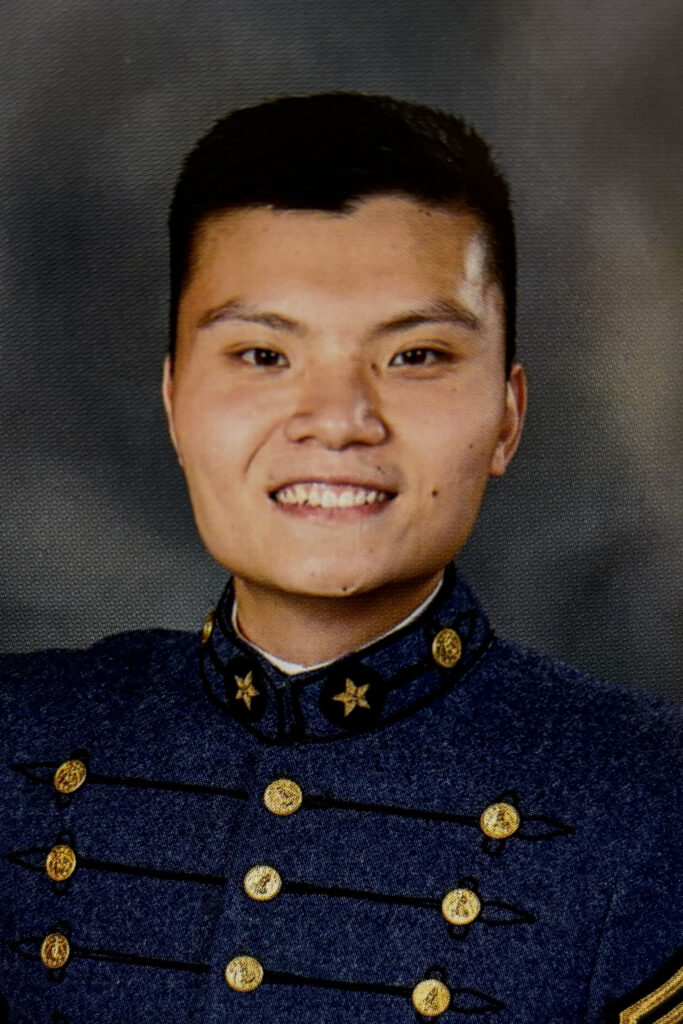
Allen Xu cadet portrait
Thaddeus Wegrzyn portrait

Wegrzyn, a biology major with an exercise science minor from Lincoln, Nebraska, served as a cadre member as a cadet. He originally wanted to go into combat in the military. He changed his mind though when he started to enjoy his academic studies at VMI.

“It all started to click with me. My advisor was great, and my interest in going into medicine bloomed. I chose primary care medicine as a specialty, so I’d be in a position to teach patients a better understanding of taking care of their bodies. I feel a strong obligation to educate and mentor patients, so they take control of their health and prevent illnesses and accidents.”

The two originally met in a public speaking class when Wegrzyn was a rat. Since both were biology majors, they shared several more classes, and served on the Honor Court together.

Xu confessed VMI prepared them well for medical school.

“The resiliency we learned at VMI has paid dividends. Cadets are taught how to find out what needs done and to create a plan. They learn good time management skills. And believe it or not, we get more sleep at VCOM than we ever got at VMI,” he laughed.  

Wegrzyn agreed and shared that VMI graduates are highly thought of at VCOM.

“VCOM’s mission is to prepare globally-minded, community-focused physicians, which is similar to that of VMI’s mission of producing citizen-soldiers with a high sense of public service. In fact, there are currently five VMI alumni who are in their first year at VCOM. There is a strong pipeline from VMI to VCOM.”

He added there is a chapter of the Student Association of Military Osteopathic Physicians & Surgeons at VCOM in which he served as president and Xu served as vice president last year. This year, the reins of the two leadership positions are held by two other VMI graduates.

Following graduation from medical school in May, Xu and Wegrzyn will begin their residencies. Xu will serve his for four years in psychiatry at Camp Lejuene, North Carolina, and Wegrzyn, who has commissioned into the Army, will serve his for three years in family medicine at Fort Bragg, North Carolina.

Behind the Balance: Anthony Wilkerson ’28 — Keydet Track and Field

Virginia Military Institute’s cadet-athletes have to juggle cadet life, heavy academic course loads, and their NCAA Division I sport. Committed to both academic and athletic pursuits, balancing their rigorous schedule in both sports and school requires a certain level of commitment and discipline. Behind the Balance is a series that focuses on those cadet-athletes and how they handle the hurdles of the day-to-day. 

Anthony Wilkerson ’28 was looking for connection when he came to Virginia Military Institute. Initially, it was a mix of track and field and a scholarship through the U.S. Army that got him through the door, but it was the bonds he formed with his brother rats that made him want to stay.  

“I came here for track and field. But being here, making connections with my brother rats — people older than me, younger — just made me want to stay here even more,” he said.

Wilkerson hopes to attend medical school, so he’s devoted a lot of his time at VMI to his studies and keeping up his GPA. It’s also the reason he joined the cadet emergency medical technicians (EMT). 

“I wanted to become an EMT because I wanted more medical field experience, something I could put on my resume for medical school,” he commented. “I think everyone needs to learn emergency medicine, because you never know when someone might pass out right beside you and it might be your best friend suffering. Instead of sitting there in a panic, you know what to do.” 

The biology major is going into the semester with 18 credits, which he must balance with his track and field schedule while also being an EMT corporal. With days starting early at 6 a.m. and classes throughout, mixed in with practice, and the need to keep up with assignments, he’s usually up until nearly midnight. His responsibilities are plentiful and well spread, but he’s learned that time management and determination are his best friends. 

“I think I have a pretty good sense of time management, because I’m the type of person that has to get all my work done before I lie down,” he explained. “I don’t think about doing something late. I don’t even look at that as an option, to be honest.” 

Cadet-athletes at VMI not only have their responsibilities with their selected sport but cadet duties on top of that. Cadets are also required to take physical fitness classes twice a week, participate in ROTC all four years, prepare for room and uniform inspections, practice for parade, guard duty, and more. 

Wilkerson shared there is a shift on the team as upper-class cadets graduate. 

“Last year we had a lot of 1st Class cadets, and you had someone to look up to. But this year, it’s like me and my friends are the ones the rats are looking up to,” he stated. “Last year, my brother rats and I would go to our dykes’ rooms, but now all the rats are coming to our rooms. It’s a cool change in dynamic being able to give those people advice on things that they’re looking for. They come to you for literally anything.” 

He aims to be an example for others.

“I want to make sure with my rat, and the people younger than me, that I’m always there for them, and they feel like they can come talk to me whenever they want,” he said. “I can have a stronger bond with them.” 

Stress can be a big factor in Wilkerson’s daily life at VMI, but he combats it by decompressing in his room after hours.  

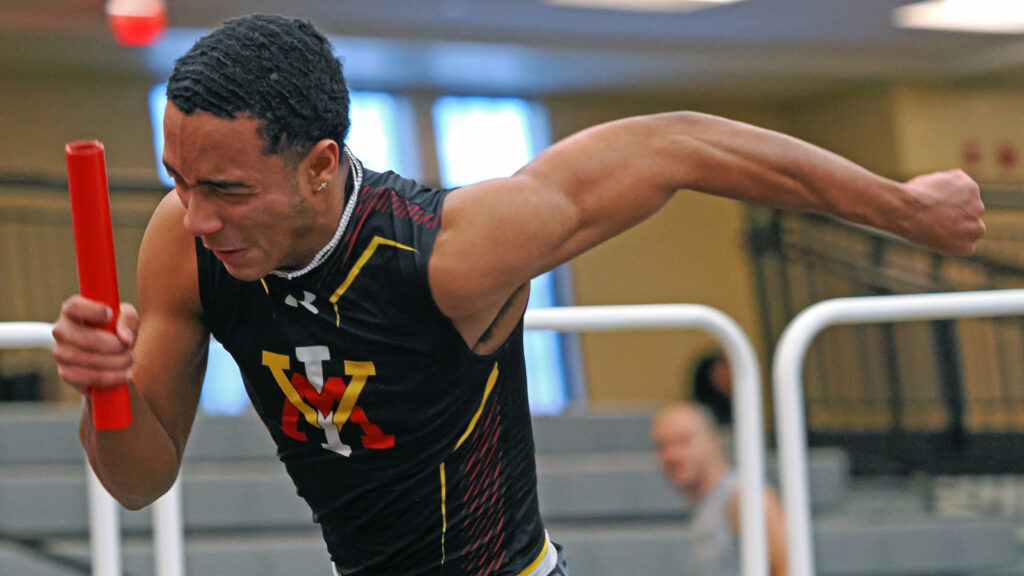
Cadet Anthony Wilkerson running an indoor track race.
VMI Team Challenge track and field meet at the Corps Physical Training Facility in Lexington, VA January 11, 2025. (Randall K. Wolf)

“I just handle the stress of the day by coming back to my room and just talking to all my roommates,” he said.  

Having people to talk to with is a good outlet, especially since there isn’t much time in the day to dwell or complain. 

The regimented schedule works to his benefit, allowing him to get shorter class assignments done between things.  

“If I have a break between classes, I’ll do those assignments,” he said. 

Whether he’s eating lunch in his room to catch up on work or spending a chunk of time between practice and dinner, Wilkerson is hammering away on assignments to stay on top of things. He says VMI has kept his life structured and allowed him to not procrastinate, compared to life at home. 

“When I come here, it’s just so much different, where I have to be here at this time. I can’t be late or this, I need to show up looking a certain way. Being here and then going home, two completely different realms,” he explained. “I think being here, it honestly helped me more than going to a different college. There are still opportunities to have fun here, just your priorities, they come first.” 

Behind the Balance: Sydney Smith ’26 — Keydet Water Polo

Virginia Military Institute’s cadet-athletes have to juggle cadet life, heavy academic course loads, and their NCAA Division I sport. Committed to both academic and athletic pursuits, balancing their rigorous schedule in both sports and school requires a certain level of commitment and discipline. Behind the Balance is a series that focuses on those cadet-athletes and how they handle the hurdles of the day-to-day. 

Sydney Smith ’26 had her sights set on attending the Air Force Academy after high school. Both of her parents were athletes there and she wanted to follow in their footsteps. One thing made her hesitate; Smith played water polo and there was no NCAA women’s water polo team at the academy. Instead, she forged her own path that led her to Virginia Military Institute.  

“I started to look at schools with ROTC programs where I could also play water polo. Coach [Danielle] Montenegro found me, and I came on my official visit, and I was like, this is it.”

Smith swam her entire life but picked up the sport of water polo because her father played. 

“I like the physicality. I like the aggression. It’s more interactive,” she explained. “I also like that it is a team sport. Swimming, it’s a team sport, but you’re still competing against your teammates for points. Whereas water polo, you can’t do it without each other. I like being on a team, it’s more fun.” 

The biology major will be commissioning into the United States Air Force come May when she graduates. From there, she will head to Pensacola, Florida, to be a combat systems officer at the Naval Navigation School in July. Her time at VMI has helped her prepare for her upcoming post.  

She is one of the three 1st Class cadets on the water polo team who holds rank. Her position as S6 lieutenant gives her firsthand experience with communications, standard operating procedures, radios, and writing — all things she will need to know in the Air Force.  

Holding a leadership position also embodies the four core values the water polo team has — support, pride, energy, and focus. Nearly everyone on the team holds rank. 

“We make it a point to support each other, even if it does get challenging,” she said. “We’ve created these four core values on our team, and we actually say each one of them when we’re doing our cool down at practice and before every lap.” 

The structure of VMI was appealing to Smith, as well as the option to commission. But the bonds she’s made with her brother rats and those on her team have really stood out. 

“We definitely have one of the best team dynamics, but I’m probably a little biased,” she admitted.  

She said it was kind of surreal to see what good friends everyone is on the team. It’s more like a family. They even established a rule that none of them would live together in barracks, just so they wouldn’t get sick of each other. 

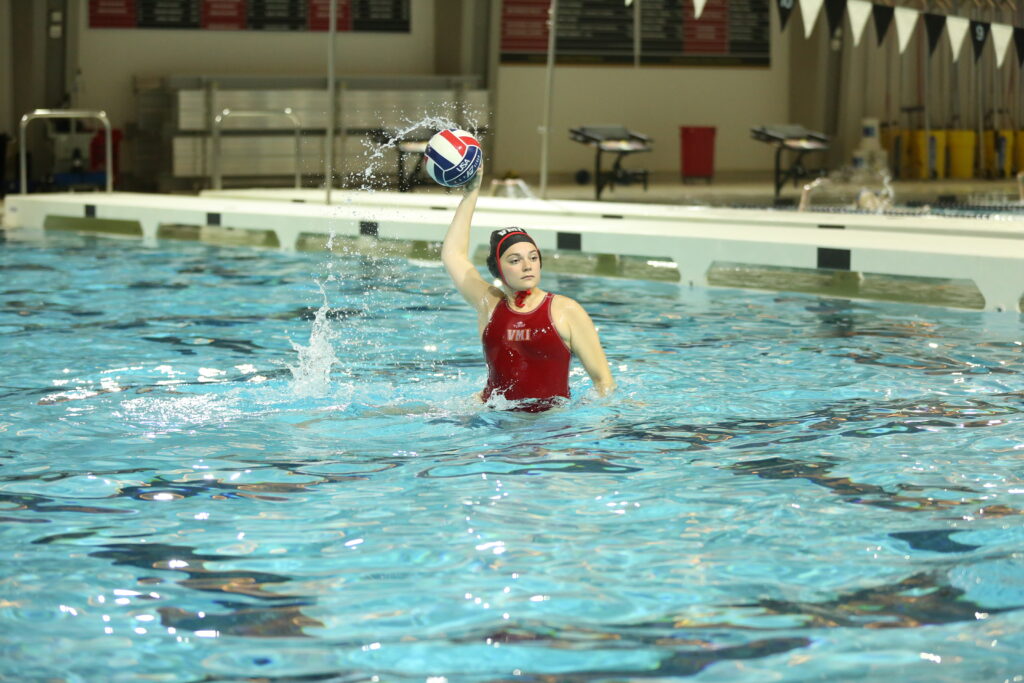
Sydney Smith in the pool playing water polo for Virginia Military Institute.

“It played out very well. None of us were in the same company, so we never lived together, but we’ve never had any issues,” she said. “Through our years here, we’ve told the 4th Class cadets that same thing: try not to live together. That can cause problems. And they’ve all made that a rule, too. And all of them are super close, too. We all hang out, and we do team dinners all the time, especially after practice in season. We make a point to all just go eat together and hang out all the time. A few of us are all the same majors. We have class together.” 

She said those on the team strive to be overachievers. From holding rank to other activities, Smith has a booked schedule.  

Cadet-athletes at VMI not only have their responsibilities with their selected sport but cadet duties on top of that. Cadets are also required to take physical fitness classes twice a week, participate in ROTC all four years, prepare for room and uniform inspections, practice for parade, guard duty, and more. 

Growing up, Smith and her sister, who is at the Naval Academy, were always told they needed to have diverse activities.  

“We’ve both been told you’re going to do other things. You are each going to play a sport, and you are going to play an instrument, and you’re also going to find a leadership role,” she said. 

Smith is also on the Glee Club, while spending two to three hours in the pool a day. That doesn’t include early morning practices or weightlifting. She’s thought ahead though, by taking summer classes every year she’s been here to lighten her academic load while she’s in season. Hence, her last semester is 13.5 credits.  

In order to keep everything straight, Smith has a large calendar she keeps in her room that’s color coded with all her activities and assignments. She said that VMI has prepared her in terms of how to handle a busy schedule. 

“Everything that I’ve had to do and manage with stress, school, and water polo, I’ve kind of compartmentalized all of it,” she said. “I think it has been the most beneficial thing. If I can handle being this busy, I can handle anything.” 

Biology Professor Publishes Article

Maj. Alison Burke, assistant professor and health professions advisor in the Department of Biology at Virginia Military Institute, recently had a research article published in PLOS One, a peer-reviewed scientific journal.

Burke, whose specialty is molecular microbiology, explained the article highlights information about four newly discovered viruses that could be used to improve seafood safety.

“We used oysters purchased from the grocery store, that had been harvested from the Chesapeake Bay in Virginia, to isolate bacteriophages — viruses that destroy host bacteria — against Vibrio parahaemolyticus, a bacterium commonly found in coastal waters that can accumulate in oysters and cause foodborne illness in humans when contaminated shellfish are eaten raw or undercooked. Unlike antibiotics or chemical treatments, bacteriophages are highly specific and naturally occurring, targeting only their bacterial hosts without harming other organisms or the environment.”

This work, which spanned over a period of one year and co-written by five other biologists, contributes to a growing body of research exploring solutions for food safety and aquaculture. “By improving our understanding of how bacteriophages interact with harmful bacteria in marine environments, the study lays important groundwork for future strategies to reduce bacterial contamination in shellfish without relying on antibiotics.”

Behind the Balance: Barrett Callejo ’27 — Keydet Women’s Soccer

Virginia Military Institute’s cadet-athletes have to juggle cadet life, heavy academic course loads, and their NCAA Division I sport. Committed to both academic and athletic pursuits, balancing their rigorous schedule in both sports and school requires a certain level of commitment and discipline. Behind the Balance is a series that focuses on those cadet-athletes and how they handle the hurdles of the day-to-day. 

When Barrett Callejo ’27 arrived for her brother’s matriculation at Virginia Military Institute several years ago, she was still in high school. But the cadets asked her upon arrival if she had a dyke, or senior mentor. Callejo said she was taken aback, and explained it wasn’t her that was matriculating, but instead her brother.  

That moment stuck with her, along with how welcoming and excited the cadets were. “There were these strong, independent women. They were coming up to me and super excited that another female was trying to come to VMI. To me, that was cool seeing that in person,” she explained. 

She was then inspired when she was recruited for soccer to come to VMI to be that example. 

“Being on the soccer team and meeting everybody, it has pushed me to emulate what those other strong, independent women have done as well,” she said.  

Callejo knew she wanted to attend a military college, but it wasn’t until she had a visit with the soccer team that it solidified her decision. 

“The thing that really stuck out the most about VMI, overall, that led me to coming to this team, was their culture on the team,” she admitted. “When I was a recruit and I came in, I remember the team being so incredibly welcoming to me. Even though I wasn’t part of the team yet, they still treated me like I was one of them already, and that was really special to me. I already felt like I was a part of that family.” 

As her time continues at VMI, so does her growth in duties. Shouldering more responsibility, Callejo said it’s been rewarding. She currently serves as part of cadre, specifically a guide sergeant with Foxtrot Company, where she serves as a mentor to those in her company. 

“Being an upperclassman, you take on a lot more responsibilities,” she said. “You look up to all those upperclassmen and all those independent women, but now you are one of them. You’re going to be that person that the freshmen can look up to, whether it be on the team or even up on the hill, because I’m a part of the cadre team. I have a couple girls in my company, and I’m hoping to be a role model for them as well.” 

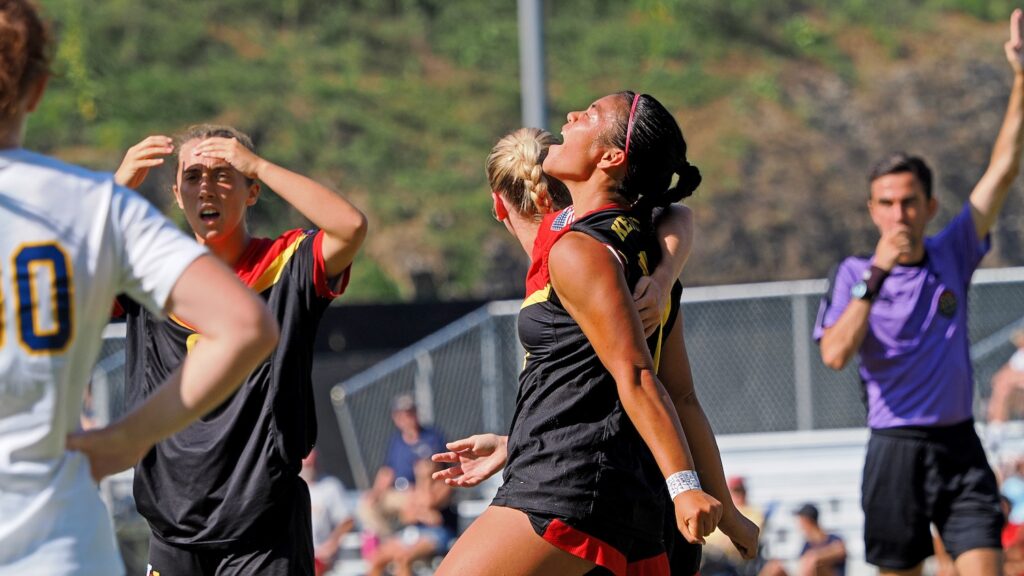
Barrett Callejo rejoicing on the soccer field while playing for Virginia Military Institute.
VMI’s women’s soccer team hosts Emory & Henry University at Patchin Field in Lexington, VA August 24, 2024. First half, VMI up 1-0. (Randall K. Wolf/VMI)

Cadet-athletes at VMI not only have their responsibilities with their selected sport but cadet duties on top of that. Cadets are also required to take physical fitness classes twice a week, participate in ROTC all four years, prepare for room and uniform inspections, practice for parade, guard duty, and more. 

Last year, Callejo served as a corporal on cadre. Serving as a corporal, she found she had a lot of influence on those below her, allowing her to lead while she was being led. She found another female guide sergeant while she was serving as a corporal, who was a big influence on her to continue being on cadre.  

“When you’re a corporal as a 3rd Class cadet, you have a lot of influence upon the rats just because you’re with them so much as a corporal,” she said. 

Having a packed day, Callejo, a biology major, has had to prioritize a couple things this year. With her role on cadre, being on the soccer team, keeping up with athletics, and more, it caused her to drop a class from 19 credit hours to 16 credit hours — primarily because she will be studying for the MCAT (Medical College Admission Test) this semester.  

“I just kept putting a lot of things onto my plate, plus being in season and the traveling,” she explained.  

The way she handles it is by writing everything down at the beginning of the week. Her Sundays consist of coming up with a game plan for her week and how she will tackle it. Whenever she gets overwhelmed, she goes for a run or hangs out with her teammates or friends.  

“Everybody on the team is one of my closest friends,” she commented. “I never thought I would make friends this tight. I’m closer with all of these girls I’ve known for three years now than I have other people that I’ve known for my entire life. But it’s not only just a team. I have some friends that I’ve met just being a cadet here, and they’re my closest friends.” 

She’s not only created bonds with her peers, but also with her professors.  

“Having professors on your side and having good relationships with professors has really helped me and has given me a lot of cool opportunities and positions at school as well,” she said.  

“I’ve had some good bonds with a lot of the professors in the chemistry and biology departments, and they’ve asked me for the past two years to help tutor for their classes. That not only helps the underclassmen who I tutor, but also, it’s helped me personally to go over all the basic stuff.” 

Those opportunities include being part of Tri Beta, a biology honor society and working on Summer Undergraduate Research Institute projects with the potential of being published. 

Her piece of advice: don’t study in barracks, there’s too much distraction. 

“I think studying is the best way to escape from all of the hectic stuff that happens up on the hill,” she said. 

Behind the Balance: Cadee Hegarty ’26 — Keydet Women’s Soccer

Virginia Military Institute’s cadet-athletes have to juggle cadet life, heavy academic course loads, and their NCAA Division I sport. Committed to both academic and athletic pursuits, balancing their rigorous schedule in both sports and school requires a certain level of commitment and discipline. Behind the Balance is a series that focuses on those cadet-athletes and how they handle the hurdles of the day-to-day. 

Cadee Hegarty ’26 wanted to compete at a high level but also was drawn to the organization and discipline that Virginia Military Institute offered. Getting a soccer scholarship to the school allowed her to form a future at VMI.  

Her recruitment was a little different since it was when the coronavirus pandemic was limiting how sports were played. Instead, she attended a soccer camp, which was hosted by former women’s soccer coach Chris Haught-Thompson. From there, all it took was a visit to VMI. 

“I always wanted a team that had girls that were so close and had a bond that wasn’t like anything else,” she explained. “At VMI, it’s something else no one will understand except the people who go here. I was drawn to the school because of them.” 

The biology major is now in her last year and serving as the S9 captain, which includes preparing for pep rallies, company athletics activities, and creating permits. S9 is primarily made up of athletes, so cadets involved must pick up the slack when those on the staff are in season. As the S9 captain, she’s fully responsible for NCAA athletes, especially the rats — moving them around, making sure they’re able to do practice, but also participate in the Rat Line.  

“When it’s S9 time, it’s S9 time, and100% of my energy goes into that,” she said. “But when I’m at practice, or when we’re traveling, or when it’s game day, 100% goes to game day. Then schoolwork or in class, I’m fully dedicated to school. If I have free time during the day before soccer starts, I try to always get my work done early, because getting behind really catches up to you.” 

She was drawn to holding leadership in S9 because of her love of sports.  

“Being an athlete at this school is very different, and one of the biggest reasons of why I wanted this position was to show athletes that we can do it too, and we are just as part of the school as everybody else,” she commented. “Also to show everybody else that athletes can do it too, and I can do the same things that you guys can do. I have kind of one foot in both doors — athlete and non-athlete, with both my responsibilities, showing people there is a balance, it can happen, and everyone’s allowed to do everything.” 

Although she’s taking a lighter load, she’s previously been pulling nearly 19 credit hours per semester.  

“I try to take summer classes too, to kind of make up because in the fall we travel so much and we miss so much school, you can’t afford to get behind,” she said.  

Cadet-athletes at VMI not only have their responsibilities with their selected sport but cadet duties on top of that. Cadets are also required to take physical fitness classes twice a week, participate in ROTC all four years, prepare for room and uniform inspections, practice for parade, guard duty, and more.

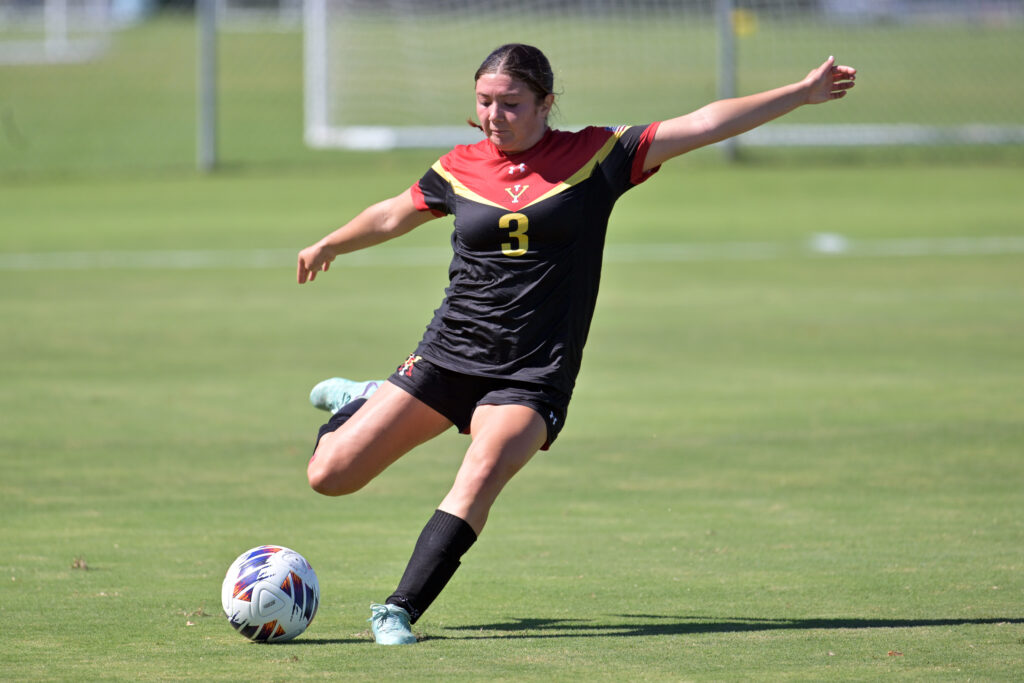
Cadee Hegarty kicking a soccer ball on the field, playing for Virginia Military Institute.
NCAA Women’s Soccer: Midshipmen prevail over VMI, 3-2

From early days to traveling each week, Hegarty works on taking each task as it comes. When the team is traveling, she could potentially miss up to three days of class — that means getting assignments ahead of time and working with her professors to make sure her work is done on time. She and her teammates spend a good amount of time while traveling dedicated to their studies. She struggled in her first year at VMI with balancing everything.  

“My rat year, I didn’t do well in school. That was hard for me. I never needed to study in high school. I never needed to, outside of soccer, go through film and read through plays and do stuff like that, but here you have to or else you’re not going to be able to just skate by,” she admitted. “I learned that sometimes you’ve got to cut out the naps. Sometimes you have to wake up a little earlier or stay up a little later to make sure everything you do gets done. I realized getting ahead is just being on time. I would try the best so I could to stay ahead of all my work. So, if I did travel, or if there was a pep rally or a football game or something where I couldn’t dedicate all my time to school, and I fell back a little bit, I was still on track.” 

The discipline that Hegarty has experienced at VMI is something she can take and build for the rest of her life.  

“If something is given to me, I’m one of those people who can’t sleep until it’s done,” she commented. “Prioritizing what’s most important and getting that done first, and putting all your time, all your energy into that … just one task at a time. I feel like a big part of the real world is priorities and discipline with any type of task. Also, integrity. I feel like a lot of workplaces look for someone who they can trust, who they know will get the job done, and who  lives by their word. And that is something VMI just drills into you.” 

Blending Passion for Medicine and Soccer with Graduate Opportunity: Whitney Tracy ’25

his article is part of The Next Step series. While the four years at VMI are designed for cadets to push themselves academically, physically, and mentally to tackle the demands of life at a premiere military college, they also prepare cadets for life after graduation. Whether that life be one in the military or one in the private sector, VMI faculty and staff provide guidance to cadets along their journeys. One department specifically dedicated to that endeavor of post-Institute success is the Office of Career Services. In The Next Step series, we highlight cadets preparing to enter the workforce after graduation, as well as those still in the midst of their cadetship preparing for internships over the summer. 

Graduate school was always on Whitney Tracy’s ’25 list following undergrad. Although her dream of pursuing medical school has changed, her time at Virginia Military Institute has guided her on a different path.  

The biology major from Blandon, Pennsylvania, will be attending Western Carolina University (WCU) for a Master of Health Sciences with a concentration in emergency medical care.

“After some career exposure and talking to various individuals in the health professions, I made the decision that I wanted to go to physician assistant (PA) school,” she explained. “I applied to WCU specifically because I was given an offer to be a graduate assistant for the women’s soccer team. With this, I would be able to coach while also earning a master’s degree, which was very appealing to me.” 

Tracy chose WCU because of a connection to one of the assistant coaches at the university, who happened to be her assistant coach on the women’s soccer team at VMI earlier in her cadetship. He reached out to her for the graduate assistant position for the women’s soccer team at WCU.  

“I specifically decided to do the Master of Health Sciences because, although it wasn’t exactly the program I had been planning to do. I saw it as a program that would help me further my knowledge of the medical field and give me a competitive edge when I do apply to PA school,” she said. 

Her program entails learning about health sciences in an administrative role, with a focus on emergency medicine. Also, with her role as a graduate assistant for the women’s soccer team, she will primarily be working with goalkeepers.  

“This will allow me to gain a more in-depth knowledge of the practices of medicine to help me when I do go on to PA school,” she said.  

She’s also always wanted to coach, so it will allow her to continue being part of a soccer team in some format.  

“When I got the offer to coach and continue my education at the same time, it felt like everything fell into place for me. This program is an opportunity for me to continue my love for soccer while preparing myself for the medical field as I improve my resume for PA school,” she said. “I have had a lot of experiences with the coaches I have had throughout my playing career that have influenced and impacted me in countless ways. I hope to be able to influence some of the players in the same ways that I have been while I am their coach.” 

Thanks to VMI, Tracy has been able to make multiple connections that have brought her many opportunities, including providing tools she can carry with her for the rest of her life — like time management, communication with others, and leadership skills. She was also able to do two summers of research at VMI and an honors thesis, which have taught her essential skills that will help her thrive while in grad school at WCU. 

“It has also set me up for success in more ways than one,” she commented. “The name VMI speaks volumes across the country and has helped me to not only get this job but will continue to help me get jobs in the future as I continue with my career.” 

Her future goals include specializing in women’s health — like becoming a PA in one of the branches of the military. She would also like to continue coaching soccer in some capacity.  

“This opportunity helps set up my future in a variety of ways so that I can take it in whichever path makes the most sense for me as I grow and develop as a person,” she admitted.