Post View Unavailable »
New Website Launched »

Natural Bridge Visit a Highlight for Introductory Biology Classes

A short drive from VMI is Natural Bridge State Park, featuring the 215-foot-tall wonder, Natural Bridge. While so close, many cadets have never visited the site. Maj. Peter Neofotis, lecturer in the Department of Biology and native of Rockbridge County, saw an opportunity to weave in some of his biology lessons with the local attraction during the spring semester. He took three sections of his Introductory Biology class to Natural Bridge in late April, as trees and flowers were blooming and animals were coming out of winter hiding. From a park ranger, the cadets learned about the formation of the bridge and the environment’s animal inhabitants, including several types of snakes. Neofotis then talked to the cadets about how the limestone that makes up the bridge and much of Rockbridge County traces its origin to the natural impacts and activity of ancient algae. Neofotis also discussed how the ancient arborvitaes in the vicinity of the park are holdovers from a community of conifer trees from the last ice age, 12,500 years ago.

Neofotis acknowledges the value of the park, landmark, and history of Natural Bridge, but emphasizes the trip exceeded his expectations. “I think part of me felt the cadets would benefit from seeing the iconic landmark and further welcome them into the landscape of Rockbridge County. The trip was so relevant to the course content and the perfect topical cap to the year. By the end of the semester, having made it through so much animal physiology, when we got to plants and the planetary carbon cycle—which is my area of expertise—it was a real gift to take the students to Natural Bridge and share with them, not only the tales and legends of George Washington and Thomas Jefferson’s connection to it, but also discuss how all the limestone of the structure—as well as the county that is named after it—was created by the activity of humble algae half-a-billion years ago, well before even the dinosaurs came to be, when the whole area was covered by a shallow ocean. And it was a joy to see the cadets interested in evolutions of yesteryear, as well as enjoy just interacting with the natural environs we were currently in.”

The cadets agreed with the value of the trip as they wrapped up their semester in the course. “At first, I thought this was just going to be some regular field trip I went on in middle school, but I was completely wrong,” shared Stone Gardner ’28. “Seeing Natural Bridge itself was one of the coolest pieces of nature I have ever seen. I highly recommend going to it. The whole tour was awesome, the park staff were great, and it had a nice walk so we could sightsee and just enjoy nature.”

Isabelle Haer ’28 enjoyed seeing the material studied in class right in front of her. “It was a hands-on experience where we took the content we were learning in class and saw how it has been practically applied to our environment around us.”

On his final trip to the park with a class, one comment in particular by Malik McNeely ’28 caught Neofotis’ attention. “As we approached the structure, Malik called out ‘Thar she blows!’ while he pointed to it with a stick, like he was holding a harpoon. I found shivers of amazement going up my spine,” explained Neofotis. “Malik had never read ‘Moby Dick,’ but he was reciting words most often ascribed to Herman Melville, who, 175 years ago, penned the great epic where a man cries the very same phrase when he sees a leviathan emerging out of the sea with a high arch, like Virginia’s Natural Bridge.”

Neofotis expressed sincere gratitude for all who supported the trip, including the Department of Biology; Julie Lozier, who supports much of the biology faculty’s research; and the knowledgeable rangers at Natural Bridge State Park.
Behind the Balance: Whitney Tracy ’25 — Women’s Keydet Soccer

Virginia Military Institute’s cadet-athletes have to juggle cadet life, heavy academic course loads, and their NCAA Division I sport. Committed to both academic and athletic pursuits, balancing their rigorous schedule in both sports and school requires a certain level of commitment and discipline. Behind the Balance is a series that focuses on those cadet-athletes and how they handle the hurdles of the day-to-day. 

With a father as a soccer coach and two older sisters playing the sport, Whitney Tracy ’25 knew she’d be on the field. Except, her father didn’t expect her to be in goal. 

“I ended up, as I got older, wanting to play in goal rather than the field, because I didn’t like running. And my dad spent years trying to keep me out of it. He did not want me to be playing goal because he was a coach and that was one position he didn’t know how to coach,” she said. “Well, I don’t like listening to my parents being the youngest child, you know … rebellion. So, I did it anyway. Turns out I was pretty good at it.” 

Tracy, originally from outside of Philadelphia, knew she wanted to play Division I soccer, but she also wanted to attend a school that was more academic-focused and structured.  

“I started looking at the military route, because it just seemed like it fit for me, that discipline, that idea of everyone caring about where they are,” she said. 

She was looking at other military colleges, but realized she didn’t know which branch of the armed forces would suit her best. She wasn’t ready to commit to commissioning. That’s when one of the coaches from Virginia Military Institute reached out.  

“It kind of fit perfectly for me,” she said. 

Not only is she the starting goal for the team, she’s also a S4 lieutenant, and part of the VMI Institute Honors Program. Her duties as a S4 lieutenant are handling supply and logistics for the Corps and other programs within the Institute. That also means she’s on post before most of the Corps with soccer and her regimental duties.  

Tracy arrives a month before the fall semester starts. The first two weeks are devoted to soccer, then it’s onto her cadre responsibilities. 

It can get really busy to balance everything, specifically Cadre Week,” she said. “We were just kind of prepping. We set up all of the rat’s’ rooms. We made sure that each one had the proper amount of hays in it. My staff was making sure that all the rooms were proper.” 

Matriculation Week was also hectic getting supplies and organized, Tracy explained. That’s all while handling her soccer schedule too, which only gets busier when classes start. 

Cadet-athletes at VMI not only have their responsibilities with their selected sport but cadet duties on top of that. Cadets are also required to take physical fitness classes twice a week, participate in ROTC all four years, prepare for room and uniform inspections, practice for parade, guard duty, and more. 

Tracy’s busy schedule isn’t a hinderance, though. It has helped her. 

“I’ve always been big on being involved in things. I don’t like sitting on the sidelines,” she said. “I’m somebody who likes trying to figure out what’s going on and help organize stuff.” 

Her job as a lieutenant is directing her sergeants and corporals.  

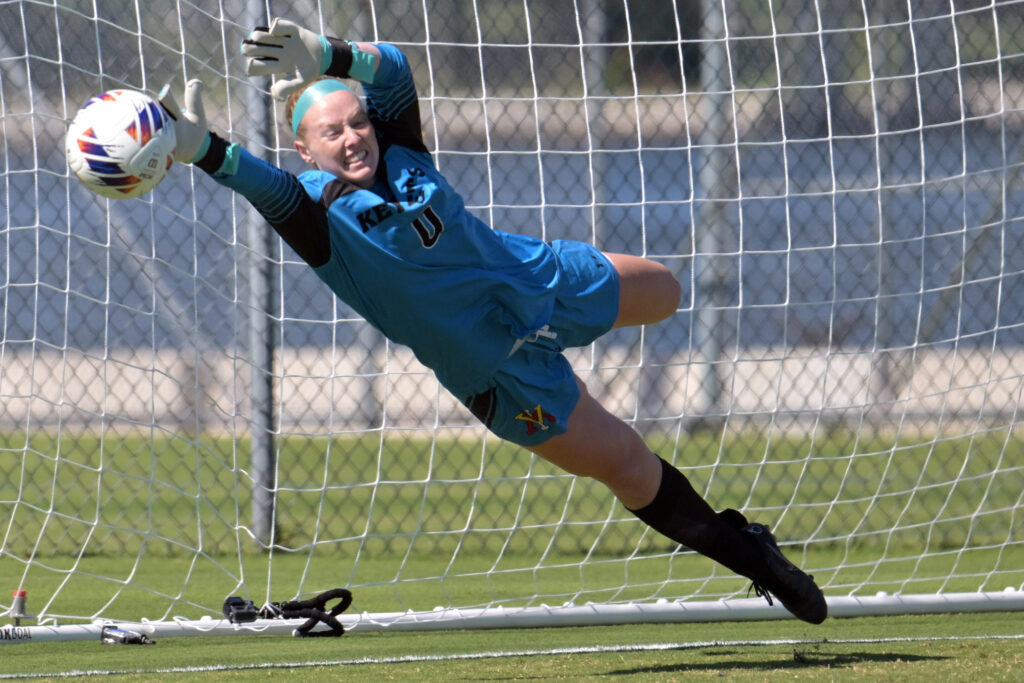
Whitney Tracy blocking a soccer ball during a Virginia Military Institute women's soccer game.
NCAA Women’s Soccer: Midshipmen prevail over VMI, 3-2

“That’s kind of where I thrive,” she said. “How do I disseminate it to get it done? How do I make sure that everything gets done? I can look at all the pieces and say, ‘Oh, this is not being done in an efficient way. How can we make this more efficient?’” 

Now in her final year at VMI as a biology major, she has a 12-credit semester for the fall, which is significantly down from previous semesters of 19 or more credits. She planned it this way, by taking heavier class loads previously, plus she did a summer abroad study program in Ireland last summer that gave her six credits.  

“I’ve taken the extra credits so that I can have that light semester,” she said. “I wanted my senior year to be able to say, I have rats, I’m finishing up my soccer career. I want to be able to go out on the weekends with my friends and go get dinner in town on Thursday night and not have to worry about six tests next week, and everything else. I kind of front loaded myself so then I could breathe my 1st Class year.”

Don’t let the 12 credits fool you though. She’s also working on her senior thesis that she will present in the spring. Her research is on the pathogenic fungal disease called White Nose Syndrome in the rock crevices of a species of bats called the Eastern small footed bats. 

Her days are still packed. She’s up at 6:30 a.m. daily for formation, then it’s breakfast, classes all day, and onto practice. By 8 p.m. she’s set in doing homework.  

“I would say I’m very big on writing things down. I have a pretty good memory when it comes to scheduling. But when it comes to homework assignments, I have to be able to see everything. I’m a very visual person.” 

She says it’s hard for her to get schoolwork done during the day because she’s so busy either talking to her professors or other tasks. But communicating with her professors is integral to keeping up with her studies and playing soccer — she’s able to work out missed tests or class assignments when she is in constant communication with them.  

Getting any work done on bus rides is a no-go for Tracy. It’s tough to get any real work done, she said. Instead, the team ends up doing a lot of work together at the hotel prior to game times. 

“The team is down in the lobby doing homework, we’re all very motivated academically that we want to make sure that we have stuff done,” she said. 

Her plans after graduation are to take a gap year, get her certified nursing assistant certification, work on contact patient hours, then apply to a physician assistant program. 

Behind the Balance: Courtney Novotny ’25 — Keydet Women’s Water Polo

irginia Military Institute’s cadet-athletes have to juggle cadet life, heavy academic course loads, and their NCAA Division I sport. Committed to both academic and athletic pursuits, balancing their rigorous schedule in both sports and school requires a certain level of commitment and discipline. Behind the Balance is a series that focuses on those cadet-athletes and how they handle the hurdles of the day-to-day.   

Courtney Novotny ’25 starts out each week with a plan. Every Sunday she goes over what needs to be done for the coming week. It’s the only way she can stay organized and on target for all her goals, especially since she’s one of the co-captains of the water polo team, handling her classes along with cadet responsibilities. 

“It just comes down to having good time management skills and organization skills,” she said. “I’m planning out what I have to do every single week, so I know what practices I have to be at and what military obligations that I might have. You always want to be two steps ahead when it comes to school because if you’re not two steps ahead, you’re going to get behind. For me, the balancing of all three of those things is just planning and knowing what you need to do for school.” 

Virginia Military Institute was a place where all her interests could intersect.  

“When I came on my visit to VMI, just the structure of the school and knowing that I can do ROTC, water polo, and major in biology at the same time was just exactly what I wanted. Because at another school, it would be a lot harder to balance all three of those things at the same time,” she said. 

Organization and balance are some things that have been instilled in Novotny’s life since high school, while she took classes outside of her high school and participated in athletics.  

“I was always very organized and always ahead on my schoolwork because I had sports and stuff like that,” she said. “I didn’t have as much free time after school as some other kids did. So, staying on top of those things was crucial and I was able to transfer those skills to VMI.” 

The biology major from Reading, Pennsylvania has been playing water polo since the fourth grade, which is not entirely common on the East Coast. But Novotny said that Pennsylvania has a large water polo community. Growing up in a swim-centric family lent itself to her finding water polo.  

“I just fell in love with it right away. I was just naturally pretty good at it,” she said.  

She loves the team aspect, especially with the small team at VMI. It allows the players to be close with one another. Having that camaraderie is key in a difficult sport like water polo. She said she’s gotten a lot of friendships out of it.  

“It’s a really hard sport because not only do you have to know how to swim but also you have to know how to tread water,” she said. “It’s a unique sport a lot of people don’t really know that much about. It’s a very rewarding sport.” 

She also enjoys getting into the pool every day for a good workout. It allows her to take her mind off all her other responsibilities.  

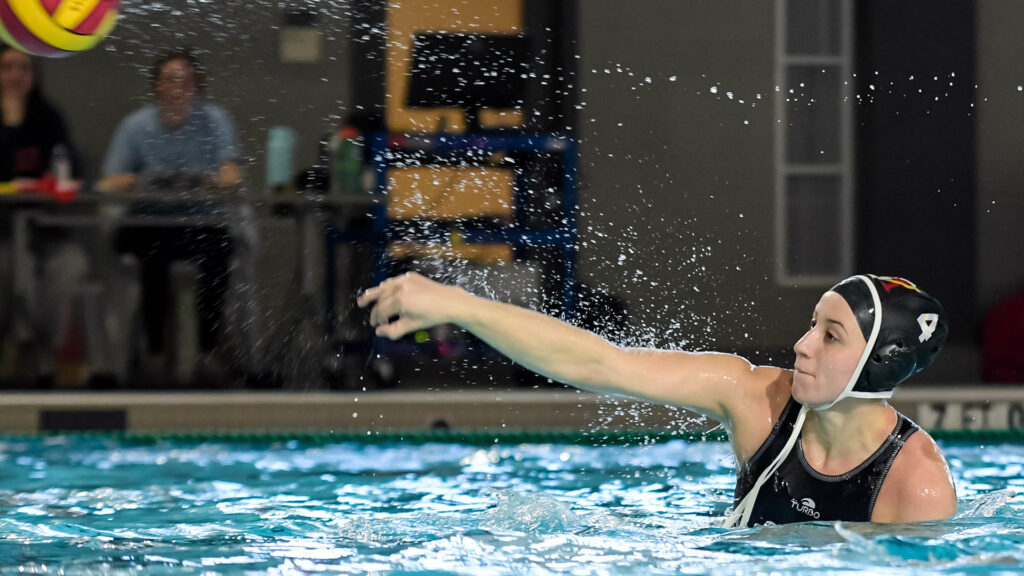
Courtney Novotny in the pool taking a shot for Virginia Military Institute's women's water polo team.

Cadet-athletes at VMI not only have their responsibilities with their selected sport but cadet duties on top of that.  Cadets are also required to take physical fitness classes twice a week, participate in ROTC all four years, prepare for room and uniform inspections, practice for parade, guard duty, and more. 

Her days can vary, depending on her schedule for classes and practice. Some days require an earlier wake-up, like when she does early morning lifting, she gets up at 5:15 a.m. 

Novotny isn’t sure if she will commission after graduating in 2025, but she is part of the Coast Guard auxiliary university program, which entails a lot of outside work and responsibilities. She said to stay on top of things, she takes the days she doesn’t have as many classes to get caught up on schoolwork. She lacks free time in the evenings because of practice.  

“I always try to tell myself even if I am having a bad day or if I do bad on an assignment that’s OK because that happens and I always make it through and overcome,” she said. “Usually, a lot of times, if I’m having a bad day, going to practice helps because it gets my mind off of it. I’ll go to practice, and I’ll be with my teammates. I forget about everything. Then I’m laughing and smiling. That’s the nice thing about playing a sport here is that you kind of get a break from academics.” 

Despite the busy schedule, Novotny said she likes the grind at VMI. Even though some days she wants to ditch practice and take a nap or do homework, she wouldn’t change it.  

“Being so involved at VMI is preparing me for the future,” she said. “When I’m older and I’m working, you’re always going to have a lot of responsibilities. So even though it is hard sometimes and I wish I didn’t always have to go to practice after classes, when I really think about it, it’s good to have this responsibility. Because it’s preparing me for what else is in the future.” 

Dyslexic Cadet Focuses Research on ADHD and Dyslexia for Honors Week Presentation

“Good afternoon. I am a 1st Class cadet here at VMI, and I have dyslexia.” That is how Claire Curtis ’23, a biology major at Virginia Military Institute, began her senior thesis titled, “Learning Differences at VMI” during Honors Week, held March 20-28.   

To a captivated audience, Curtis shared that the U.S. Department of Education defines a learning difference as being “A disorder in one or more of the basic psychological processes involved in understanding or in using language, spoken or written, which may manifest itself in an imperfect ability to listen, speak, read, write, spell, or to do mathematical calculations.”

Curtis then focused her discussion on two fairly common learning differences: ADHD, a neuropsychological disorder characterized by hyperactivity, inattention, and impulsiveness; and dyslexia, a neuropsychological disorder personal to Curtis, and characterized by issues in reading, writing, and understanding written language, and affects 20% of the population. She postulated that because the two are the most prevalent learning disorders, there may be a number of students with one or both at VMI. 

Curtis shared that her parents believed her capable of reading at the age of four, but she had only memorized the story books that her parents had read to her. They became aware of a problem when she was off by a page, but told the story verbatim. She was officially diagnosed with dyslexia when she was in 3rd grade. However, she is considered to be a twice-exceptional learner, that is a student who has both a high cognitive ability and who has a learning disorder, which is why she is an honors student at an exceptionally challenging senior military college. 

Curtis cited federal and state laws currently in place that prohibit discrimination, and allow accommodations for students with learning differences. She examined several colleges and universities in Virginia, such as George Mason University, James Madison University, Randolph-Macon College, University of Virginia, Virginia Tech, and Virginia Commonwealth University, who all offer between three to six different accommodations. But according to Curtis, using accommodations for learning differences disqualifies one from enlisting or commissioning, as well as attending a military college.

“VMI’s accommodations include assistive technology, priority registration, extra time on tests, a separate testing location, and academic assistance. I compared those accommodations to what is offered at the Citadel, a college very similar to VMI. Their accommodations include learning assistance, a test-taking center, assistive technology, peer note-takers as well as note-taking alternatives, and priority registration. Like VMI though, they cannot accommodate those who are commissioning,” she explained. 

Curtis spent much of the year researching, reviewing, and interpreting brain scans, and seeking best practices at places of higher education with regard to learning differences. She sought to educate and advocate, and identified ways to further support VMI cadets with learning differences, including additional funding for programs and support staff.  

Maj. Molly Kent, assistant professor in the Department of Biology and Curtis’ advisor stated, “Claire approaches material and data differently than many in the sciences, but her unique perspective and voice have been educational for me. I have learned so much from Claire’s project and hard work over the past several semesters. I can’t wait to see what she does next.” 

Lt. Col. Sara Whipple, assistant professor in the Department of Psychology said, “I’m impressed with the breadth of information Claire has covered, from the neuroscience of dyslexia and ADHD, to federal and state policies, down to an analysis of services and accommodations that a variety of colleges offer. Advising her on this project allowed me to recognize ways I could improve inclusivity and accessibility in my own classrooms.”  

Curtis is from Louisville, Kentucky, where she attended high school at Presentation Academy. She is the daughter of Diane and Brian Curtis. Her minors are history and chemistry. She is part of the Institute Scholar program, an S7 lieutenant, works as a cadet assistant athletic trainer, serves as an EMS member, is a member of the Cadet Superintendent’s Advisory Board, and plays volleyball. After graduation, she hopes to commission into the military and attend medical school.