Post View Unavailable »
New Website Launched »

The Vanguard — Scott Streff ’25

The Vanguard series highlights cadets of Virginia Military Institute who exemplify promise, perseverance, and the true spirit of leadership. While they may not be the top-ranking students or those in prestigious positions, these individuals’ dedication, resilience, and growth embody the essence of being a VMI cadet. By sharing their stories, including the challenges they’ve faced and overcome, we shine a spotlight on the diverse paths to success at the Institute, proving that leadership and excellence come in many forms. 

Scott Streff ’25 was looking for warmer weather in Virginia when he got an offer to play lacrosse at Virginia Military Institute. The international studies major from Minnesota was also looking to commission into the U.S. Army.  

“I came here to play lacrosse. I was recruited out of high school. I’d never been to the state of Virginia before I committed, so I just came here sight unseen, but liked what it seemed like, and it was warm,” he admitted.Although he’s not on the lacrosse team anymore, he stayed at VMI because the knowledge and experience he is gathering lends itself to his future plans — utilizing his international studies degree inside or outside the Army, like working for the government or private sector.

His first two years at the Institute were lackluster, he stated, making the GPA needed to maintain commissioning status.  

“Over the years, I’ve realized that my professors are super knowledgeable, especially in international studies,” Streff said. “I think we have some of the best professors, and what they’re talking about can help me.” 

By his 2nd Class year, he was awarded academic stars, which means a cadet has a cumulative GPA of 3.5, or has earned a yearly GPA of 3.5 for the previous academic year.  

“My dyke, when he was here, said grades are the most important thing. Whatever rank you have is really nice and really cool, but nobody in the real world cares that you were a corporal. They care about your GPA,” he said. “That’s what people look at first on a resume. That’s a major factor in Army rankings. So [my dyke] kind of drove me. He had the highest GPA in his major, and his roommate had the highest GPA in his major. I just wanted to go off that.” 

He was also inspired to have the lacrosse team GPA be above a 3.2, which he had been below most of his cadetship. Although he’s not on the team anymore, he’s still close to others that are, and they motivate each other to get good marks. Streff is on the Rat Disciplinary Committee, which is responsible for the discipline and conduct of rats throughout the Rat Line. 

Streff has had his share of struggles while at VMI. He admits he doesn’t spell at a high level, which can be challenging as an international studies major — there are a lot of papers to write.  

“My roommates, they put me through a spelling bee, and they figured that I spelled about a fourth-grade level. I had to overcome that,” Streff explained. “I also needed to overcome the time management aspect of VMI. I was wasting a lot of time and putting time into the wrong areas, getting distracted.” 

He found that staying in his room with two monitors hooked up to his computer was a more effective way to study, instead of spending time in academic buildings where more distractions could be presented.  

It also helped finding a passion for international studies. He’s able to minor in Middle Eastern studies, giving him interesting classes to enroll in, which in turn made learning the material easier and fun. 

Salih Yasun, assistant professor in the Department of International Studies and Political Science, describes Streff as a friendly, ambitious student, saying, he’s “in peace with himself.” 

“Intellectually, he is very open to challenging himself. He has the ability to lighten the mood in class whenever he wishes to do so,” Yasun said. “He is the kind of cadet every professor wishes to have in their class.” 

Vera Heuer, professor in the Department of International Studies and Political Science, said Streff is personal, grounded, and doesn’t view education as a commodity. She appreciated his approach to VMI’s expectations.  
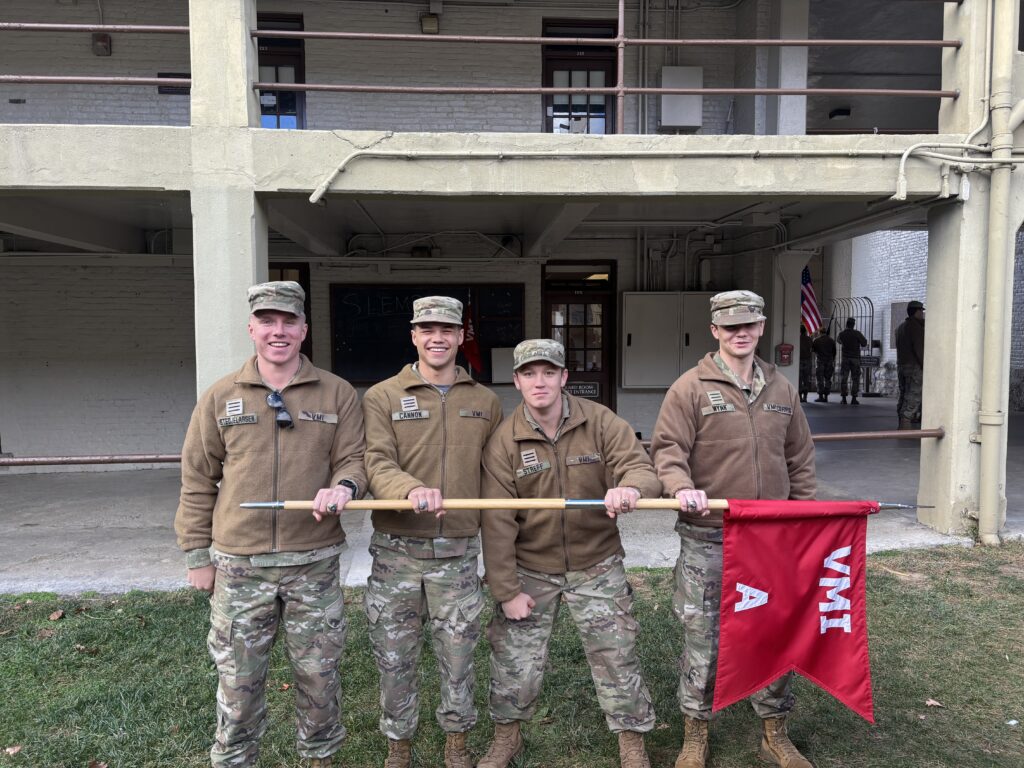
Scott Streff with his brother rats at Virginia Military Institute in barracks.

“He clearly is motivated to do well in his classes, but he would first try to improve his performance on his own rather than ask the instructor,” she commented. “Even when he turns for help, I always felt that he was very cognizant of not viewing faculty as a service deliverer, but more as a mentor.”

Heuer saw an example of this during Streff’s 3rd Class year in how he was as a peer instructor trying to communicate to other students to put in the effort and come to sessions prepared. She noticed that he’d inform students that if they weren’t prepared, he would be limited in how he could help them. He was essentially interacting with his peers as faculty members do with their students, she said.  

“This shows that he has great social awareness and what makes him a good leader,” she said. “He was very good at balancing corps, athletic, and academic commitments — he was able to finally earn academic stars only after he relieved himself from some of the commitments, like quitting lacrosse. I was really happy to see him finally getting the academic accolades he is so deserving of.” 

As graduation approaches, Streff is excited to serve his country, then hopefully pursue further studies after. He feels his time at VMI has well prepared him for whatever comes.  

“I think VMI matures you … you have a lot more real-world responsibilities and concerns,” he stated. “I think the priority of VMI cadets is very different than the priority of most college students across the nation. It’s a much more competitive environment post-graduation. People care about what jobs you’re getting, what opportunities you’re getting, what internships you are getting.” 

Behind the Balance: Eleyah Armstrong ’25 — Keydet Women’s Track and Field

Virginia Military Institute’s cadet-athletes have to juggle cadet life, heavy academic course loads, and their NCAA Division I sport. Committed to both academic and athletic pursuits, balancing their rigorous schedule in both sports and school requires a certain level of commitment and discipline. Behind the Balance is a series that focuses on those cadet-athletes and how they handle the hurdles of the day-to-day. 

Adrenaline and nerves flow through Eleyah Armstong ’25 before she starts a race. As a captain and sprinter on Virginia Military Institute’s track and field team, the anxiety dissipates quickly as she runs. The downside to sprinting is that it’s over faster than it began. Then, she has to start all over.  

“Even though I’ve been running for so long, still, to this day, I get performance anxiety,” she admitted. “I try to calm myself. And the two words that I repeat to center my mind, to calm down, is ‘inner peace,’ because I meditate before I get into competition mode.”She doesn’t put a lot of emphasis on her anxiety, instead she puts a lot of her faith in God.  

“I also talk to God, and I just put it in his hands, because I know he’s got me through it before, he’ll get me through it again,” Armstrong explained. “The path that he has me walking, I know there’s success at the end, and I’m going to accomplish the goals that I have for myself.” 

She’s been running track for over 14 years. She said her parents put her in track after she raced a girl during her brother’s football practice when she was 7 years old. The girl she raced, who was just a year older, was known to be one of the fastest in the area and ran with a higher age group.  

“My dad decided to put me in it,” she said. “I like to compete a lot, and I like the adrenaline that comes behind it. I just stuck with it.” 

The psychology major is in her last year at VMI and plans on commissioning into the U.S. Army in May.  

Cadet-athletes at VMI not only have their responsibilities with their selected sport but cadet duties on top of that. Cadets are also required to take physical fitness classes twice a week, participate in ROTC all four years, prepare for room and uniform inspections, practice for parade, guard duty, and more. 

Eleyah Armstong jumping at a track and field event for Virginia Military Institute.
2022 SoCon Track and Field Championships

In her previous three years, Armstrong would have to get up early and split her day between practice, classes, and then practice again.  

“You have to shift your focus a lot. You have to start with this, and then go back into this, and then you have to get back into the rhythm,” she explained. 

Now, she’s able to have devoted afternoon practices, which leaves her mornings more open for studying and other obligations. Her role as captain has also allowed her to discover her own leadership style. She spent last year with a captain role under a 1st Class cadet, which gave her the opportunity to be able to shadow and learn. Last year, she qualified for the NCAA East Regional first round of the 2024 NCAA Track and Field Championships, making her the first women’s qualifier from VMI since 2011. 

“I already had a good communication system with the coaches, because I just like to make sure my team is on the same page. I like to have harmony,” Armstrong stated.  

Track served as an outlet of stress relief for Armstrong. Overall, VMI has also helped build her as a person. 

“I think VMI has prepared me for the future, as far as working with different people from different backgrounds and creating bonds with different people from different backgrounds,” she said. “You never know who people really are, or where they come from, until you get to know them and work with those people, whether that’s in the classroom or in the ROTC department or your teammate.” 

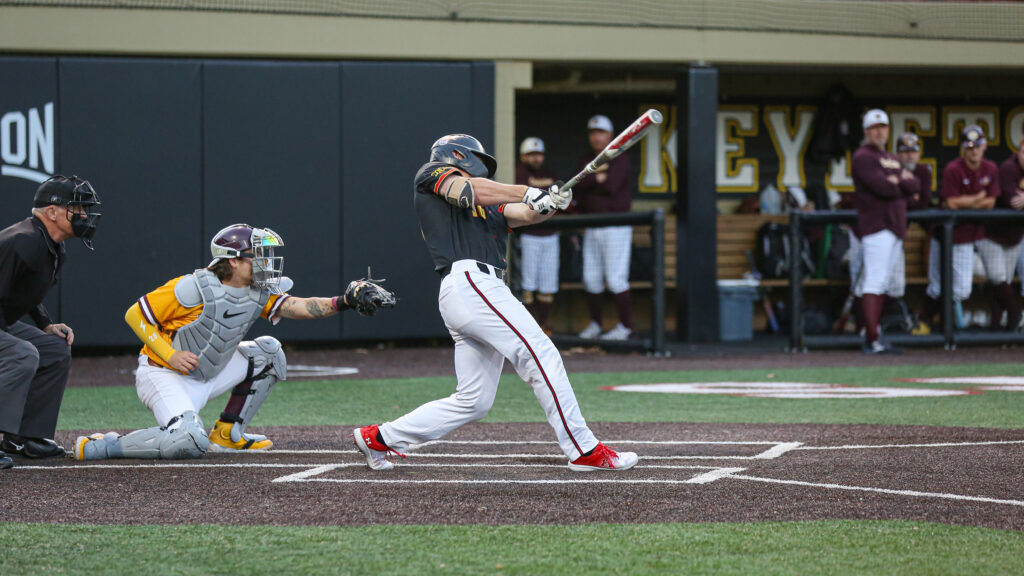
Behind the Balance: Ryan Peterson ’25 — Keydet Baseball

Virginia Military Institute’s cadet-athletes have to juggle cadet life, heavy academic course loads, and their NCAA Division I sport. Committed to both academic and athletic pursuits, balancing their rigorous schedule in both sports and school requires a certain level of commitment and discipline. Behind the Balance is a series that focuses on those cadet-athletes and how they handle the hurdles of the day-to-day. 

Ryan Peterson ’25 has learned how to compartmentalize and focus. He said it’s something that his time at Virginia Military Institute has helped frame for him. The international studies major explained that the rigors of academics and playing a Division I sport makes it so he must focus on one task at a time. 

“First and foremost, I won an opportunity to compete at the Division I level, and that really sold me,” Peterson explained. “The school also intrigued me a lot, just because it just seemed like a different way of learning, as compared to other colleges around. I think here gives you a different perspective on how to compartmentalize things.”Cadet-athletes at VMI not only have their responsibilities with their selected sport but cadet duties on top of that. Cadets are also required to take physical fitness classes twice a week, participate in ROTC all four years, prepare for room and uniform inspections, practice for parade, guard duty, and more. 

“If you’re thinking about the stuff up on the hill, then it’s going to affect your performance down at practice,” Peterson admitted. “If you’re thinking about your performance at practice, it’s going to bleed into your study hours and turn a couple hours of homework into three maybe four, and some long nights.” 

In his final semester, Peterson is taking 14 credits. The lighter load is due to previous semesters at 17.5 credits. While he’s in season with baseball, he’s getting up at 5:30 a.m. for morning weightlifting. Then it’s breakfast and on to class. He’s found that any spare time he has during his days, he fits in as much school assignments, studying, and work in between other obligations. 

“I try to be really on it and get my work done when I can,” he said.  

Individual practice begins at 2 p.m. for Peterson, then later in the afternoon is the full team practice, which wraps up around 6 or 7 p.m. Then he’s studying until about 10 p.m. Each hour of the day is accounted for, he said. The strict schedule that he and others at VMI follow has also helped with preparing him for the future. 

“I think coming here out of high school I was really glued to my phone or things that can distract you, and over the years and learning how to balance everything and do well in my classes, I really had to transition between being present at practice to being present in my homework,” he explained. 

VMI BB Fall Scrimmage vs. UC Action Shot

Baseball serves as an outlet for him. 

“It’s normally the most fun part of my day. I’m lucky that it’s still fun to me,” Peterson said. “I know some people, as they get older, it gets more of a burden. Luckily it hasn’t gotten to that point. It definitely helps me when I’m stressed. Having that outlet together every day, because I see myself as lucky because I know some people come here and they don’t have something like that. They don’t have an NCAA sport to go down to and play or take in.” 

Peterson, a catcher, has always been intrigued by the team atmosphere of baseball. He’s been playing since the age of 6. 

“I think everybody, whether you’re the star player or the last guy on the bench, can have a shared part in the team’s success or failure,” he stated. “I think a lot of baseball feeds off energy, and if you have everybody bought into playing for each other and the team’s goals, that it can be pretty powerful.” 

Now in his last season, he’s looking toward the future. “It is bittersweet, but I’m really at peace with things. I think coming here really made me take in what I’m doing every day and understand where I’m at in the world,” he admitted. “I feel that this place in particular and the program we have down at the field has made me kind of take in every day. So, I have no regret of looking back and saying, I wish I put a little bit more effort here and there. I’m at peace with knowing that I’ve given a lot of effort.” 

He plans on going to law school and has aspirations of becoming a judge advocate. 

“I’ve always been interested in structure. I’ve always been interested in law and as well as the military, so that’s why I would like to be a judge advocate,” he said. “I’ll take the lessons I’ve learned here, translate them into both my interests and into the real world and try to help people who serve and help us.” 

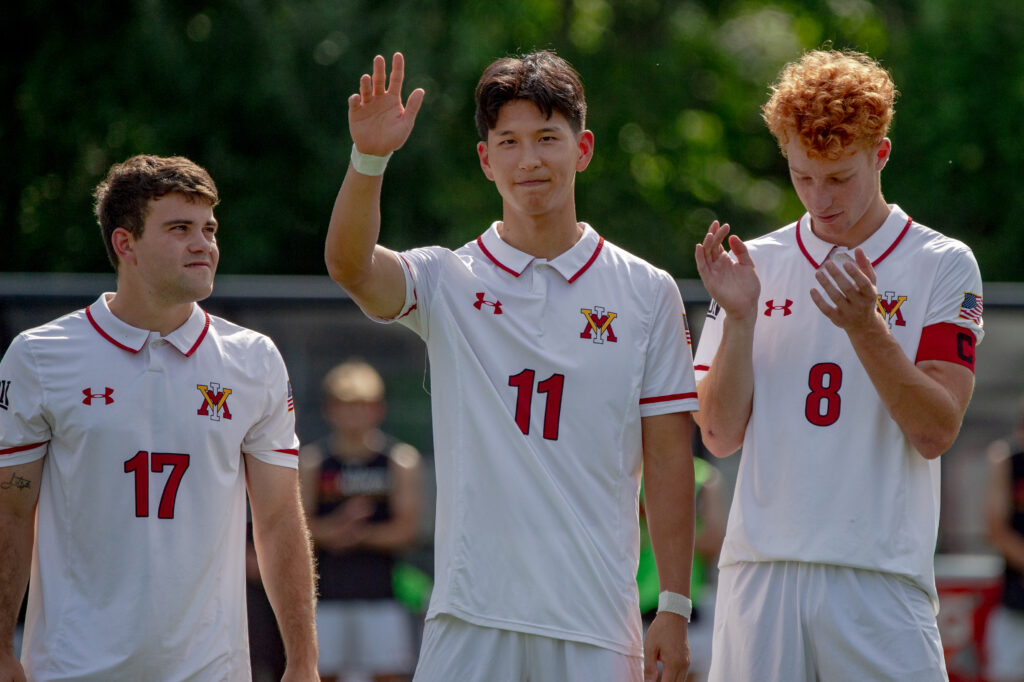
Behind the Balance: Woongchan Oh ’25 — Men’s Keydet Soccer

Woongchan Oh ’25 grew up in the Korean countryside. He said there wasn’t much to do, but with a ball and a field, the possibilities were endless.  

“With a soccer ball, you can start playing without any other equipment,” he said.  

He’s been playing since he was a child and had dreams of going professional.  

“I joined the local soccer team when I was in fourth grade. Since then, I’ve been in a very competitive environment,” he said. 

He was in a soccer pro-academy for most of his time in Korea. Then once he was in the United States during high school, he was in a soccer development academy, which is the highest youth level. He spent his high school years in Maryland and his family now lives in Harrisonburg, Virginia. 

When looking for the next step after high school, Oh wasn’t initially considering military school or even joining the military. His father had been part of the Korean military, so he was familiar. When he was approached by the Virginia Military Institute soccer coach for an offer to play for the team, he talked it over with his parents.  

“My father thought it would be great to start a career as a commissioning officer,” he said. “I did some research, and I grew with this opinion, so I decided to join VMI.”

Oh says playing soccer at VMI is a different atmosphere due to the smaller nature of the school. 

“It’s different because you’re playing with your classmates and roommates and we’re going through everything that’s going on here together. It’s more special,” he said. 

The civil engineering major has a full plate. He plans on commissioning into the U.S. Army and has kept a full load of classes for much of his cadetship.  

Cadet-athletes at VMI not only have their responsibilities with their selected sport but cadet duties on top of that. Cadets are also required to take physical fitness classes twice a week, participate in ROTC all four years, prepare for room and uniform inspections, practice for parade, guard duty, and more. 

VMI MSOC Action Shot vs. Howard

Oh says he’s not one to play video games or get involved in similar distractions. Instead, he comes up with a game plan of how he’ll be able to finish all his work in a timely manner. 

“I had to make a base plan. Like, get food from Crozet and come to my room and study and eat at the same time,” he said. 

He’s up at 6:30 a.m. daily, with classes and practice until 7 p.m., then he’s doing homework until at least 11 p.m. He says there’s not a lot of breaks in between.

“If you don’t spend time on your phone and other stuff …” he said it’s easy to stay on task. 

Playing soccer serves as a way for him to let loose and cope with stress. 

“I don’t think about academics on the field, I just focus on soccer,” he said. “It’s not just an individual sport. It’s just playing with my friends and building relationships with other people.” 

His time at VMI has taught him how to manage his time, which will be useful for his future career.  

“I think as a lieutenant in the military, you have to work ahead, and you have to know what your role is. I think even in the classroom or on the field, you have to know what to do next, just being proactive,” he said.  

Behind the Balance: Whitney Tracy ’25 — Women’s Keydet Soccer

Virginia Military Institute’s cadet-athletes have to juggle cadet life, heavy academic course loads, and their NCAA Division I sport. Committed to both academic and athletic pursuits, balancing their rigorous schedule in both sports and school requires a certain level of commitment and discipline. Behind the Balance is a series that focuses on those cadet-athletes and how they handle the hurdles of the day-to-day. 

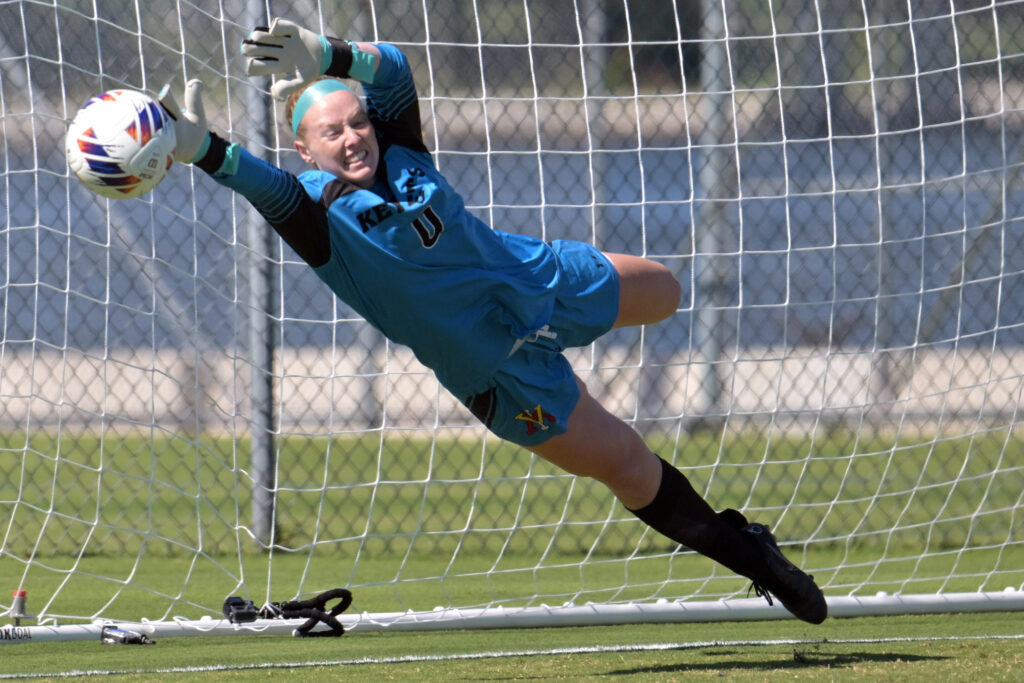
With a father as a soccer coach and two older sisters playing the sport, Whitney Tracy ’25 knew she’d be on the field. Except, her father didn’t expect her to be in goal. 

“I ended up, as I got older, wanting to play in goal rather than the field, because I didn’t like running. And my dad spent years trying to keep me out of it. He did not want me to be playing goal because he was a coach and that was one position he didn’t know how to coach,” she said. “Well, I don’t like listening to my parents being the youngest child, you know … rebellion. So, I did it anyway. Turns out I was pretty good at it.” 

Tracy, originally from outside of Philadelphia, knew she wanted to play Division I soccer, but she also wanted to attend a school that was more academic-focused and structured.  

“I started looking at the military route, because it just seemed like it fit for me, that discipline, that idea of everyone caring about where they are,” she said. 

She was looking at other military colleges, but realized she didn’t know which branch of the armed forces would suit her best. She wasn’t ready to commit to commissioning. That’s when one of the coaches from Virginia Military Institute reached out.  

“It kind of fit perfectly for me,” she said. 

Not only is she the starting goal for the team, she’s also a S4 lieutenant, and part of the VMI Institute Honors Program. Her duties as a S4 lieutenant are handling supply and logistics for the Corps and other programs within the Institute. That also means she’s on post before most of the Corps with soccer and her regimental duties.  

Tracy arrives a month before the fall semester starts. The first two weeks are devoted to soccer, then it’s onto her cadre responsibilities. 

It can get really busy to balance everything, specifically Cadre Week,” she said. “We were just kind of prepping. We set up all of the rat’s’ rooms. We made sure that each one had the proper amount of hays in it. My staff was making sure that all the rooms were proper.” 

Matriculation Week was also hectic getting supplies and organized, Tracy explained. That’s all while handling her soccer schedule too, which only gets busier when classes start. 

Cadet-athletes at VMI not only have their responsibilities with their selected sport but cadet duties on top of that. Cadets are also required to take physical fitness classes twice a week, participate in ROTC all four years, prepare for room and uniform inspections, practice for parade, guard duty, and more. 

Tracy’s busy schedule isn’t a hinderance, though. It has helped her. 

“I’ve always been big on being involved in things. I don’t like sitting on the sidelines,” she said. “I’m somebody who likes trying to figure out what’s going on and help organize stuff.” 

Her job as a lieutenant is directing her sergeants and corporals.  

Whitney Tracy blocking a soccer ball during a Virginia Military Institute women's soccer game.
NCAA Women’s Soccer: Midshipmen prevail over VMI, 3-2

“That’s kind of where I thrive,” she said. “How do I disseminate it to get it done? How do I make sure that everything gets done? I can look at all the pieces and say, ‘Oh, this is not being done in an efficient way. How can we make this more efficient?’” 

Now in her final year at VMI as a biology major, she has a 12-credit semester for the fall, which is significantly down from previous semesters of 19 or more credits. She planned it this way, by taking heavier class loads previously, plus she did a summer abroad study program in Ireland last summer that gave her six credits.  

“I’ve taken the extra credits so that I can have that light semester,” she said. “I wanted my senior year to be able to say, I have rats, I’m finishing up my soccer career. I want to be able to go out on the weekends with my friends and go get dinner in town on Thursday night and not have to worry about six tests next week, and everything else. I kind of front loaded myself so then I could breathe my 1st Class year.”

Don’t let the 12 credits fool you though. She’s also working on her senior thesis that she will present in the spring. Her research is on the pathogenic fungal disease called White Nose Syndrome in the rock crevices of a species of bats called the Eastern small footed bats. 

Her days are still packed. She’s up at 6:30 a.m. daily for formation, then it’s breakfast, classes all day, and onto practice. By 8 p.m. she’s set in doing homework.  

“I would say I’m very big on writing things down. I have a pretty good memory when it comes to scheduling. But when it comes to homework assignments, I have to be able to see everything. I’m a very visual person.” 

She says it’s hard for her to get schoolwork done during the day because she’s so busy either talking to her professors or other tasks. But communicating with her professors is integral to keeping up with her studies and playing soccer — she’s able to work out missed tests or class assignments when she is in constant communication with them.  

Getting any work done on bus rides is a no-go for Tracy. It’s tough to get any real work done, she said. Instead, the team ends up doing a lot of work together at the hotel prior to game times. 

“The team is down in the lobby doing homework, we’re all very motivated academically that we want to make sure that we have stuff done,” she said. 

Her plans after graduation are to take a gap year, get her certified nursing assistant certification, work on contact patient hours, then apply to a physician assistant program. 

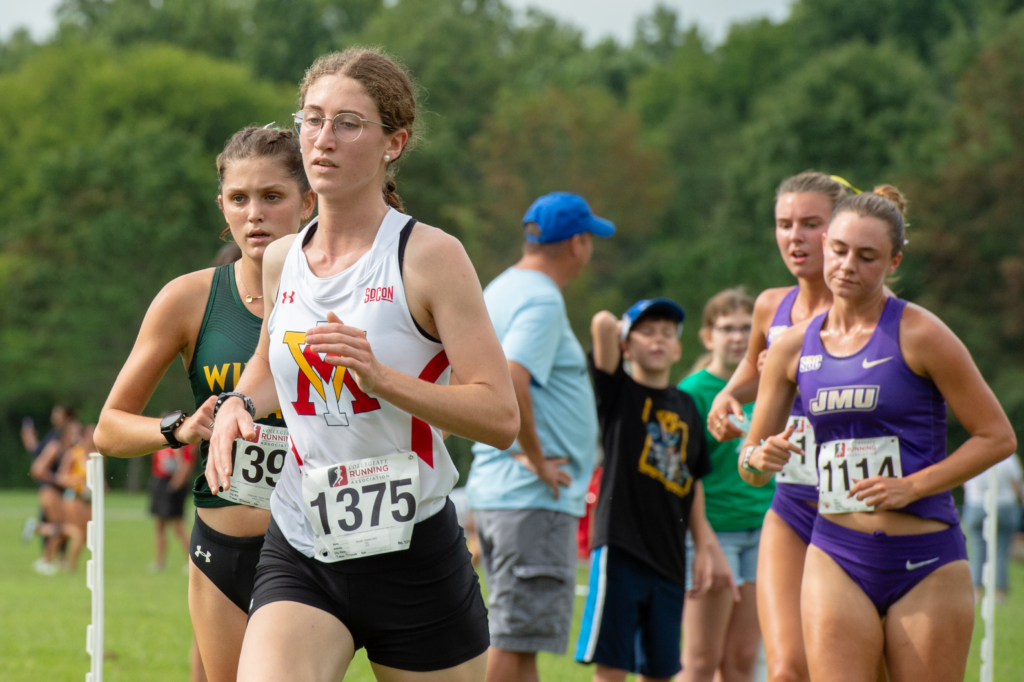
Behind the Balance: Patrick Kiernan ’25 — Keydet Cross Country

Virginia Military Institute’s cadet-athletes have to juggle cadet life, heavy academic course loads, and their NCAA Division I sport. Committed to both academic and athletic pursuits, balancing their rigorous schedule in both sports and school requires a certain level of commitment and discipline. Behind the Balance is a series that focuses on those cadet-athletes and how they handle the hurdles of the day-to-day. 

Community is something Patrick Kiernan ’25 values in his life. It’s one of the reasons he chose to go to Virginia Military Institute and also a big part as to why he’s on the cross country team.  

He started running at a young age, thanks to a cross country camp he attended with his cousin.  

“I enjoyed it, not just the sport, but the community that camp built,” he said. “I decided to do it in high school, and I really enjoyed just that sense of community I had with my teammates. I think I was a lot closer than other sports teams I had been on in middle school and elementary school.”

He continued running through high school and by his junior year, he was contacting the coach at VMI to inquire about running there. He had to track his times and give the coach updates, to show the progress he was making. Then a couple days after Matriculation Week, he was able to join the team practices.  

When he first started on the team, he was averaging about 45 to 60 miles a week. Now, it’s between 60 and 80 miles.  

“The longest I’ll go is 16 miles, but it depends on the day. So, some — we call them a maintenance or a recovery run — will be, for me, around eight to 10 miles,” he said. “Our harder days will usually be around 10 to 13 miles. Then usually we’ll have one really long run of about 12 to 16 consecutive miles.”  

To keep occupied during the longer runs, Kiernan says he’s usually running in a group, so they’ll all talk to each other.  

“When I’m on my own, my mind just kind of wanders. On a busier day, I might just be thinking about planning out my week or my day, like how I’m going to get things done,” he said. “Every once in a while, I’ll have earbuds in and listen to music. ”

Kiernan keeps a tight schedule, as do most cadets. He’s asleep by 10:30 p.m. after a full day of activities. The history major has found the busier he is, the more time he has to finish tasks. The constant movement and busyness allow him to stay focused. He participates in several clubs and serves as a S7 lieutenant, which deals with cadet life and is responsible for the general well-being and morale of the Corps of Cadets. He’s also a cadet chaplain.

“Last year was probably one of my busiest years as a cadet, where I had a bunch of different obligations. I had my rank, being on the team, I was also president of the Newman Society, vice president for Pre-Law Society. I constantly had stuff I was doing,” he said. “I think a lot of it was trying to prioritize, my sleep and not staying up super late. I found those little bits in the day and figured out how long it took me to get an assignment for class done or get something done. It was more just figuring out the little moments in the day I can use to get a little bit of work done, and then that just built up.” 

Cadet-athletes at VMI not only have their responsibilities with their selected sport but cadet duties on top of that. Cadets are also required to take physical fitness classes twice a week, participate in ROTC all four years, prepare for room and uniform inspections, practice for parade, guard duty, and more.  

Patrick Kiernan running cross country for Virginia Military Institute.

“I think it was a lot about just me prioritizing getting work done in the day, so you have less to do at night,” he said.

He said being part of cadre has helped him establish a way to manage his time. During Cadre Week, he had to figure out what to make a priority due to multiple meetings and rank responsibilities.  

“It was deciding which ones were a higher priority that I needed to be at and then which ones I could just have someone fill me in on what it was about,” he said. “I think even throughout the school year, it’s a similar thing of figuring out what needs to be done immediately and what can wait, or what I should start on early, so it doesn’t become a problem later.” 

He believes VMI has built up a certain discipline in his work ethic and how he approaches problems.  

“I’ve noticed that being at VMI, when they talk about discipline, it’s not doing the insane hard, workouts and stuff every day. A lot of it’s just doing those small things you don’t really want to do, like getting up early,” he said. “I think that adaptability is a big thing. There’s a lot of sudden changes, military or non-military life, where things just come up. I think it’s helped me be fairly adaptable, where I can just on the fly make an adjustment in my schedule or in my day to figure out how to get a lot of things done.” 

Behind the Balance: Sedona Dancu ’25 — Women’s Keydet Soccer

Virginia Military Institute’s cadet-athletes have to juggle cadet life, heavy academic course loads, and their NCAA Division I sport. Committed to both academic and athletic pursuits, balancing their rigorous schedule in both sports and school requires a certain level of commitment and discipline. Behind the Balance is a series that focuses on those cadet-athletes and how they handle the hurdles of the day-to-day. 

Sedona Dancu ’25 said she wasn’t even looking at military colleges until she received a call from the women’s soccer coach at Virginia Military Institute. The psychology major, with a minor in exercise science and leadership studies, said once she learned about the vast alumni network VMI offers and the connections she could gain, she was in. That coupled with a soccer scholarship, it was the best move for her. 

At the age of two, she was handed a soccer ball and there was no turning back. It’s the competitiveness and team aspect she enjoys the most.  

“It’s hard to explain. I feel content when I’m on the field,” she said.  

But it’s the tightness of the team that’s kept her at VMI. 

“At VMI, with it not being a lot of girls, we will all do anything for each other,” she said of the girls on her team. “We will stand up for each other in any situation. I could trust all of them with my life. We go through so much, especially the girls in my class, starting with the Rat Line together.” 

She said from her first year, her class went from 14 women on the team down to eight.   

“All eight of us are really close,” she said.   

Cadet-athletes at VMI not only have their responsibilities with their selected sport but cadet duties on top of that. Cadets are also required to take physical fitness classes twice a week, participate in ROTC all four years, prepare for room and uniform inspections, practice for parade, guard duty, and more. 

Dancu is up at 5 a.m. during the week for practice. Then it’s breakfast and onto classes. This semester she has her lightest load with 12 and a half credits. Previously, most of her semesters were 18 credits or more. After classes end at 3 p.m., she’s rushing off to another practice until 7 p.m. Then it’s dinner, homework, and bed. Some nights she stays up past midnight doing homework, only to turn around and get up at 5 a.m. the next morning. 

“I think the quickest thing I had to learn was to manage my time and not procrastinate,” she said. “Procrastinating is huge, especially as a 4th Class cadet. You can easily procrastinate things because you get so loaded with all the Rat Line responsibilities, soccer, and getting used to being in college.” 

Managing time, and having discipline and accountability are high priorities for Dancu.  

“I usually write out a schedule … just managing every hour of the day. Because every minute of the day here is so precious,” she said.  

She feels that VMI has helped provide the structure that’s needed to follow a strict schedule. When Dancu compares her college life to her friends or siblings at more traditional colleges, there’s such a difference. 

“They have like one class every two days and then they can sleep in. It’s funny comparing schedules, because we’re literally up from 7 a.m. to midnight doing things every hour,” she said. “Even when you don’t have homework, we have military duty. In season, you’re traveling, and we get back at 4 a.m., then you have to go to class.” 

Sedona Dancu kicks the soccer ball at a Virginia Military Institute women's soccer game.
VMI’s women’s soccer team hosts Emory & Henry University at Patchin Field in Lexington, VA August 24, 2024. First half, VMI wins 2-0. (Randall K. Wolf/VMI)

Despite the rigorous schedule, Dancu pointed out that the women’s soccer team won an academic award for highest GPA among women’s sports at VMI last year. 

“It’s really motivating, because when we’re on the bus or in the hotel room, everyone is doing homework, and you’re like, shoot, I should probably be doing it, too,” she said. “They’re just so smart and on top of it. In a way, soccer helps with school, because you have the time to do class and then you have practice. If I didn’t play sport here, it would be difficult for me to focus. Being on the soccer team and having such a busy schedule, it makes it easier to get your homework done.”

Dancu said she’s someone who loves staying busy. When she’s on break from school, she’s on a mission to fill her days.  

“I can’t just sit around and not do anything,” she said. “It’s taught me what hard work looks like and I am very grateful for that, because I think it will really help me in the future.” 

Being at VMI has offered her discipline. 

“I’m more disciplined in all aspects of my life, especially my faith,” she said. “My faith has grown tremendously since I’m a cadet chaplain.” 

She’s already seen the alumni network work for her. This past summer she had an internship at the University of North Florida, working in the athletic marketing department. An alumnus got her in contact with the right people and she was offered the opportunity. 

Following graduation, she plans on playing soccer for one more year while attending graduate school. She wants to pursue leadership studies, ministry, or something in sports.  

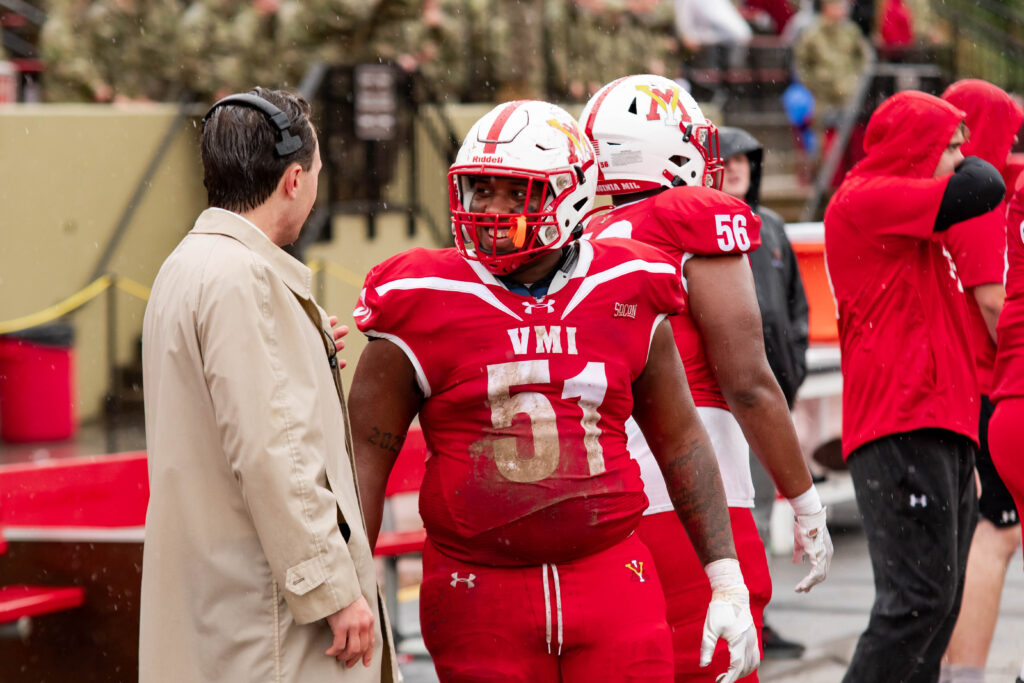
Behind the Balance: Terrell Jackson ’25 — Keydet Football

Virginia Military Institute’s cadet-athletes have to juggle cadet life, heavy academic course loads, and their NCAA Division I sport. Committed to both academic and athletic pursuits, balancing their rigorous schedule in both sports and school requires a certain level of commitment and discipline. Behind the Balance is a series that focuses on those cadet-athletes and how they handle the hurdles of the day-to-day. 

When Terrell Jackson ’25 got to Virginia Military Institute, he was assigned an academic advisor through cadet athletic development. With resources like the Miller Academic Center, Jackson said VMI provides opportunities for those who may fall behind on academic studies. 

“It really comes down to just using the resources that VMI provides,” he said. 

Academic advisors are standard in a college environment, Jackson said.  

“They help you arrange your schedule in the beginning of the semester. But also, after you arrange it, they help you stay on top of all the work that you have, keep track of your grades, let you know what you’re slipping up or getting behind on, and what you need to do to get back to it,” he said.  

They even help you find tutors, which Jackson did for history. The psychology major said the extra guidance helped him with his VMI journey. 

Cadet-athletes at VMI not only have their responsibilities with their selected sport but cadet duties on top of that. Cadets are also required to take physical fitness classes twice a week, participate in ROTC all four years, prepare for room and uniform inspections, practice for parade, guard duty, and more. 

As a captain on the defensive line, his responsibilities go beyond the field. He’s one of seven captains for the 124-player team. He says it’s an honor to see his teammates hold him in a higher regard and have respect for him.  

Being captain also means meeting with several different organizations on post. From meeting with the regimental staff, the general committee comprised of a board of cadets, to meeting with Maj. Gen. Cedric T. Wins ’85, superintendent, Jackson and the other captains are there to maintain a relationship between athletics and the Corps, while also providing support to rats on the team. 

His days start and end with football, while carrying a 15 and a half credit course load. Waking up between 6 or 6:45 a.m. each day, he goes through the motions of a cadet — rolling his hay, heading to morning practice, then onto breakfast before a full day of classes. By 3:50 p.m., it’s time for the team meeting to start where the head coach addresses the team.  

“The whole team gets together, and the head coach talks about what we’re doing for the day: what we have planned for our game, how the other team looks, the game plan, and what each position or unit needs to do for us to win the game,” he said. 

Then they all break out into specific meetings where it’s dedicated to their positions on the field. That’s where they spend time watching game film to learn either their own strengths and weaknesses or that of the other team they are set to play. By 5:30 p.m. they’re out on the practice field.  

Everything is wrapped up after 7 p.m. after the players do cool downs, treatments, and showers. Jackson oversees accounting for everyone as they line up to head to Crozet Hall for dinner. He turns in a sheet of names to the commandant’s office for accountability.  

There’s a lot of moving parts that Jackson must account for daily, so staying on top of everything takes dedication. 

Terrell Jackson at a Virginia Military Institute football game.

“It’s just about putting in effort. There’s no special trick or secret magic to it,” he said. “You’ve got to not complain about it and just keep going. You were put here for a reason; you’ve got to embrace your role. Our biggest thing on the football team this year is just building a legacy. We might not win a playoff game or win a championship. If my class and the captains that we have now start building a legacy so we could come back in four years and we’re on top of the SoCon, or win the national championships, I’ll be happy to say, I started that. That came from our class.” 

The discipline and routine that VMI has instilled in Jackson is something he will carry throughout his life.  

“It’ll force you to get some time management skills. Either you get them or you’ll get left behind,” he said. “VMI is a tough place to be, especially to last. A lot of people could come here, but can you last?” 

Behind the Balance: Abby Fiorillo ’25 — Keydet Cross Country

Virginia Military Institute’s cadet-athletes have to juggle cadet life, heavy academic course loads, and their NCAA Division I sport. Committed to both academic and athletic pursuits, balancing their rigorous schedule in both sports and school requires a certain level of commitment and discipline. Behind the Balance is a series that focuses on those cadet-athletes and how they handle the hurdles of the day-to-day. 

It wasn’t love at first run for Abby Fiorillo ’25. She said her father made her do cross country when she was in high school, but the longer she ran, her love for the sport grew.  

It brought her community, and it was something that she was excited to continue to do while at Virginia Military Institute.  

“I love the competition,” she said. “It’s challenging, and I like the community around it.”

The physics major chose VMI for the ROTC aspect; she will be commissioning into the U.S. Army after graduation next year.  

“I chose VMI for a lot of reasons,” she said. “My brother came here, so it was familiar. And then I really wanted the community that VMI has to offer.” 

That community can be found in the Corps and within the cross country team. She said when she’s training during the week, she’s often running with a friend or finding time to reflect on her own. Her daily runs average between seven and eight miles, while she’s doing between 40 and 45 miles weekly.  

“My favorite part about cross country is practicing. I love working out, and I don’t have to plan when my workouts are going to be. I already know I have a specified time,” she said. “It’s consistent. When I’m not studying or when I’m stressed, cross country gives me that outlet and that mental focus.” 

She’s chatting it up when she runs with friends. Other days, she opts to listen to music on her phone.  

“Some of the time, it’s like meditation,” she said. “And sometimes I don’t even think about anything. I’m just running.” 

It’s become sort of routine for her, she said. 

“I really don’t pay attention to it anymore because I’m so used to running it,” she said. “Now I just want to just go into my little mental state and clear my mind, or think about what happened that day, or something that’s on my mind, or what I want to do in the future.” 

Abby Fiorillo running cross country for Virginia Military Institute.

It can also serve as a planning period for her. Cadet-athletes at VMI not only have their responsibilities with their selected sport but cadet duties on top of that. Cadets are also required to take physical fitness classes twice a week, participate in ROTC all four years, prepare for room and uniform inspections, practice for parade, guard duty, and more. 

Her regimented days begin at 6:45 a.m. and don’t end until after 8 p.m. She does set a hard stop at 10:30 p.m. 

“I try to get as much sleep as I can, just because it’s taxing on your body and I enjoy it,” she said about her sport. 

She said having a plan and system is important, especially knowing your priorities.

“I love my sport, but I’m here for academics. I’m really getting a degree out of this. It’s having priorities and knowing how to schedule it all, staying on top of homework, practicing every day and doing everything you can, just to fit it all in,” she said. “I think I was pretty good at routine in high school, but VMI made me realize that I can fit so much more into my routine than I thought.”

Fiorillo said the constant go of VMI will help her become a great leader. With her desire to commission into the Army, the ability of coming up with a plan and procedure will lend itself to her leading a platoon, she said.  

“Knowing that there are going to be early days, late days … every day is going to be different. But making sure that you have your priorities straight is going to help with that,” she said. “I think VMI fosters that shared suffering of everyone doing the same thing. No one wants to wake up at 7 a.m. every day. But it shows that we’re a little bit more responsible, and it instills those characteristics.” 

Behind the Balance: Gretal Shank ’25 — Keydet Cross Country

Virginia Military Institute’s cadet-athletes have to juggle cadet life, heavy academic course loads, and their NCAA Division I sport. Committed to both academic and athletic pursuits, balancing their rigorous schedule in both sports and school requires a certain level of commitment and discipline. Behind the Balance is a series that focuses on those cadet-athletes and how they handle the hurdles of the day-to-day. 

Gretal Shank ’25 started running cross country when she was in seventh grade. She almost quit two weeks in. 

“I didn’t like it,” she admitted. “It was hard, but then I realized I was pretty good at it, so I stuck with it and did it all through high school. I did pretty well, I’m still running.” 

She averages running 30 to 40 miles a week. During that time, she treats it as meditation. Shank, an English major, says she spends her runs sometimes formulating stories.  

“I’m also a writer. I do a lot of my thinking about ideas for what I’m going to write, while I run, also just ideas for anything,” she said. “I got a lot of time on my hands.” 

During the harder workouts, though, she’s not thinking about anything. 

“I think a big part of it is mental. It gives me a mental break in the middle of the day. I get a lot of my thinking done while I’m running,” she said. “Also, it keeps me fit, obviously. It gives me goals to work on, from personal goals to team-oriented goals. A big aspect of that is teamwork, but it’s also an individual sport.”

She applied to West Point, but didn’t get in, so she shifted to VMI. Without even seeing post first, she decided to commit. It took one call to the cross country coach for her to get on the team with a partial scholarship. 

“I wanted a college experience that wasn’t going to be ordinary,” Shank said. “But it initially started whenever I was looking into commissioning, because my parents are both in the military.” 

With plans of commissioning into the U.S. Army, Shank’s days are filled and regimented — much like other cadets at VMI. The schedule she keeps ensures she’s able to get all her tasks done. On top of a sport, she’s taken a heavy credit load her entire time at VMI — taking 20 credits this semester, three of which are dedicated to her honor’s thesis. Due to her psychology minor, she must tack on six more classes to fulfill requirements.  

Gretal Shank running cross country for Virginia Military Institute.

Her academic schedule is packed. Mondays, Wednesdays, and Fridays, she has five or six classes, then heads to practice from 3:30 to 7 p.m. Tuesdays and Thursdays, she has Army ROTC lab and classes. 

Cadet-athletes at VMI not only have their responsibilities with their selected sport but cadet duties on top of that. Cadets are also required to take physical fitness classes twice a week, participate in ROTC all four years, prepare for room and uniform inspections, practice for parade, guard duty, and more.   

The continuous activity is something Shank likes. Besides being a DI athlete and having cadet responsibilities, she’s the visual editor for Cadence, the Institute’s fine arts publication. She also works at the VMI Writing Center and is the president of Sigma Tau Delta, the International English Honor Society.

“I think for me, it might make it easier. I haven’t known any different, but I think it’s easier because I have a consistent schedule,” she said.  

Each day has a specific schedule that Shank doesn’t deter from. When it comes to a slower day or a day off, she often doesn’t know what to do with herself. She needs constant activity to push her along.  

“I find that on days that I don’t have practice, which is pretty rare, I actually don’t get more work done,” she said. 

VMI has kept her busy and helped create a lifestyle of structure, she said. She needs to have a designated time for everything, otherwise she’d get nothing done.  

“Honestly, the busier I am, the more I will be able to get done, because otherwise it’s easier for me to just be lazy,” she admitted. “I’ve kind of run into that problem on Tuesdays and Thursdays a little bit to where I just kind of want to relax, because my Monday, Wednesday, Fridays are so busy, but it’s been fun. I’ve gotten all the work done that I need to get done, so that’s what matters.”