Post View Unavailable »
New Website Launched »

The Vanguard — John Gibson ’26

The Vanguard series highlights cadets of Virginia Military Institute who exemplify promise, perseverance, and the true spirit of leadership. While they may not be the top-ranking students or those in prestigious positions, these individuals’ dedication, resilience, and growth embody the essence of being a VMI cadet. By sharing their stories, including the challenges they’ve faced and overcome, we shine a spotlight on the diverse paths to success at the Institute, proving that leadership and excellence come in many forms. 

High school was a breeze for John Gibson ’26. He thought coming to Virginia Military Institute, he wouldn’t have to put in any extra effort. 

Except, he was wrong.

“My GPA the fall semester of my rat year was just atrocious,” he explained. “I thought I’m having so much fun here, being a rat with my friends, taking these classes, that I can’t really afford to lose it just because I’m not willing to do my homework. I need to do the work. That spring semester, I just really put the axe to the grindstone and did the work. Then I fell in love with doing the work as well.” 

He was drawn to economics and business as a major because it applies to a lot in his life. 

“I’d say it’s applicable to everyone’s lives,” he stated. “Whether it’s you’re learning about inflation rates or unemployment, you can read the news and understand it.” 

As his classes went on and became more major-focused, his interest and devotion to learning grew. 

He said his classes became more competitive and his professors found interesting ways to engage cadets. In his business finance class with Col. Jeffrey Smith, they’re presented with academic sporting events. Gibson explained that the approach to these events is not to be seen as studying for an exam but working hard and treating it like a race. He said switching the way he thought about preparing for it was more geared toward steady preparation. 
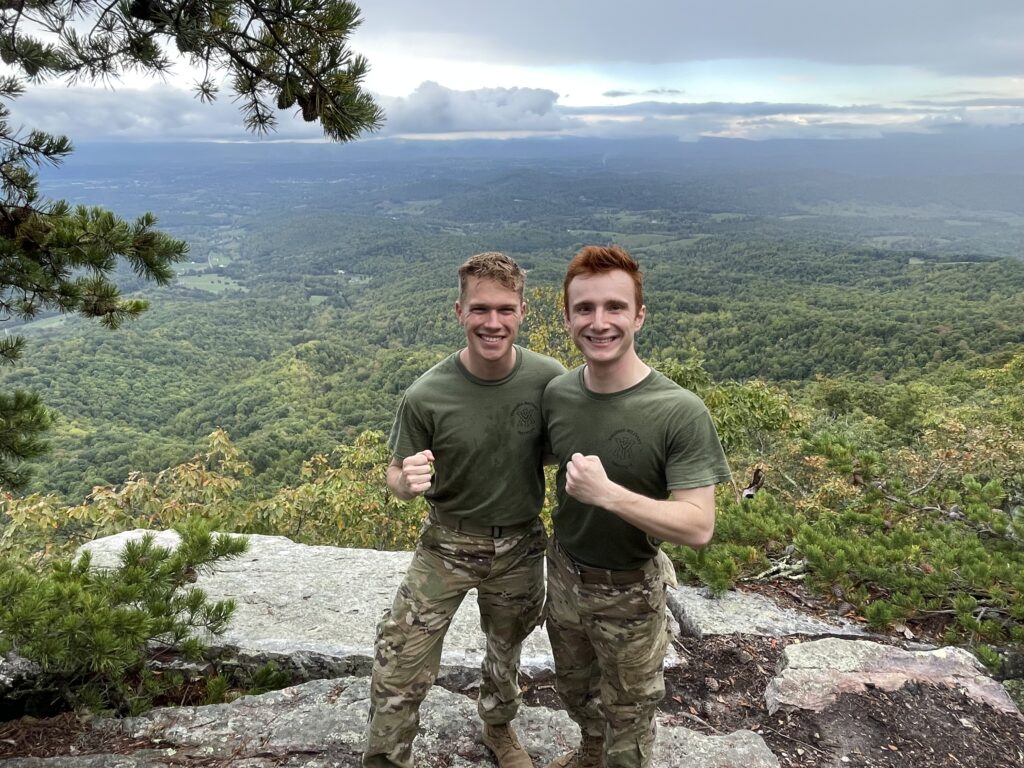
John Gibson atop House Mountain in Lexington during a hike with the Corps of Cadets at Virginia Military Institute.

“I think of it as practicing for the exam in the same way as when I go for a run,” he explained. “I’m not just running to tire my legs out, but it’s to prepare for my upcoming race. It’s like building endurance in both instances.”

Col. Samuel Allen, professor in the Department of Economics and Business, said Gibson is thoughtful and good at asking questions that will help him, along with the rest of the class, better understand the content. 

“John shines without taking the spotlight away from anyone else,” Allen said. 

Allen said he saw great promise in Gibson when he was on the Rat Line and it was a challenging first semester.  

“The rigors of being a rat knocked him down, metaphorically, yet he rebounded, redoubled his efforts, and emerged committed growing as a scholar,” Allen said.

Gibson said he knows the difference between when it’s time to work and time to play.  

“I’ve become a much harder worker, and not just because I have to, but now I enjoy hard work,” he admitted. “When I matriculated, I was lazy. But with one of my brother rats, we joke about how we have figured out how to use all 24 hours of our day.” 

Gibson tries to stay as involved as possible, with participating in cadre for Charlie Company and working at the Miller Academic Center. 
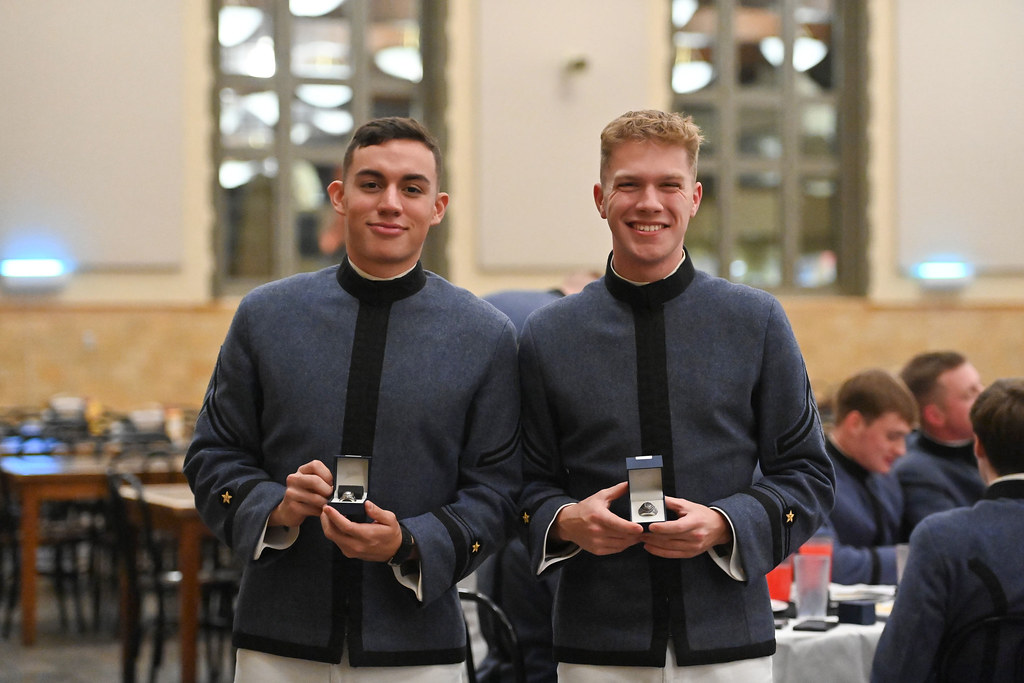
John Gibson shows off his Virginia Military Institute ring.

“I try and interact with as many people as I can,” he said. 

Capt. Meghan Ferguson, academic support coordinator at the Miller Academic Center, said Gibson is a highly sought-after peer tutor. This year he’s conducted nearly 50 tutoring sessions, she said. He also serves as the cadet facilitator for a health and performance wellness group study session.  

“Through his work for the Miller Academic Center, he exemplifies both exceptional leadership and academic achievement,” Ferguson said. “As a further example of Gibson’s leadership, he has guided a struggling new cadet to the Miller Academic Center for advising and academic support. Cadets have great influence over one another, and we appreciate Gibson’s mentorship and promotion of our academic services. When he observes concern or struggle, he provides resources, support, and a plan of action. We are thankful that he uses his academic skills and leadership for the benefit of others.” 
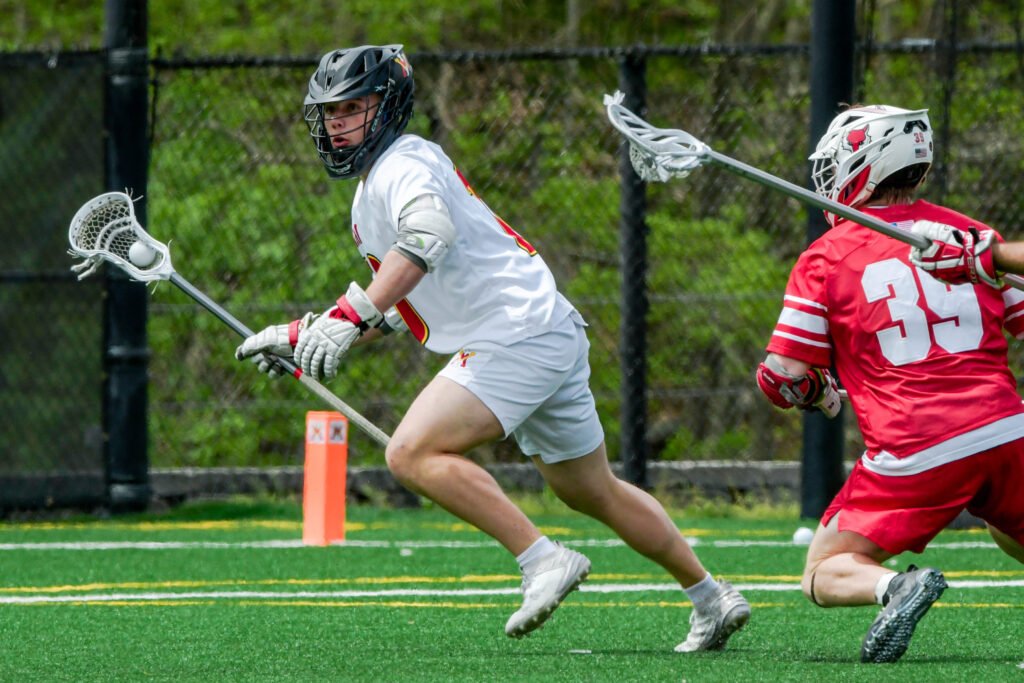
Behind the Balance: Cole Jones ’26 — Keydet Lacrosse

Virginia Military Institute’s cadet-athletes have to juggle cadet life, heavy academic course loads, and their NCAA Division I sport. Committed to both academic and athletic pursuits, balancing their rigorous schedule in both sports and school requires a certain level of commitment and discipline. Behind the Balance is a series that focuses on those cadet-athletes and how they handle the hurdles of the day-to-day. 

Since the age of 5, Cole Jones ’26 has been playing lacrosse. It’s a good mix of several sports, he said.  

“It brings every other aspect of sports into one. I played football when I was little, which is super physical, but it’s not as fast paced. I always played basketball. It’s kind of a mix between those two … physical and fast paced.”

The constant go of the game is also like his fast pace in his everyday life at Virginia Military Institute.  

Cadet-athletes at VMI not only have their responsibilities with their selected sport but cadet duties on top of that. Cadets are also required to take physical fitness classes twice a week, participate in ROTC all four years, prepare for room and uniform inspections, practice for parade, guard duty, and more. 

His priorities have changed since coming to VMI. He finds that he is more focused, especially with the structure he’s had to maintain. Thankfully, during times of struggle in keeping up, he was able to lean on his dykes and brother rats for support.  

“If you have a ton of free time — something they told me — then you’re probably doing something wrong,” Jones said. “There’s always something that should be getting done, whether that’s just extra readings, catching up, getting ahead on work, or studying.” 

The international studies major is set to commission into U.S. Army once he graduates.  Jones explained that his duties with ROTC and lacrosse go hand-in-hand.”The physical fitness aspect of it, it’s good, so I don’t have to really work out as much on my own because of going to practice and doing team lifts. Then the ROTC cadre are pretty flexible and understanding that if you miss things for sports, they’ll give you times to make stuff up or extra instruction periods and things like that.” 

In high school, Jones was focused on lacrosse and hanging out with friends. Coming to VMI, he became more school focused.  

Cole Jones playing lacrosse for Virginia Military Institute.

“When I got here, my dad, who went to West Point, always told me school’s no joke. It’s not like high school. You actually spend time on it. I was really paranoid coming here about school work, and then I just kind of hit the ground running. I realized if I want good grades, you can’t slack, you have to devote at least a few hours a day to working on homework.” 

VMI is a different college experience, but it’s allowed him to see how a stacked schedule will be once he’s out of school. He’s learned how to maximize his time for what he needs to get done.  

“Our coach always says, once you get on the field, leave everything else up on the hill and just focus on the sport and practice that day,” Jones stated. “Everyone has their tough days and going down there with your whole group of guys, getting just to compete every day … it’s always awesome.” 

Being part of a team — on and off the field — has allowed Jones to understand prioritizing things. 

“Our coach also reminds us to control the things that you can control. There are definitely times where I get stressed out, and then I just kind of stop and lean back. It’s like, well, I have this thing that’s due tonight. Focus on that. And then, just one thing at a time. People here will say, just focus, especially as you’re a rat, it’s just one meal at a time. So, get to the next meal, get to the next day, the next assignment, whatever that is, just work one step at a time.” 

The Vanguard — Ryan Halverson ’26

The Vanguard series highlights cadets of Virginia Military Institute who exemplify promise, perseverance, and the true spirit of leadership. While they may not be the top-ranking students or those in prestigious positions, these individuals’ dedication, resilience, and growth embody the essence of being a VMI cadet. By sharing their stories, including the challenges they’ve faced and overcome, we shine a spotlight on the diverse paths to success at the Institute, proving that leadership and excellence come in many forms. 

Lessons learned outside the classroom at Virginia Military Institute are what push Ryan Halverson ’26 to do better. He’s never been one to really enjoy school, but once he was able to apply what’s he’s learning in class to the outside world, his drive grew.  

“I’ve learned a lot more lessons in VMI classrooms just about myself,” he said.

One class he took on civic discourse presented him with a project on how to portray an argument and how to move an audience. He said that being at VMI, he knows it serves the greater good. 

“I think that’s really important for not only business, but in the military as well. Understanding that from that perspective, and not just a school perspective, is important,” he explained. 

Halverson, an English major, originally came to VMI as a civil engineering major. 

“I instantly knew it was a mistake.” 

Lt. Col. Pennie Ticen, associate professor in the Department of English, Rhetoric, and Humanistic Studies described Halverson as a conscientious student, ever since the beginning of his cadetship. She had him as a rat. 

“He came to class having done any assigned reading and/or writing, regularly contributed to class discussion — partly by listening carefully to his peers’ comments and then adding a synthesizing comment or a question designed to further discussion,” she explained. Halverson had approached her when he wanted to switch majors. “Demonstrating the care he brings to all his decision-making, he asked me for materials about the major, made an appointment to meet with me so he could ask questions, and then decided to submit his request to change departments.”

He switched to English because he saw it could really lend itself to what he wants to pursue after college, which is commissioning into the Marine Corps.  

“It was best for me in terms of communication and in leadership,” he said.  

Ticen, who is also Halverson’s advisor, said he is always the first cadet to get in touch with any questions or concerns about scheduling. 

“[He’s] making sure he is making steady progress on his degree, taking his major courses in the order in which we suggest so that he can build up his skills in our challenging humanities curriculum covering — art history and visual culture, literature, philosophy, and rhetoric & writing, etcetera,” she said. “In his cadetship, Halverson has consistently demonstrated his desire to get the most out of his VMI experience.” 

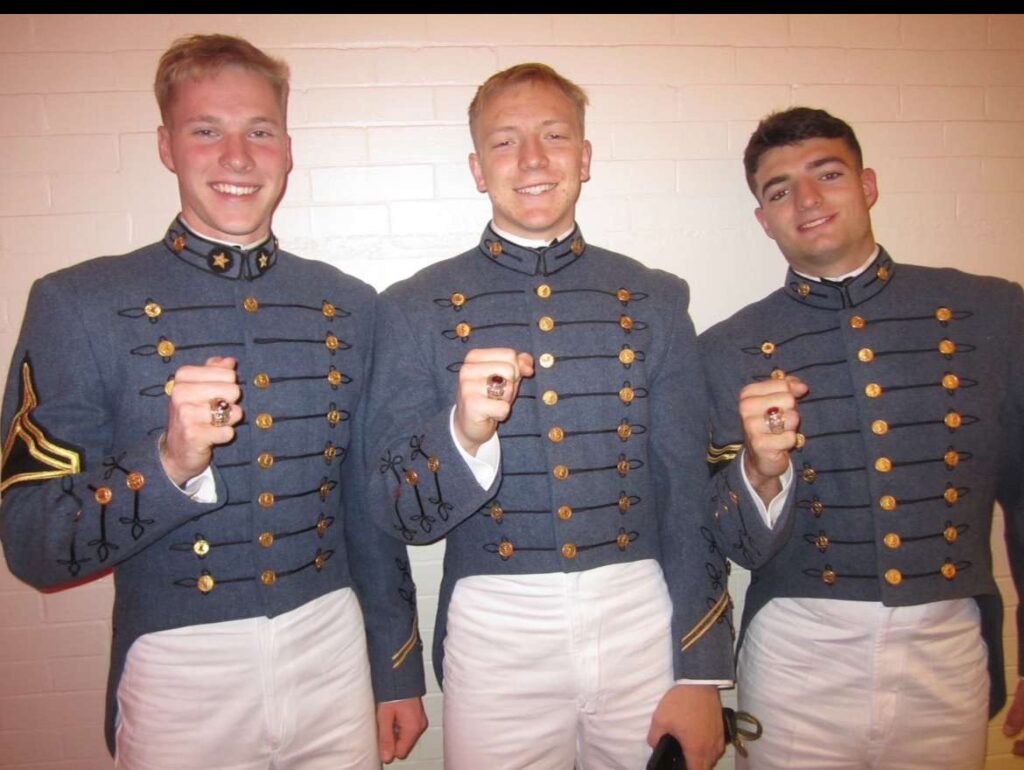
Ryan Halverson showing off his Virginia Military Institute ring with his brother rats.

By serving on the Rat Disciplinary Committee (RDC) and on cadre this year, he will move into the role of RDC president next year.  

“I would just say I’m someone who likes to push those around me. I like to make people better and really show people what they can do,” he commented. “One of my favorite quotes is, as a leader, you don’t show people your superpowers, you show them theirs. I think that’s what I try to do at VMI.” 

It’s a shift for him, he said. When he was in high school, he always wanted to help others but didn’t apply himself much to leadership positions. His time at VMI has helped that. He said the sense of camaraderie and the push to make everyone better was a turning point.  

Although the daily grind at VMI can be challenging, Halverson said his roommates and friends help him keep going.  

“There’s not one challenge here that you can’t overcome, but it’s being able to do that every single day is what’s hard,” he said. 

Col. Michelle Iten, associate professor in the Department of English, Rhetoric, and Humanistic Studies and the one who taught his civic discourse class, said Halverson is an insightful thinker who is strong at critical thinking. She said he also has a strong work ethic and puts in the time needed without cutting corners. 

“From the work he did for my class and our conversations, it’s clear to me that Halverson sees college as a place to expand his knowledge — he wants to learn deeply,” she stated. “He puts in all the careful thought and hard work needed to truly learn. This sets him apart from many cadets who are in class because they have to be and are in college just to get a degree. 

“He also stands out for his critical thinking skills,” she continued. “Ryan often impressed me with his comments in class — he’s insightful beyond his years in seeing cause and effect and in understanding what motivates people.” 

Halverson said being honest with yourself on what you need to improve on is important, especially when you are a rat. 

“It shows you where you’re lacking so that when it’s over, you can develop yourself through the next three years. Know your weaknesses, and I strive every day to become better in those areas,” he said. “You get put in so many stressful and uncomfortable situations that you get through. Doing that over and over just builds confidence.” 

Behind the Balance: Sadie Smith ’26 — Women’s Water Polo

Virginia Military Institute’s cadet-athletes have to juggle cadet life, heavy academic course loads, and their NCAA Division I sport. Committed to both academic and athletic pursuits, balancing their rigorous schedule in both sports and school requires a certain level of commitment and discipline. Behind the Balance is a series that focuses on those cadet-athletes and how they handle the hurdles of the day-to-day. 

Sadie Smith ’26 has been working for over a year to land an internship with the Defense Intelligence Agency. She first applied last year, had interviews over the summer, and most recently heard that she would be spending 10 weeks in Washington, D.C. 

Initially, the international studies major was looking to commission into the Army, but she was medically disqualified. Instead, Smith thinks working with a government agency is where she’ll land, thus her summer internship will help aid that.“I’m so grateful to have that opportunity,” she said. “I think it’s going to be really cool. I want to work for a government agency. I’m really open minded in terms of what I do after graduation. I would love to get a job offer from them, but if that doesn’t happen, I am open to grad school, or taking some time to travel … not really set on something specific.” 

The structure and connections that VMI has given Smith have shown she has the capability to balance everything the Institute has thrown at her. From being one of the water polo team captains, to serving on cadre, and being part of the Honors Program, Smith has proved that she can stay afloat.  

Cadet-athletes at VMI not only have their responsibilities with their selected sport but cadet duties on top of that. Cadets are also required to take physical fitness classes twice a week, participate in ROTC all four years, prepare for room and uniform inspections, practice for parade, guard duty, and more. 

She was drawn to the small classes and community feel of VMI. 

“When I visited, I was like, this is a really special type of lifestyle. This is going to set me up for success and help me be pretty disciplined,” Smith explained. “It’s definitely been worth it. I look back, getting here as a rat, and I’ve come a long way in terms of leadership.” 

Smith has served on cadre for two years, as a corporal and a sergeant. Next year, she’s applying for an officer position. That, coupled with being one of the water polo captains, are two positions very different in terms of leadership.  

“Those two different leadership experiences, in their own ways, have helped me develop kind of my own unique leadership,” she stated. “I really love being water polo captain. It’s so fun. My team is everything to me. If I wasn’t on that team here, VMI would definitely be a little bit more difficult. I love going down for practice. I love my coach. I love our team environment. We’re a smaller team, we have a great time together, and we work hard together.”  

Smith, who is from Southern California, has been playing water polo since she was nine years old, first as a club sport, then in high school. She started out with swimming, but found water polo was a challenge she wanted to pursue. The physicality, the quickness, the skill, and the aggression of the sport call to her. Overall, it’s the bond she has with the team that gives her peace and drive. 

“The team is really cohesive. Everyone is there for each other, and we’re all going through the same VMI struggles too, which I think binds everyone even more,” she said. “Everyone supports each other. I really like how the upperclassmen are always there for the rats and the rats are always there for the upperclassmen. It kind of goes both ways. We have a good system on our team with our coach, and we work constantly on team- building activities and maintaining a good team environment.” 

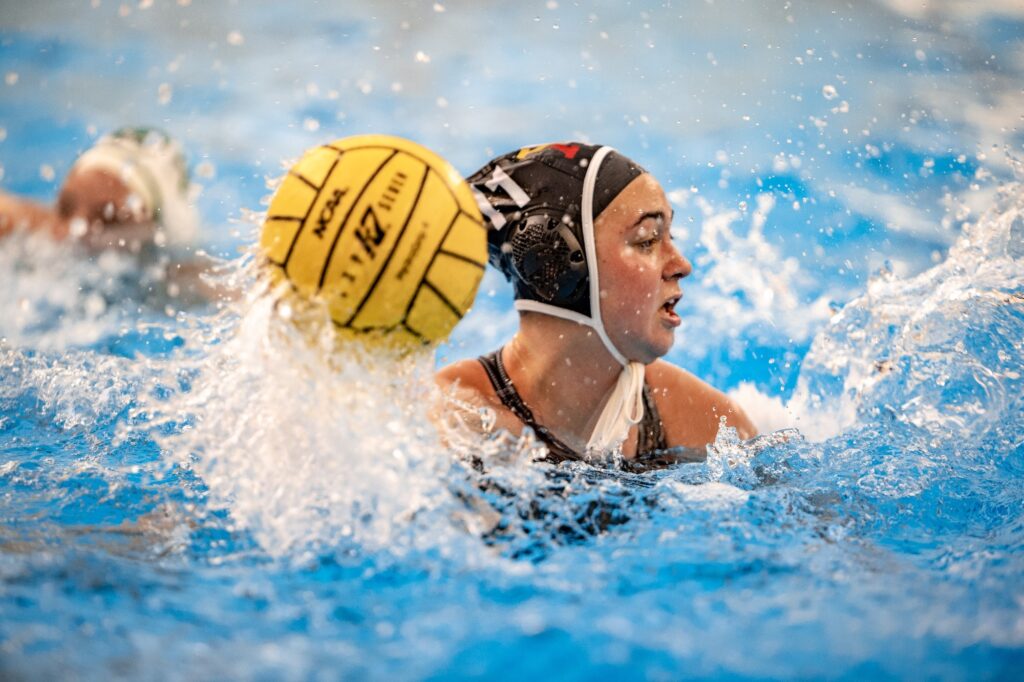
Sadie Smith playing water polo for Virginia Military Institute.

Smith credits her coach, Danielle Montenegro, for considering all the things she and her teammates have to keep up with.  

“Coach is so great. She makes us work hard, but she knows our limits, and she knows we’re going through a lot outside of water polo stuff,” Smith explained. “A lot of other coaches here don’t necessarily focus on that or care as much as she does. And that’s why I really appreciate how she goes about talking to us and coaching us, keeping in mind there’s a lot of other things we have to do for school and everything else.”

The regimented structure of VMI appealed to Smith, which has come to her advantage especially when she’s in season. She’s up during the week at 5:45 a.m. to do team weightlifting, then it’s breakfast and onto classes. If she doesn’t have class early, she’ll utilize the mornings to get work done.  

She’s in class until about 2:30 p.m. daily and off to practice at 4 p.m. Smith uses the time between class and practice to get schoolwork from her 17.5 credit load done. After practice, the team goes to dinner until about 8 p.m., then Smith is off to the library to study. She gives herself a cutoff at 11:30 p.m. so she can get to sleep by midnight.  

“I like to go to sleep before midnight. I cannot function after midnight,” she admitted. 

Her time at VMI has also instilled the need for time management and professionalism.  

“It’s the little things every day that add up over time and really make you a new kind of person, like a very responsible, very professional person,” Smith shared. “I’m still pretty goofy, especially around my team, but there’s a time and place for everything.” 

Behind the Balance: Colin Blandford ’26 — Men’s Keydet Soccer

Virginia Military Institute’s cadet-athletes have to juggle cadet life, heavy academic course loads, and their NCAA Division I sport. Committed to both academic and athletic pursuits, balancing their rigorous schedule in both sports and school requires a certain level of commitment and discipline. Behind the Balance is a series that focuses on those cadet-athletes and how they handle the hurdles of the day-to-day.  

Becoming one of the co-captains of Virginia Military Institute’s men’s soccer team, Colin Blandford ’26 didn’t expect to carry so much weight. It was a stark contrast to him serving as captain in high school.  

“I took a lot more responsibility than I thought,” he said. “It’s nothing like what I actually thought.”

It meant meetings, engaging with people he hadn’t expected, boosting morale, spreading the message of their coach, and more. He said, as a captain, you’re acting as the liaison between the commandant staff and the team.  

“There are different issues that arise every day, because there’s so much going on here,” he said. “You’re advocating for somebody one day, you’re trying to figure out a new rule, sign-outs, how things are going to work, and you’re working with the coach as well to make sure that the team is successful on the field .” 

Blandford said he puts in extra time talking with his coach to ensure his messages are properly portrayed to the team.  

“I think the biggest thing I picked up on is how much more communication and my input are valued —  a lot more than I thought,” he said. 

It’s added to the responsibility as a team player and puts a heavier load on him as a cadet, but that’s the VMI way, he added.  

“Honestly, you’re so forced to be on a schedule here, and they teach you so well how to manage your time and how your whole day is structured that it hasn’t been too hard,” he said. “You go to practice in the morning, go to school all day, go to practice in the afternoon again, then after dinner, the rest of your night is for homework. That’s kind of the schedule I follow every day.” 

Structure is what he needed. 

“I chose VMI because I knew a normal college wouldn’t have suited me well, just based off how I was in high school,” Blandford said. “I knew that if I wanted to be serious about playing sports, that I need to be somewhere where structure was built in.” 

Cadet-athletes at VMI not only have their responsibilities with their selected sport but cadet duties on top of that. Cadets are also required to take physical fitness classes twice a week, participate in ROTC all four years, prepare for room and uniform inspections, practice for parade, guard duty, and more.  

Learning proper communication has become a skill that Blandford relies on. He’s traveling a lot during the season, which means missing classes.  

“I’d say a lot of the problems that I ran into in my earlier years were solved just through communicating with my teachers more effectively,” he said. “The teachers here are very understanding of obligations and especially understanding of time management, because everybody here is strained for time. This year, I’ve noticed that it’s not as difficult to keep up my work, as I found in the past, and that’s based just off communication.” 

Blandford, an English major with a minor in business, has 18 and a half credits this semester, which means he must stay on top of his studies. With a heavy load of classes on Tuesdays and Thursdays, he spends the rest of the week tackling most of his work.  

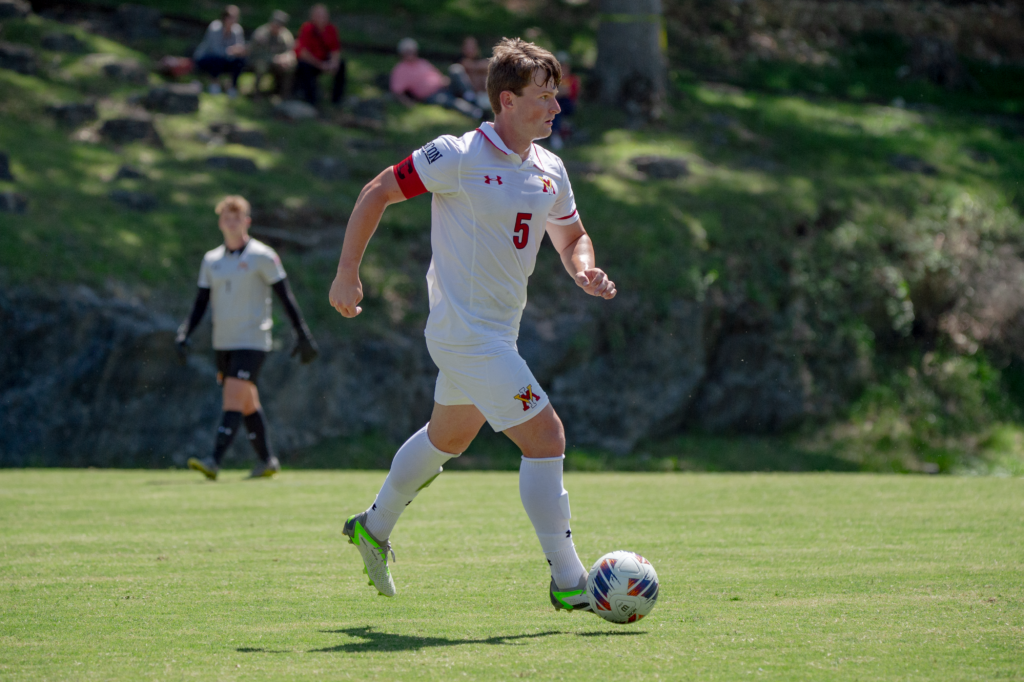
Colin Blandford kicks the soccer ball on the field during a Virginia Military Institute men' soccer game.

Finding his goal

Blandford has been playing soccer since he was three years old. He played several sports growing up, but soccer was the one that stuck out — it was the one he excelled at. He likes the constant flow of action and how the game can change in just seconds. Mainly, he likes being part of the team. 

“As the years progressively go on, I think being part of the team is amazing. Those are my best friends,” he said. “I spend the most time with them. It’s huge that this group gets along. It’s a tiny school, so you see them at school all day. You go to sports with them all day. You live with them.” 

He credits his coach for bringing the group together. 

“All the guys within the group have done a great job of taking care of each other and buying into what we’re trying to do,” he said.