Post View Unavailable »
New Website Launched »

Behind the Balance: Eleyah Armstrong ’25 — Keydet Women’s Track and Field

Virginia Military Institute’s cadet-athletes have to juggle cadet life, heavy academic course loads, and their NCAA Division I sport. Committed to both academic and athletic pursuits, balancing their rigorous schedule in both sports and school requires a certain level of commitment and discipline. Behind the Balance is a series that focuses on those cadet-athletes and how they handle the hurdles of the day-to-day. 

Adrenaline and nerves flow through Eleyah Armstong ’25 before she starts a race. As a captain and sprinter on Virginia Military Institute’s track and field team, the anxiety dissipates quickly as she runs. The downside to sprinting is that it’s over faster than it began. Then, she has to start all over.  

“Even though I’ve been running for so long, still, to this day, I get performance anxiety,” she admitted. “I try to calm myself. And the two words that I repeat to center my mind, to calm down, is ‘inner peace,’ because I meditate before I get into competition mode.”She doesn’t put a lot of emphasis on her anxiety, instead she puts a lot of her faith in God.  

“I also talk to God, and I just put it in his hands, because I know he’s got me through it before, he’ll get me through it again,” Armstrong explained. “The path that he has me walking, I know there’s success at the end, and I’m going to accomplish the goals that I have for myself.” 

She’s been running track for over 14 years. She said her parents put her in track after she raced a girl during her brother’s football practice when she was 7 years old. The girl she raced, who was just a year older, was known to be one of the fastest in the area and ran with a higher age group.  

“My dad decided to put me in it,” she said. “I like to compete a lot, and I like the adrenaline that comes behind it. I just stuck with it.” 

The psychology major is in her last year at VMI and plans on commissioning into the U.S. Army in May.  

Cadet-athletes at VMI not only have their responsibilities with their selected sport but cadet duties on top of that. Cadets are also required to take physical fitness classes twice a week, participate in ROTC all four years, prepare for room and uniform inspections, practice for parade, guard duty, and more. 

Eleyah Armstong jumping at a track and field event for Virginia Military Institute.
2022 SoCon Track and Field Championships

In her previous three years, Armstrong would have to get up early and split her day between practice, classes, and then practice again.  

“You have to shift your focus a lot. You have to start with this, and then go back into this, and then you have to get back into the rhythm,” she explained. 

Now, she’s able to have devoted afternoon practices, which leaves her mornings more open for studying and other obligations. Her role as captain has also allowed her to discover her own leadership style. She spent last year with a captain role under a 1st Class cadet, which gave her the opportunity to be able to shadow and learn. Last year, she qualified for the NCAA East Regional first round of the 2024 NCAA Track and Field Championships, making her the first women’s qualifier from VMI since 2011. 

“I already had a good communication system with the coaches, because I just like to make sure my team is on the same page. I like to have harmony,” Armstrong stated.  

Track served as an outlet of stress relief for Armstrong. Overall, VMI has also helped build her as a person. 

“I think VMI has prepared me for the future, as far as working with different people from different backgrounds and creating bonds with different people from different backgrounds,” she said. “You never know who people really are, or where they come from, until you get to know them and work with those people, whether that’s in the classroom or in the ROTC department or your teammate.” 
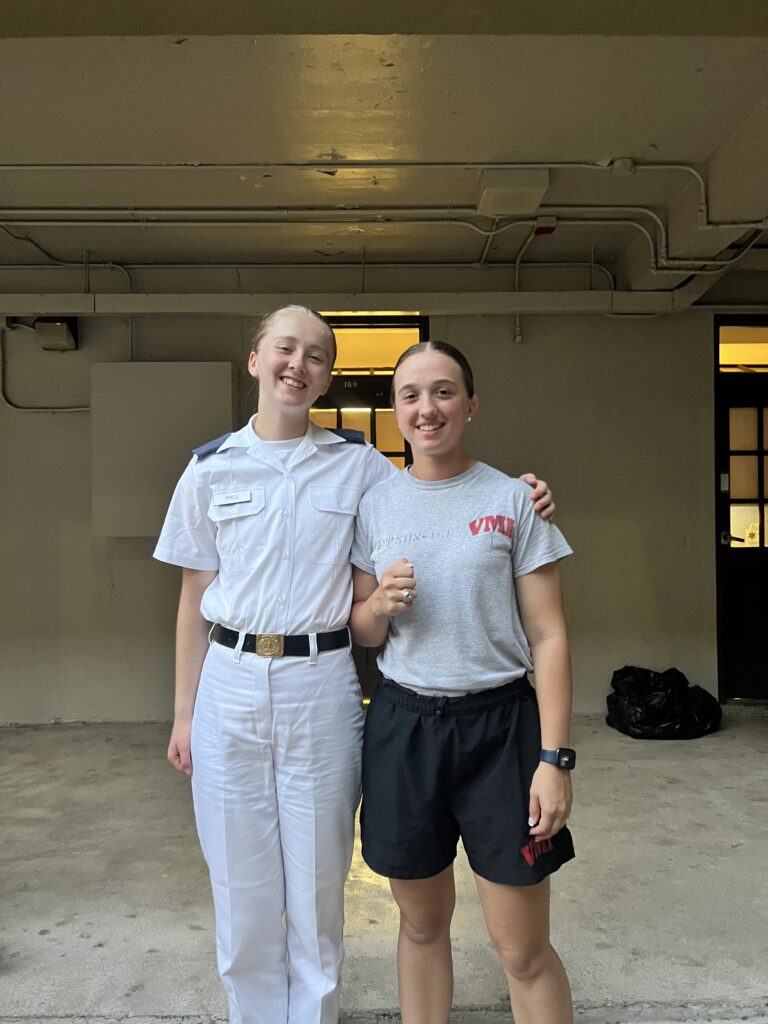
The Vanguard — Virginia Price ’28

The Vanguard series highlights cadets of Virginia Military Institute who exemplify promise, perseverance, and the true spirit of leadership. While they may not be the top-ranking students or those in prestigious positions, these individuals’ dedication, resilience, and growth embody the essence of being a VMI cadet. By sharing their stories, including the challenges they’ve faced and overcome, we shine a spotlight on the diverse paths to success at the Institute, proving that leadership and excellence come in many forms. 

Challenges and a different college experience are a huge draw for those considering Virginia Military Institute. That’s exactly why Virginia Price ’28 chose it. 

It’s a challenge she seems to accept and prospered at within just a few months of being at VMI. The English major has a passion for writing, especially poetry.  

Dr. Duncan Richter, professor in the Department of English, Rhetoric, and Humanistic Studies, said she’s been a model student in the course she’s taken with him. He said she was one of the top three students who he could count on to complete every assignment.  

Virginia Price with her brother rat at Virginia Military Institute.

“I don’t know of any struggles she has faced, but already as a rat she has earned a high enough GPA to be a potential candidate for the Institute Honors program,” he said.  

Richter also pointed out Price recently won a contest for her poetry — part of the VMI Writing Contest.  

“She stands out, not by being loud or having a high opinion of herself, but by doing what she needs to do and always having a positive attitude. She never seems to feel sorry for herself or be anything but cheerful,” Richter added. 

Price has always loved reading and writing; she excelled at them in high school and found them to be areas she wanted to pursue in college. 

“I like that you can tell a story and that you can connect to your audience, but you don’t need that many words,” she said about poetry. “You can write a few lines and someone will feel the exact same way that you’re feeling. You can draw them in.” 

She is highly focused on her academics and strives for the best. Currently taking 17.5 credits, she’s finding as she’s into her second semester, she’s enjoying the variety of classes more.  

“I try to just get the most out of my academic experience here, because in the end, that’s what I’m paying for — a college education,” she explained. “I try to prioritize my classes; that’s my number one thing.” 

Transitioning to college life on the Rat Line was tough, she said. It had been the first time in her life that she had been yelled at or commanded to do things. As a non-commissioning cadet, she’s here for the experience itself. Matriculation Week, though, helped her transition more into the Institute.  

“I think it kind of showed me how to work well under pressure,” she said. “You don’t have time to miss home or anything, because you’re automatically in it. Then when you get out of Matriculation Week, you go straight into classes.” 

She’s excited for what’s to come next during her time at VMI: Things like taking leadership positions, which she says sets you up for further success in life, as well as joining club sports and getting to know others in the Corps. She currently participates in the VMI Brazilian Jiu-Jitsu Club the VMI Rock Climbing Club. 

“I feel like at any other college, you don’t really talk to people as much,” she admitted. “Everybody’s kind of in their own little world. But here, we all do things as a mass. You get to meet more people; there’s more of a connection.” 

Behind the Balance: Patrick Jordon ’27 — Keydet Wrestling

Virginia Military Institute’s cadet-athletes have to juggle cadet life, heavy academic course loads, and their NCAA Division I sport. Committed to both academic and athletic pursuits, balancing their rigorous schedule in both sports and school requires a certain level of commitment and discipline. Behind the Balance is a series that focuses on those cadet-athletes and how they handle the hurdles of the day-to-day. 

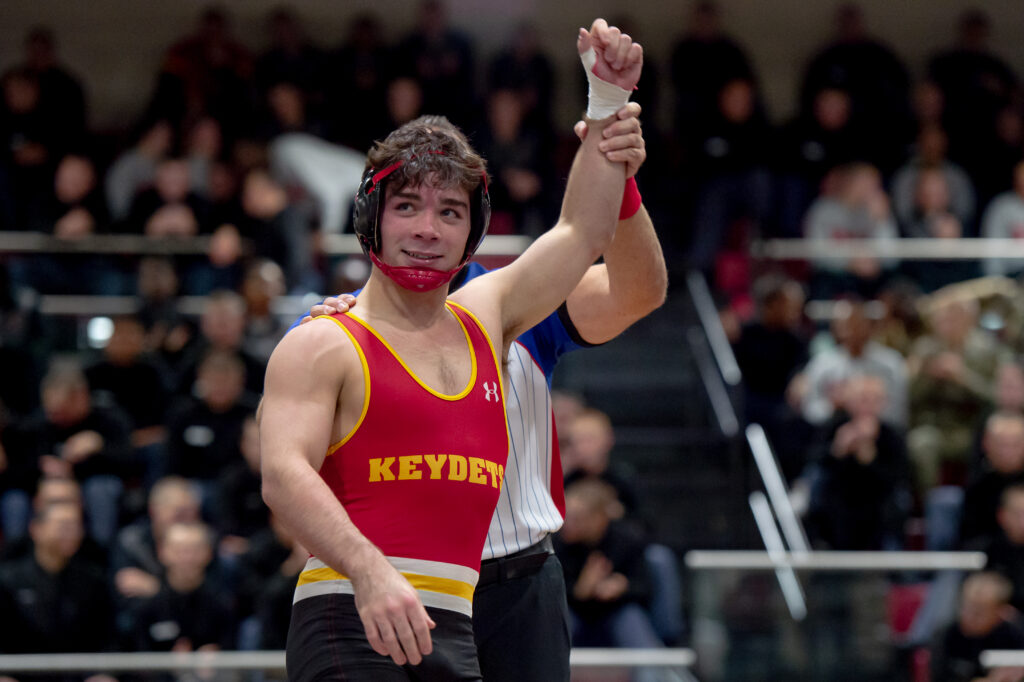
At 5 years old, Patrick Jordon’s ’27 parents were urged to take him to wrestling practice. It started out as an appeasement to his parents’ friends, but in turn, he ended up loving it. 

“We went to practice just to tell them that we went and that we wouldn’t do it again. I really liked it, so I stuck with it,” he said. It’s an individual sport. You get out of it what you put in. I really like that part, because it’s up to me to get the results.”The civil engineering major initially wanted to commission but has devoted more time to wrestling and his major. He was drawn to Virginia Military Institute primarily for wrestling but was also interested in the engineering program. 

“I had heard that professors were super helpful. Civil engineering is hands on. You can see the work that you put in. I like solving problems,” Jordon explained. “Also, coming out of here, I would have a good setup.” 

As a wrestler, he has to think about his weight class, so it’s either gaining or losing weight. It can put some stress on Jordon, which can make him procrastinate.  

“Honestly, I just have to start, because the hardest part is starting,” he stated. “Whether it’s cutting weight or homework, I’d like to put it off, but once I start, it’s not that bad. You take it one step at a time, and it’s manageable.” 

Cadet-athletes at VMI not only have their responsibilities with their selected sport but cadet duties on top of that. Cadets are also required to take physical fitness classes twice a week, participate in ROTC all four years, prepare for room and uniform inspections, practice for parade, guard duty, and more.“Wrestling has taught me a lot of the same lessons that VMI has taught me, like time management and pushing through the hard times,” he said. “With wrestling, there’s a lot of weight management. Sometimes school was hard, even in high school, just because I was worrying about my weight.” 

VMI Wrestling vs. Seton Hill Action Shot

In times of struggle, he reaches out to those he’s close with at VMI, either on the wrestling team or his roommates, who are in the same major as him.  

“I talk to my friends a lot. We all go through the same stuff, whether that’s in the wrestling room or up on the hill,” he admitted. 

Jordon said last year he struggled both on and off the mat. He found his love for wrestling diminishing. This year, it took figuring out how to manage his time. When it’s school time, he focuses on that. At practice, wrestling is all that’s on his mind.  

“I really have a blast. And the people that I do it with are probably some of my best friends ever. Wrestling practice is the best part of my day,” he commented. “I fell in love with it again.” 

The mental and physical struggle is something Jordon is moving past or learning how to cope with. 

“As a rat, I really struggled with my weight and wrestling,” he admitted. “I didn’t really struggle in school too much, but learning how to balance my time, because between going to wrestling and coming back, you don’t have much to play around with. It’s like one thing after the other. Because I procrastinate a lot, and I know that once I start something, I pretty much finish it in one sitting.” 

Breaking Records, One Lift at a Time

The Institute hosted the 2025 United States Powerlifting Coalition (USPC) Virginia is for Lifters! powerlifting meet Saturday Feb. 1 in Cocke Hall, and it was a day of excellence for VMI Powerlifting, a club sport for cadets. Seven cadets from the club participated and closed out the day with six championships and one 2nd place finish.

Dakota Jones ’26 (ACIC) – 1st place Open, 82.5kg weight class, Total: 1,005 lbs.

Aidan Carman ’27 – 1st Place Juniors, 82.5kg weight class, Total: 760lbs

Chin-jen Hsiao ’26 – 1st Place Juniors, 75kg weight class, Total: 845lbs

Colton Shirk ’27 – 1st Place Juniors, 90kg weight class, Total: 1,237lbs

Zachary Rivera ’2 – 2nd Place Juniors, 90kg weight class, Total: 986lbs

Garrett Barber ’25 – 1st Place Juniors, 75kg weight class, Total: 1,242lbs

Heathe Hernandez ’25 – 1st Place Juniors, 100kg weight class, Total: 1,166lbs

The team also broke ten national and state records during the day, reflecting cadets’ home states and nation.

Garrett Barber ’25 (181 lbs.):

  • Bench Press, 337 lbs., State Record, Texas
  • Deadlift, 456 lbs., State Record, Texas
  • Best Lifter of the Meet

Chin-jen Hsiao ’26 (165 lbs.):

  • Squat, 308 lbs., National Record, Taiwan
  • Bench Press, 220 lbs., National Record, Taiwan
  • Deadlift, 326 lbs., National Record, Taiwan
  • Total Lift, 854 lbs., National Record, Taiwan

Aidan Carman  ’27 (181 lbs.):

  • Squat, 235 lbs., State Record, Georgia
  • Bench Press, 180 lbs., State Record, Georgia
  • Deadlift, 315 lbs., State Record, Georgia
  • Total Lift, 760 lbs., State Record, Georgia

VMI cadets, especially the S9 staff, and employees coordinated, staged, and worked at the event, making it not only a success, but also a showcase of the professionalism and esprit de Corps found at the Institute.

The event is available to view on the USPC YouTube channel.

– VMI –

Behind the Balance: Ryan Peterson ’25 — Keydet Baseball

Virginia Military Institute’s cadet-athletes have to juggle cadet life, heavy academic course loads, and their NCAA Division I sport. Committed to both academic and athletic pursuits, balancing their rigorous schedule in both sports and school requires a certain level of commitment and discipline. Behind the Balance is a series that focuses on those cadet-athletes and how they handle the hurdles of the day-to-day. 

Ryan Peterson ’25 has learned how to compartmentalize and focus. He said it’s something that his time at Virginia Military Institute has helped frame for him. The international studies major explained that the rigors of academics and playing a Division I sport makes it so he must focus on one task at a time. 

“First and foremost, I won an opportunity to compete at the Division I level, and that really sold me,” Peterson explained. “The school also intrigued me a lot, just because it just seemed like a different way of learning, as compared to other colleges around. I think here gives you a different perspective on how to compartmentalize things.”Cadet-athletes at VMI not only have their responsibilities with their selected sport but cadet duties on top of that. Cadets are also required to take physical fitness classes twice a week, participate in ROTC all four years, prepare for room and uniform inspections, practice for parade, guard duty, and more. 

“If you’re thinking about the stuff up on the hill, then it’s going to affect your performance down at practice,” Peterson admitted. “If you’re thinking about your performance at practice, it’s going to bleed into your study hours and turn a couple hours of homework into three maybe four, and some long nights.” 

In his final semester, Peterson is taking 14 credits. The lighter load is due to previous semesters at 17.5 credits. While he’s in season with baseball, he’s getting up at 5:30 a.m. for morning weightlifting. Then it’s breakfast and on to class. He’s found that any spare time he has during his days, he fits in as much school assignments, studying, and work in between other obligations. 

“I try to be really on it and get my work done when I can,” he said.  

Individual practice begins at 2 p.m. for Peterson, then later in the afternoon is the full team practice, which wraps up around 6 or 7 p.m. Then he’s studying until about 10 p.m. Each hour of the day is accounted for, he said. The strict schedule that he and others at VMI follow has also helped with preparing him for the future. 

“I think coming here out of high school I was really glued to my phone or things that can distract you, and over the years and learning how to balance everything and do well in my classes, I really had to transition between being present at practice to being present in my homework,” he explained. 

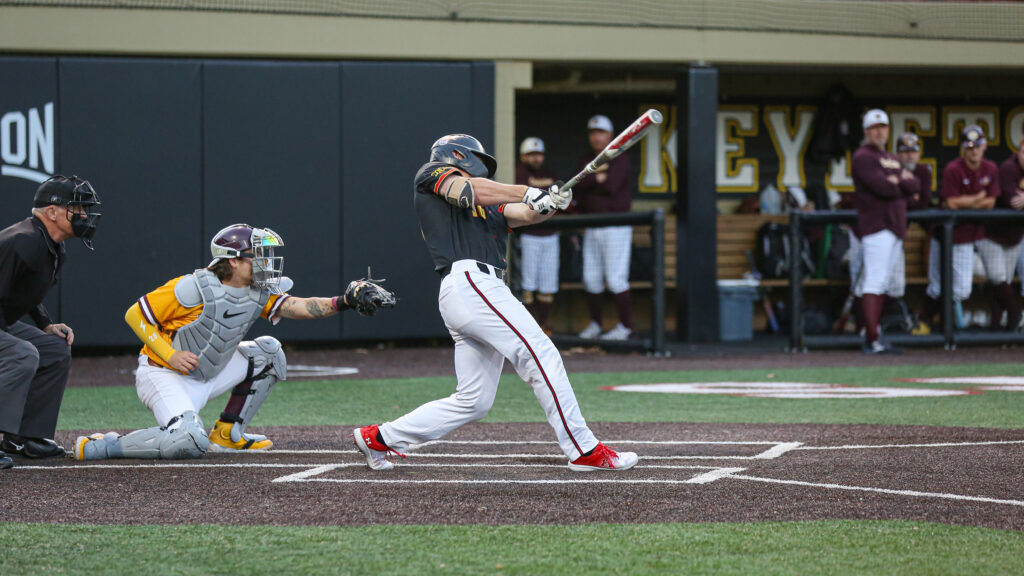
VMI BB Fall Scrimmage vs. UC Action Shot

Baseball serves as an outlet for him. 

“It’s normally the most fun part of my day. I’m lucky that it’s still fun to me,” Peterson said. “I know some people, as they get older, it gets more of a burden. Luckily it hasn’t gotten to that point. It definitely helps me when I’m stressed. Having that outlet together every day, because I see myself as lucky because I know some people come here and they don’t have something like that. They don’t have an NCAA sport to go down to and play or take in.” 

Peterson, a catcher, has always been intrigued by the team atmosphere of baseball. He’s been playing since the age of 6. 

“I think everybody, whether you’re the star player or the last guy on the bench, can have a shared part in the team’s success or failure,” he stated. “I think a lot of baseball feeds off energy, and if you have everybody bought into playing for each other and the team’s goals, that it can be pretty powerful.” 

Now in his last season, he’s looking toward the future. “It is bittersweet, but I’m really at peace with things. I think coming here really made me take in what I’m doing every day and understand where I’m at in the world,” he admitted. “I feel that this place in particular and the program we have down at the field has made me kind of take in every day. So, I have no regret of looking back and saying, I wish I put a little bit more effort here and there. I’m at peace with knowing that I’ve given a lot of effort.” 

He plans on going to law school and has aspirations of becoming a judge advocate. 

“I’ve always been interested in structure. I’ve always been interested in law and as well as the military, so that’s why I would like to be a judge advocate,” he said. “I’ll take the lessons I’ve learned here, translate them into both my interests and into the real world and try to help people who serve and help us.” 

Behind the Balance: Sadie Smith ’26 — Women’s Water Polo

Virginia Military Institute’s cadet-athletes have to juggle cadet life, heavy academic course loads, and their NCAA Division I sport. Committed to both academic and athletic pursuits, balancing their rigorous schedule in both sports and school requires a certain level of commitment and discipline. Behind the Balance is a series that focuses on those cadet-athletes and how they handle the hurdles of the day-to-day. 

Sadie Smith ’26 has been working for over a year to land an internship with the Defense Intelligence Agency. She first applied last year, had interviews over the summer, and most recently heard that she would be spending 10 weeks in Washington, D.C. 

Initially, the international studies major was looking to commission into the Army, but she was medically disqualified. Instead, Smith thinks working with a government agency is where she’ll land, thus her summer internship will help aid that.“I’m so grateful to have that opportunity,” she said. “I think it’s going to be really cool. I want to work for a government agency. I’m really open minded in terms of what I do after graduation. I would love to get a job offer from them, but if that doesn’t happen, I am open to grad school, or taking some time to travel … not really set on something specific.” 

The structure and connections that VMI has given Smith have shown she has the capability to balance everything the Institute has thrown at her. From being one of the water polo team captains, to serving on cadre, and being part of the Honors Program, Smith has proved that she can stay afloat.  

Cadet-athletes at VMI not only have their responsibilities with their selected sport but cadet duties on top of that. Cadets are also required to take physical fitness classes twice a week, participate in ROTC all four years, prepare for room and uniform inspections, practice for parade, guard duty, and more. 

She was drawn to the small classes and community feel of VMI. 

“When I visited, I was like, this is a really special type of lifestyle. This is going to set me up for success and help me be pretty disciplined,” Smith explained. “It’s definitely been worth it. I look back, getting here as a rat, and I’ve come a long way in terms of leadership.” 

Smith has served on cadre for two years, as a corporal and a sergeant. Next year, she’s applying for an officer position. That, coupled with being one of the water polo captains, are two positions very different in terms of leadership.  

“Those two different leadership experiences, in their own ways, have helped me develop kind of my own unique leadership,” she stated. “I really love being water polo captain. It’s so fun. My team is everything to me. If I wasn’t on that team here, VMI would definitely be a little bit more difficult. I love going down for practice. I love my coach. I love our team environment. We’re a smaller team, we have a great time together, and we work hard together.”  

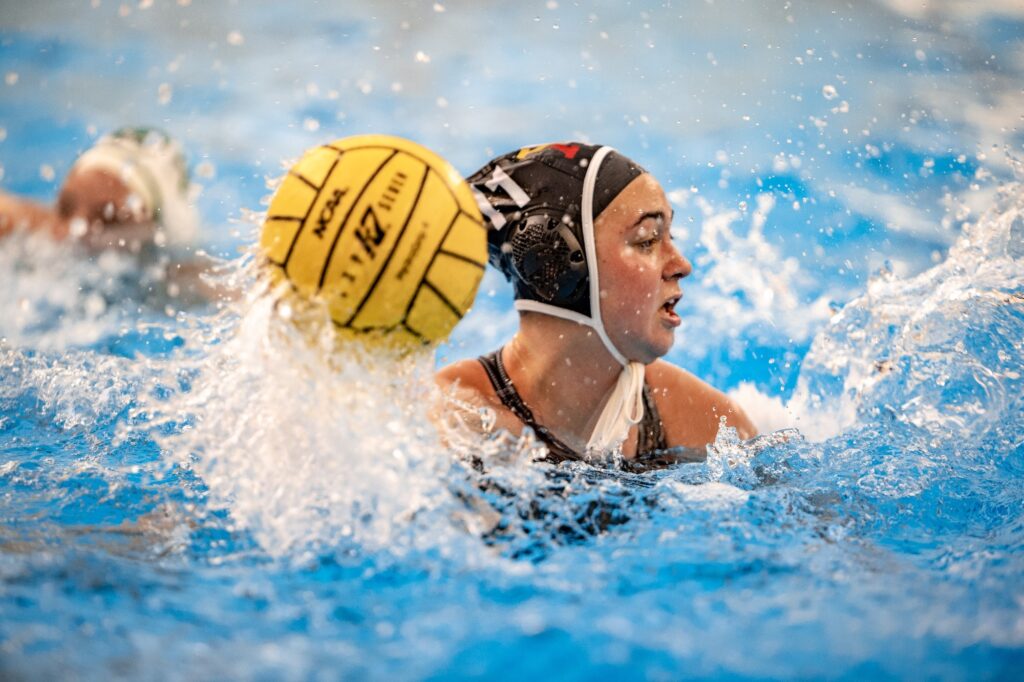
Smith, who is from Southern California, has been playing water polo since she was nine years old, first as a club sport, then in high school. She started out with swimming, but found water polo was a challenge she wanted to pursue. The physicality, the quickness, the skill, and the aggression of the sport call to her. Overall, it’s the bond she has with the team that gives her peace and drive. 

“The team is really cohesive. Everyone is there for each other, and we’re all going through the same VMI struggles too, which I think binds everyone even more,” she said. “Everyone supports each other. I really like how the upperclassmen are always there for the rats and the rats are always there for the upperclassmen. It kind of goes both ways. We have a good system on our team with our coach, and we work constantly on team- building activities and maintaining a good team environment.” 

Sadie Smith playing water polo for Virginia Military Institute.

Smith credits her coach, Danielle Montenegro, for considering all the things she and her teammates have to keep up with.  

“Coach is so great. She makes us work hard, but she knows our limits, and she knows we’re going through a lot outside of water polo stuff,” Smith explained. “A lot of other coaches here don’t necessarily focus on that or care as much as she does. And that’s why I really appreciate how she goes about talking to us and coaching us, keeping in mind there’s a lot of other things we have to do for school and everything else.”

The regimented structure of VMI appealed to Smith, which has come to her advantage especially when she’s in season. She’s up during the week at 5:45 a.m. to do team weightlifting, then it’s breakfast and onto classes. If she doesn’t have class early, she’ll utilize the mornings to get work done.  

She’s in class until about 2:30 p.m. daily and off to practice at 4 p.m. Smith uses the time between class and practice to get schoolwork from her 17.5 credit load done. After practice, the team goes to dinner until about 8 p.m., then Smith is off to the library to study. She gives herself a cutoff at 11:30 p.m. so she can get to sleep by midnight.  

“I like to go to sleep before midnight. I cannot function after midnight,” she admitted. 

Her time at VMI has also instilled the need for time management and professionalism.  

“It’s the little things every day that add up over time and really make you a new kind of person, like a very responsible, very professional person,” Smith shared. “I’m still pretty goofy, especially around my team, but there’s a time and place for everything.” 

The Extra Mile: Rock Climbing Club

All it took was the promise of extra credit for Owen Clarke ’25 to start climbing. He had to hit a certain route to gain 10 extra points on his final exam, according to Department of History assistant professor Maj. Christopher Blunda. Blunda also happens to be the assistant coach for Virginia Military Institute’s Rock Climbing Club.  

Clarke is the cadet in charge for the club. He always had some interest in climbing, but didn’t start taking it seriously until last January.  

“I had kind of dabbled in it,” he admitted. 

The club, which has about 15 cadets on the roster, practices three times a week. They also make excursions to cliffs and bouldering opportunities in the surrounding areas on the weekends. Most recently, the club took a trip to McAfee Knob outside of Roanoke to boulder.  

Zeb Barrett ’26 joined the club because he’d always enjoyed climbing things as a kid. With the giant rock wall at VMI’s Corps Physical Training Facility, he saw an opportunity to grow his skills.  

“I never really had the time to dedicate myself to rock climbing,” he explained. “Since I came to VMI, there’s a rock wall right there. I was like, I might get into this and see what’s up. And I really enjoyed it.” 

For Connor Bott ’26, he had gone to a summer camp in high school where he discovered a passion for rock climbing. 

“I didn’t really have a chance to do it since then, until I got to VMI, just because I live on the Eastern Shore. The nearest cliff is here. Once I got here, though, I started in the club, and that was a lot of fun,” he said. 

They have about seven competitive climbers on the roster, the rest are in varying skill levels — but it’s all about the confidence you have in your body and strength. 

“Rock climbing, when you begin, is not really an intuitive movement. You don’t move in a way that you’re used to moving,” Clarke stated. “You kind of have to learn over time how to move up routes and change your body in ways you’d normally not think about.” 

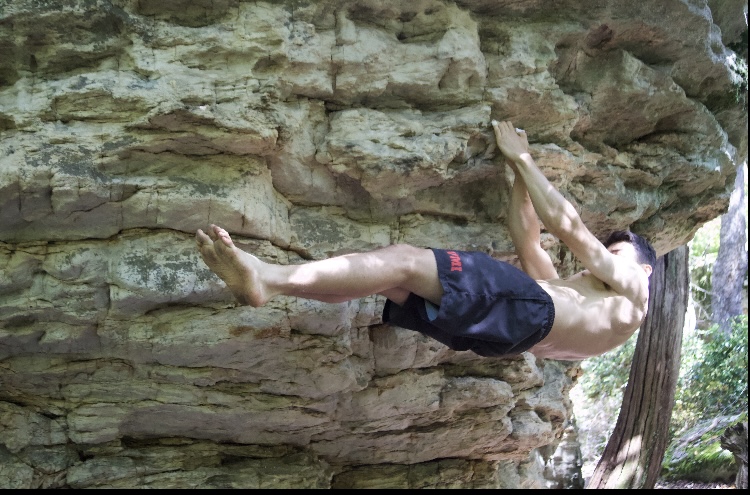
The club isn’t just specifically rock climbing (or top rope), they also do bouldering is done at lower heights and doesn’t require ropes or harnesses. Both Clarke and Bott prefer bouldering to rock climbing.  

“I think it’s more technique based,” Clarke said. “Bouldering is more interesting to me. It’s more of a puzzle.”

The club competes in what are called red point competitions, which consist of each climber getting a certain number of routes in varying difficulty and two hours to complete the route in one go. Scores are based on how many times you are able to complete the route in one go, which is called a flash.  

A guy grappling on rocks as a part of the rock climbing club at VMI.
Screenshot

“Top rope changes in length, so it’s a lot longer and more endurance based,” Barrett said. “Since it’s so long, you can’t have intense movements along the whole route, so it’s a lot easier on strength movements. Bouldering is a lot shorter, so it’s more intensive for a short amount of time. I prefer bouldering because I have more strength than endurance.” 

Bott is the opposite; he enjoys top rope to bouldering. He says it acts as a good way to break away from his academic schedule and have a release, which is something Clarke echoed. 

“My favorite thing about the club is it’s an escape for me. When I’m climbing, I just have to worry about the problem in front of me,” Clarke continued. “I’ve got to think about the way in which I’m going to try to go up the wall. I don’t have to worry about a million other things happening here [at VMI].” 

It also requires a lot of strength you wouldn’t even consider, according to Clarke. 

“It’s a lot of weird joint stability, putting your joints in a position that they’re not used to being in,” he said. “Rock climbing is more like calisthenics, where you’re putting the joints in your body in unstable positions and forcing them to adapt.” 

Although they do compete, it’s more of a community-based sport. Everyone wants each other to succeed, Clarke said. 

“Everyone loves watching someone get better in their climbs,” Bott said.  

“It’s not a team sport, but there is definitely a community, and people cheer each other on,” Barrett added. “If I see a person struggling, I ask if they need help, then help them as much as possible.” 

For Barrett, the club serves as a place for fun and enjoying something he’s passionate about. 

“Everybody has a passion … it’s my passion. I just love it. That’s why I think it’s important. Everybody has to love something. This is something I love,” Barrett said.  

The Extra Mile: Racquet Sports Club

Jude Roberts ’25 was inspired to start a new club sport at Virginia Military Institute after joining a badminton team while studying abroad.  

“I missed tennis and racquetball, and I remembered all the people I had talked to at VMI regarding their interest in these sports. A few of them even considered starting a tennis club before me, so I knew there was interest,” he explained. 

He and others joined together to start the Racquet Sports Club, where Roberts is the cadet in charge.  

There are currently 33 cadets on the roster for the club, but Roberts said about half of them are active, consistent tennis players. Others appear sporadically for more niche sports.

“We mostly play tennis and pickleball,” Roberts said. “We just recently acquired the equipment to play racquetball and badminton as well, so we are coordinating the schedules for those.” 

Roberts has always played a form of racquet sport since he was young, starting with racquetball. It was something his uncle taught him to do for fun, learning the basics.  

“I was just looking for something to do during my senior year of high school, so I joined the tennis team and learned a lot while having a great time with my friends and coaches,” he said. “From there, it was easy to try pickleball at my local gym and eventually badminton in England. These sports have been a tremendous source of joy and camaraderie for me, so I hope we can offer cadets some similar experiences.” 

The club has some larger events planned for the spring, but for now, they’re just playing for fun. The hope is to play with the Rockbridge Tennis Association every Saturday.  

Raj Singh ’25, a member of the club, started playing tennis when he was in elementary school, and has loved the sport ever since. He played all through high school but stopped once he came to VMI because there wasn’t a team or club dedicated to it.  

“I really enjoyed the movement, high pace, and the intensity the games can give throughout a match,” he stated. “I enjoy the club, it is a great way to relieve some stress, get a nice workout but also it allows me to keep my skills as a tennis player as it can diminish when you don’t play for a while.” 

Although the club is still in its infancy, Singh said he hopes it grows bigger and becomes an opportunity to begin outreach to other schools for more opportunities.  

“Clubs like ours are important as they give cadets an opportunity to get into sports which may not be offered in regular classes or in NCAA,” he explained. “Giving us more options can help in health, coordination, and involvement with other cadets.” 

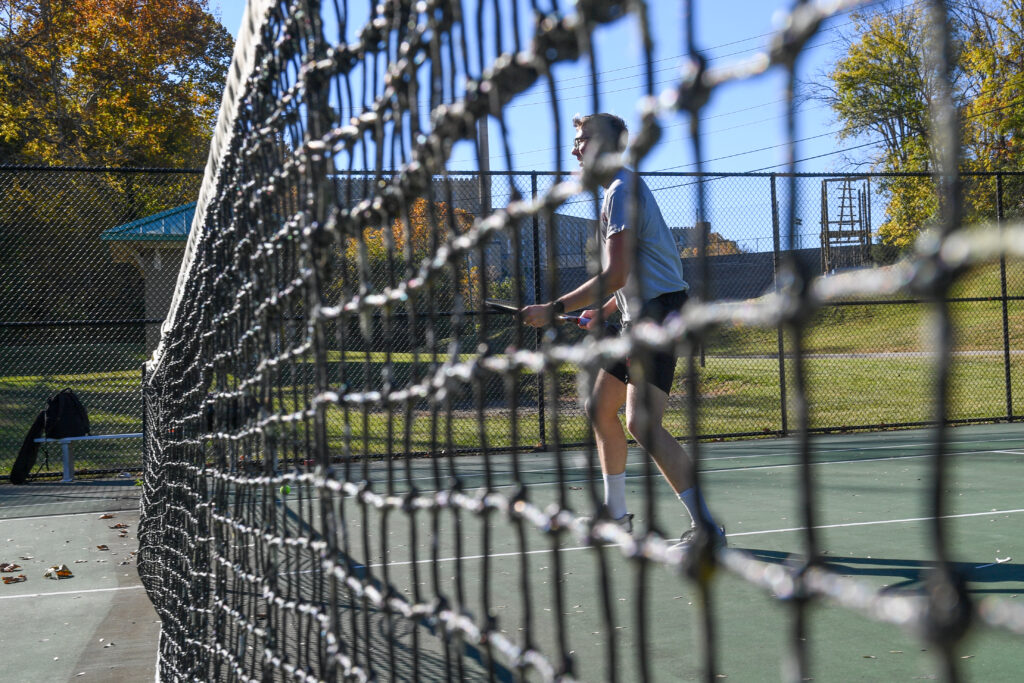
A cadet behind a net on the tennis court.

Roberts said clubs like his offer an opportunity for cadets to take a break from the stresses of VMI responsibilities. 

“I enjoy the club because it provides me with a fun way to stay fit and a break from the typical VMI monotony. It has been very fulfilling to watch it grow and see other cadets enjoying it.” 

He also said the club has offered him profound leadership experience.  

“I have learned a lot about the considerations that go into everything we do here at VMI. I have a much deeper appreciation for the level of care and effort that goes into cadet life, and I am grateful for everything that has been done for us to come out and play some racquet sports,” he said. 

Behind the Balance: Woongchan Oh ’25 — Men’s Keydet Soccer

Woongchan Oh ’25 grew up in the Korean countryside. He said there wasn’t much to do, but with a ball and a field, the possibilities were endless.  

“With a soccer ball, you can start playing without any other equipment,” he said.  

He’s been playing since he was a child and had dreams of going professional.  

“I joined the local soccer team when I was in fourth grade. Since then, I’ve been in a very competitive environment,” he said. 

He was in a soccer pro-academy for most of his time in Korea. Then once he was in the United States during high school, he was in a soccer development academy, which is the highest youth level. He spent his high school years in Maryland and his family now lives in Harrisonburg, Virginia. 

When looking for the next step after high school, Oh wasn’t initially considering military school or even joining the military. His father had been part of the Korean military, so he was familiar. When he was approached by the Virginia Military Institute soccer coach for an offer to play for the team, he talked it over with his parents.  

“My father thought it would be great to start a career as a commissioning officer,” he said. “I did some research, and I grew with this opinion, so I decided to join VMI.”

Oh says playing soccer at VMI is a different atmosphere due to the smaller nature of the school. 

“It’s different because you’re playing with your classmates and roommates and we’re going through everything that’s going on here together. It’s more special,” he said. 

The civil engineering major has a full plate. He plans on commissioning into the U.S. Army and has kept a full load of classes for much of his cadetship.  

Cadet-athletes at VMI not only have their responsibilities with their selected sport but cadet duties on top of that. Cadets are also required to take physical fitness classes twice a week, participate in ROTC all four years, prepare for room and uniform inspections, practice for parade, guard duty, and more. 

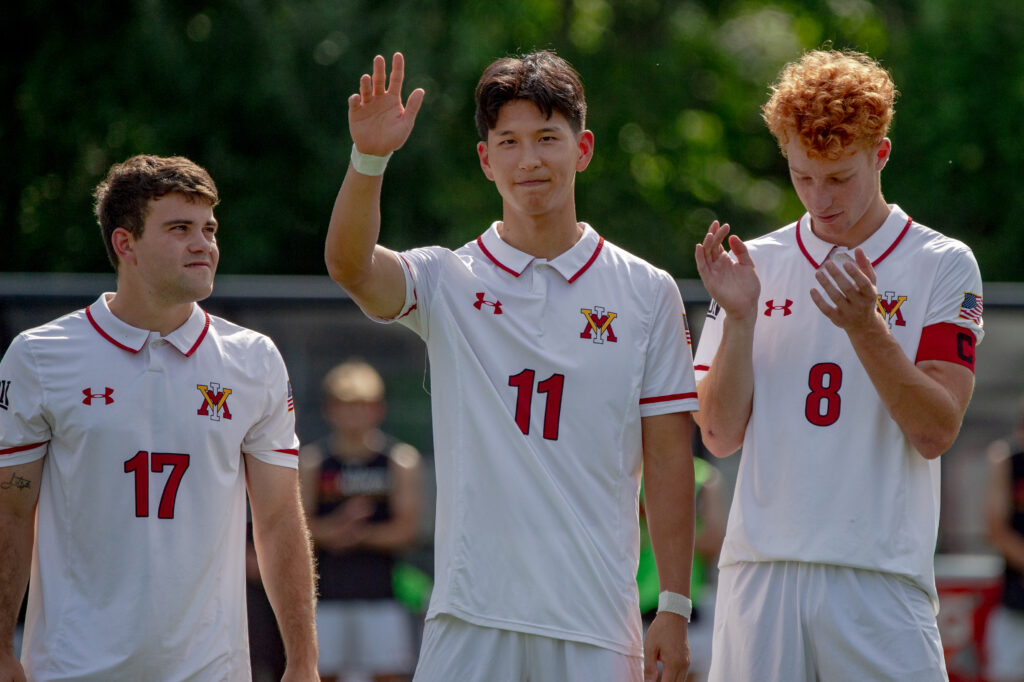
VMI MSOC Action Shot vs. Howard

Oh says he’s not one to play video games or get involved in similar distractions. Instead, he comes up with a game plan of how he’ll be able to finish all his work in a timely manner. 

“I had to make a base plan. Like, get food from Crozet and come to my room and study and eat at the same time,” he said. 

He’s up at 6:30 a.m. daily, with classes and practice until 7 p.m., then he’s doing homework until at least 11 p.m. He says there’s not a lot of breaks in between.

“If you don’t spend time on your phone and other stuff …” he said it’s easy to stay on task. 

Playing soccer serves as a way for him to let loose and cope with stress. 

“I don’t think about academics on the field, I just focus on soccer,” he said. “It’s not just an individual sport. It’s just playing with my friends and building relationships with other people.” 

His time at VMI has taught him how to manage his time, which will be useful for his future career.  

“I think as a lieutenant in the military, you have to work ahead, and you have to know what your role is. I think even in the classroom or on the field, you have to know what to do next, just being proactive,” he said.  

From the Himalayas to the Appalachians: Cadets Explore Culture and Tradition at China Folk House

The house of a Tibetan Catholic family was built near Cizhong, China in 1989. With a blend of Tibetan, Naxi, Bai, and Han Chinese ethnic styles, the home follows traditional layout, materials, methods, and ornamentation of houses in the region going back centuries. 

In 2017, the house had to be relocated due to the construction of the Wunonglong dam. Now calling Harpers Ferry, West Virginia, home, the China Folk House is along the Appalachian Trail connecting to the Shenandoah River, echoing its previous landscape of the Himalayas and Mekong River in China. What started out as a simple teatime at the home in China, turned into having the house disassembled and shipped over to the United States. 

Learn more about the home here. 

Sitting on a 1,600-acre nature conservatory as part of the Friends Wilderness Center, the home is a cultural and educational center dedicated to environmental stewardship, cultural exchange, community engagement, and experiential education, according to its website. 

The China Folk House was the perfect place for 15 Virginia Military Institute cadets from Chinese Civilization, Introduction to Advanced Chinese, and Cultural History of Chinese Martial Arts classes to visit.  

The trip was planned and organized by the Phi Sigma Iota Honor Society, the National Collegiate Chinese Honor Society, VMI’s Department of Modern Languages and Cultures, and Department of History. 

Three faculty members oversaw the visit: Dr. Laura Xie, associate professor of Chinese and faculty advisor for Phi Sigma Iota Honor Society; Dr. Lu Lu, assistant professor of Chinese and faculty advisor for the National Collegiate Chinese Honor Society, and Dr. Qiong Liu, assistant professor in the history department.  

The group of professors had learned about the home from colleagues at other universities who had visited it, and the founder of the China Folk House presented it at a Chinese pedagogy workshop they had attended.  

Xie said it was an enriching and one-of-a-kind experience for the cadets, allowing them to engage directly with artifacts, architecture, and lifestyles that embody the history and culture of traditional Chinese society. She said during the visit, one of the founders explained the China Folk House was reconstructed to reflect the spirit of old rural China. 

“She explained that the Folk House was built in the style of traditional farming villages, where neighbors worked together, supported one another, and tackled projects as a community,” Xie explained. “This gives our students a sense of how community bonds and shared responsibilities shaped traditional Chinese lifestyles.” 

Xie and others said the excursion allowed cadets to explore the Chinese culture that can’t be covered in a typical classroom setting.  

“To be honest, cadets don’t often have opportunities to experience Asian cultures locally in Lexington,” Lu said. “Excursions like these allow them to immerse themselves in foreign cultures and languages, even if only briefly.” 

The visit provided hands-on examples of certain themes covered in class, from traditional construction techniques to symbolism.  

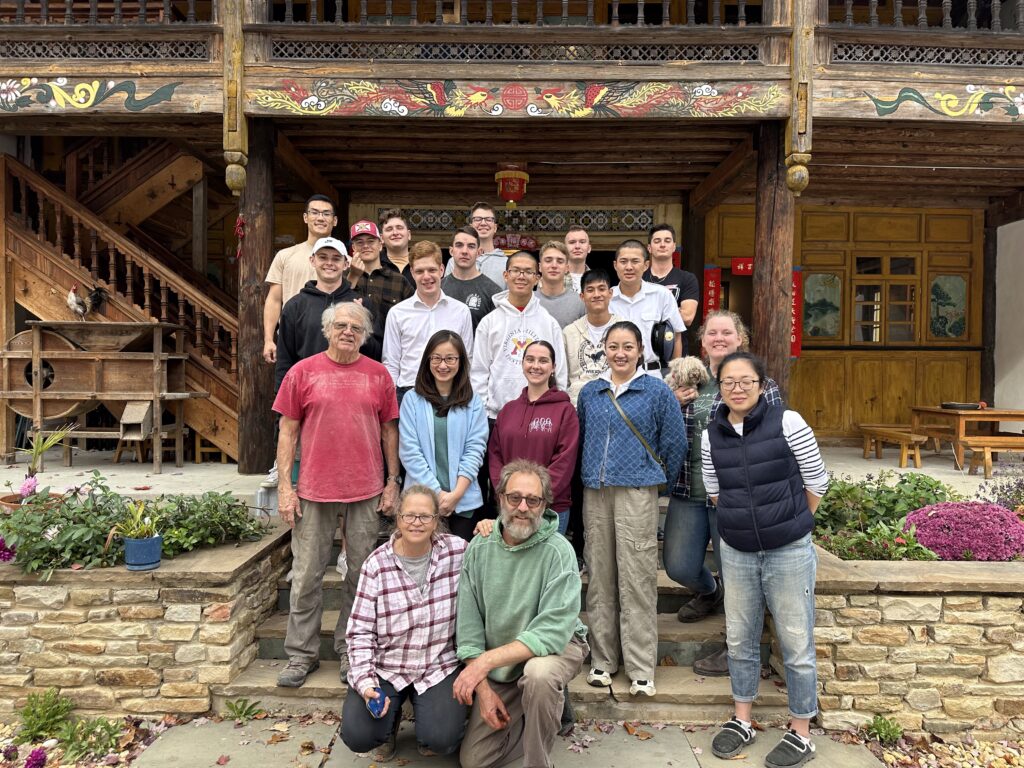
A group of VMI cadets outside the China Folk House Retreat in Harpers Ferry, West Virginia, where they immersed themselves in traditional Chinese culture.

“The highlight of the trip was the cadets’ active involvement in the house construction process itself, and I was especially impressed by their teamwork and camaraderie, a true reflection of VMI’s spirit,” Lu said. “I believe this trip bridged the gap between classroom knowledge and real-world application and offered our cadets invaluable memories.” 

Liu’s class, The Cultural History of Chinese Martial Arts, covers not only the techniques of Chinese martial arts, but also the cultural meanings within the practice.  

“For example, Daoism — a philosophy deeply intertwined with Chinese martial arts — emphasizes harmony between humans and nature,” she stated. “The China Folk House beautifully embodies this principle in its design and integration with the natural surroundings. Traditional Chinese architecture, often influenced by feng shui, reflects Daoist cosmology, aligning spaces for balance and positive energy.” 

By exploring the layout and architecture of the Folk House, it allowed cadets to experience the principles like harmony, balance, and simplicity, Liu explained. 

“This experiential learning deepened their understanding of concepts they may have only encountered in texts, revealing how abstract ideas like yin-yang and feng shui come to life in physical spaces,” Liu commented. “The visit offered a tangible link between philosophical concepts, such as naturalness, and everyday practices, illustrating that philosophy isn’t just theoretical; it shapes practical aspects of life, from martial arts to architecture. Observing these principles in action helped the cadets appreciate how cultural philosophies influence daily experiences and lifestyle choices.”

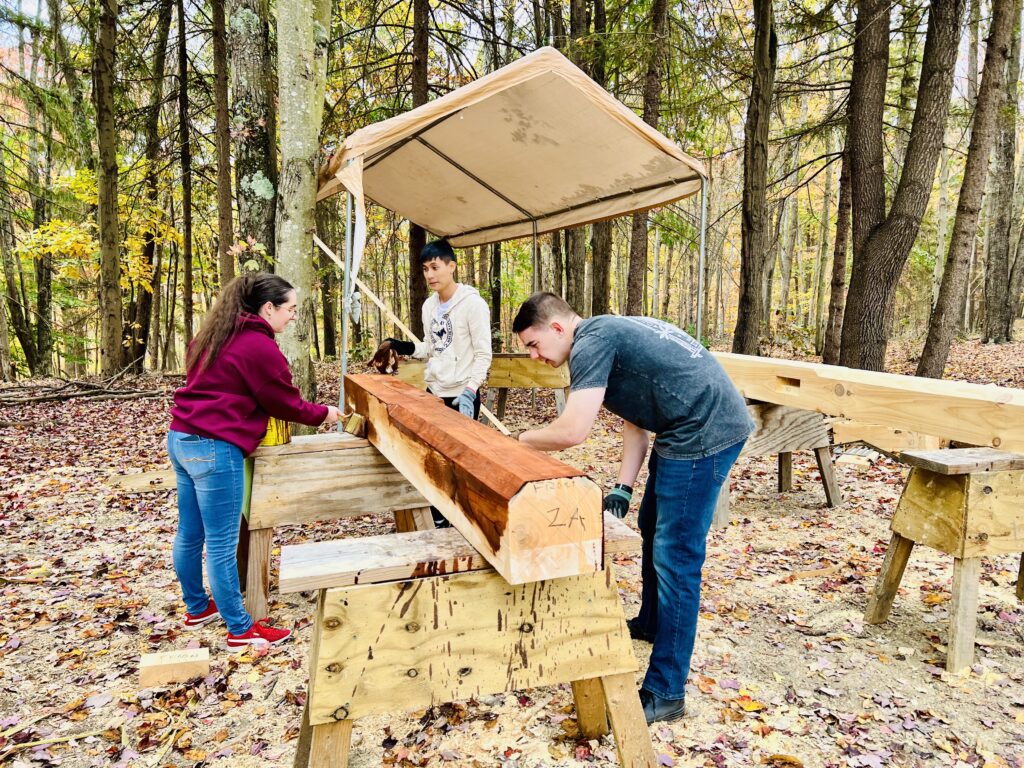
Anna Yemelianova ’25, the president of Phi Sigma Iota, found the experience meaningful because she and others were able to contribute to work at the home like staining wood, mixing concrete, and tending to gardens. It also provided a window into rural life and the transformation throughout China’s reform periods.  

“Each space within the home told its own story — from the traditional kitchen that witnessed countless family gatherings to storage areas that reflected changing agricultural practices across generations,” she said. “As urbanization and modernization spread globally, preserving spaces like this becomes increasingly vital for maintaining connections to local knowledge and cultural traditions.” 

The Folk House serves as a museum piece and a living bridge between past and present allowing visitors to see how rural families adapted to social and political changes, according to Yemelianova. 

“Through both learning and volunteering, our group of VMI cadets became part of this ongoing story of cultural preservation, helping ensure these invaluable traditions and knowledge continue to be shared with future generations.”  

A group of cadets stain wood at the China Folk House Retreat in Harpers Ferry, West Virginia.