Post View Unavailable »
New Website Launched »

Honors Week: Cadet Researches Suicide Prevention

Advertisers have long known that a celebrity’s endorsement of a product can increase sales, but does that marketing strategy hold true for a health care campaign, more specifically a mental health campaign? That is what Delilah Martindale ’25, a Virginia Military Institute cadet, researched for her honors thesis, “Preventing Suicide: The Effect of Visibility on Mental Health Infrastructure.”

Martindale chose the subject of suicide prevention in order to merge her major in international studies with her minor in psychology. Martindale’s advisor, Vera Heuer, Ph.D., professor in the Department of International Studies and Political Science, whose area of expertise is social movements, encouraged her to take a look at mental health care.

“Essentially, we embraced this political sociological approach and came up with a project where she examined the degree with which the visibility of an organization in trying to raise awareness for suicide prevention actually impacts tangible outcomes. It’s truly in the spirit of the Institute honors program by merging various disciplines, and she did quite a wonderful job with that,” Heuer said. 

Martindale’s research question asks, “What effect does visibility have on mental health infrastructure?” She defined mental health infrastructure (MHI) as the physical and organizational structures, facilities, and systems that collectively support the delivery of mental health care services. She hypothesized that the more visibility a campaign can create, the higher the rate of increasing MHI, and if a campaign can obtain a celebrity endorsement, it will enhance its visibility and therefore positively impact MHI.

“There is a psychological phenomenon where repeated exposure to a stimulus leads to an increased liking or preference for that stimulus. So essentially, familiarity breeds liking. The more familiar you are with something, the more likely you are to like it or have it in the forefront of your brain when you’re making decisions,” explained Martindale. 

She tested her hypothesis by examining five case studies: The Trevor Project, a leading suicide prevention/crisis intervention nonprofit for young people ages 13 to 24 of the LGBTQ+ community; The Jed Foundation, an organization established by a couple following the suicide of their son; Active Minds, a program launched by the sister of a man who committed suicide; Hope for the Day, a prominent nonprofit movement in Chicago that influences proactive suicide prevention and mental health education; and Project Semicolon, an organization founded by a woman whose father took his own life, and in which Selena Gomez, a very prominent A-list celebrity is involved as executive producer.

Martindale assigned each case study a score based on their facilities, services, resources, education, and patient interaction compared to their social media presence, celebrity endorsement, news coverage, advertising and published literature.  

She concluded that the first part of her hypothesis, “The more visibility a campaign can create, the higher the rate of increasing MHI,” is correct most of the time. “Clearly it was correct, four out of five times that I did the different case studies.”

The second part of the hypothesis, “If a campaign can obtain a celebrity endorsement, it will enhance its visibility and therefore positively impact MHI,” was inconclusive. “It seems to be more about what type of celebrity involvement there is, how actively engaged they were, what kind of endorsements they were doing, rather than general celebrity involvement,” she clarified. 

Martindale is from San Bruno, California, where she attended Capuchino High School. She is the daughter of Mary Lefevre and Dave Martindale. In addition to minoring in psychology, she also minors in Spanish and leadership studies. After graduation, she plans to commission into the U.S. Army.  

Behind the Balance: Val Tonnu ’26 — Keydet Women’s Swim and Dive

Virginia Military Institute’s cadet-athletes have to juggle cadet life, heavy academic course loads, and their NCAA Division I sport. Committed to both academic and athletic pursuits, balancing their rigorous schedule in both sports and school requires a certain level of commitment and discipline. Behind the Balance is a series that focuses on those cadet-athletes and how they handle the hurdles of the day-to-day. 

With dreams of commissioning into the United States Air Force, Val Tonnu ’26 was aiming for a military college experience. She knew if she deviated from that, her drive to continue the path to the Air Force could diminish, along with her grades potentially suffering. 

Despite not being accepted into the Air Force Academy, she pushed on and decided Virginia Military Institute was the right choice.  

“I think I need to be at this place, or else I’m going to go a little crazy,” she said. 

As a civil engineering major, she’s enrolled in 18.5 credits this semester, while also swimming on VMI’s swim and dive team. 

Val Tonnu swims in the pool during a meet for Virginia Military Institute.

“Originally, I wasn’t going to swim, because I really did not enjoy swimming my senior year of high school. I kind of just fell out of love with it,” she admitted. It was much like being burnt out over the sport. 

When she attended the Summer Transition Program before she matriculated at VMI, someone from the team urged her to contact Coach Scott Thacker. Now, she feels like she’s found her purpose on the team, as well as a newfound love of the sport.  

She said she values the effort she and others put in on the team — character is something she respects.  

“I’m never going care about your competitiveness or your performance level, but I’m going to care about the effort and the type of person you are,” she said. “I want to help the younger kids understand that it’s really your character that helps make you.” 

Tonnu is just mirroring what she experienced her first year on the team: a level of leadership that pushed her to succeed. She said the outgoing 1st Class members were caring towards the rats on the team. 

“No matter what, they just wanted us to succeed,” she explained. “And not just in the pool, but they’d always ask us how we were doing in school and how our day was. That’s something I want to carry on throughout the team.” 

It can be a struggle to keep up with the day-to-day outside of the pool. As a long-distance swimmer — swimming the 500-, 1000-, and 1650-meter — she knows about endurance.  

Cadet-athletes at VMI not only have their responsibilities with their selected sport but cadet duties on top of that. Cadets are also required to take physical fitness classes twice a week, participate in ROTC all four years, prepare for room and uniform inspections, practice for parade, guard duty, and more. 

She’s up during the week at 5:25 a.m. to prepare for morning swim, then breakfast and onto classes until lunch. After lunch she either has a lab or can get some schoolwork done. 

“I usually take a lot of the time in between classes to go do work,” she said. “Having a schedule, and the fact that at VMI, it’s a premade schedule for you, it helps a lot. I do prioritize that time in between classes, even if it’s just like the 10 minutes in between class, I can go to my teacher’s office and ask them for help.” 

She credits the engineering department for providing any help she needs to keep her grades in good standing or if she has any questions.  

Swimming allows her to be with herself, she said. She’s able to clear her mind, space out, or even go through what she did in class prior to practice. 

“If I’m upset or have a bad day, I get to practice and don’t think about it anymore,” Tonnu admitted. “It gives me a lot of time to think. During our long sets in the pool, I’m either singing a song, or I think about schoolwork a lot. My friends and I think about schoolwork, and we’ll think about a random problem that we had in class, and I’d be like, ‘oh my gosh, that’s how you do it.’” 

She said not only is the team gaining recruits that are faster and stronger, but they’re more positive and supportive.  

As one of the co-presidents of the Student Athletic Advisory Committee, she’s finding her voice more and more.  

“I think my leadership style is a lot different than it used to be like, because when I came in, obviously you’re a little scared and you don’t want to speak up as much. In high school, I didn’t speak up, I was a huge people pleaser,” she said. “It bled into the way I led, because I let people walk over me. But I think this place has helped me put my foot down. And people are a lot more encouraging and supporting of my ideas.” 

The Vanguard — Alexis Gonzalez ’25

The Vanguard series highlights cadets of Virginia Military Institute who exemplify promise, perseverance, and the true spirit of leadership. While they may not be the top-ranking students or those in prestigious positions, these individuals’ dedication, resilience, and growth embody the essence of being a VMI cadet. By sharing their stories, including the challenges they’ve faced and overcome, we shine a spotlight on the diverse paths to success at the Institute, proving that leadership and excellence come in many forms. 

Helping others is Alexis Gonzalez’ ’25 backbone. Anything she can do to help others,; she’s immediately on board. She plans on pursuing emergency management after graduating and going to paramedic school.  

“I do it for the people,” she said about being an emergency medical technician (EMT). “I have to be the calm in the storm. I have to do my job, but it’s a Catch-22 because every time you do your job, somebody is having the worst day of their life. Being that calm in the storm for that person is a feeling that I can’t even describe. I’ve seen some incredible things and some horrific things. I’m happy to say, I don’t regret it one bit. It just gives me the opportunity to guide others getting into the field.”

The history major accidentally stumbled upon Virginia Military Institute. She admitted while searching for the University of Valley Forge, she ended up misspelling it and VMI popped up instead. It turned out to be the best mistake she’s made. 

“VMI was the only school I got in early decision, and I haven’t looked back since,” Gonzalezs said. “My desire was to get out of Texas, so I was trying to go as far away as I could, and VMI was willing to give me an academic scholarship.” 

She found the right fit in history. She loves learning about strategy, business history, military history, and constitutional history — which VMI has in spades. Her academics didn’t come without struggle, though.  

“I’m not an academic weapon,” she admitted. “I’m a very physical, practice, tactile person, like if I can touch it, good to go. Books … can’t read. I’m highly dyslexic, the words jumble. Learning how to in college was fun.” 

Her trick? Reading key parts of materials and gathering the overall sense of what is being studied. 

“I worked really, really hard. My academic advisor, I give him a lot of credit, because he taught me how to read a book, because you don’t necessarily need to read all of it. You just need to read the key parts of it — the intro, the conclusion. That’s what I kind of focus on. If I need to read a chapter, I’ll skim it, and my brain will go from there.” 

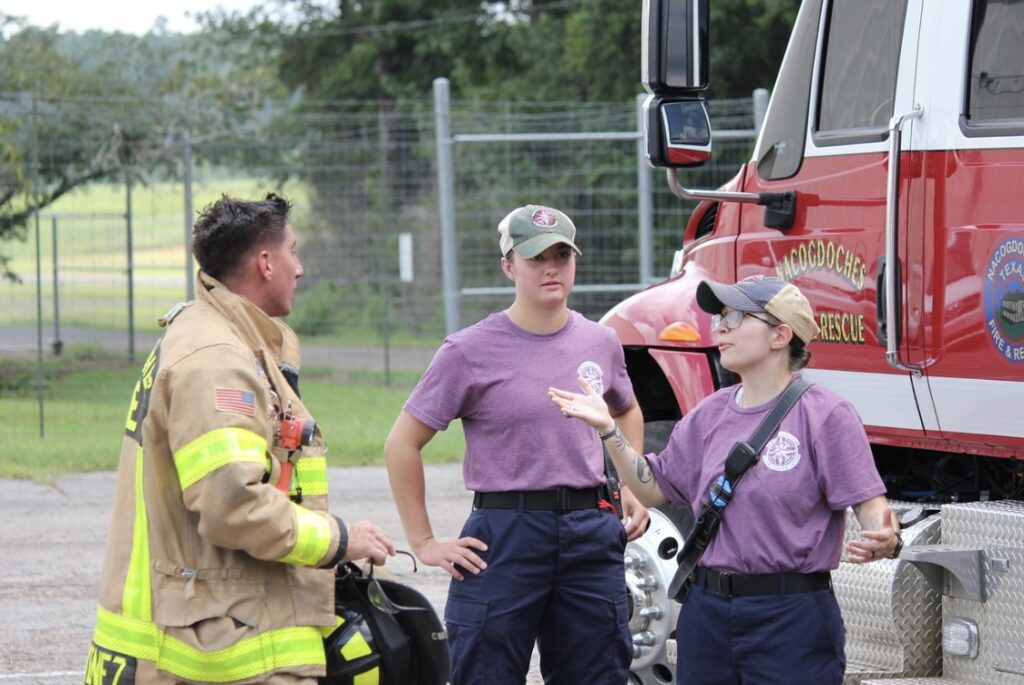
Alexis Gonzalez working as a cadet EMT.
Screenshot

She credits a class she took early on at VMI called Intro to Methods in helping her create her own system of learning. 

“It teaches you how to be a historian and read all those things you need to read and pick out the pieces that you actually need to focus on,” she explained. “That class kind of helped me solidify the rest of my academic career, because I literally transferred what I learned there and just put it to every other class and it worked. I worked really hard at it, and it didn’t click until my 2nd Class year. My GPA started going up. Last semester, I had 3.4. I’ve never had a 3.4.”

Maj. Christopher Blunda, assistant professor in the Department of History and Gonzalez’ academic advisor, described her as a hardworking student and someone he could always count on coming prepared to class and willing to share her perspectives.  

“Her participation promoted an environment that was conducive to learning and was therefore quite beneficial to her fellow students,” he explained. “Her accomplishments in the classroom are, in my view, quite impressive given the extent of her numerous obligations and responsibilities.” 

She says she’s decent cadet who is active as a lieutenant for VMI’s cadet EMT and the president of the Cadet Equity Association (CEA). She said she likes being part of the community and participating. 

Apart from figuring out her learning style, Gonzalez said her writing has improved during her time at VMI. She credits the Writing Center for it. The biggest growth has been her confidence.  

“I want to say I’ve grown quite a bit just in my confidence level,” she said. “I’ve grown together with my brother rats. Just learning your place in the system, growing, and becoming a part of the team.” 

Blunda said he and his colleagues view her with great respect.  

“In my view, she is among the most promising 1st Class cadets because of her attention to detail, ability to present well, and commitment to teamwork and service,” he said. “The qualities mentioned above make her stand out. There are a great number of good cadets at VMI, I consider Cadet Gonzalez among the best. She learns from her experiences and is able to apply that knowledge effectively. She is not the sort of person who ever needs to be told anything twice. Hers is a consistent pattern of improvement. My colleagues in history will certainly miss her after she graduates.” 

Behind the Balance: Cameron Thomas ’27 — Keydet Men’s Track and Field

Virginia Military Institute’s cadet-athletes have to juggle cadet life, heavy academic course loads, and their NCAA Division I sport. Committed to both academic and athletic pursuits, balancing their rigorous schedule in both sports and school requires a certain level of commitment and discipline. Behind the Balance is a series that focuses on those cadet-athletes and how they handle the hurdles of the day-to-day. 

College was the last thing on Cameron Thomas’ ’27 radar in high school. Instead, he was looking to enlist in the military once he graduated. That was until he started track his junior year, specifically competing in pole vault. 

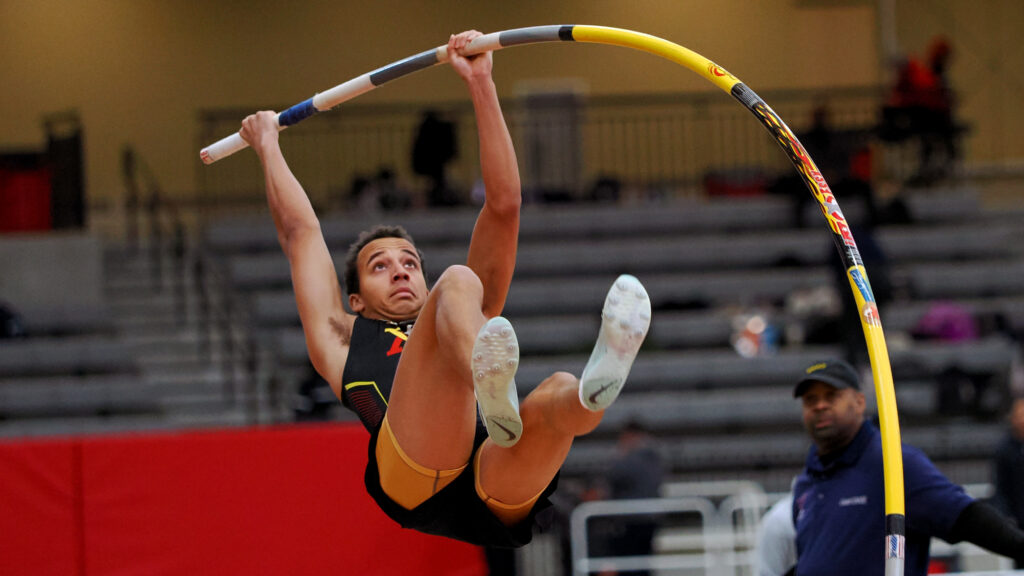
Thomas admits he used to fear heights, but now catapulting over the pole is no big deal. Instead it’s something he highly excels at. Recently, he broke a more than two decade old Virginia Military Institute record for pole vault for indoor track and broke the record last year for outdoor track. In 2024, he also won the pole vault individual title at the SoCon Championships for All-SoCon recognition. 

“Pole vaulting is a very mental sport so staying calm and focused is crucial to competing at this high of a level,” he explained. “Trusting the process on one day that you have practiced for the entire year can be very stressful, especially in front of a large audience.” 

To combat that, he’s come up with breathing techniques and nutrition plans for the days leading up to competition.  

“As long as you do as much as you can to prepare yourself, everything you do on that day during competition should feel easy and effortless,” he said. “My best days are ones where I’m not forcing anything. So, in a way pole vaulting on competition day should just feel like a run and jump; everything else is irrelevant.” 

Keeping stress down and staying organized are ways he stays in the zone.  

Cadet-athletes at VMI not only have their responsibilities with their selected sport but cadet duties on top of that. Cadets are also required to take physical fitness classes twice a week, participate in ROTC all four years, prepare for room and uniform inspections, practice for parade, guard duty, and more.

Taking 16 and a half credits as an economics and business major, Thomas says this is a lighter load than he had last year with over 18 credits. His days usually start at 6:30 a.m. when he gets up and heads to breakfast. This semester he has classes until noon, which allows him several hours to complete any class assignments.  

“The schedule I have right now is really nice because right after my classes, that’s what I’m the most focused,” he explained. “So, getting right into my homework, I can get pretty far ahead.” 

Sometimes, he can fit in a power nap before heading to practice at 4 p.m., which lasts until 7 p.m. He eats at 7:30 p.m. then studies until he’s ready for bed, which he has a pretty rough stop at 9:30 p.m. 

Cameron Thomas pole vaulting during a track and field meet for Virginia Military Institute.
VMI Team Challenge track and field meet at the Corps Physical Training Facility in Lexington, VA January 11, 2025. (Randall K. Wolf)

“I had a bad habit last year going to bed at like 10:30 p.m. because that’s when taps is, so it’s like the average bedtime. But I realize if I get way more sleep, I feel a lot happier,” he said.  

Originally, Thomas was a biology major. Enrolling in the Summer Transition Program prior to matriculating, he took a class with Col. Wade Bell, but instead of focusing on biology, Thomas was trading stocks.  

“He would always laugh at me because I’d be in the back of the class just yelling whenever I make money,” he said. “He really prompted me to go toward the economics and business major, because I didn’t even know that was the thing.” 

Thomas said he is interested in learning how the economy works, especially this year with his more major-centric classes that are focused on it. He said in high school he was stock trading.  

Cameron Thomas pole vaulting during a track and field meet for Virginia Military Institute.
VMI Team Challenge track and field meet at the Corps Physical Training Facility in Lexington, VA January 11, 2025. (Randall K. Wolf)

“I got really obsessed with stock trading and learning how numbers work. I’ve always been a math guy as well, way more than writing or reading,” he commented “I like making money or sometimes losing money. You know, it’s all process.” 

Coming to VMI was a process for him as well, especially learning how to adapt to a strict schedule. 

“I think I’m a lot more mature since I’ve been here. Before I was doing things like staying up late, and not really thinking about how my days coincide with each other on like a day-to-day basis,” he admitted. “I’d always wait to do my work until the last minute. Now I realize that getting it done early is going to be easier in the long run.” 

He’s also committed to his daily practices at track. 

“It was very difficult when I first got here during the Rat Line, because we also had the other stuff. Like last year, I kind of went down with my progression, because I was doing push-ups before the meets, I was marching in new boots and walking in low quarters. A lot of stuff to get used to.” 

He’s learned how to hold himself accountable. His growth in understanding responsibility will help him in the future, especially with dreams of joining the World Class Athlete program with the U.S. Army. Currently, he’s seeking to commission into the Army. The program enables athletes to train for the Olympics. If that doesn’t pan out, he’s looking to be part of the Finance Corps in the Army. 

Behind the Balance: Cole Jones ’26 — Keydet Lacrosse

Virginia Military Institute’s cadet-athletes have to juggle cadet life, heavy academic course loads, and their NCAA Division I sport. Committed to both academic and athletic pursuits, balancing their rigorous schedule in both sports and school requires a certain level of commitment and discipline. Behind the Balance is a series that focuses on those cadet-athletes and how they handle the hurdles of the day-to-day. 

Since the age of 5, Cole Jones ’26 has been playing lacrosse. It’s a good mix of several sports, he said.  

“It brings every other aspect of sports into one. I played football when I was little, which is super physical, but it’s not as fast paced. I always played basketball. It’s kind of a mix between those two … physical and fast paced.”

The constant go of the game is also like his fast pace in his everyday life at Virginia Military Institute.  

Cadet-athletes at VMI not only have their responsibilities with their selected sport but cadet duties on top of that. Cadets are also required to take physical fitness classes twice a week, participate in ROTC all four years, prepare for room and uniform inspections, practice for parade, guard duty, and more. 

His priorities have changed since coming to VMI. He finds that he is more focused, especially with the structure he’s had to maintain. Thankfully, during times of struggle in keeping up, he was able to lean on his dykes and brother rats for support.  

“If you have a ton of free time — something they told me — then you’re probably doing something wrong,” Jones said. “There’s always something that should be getting done, whether that’s just extra readings, catching up, getting ahead on work, or studying.” 

The international studies major is set to commission into U.S. Army once he graduates.  Jones explained that his duties with ROTC and lacrosse go hand-in-hand.”The physical fitness aspect of it, it’s good, so I don’t have to really work out as much on my own because of going to practice and doing team lifts. Then the ROTC cadre are pretty flexible and understanding that if you miss things for sports, they’ll give you times to make stuff up or extra instruction periods and things like that.” 

In high school, Jones was focused on lacrosse and hanging out with friends. Coming to VMI, he became more school focused.  

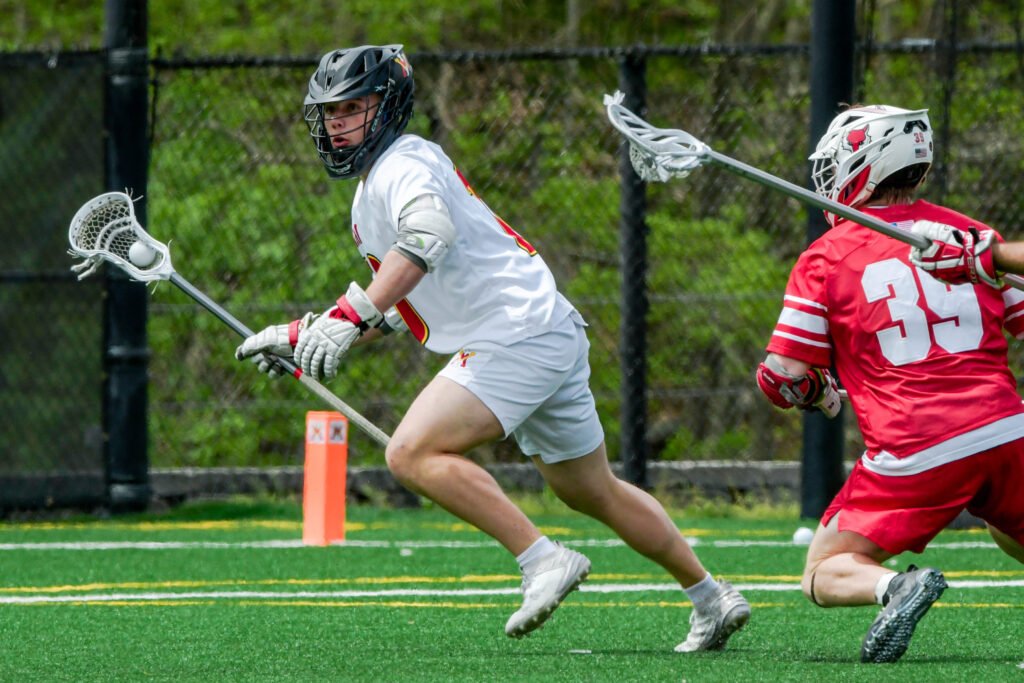
Cole Jones playing lacrosse for Virginia Military Institute.

“When I got here, my dad, who went to West Point, always told me school’s no joke. It’s not like high school. You actually spend time on it. I was really paranoid coming here about school work, and then I just kind of hit the ground running. I realized if I want good grades, you can’t slack, you have to devote at least a few hours a day to working on homework.” 

VMI is a different college experience, but it’s allowed him to see how a stacked schedule will be once he’s out of school. He’s learned how to maximize his time for what he needs to get done.  

“Our coach always says, once you get on the field, leave everything else up on the hill and just focus on the sport and practice that day,” Jones stated. “Everyone has their tough days and going down there with your whole group of guys, getting just to compete every day … it’s always awesome.” 

Being part of a team — on and off the field — has allowed Jones to understand prioritizing things. 

“Our coach also reminds us to control the things that you can control. There are definitely times where I get stressed out, and then I just kind of stop and lean back. It’s like, well, I have this thing that’s due tonight. Focus on that. And then, just one thing at a time. People here will say, just focus, especially as you’re a rat, it’s just one meal at a time. So, get to the next meal, get to the next day, the next assignment, whatever that is, just work one step at a time.” 

The Vanguard — Scott Streff ’25

The Vanguard series highlights cadets of Virginia Military Institute who exemplify promise, perseverance, and the true spirit of leadership. While they may not be the top-ranking students or those in prestigious positions, these individuals’ dedication, resilience, and growth embody the essence of being a VMI cadet. By sharing their stories, including the challenges they’ve faced and overcome, we shine a spotlight on the diverse paths to success at the Institute, proving that leadership and excellence come in many forms. 

Scott Streff ’25 was looking for warmer weather in Virginia when he got an offer to play lacrosse at Virginia Military Institute. The international studies major from Minnesota was also looking to commission into the U.S. Army.  
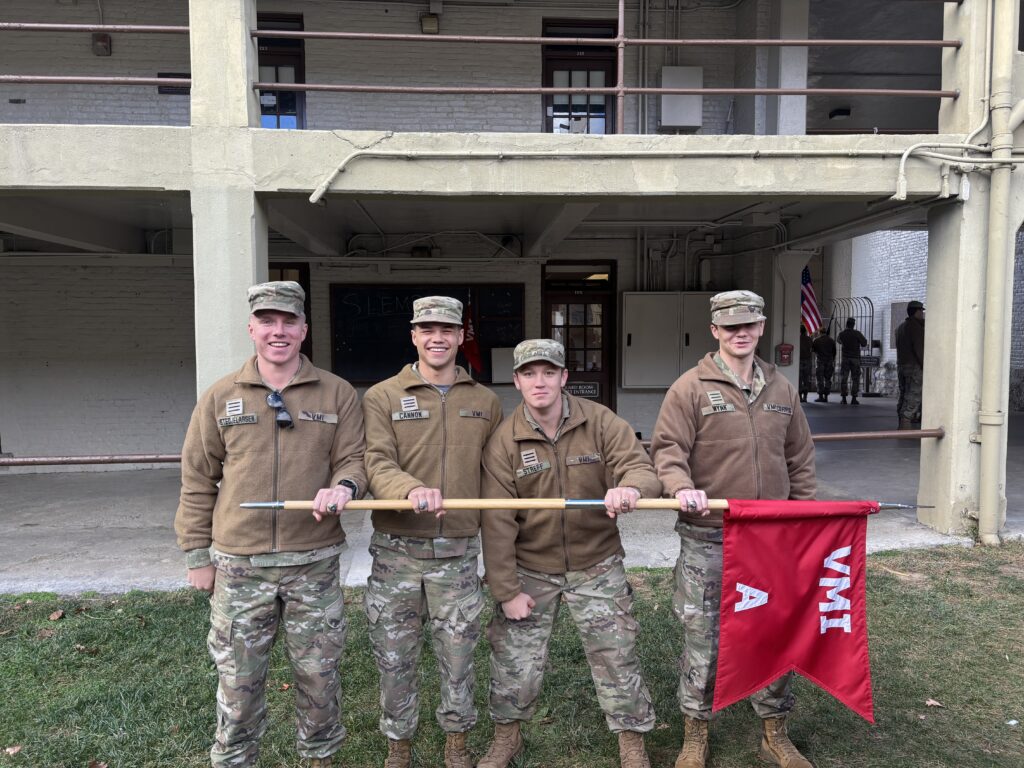
“I came here to play lacrosse. I was recruited out of high school. I’d never been to the state of Virginia before I committed, so I just came here sight unseen, but liked what it seemed like, and it was warm,” he admitted.Although he’s not on the lacrosse team anymore, he stayed at VMI because the knowledge and experience he is gathering lends itself to his future plans — utilizing his international studies degree inside or outside the Army, like working for the government or private sector.

His first two years at the Institute were lackluster, he stated, making the GPA needed to maintain commissioning status.  

“Over the years, I’ve realized that my professors are super knowledgeable, especially in international studies,” Streff said. “I think we have some of the best professors, and what they’re talking about can help me.” 

By his 2nd Class year, he was awarded academic stars, which means a cadet has a cumulative GPA of 3.5, or has earned a yearly GPA of 3.5 for the previous academic year.  

“My dyke, when he was here, said grades are the most important thing. Whatever rank you have is really nice and really cool, but nobody in the real world cares that you were a corporal. They care about your GPA,” he said. “That’s what people look at first on a resume. That’s a major factor in Army rankings. So [my dyke] kind of drove me. He had the highest GPA in his major, and his roommate had the highest GPA in his major. I just wanted to go off that.” 

He was also inspired to have the lacrosse team GPA be above a 3.2, which he had been below most of his cadetship. Although he’s not on the team anymore, he’s still close to others that are, and they motivate each other to get good marks. Streff is on the Rat Disciplinary Committee, which is responsible for the discipline and conduct of rats throughout the Rat Line. 

Streff has had his share of struggles while at VMI. He admits he doesn’t spell at a high level, which can be challenging as an international studies major — there are a lot of papers to write.  

“My roommates, they put me through a spelling bee, and they figured that I spelled about a fourth-grade level. I had to overcome that,” Streff explained. “I also needed to overcome the time management aspect of VMI. I was wasting a lot of time and putting time into the wrong areas, getting distracted.” 

He found that staying in his room with two monitors hooked up to his computer was a more effective way to study, instead of spending time in academic buildings where more distractions could be presented.  

It also helped finding a passion for international studies. He’s able to minor in Middle Eastern studies, giving him interesting classes to enroll in, which in turn made learning the material easier and fun. 

Salih Yasun, assistant professor in the Department of International Studies and Political Science, describes Streff as a friendly, ambitious student, saying, he’s “in peace with himself.” 

“Intellectually, he is very open to challenging himself. He has the ability to lighten the mood in class whenever he wishes to do so,” Yasun said. “He is the kind of cadet every professor wishes to have in their class.” 

Vera Heuer, professor in the Department of International Studies and Political Science, said Streff is personal, grounded, and doesn’t view education as a commodity. She appreciated his approach to VMI’s expectations.  

Scott Streff with his brother rats at Virginia Military Institute in barracks.

“He clearly is motivated to do well in his classes, but he would first try to improve his performance on his own rather than ask the instructor,” she commented. “Even when he turns for help, I always felt that he was very cognizant of not viewing faculty as a service deliverer, but more as a mentor.”

Heuer saw an example of this during Streff’s 3rd Class year in how he was as a peer instructor trying to communicate to other students to put in the effort and come to sessions prepared. She noticed that he’d inform students that if they weren’t prepared, he would be limited in how he could help them. He was essentially interacting with his peers as faculty members do with their students, she said.  

“This shows that he has great social awareness and what makes him a good leader,” she said. “He was very good at balancing corps, athletic, and academic commitments — he was able to finally earn academic stars only after he relieved himself from some of the commitments, like quitting lacrosse. I was really happy to see him finally getting the academic accolades he is so deserving of.” 

As graduation approaches, Streff is excited to serve his country, then hopefully pursue further studies after. He feels his time at VMI has well prepared him for whatever comes.  

“I think VMI matures you … you have a lot more real-world responsibilities and concerns,” he stated. “I think the priority of VMI cadets is very different than the priority of most college students across the nation. It’s a much more competitive environment post-graduation. People care about what jobs you’re getting, what opportunities you’re getting, what internships you are getting.” 

The Vanguard — Ryan Halverson ’26

The Vanguard series highlights cadets of Virginia Military Institute who exemplify promise, perseverance, and the true spirit of leadership. While they may not be the top-ranking students or those in prestigious positions, these individuals’ dedication, resilience, and growth embody the essence of being a VMI cadet. By sharing their stories, including the challenges they’ve faced and overcome, we shine a spotlight on the diverse paths to success at the Institute, proving that leadership and excellence come in many forms. 

Lessons learned outside the classroom at Virginia Military Institute are what push Ryan Halverson ’26 to do better. He’s never been one to really enjoy school, but once he was able to apply what’s he’s learning in class to the outside world, his drive grew.  

“I’ve learned a lot more lessons in VMI classrooms just about myself,” he said.

One class he took on civic discourse presented him with a project on how to portray an argument and how to move an audience. He said that being at VMI, he knows it serves the greater good. 

“I think that’s really important for not only business, but in the military as well. Understanding that from that perspective, and not just a school perspective, is important,” he explained. 

Halverson, an English major, originally came to VMI as a civil engineering major. 

“I instantly knew it was a mistake.” 

Lt. Col. Pennie Ticen, associate professor in the Department of English, Rhetoric, and Humanistic Studies described Halverson as a conscientious student, ever since the beginning of his cadetship. She had him as a rat. 

“He came to class having done any assigned reading and/or writing, regularly contributed to class discussion — partly by listening carefully to his peers’ comments and then adding a synthesizing comment or a question designed to further discussion,” she explained. Halverson had approached her when he wanted to switch majors. “Demonstrating the care he brings to all his decision-making, he asked me for materials about the major, made an appointment to meet with me so he could ask questions, and then decided to submit his request to change departments.”

He switched to English because he saw it could really lend itself to what he wants to pursue after college, which is commissioning into the Marine Corps.  

“It was best for me in terms of communication and in leadership,” he said.  

Ticen, who is also Halverson’s advisor, said he is always the first cadet to get in touch with any questions or concerns about scheduling. 

“[He’s] making sure he is making steady progress on his degree, taking his major courses in the order in which we suggest so that he can build up his skills in our challenging humanities curriculum covering — art history and visual culture, literature, philosophy, and rhetoric & writing, etcetera,” she said. “In his cadetship, Halverson has consistently demonstrated his desire to get the most out of his VMI experience.” 

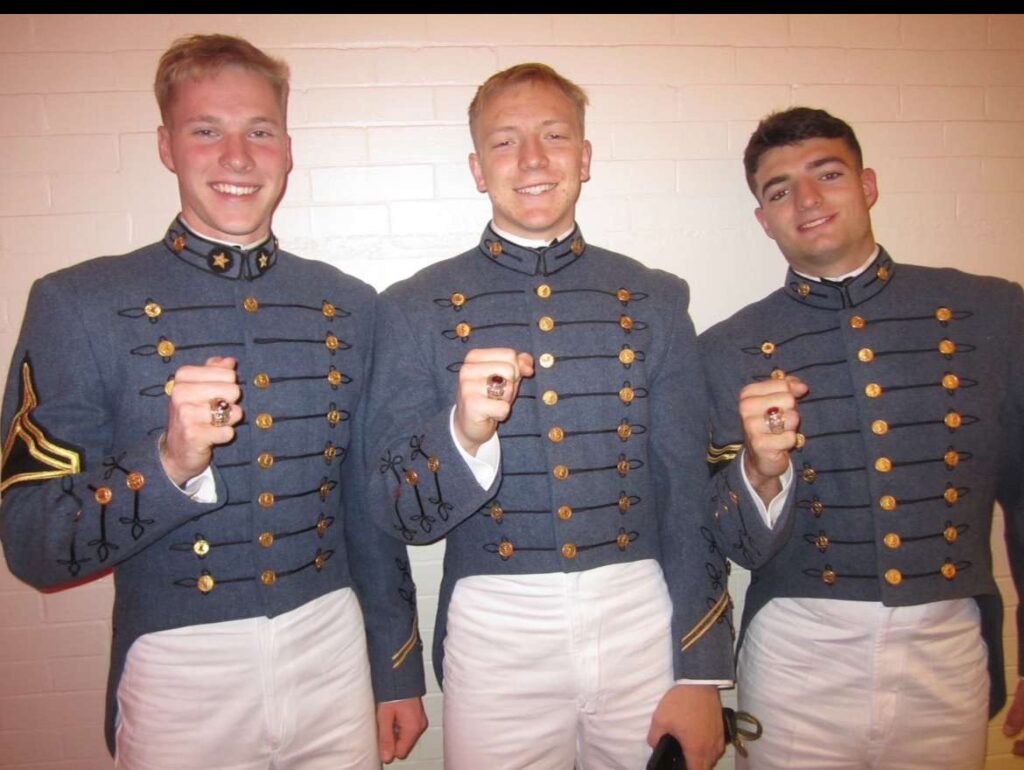
Ryan Halverson showing off his Virginia Military Institute ring with his brother rats.

By serving on the Rat Disciplinary Committee (RDC) and on cadre this year, he will move into the role of RDC president next year.  

“I would just say I’m someone who likes to push those around me. I like to make people better and really show people what they can do,” he commented. “One of my favorite quotes is, as a leader, you don’t show people your superpowers, you show them theirs. I think that’s what I try to do at VMI.” 

It’s a shift for him, he said. When he was in high school, he always wanted to help others but didn’t apply himself much to leadership positions. His time at VMI has helped that. He said the sense of camaraderie and the push to make everyone better was a turning point.  

Although the daily grind at VMI can be challenging, Halverson said his roommates and friends help him keep going.  

“There’s not one challenge here that you can’t overcome, but it’s being able to do that every single day is what’s hard,” he said. 

Col. Michelle Iten, associate professor in the Department of English, Rhetoric, and Humanistic Studies and the one who taught his civic discourse class, said Halverson is an insightful thinker who is strong at critical thinking. She said he also has a strong work ethic and puts in the time needed without cutting corners. 

“From the work he did for my class and our conversations, it’s clear to me that Halverson sees college as a place to expand his knowledge — he wants to learn deeply,” she stated. “He puts in all the careful thought and hard work needed to truly learn. This sets him apart from many cadets who are in class because they have to be and are in college just to get a degree. 

“He also stands out for his critical thinking skills,” she continued. “Ryan often impressed me with his comments in class — he’s insightful beyond his years in seeing cause and effect and in understanding what motivates people.” 

Halverson said being honest with yourself on what you need to improve on is important, especially when you are a rat. 

“It shows you where you’re lacking so that when it’s over, you can develop yourself through the next three years. Know your weaknesses, and I strive every day to become better in those areas,” he said. “You get put in so many stressful and uncomfortable situations that you get through. Doing that over and over just builds confidence.” 

Behind the Balance: Matthew Picard ’27 — Keydet Men’s Swim and Dive

Virginia Military Institute’s cadet-athletes have to juggle cadet life, heavy academic course loads, and their NCAA Division I sport. Committed to both academic and athletic pursuits, balancing their rigorous schedule in both sports and school requires a certain level of commitment and discipline. Behind the Balance is a series that focuses on those cadet-athletes and how they handle the hurdles of the day-to-day. 

Matthew Picard ’27 vowed he would never attend a military college. One of his teammates in high school ended up going to Virginia Military Institute and he was encouraged to investigate it.

“He went to high school with me, and we both swam on the high school team. I asked where he was going to college, because he was the captain and a good role model. And he said, VMI,” Picard explained. “I was like, what is that military school? He then said I should look into it. I’m like, no, I’m never going to go. There is no reason for me to go into the military.” 

A conversation with his father got some gears turning for him. That’s when he started researching VMI.  

Picard was intrigued to see that a new aquatic center was being built at VMI and there was also a new swim coach. After a conversation with Coach Scott Thacker, Picard was more on board. Then he discovered the engineering program at the Institute, and he was sold.  

“It came down to the decision, and my dad told me, ‘If you’re going to pick four years of your life to put everything into and just get it done, it’s now,” he said. 

The mechanical engineering major is enrolled in 19 credits this semester, as well as being part of the swim and dive team.  

Cadet-athletes at VMI not only have their responsibilities with their selected sport but cadet duties on top of that. Cadets are also required to take physical fitness classes twice a week, participate in ROTC all four years, prepare for room and uniform inspections, practice for parade, guard duty, and more. 

Managing his time has been the hardest thing to get down. 

“I benefit from practicing and then eating,” He explained. “I find that I can lock in and get work done after that.” 

His days start early — 6 a.m. four times a week for morning practice. He’s in class starting at 8 or 9 a.m. then practice again at 4 p.m. until after 7 p.m. After grabbing a bite to eat, then he dedicates the rest of the night to studying and schoolwork.  

Swimming, although a demanding practice schedule, allows him to switch focus. He swims the 50-meter, 100-meter, and 200-meter relays, all freestyle.  

Matthew Picard diving into the pool during a Virginia Military Institute swim meet.

“I think it’s very power focused. I love moving quick, trying to get to the wall as fast as you can,” he stated. “I think it’s very competitive. I feel like with sprints, you’re a lot closer with other people, so it kind of pushes you to get that much faster.” 

He’s proven to be fast. Last year, he and others on the team broke several VMI records. He set a rat and team record in the 50-yard freestyle, a rat and team record in the 100-yard freestyle, a rat and team record in the 200-freestyle, as well as several other relay records. 

Picard has been interested in how things work since a young age. He likes taking things apart and putting them back together. 

“I used to take apart pens, radios, just all sorts of stuff. And my parents hated it, because I would just break things,” he joked. “I like to know why does that work the way it does. That’s the biggest thing: designing and then building, and then problem solving and going through the whole process to make things.” 

He feels like VMI prepared him to handle heavy course loads and his swim team responsibilities, as well as preparing him for whatever is next after he graduates.  

“I think I’ve definitely felt more qualified than some of my buddies that have come back from other places with the same major. I think it’s definitely taught some life skills, a lot of maturity. We grow up fast here.” 

Never Quit, Never Settle: 2nd Lt. Janine Colantonio’s Pursuit of Excellence in Ranger School

This story originally appeared on the U.S. Army website.

“I met God in the mountains.”

These were the words of 2nd Lt. Janine Colantonio, a 2023 graduate of Virginia Military Institute and newly tabbed infantry officer, as she reflected on her experience at one of the Army’s toughest schools—Ranger School.

Colantonio graduated from Ranger School on January 24, 2025. Her journey was more than just a test of physical endurance—it was a crucible of leadership, self-discipline, and perseverance.

A Legacy of Leadership: Inspired to Lead

For Colantonio, the pursuit of excellence wasn’t just a personal ambition—it was a legacy she was determined to continue.

Her grandfather, Ron Colan, a VMI Class of 1963 graduate, Vietnam War veteran, and engineer officer, played a pivotal role in shaping her decision to transfer to VMI and join Army ROTC.

As a child, she didn’t fully grasp the significance of his service. It wasn’t just his military background that inspired her—it was the leader he was and the character he embodied. Those same qualities became the foundation for her own pursuit of excellence as a leader.

When her father encouraged her to follow in his footsteps, she saw VMI and ROTC as the path to becoming the best leader she could be.

The Road to Ranger School: A Test of Grit & Competition

Before stepping into the grueling phases of Ranger School, Colantonio honed her skills and mental toughness through VMI’s Ranger Challenge Team. Competing in Army ROTC’s toughest event, she trained alongside like-minded cadets who thrived in an environment of high standards and voluntary hardship.

“I was drawn to Ranger Challenge because it was a group of individuals who wanted to put in the extra work and challenge themselves. It’s a volunteer competition, and I learned early on that if you want to be the best, you have to get used to being uncomfortable”

That intensity prepared her for the exhaustion, tactical proficiency, and accountability required at Ranger School. More importantly, the experience reinforced a core belief she carried into her military career—when you surround yourself with highly driven people, they will push you beyond your perceived limits.

A Test Beyond 62 Days

Ranger School’s “62 and through” mantra is well known. It signifies a Soldier’s ability to complete the course without being recycled—a straight path through the grueling 62-day challenge.

But for Colantonio, Ranger School wasn’t just about surviving the course—it was about self-improvement. Endurance, competition, and leadership development didn’t stop at earning the tab.

“You want to give yourself the best leadership experience. Ranger School is a place where you can get as close to real combat experience and the stressors that come with it without actually being in combat.”

Her mindset would soon be tested in ways she never expected.

Endurance: The Power of Pushing Forward

Ranger School is a brutal test of endurance—a relentless cycle of food deprivation, sleep deprivation, and nonstop movement through some of the toughest environments imaginable.

Yet, for Colantonio, the toughest challenge wasn’t physical—it was facing failure head-on.

After successfully completing Infantry Basic Officer Leader Course (IBOLC) and Ranger Assessment Phase (“RAP Week”), she entered phase 1 of Ranger School, but was unexpectedly dropped—a setback that forced her to ask herself:

“Do I really want this?”

Instead of giving up, she did what true leaders do—she self-reflected, sought honest feedback, and refined her approach.

“Most people in Ranger School are used to being one of the best. Pride gets to you. But this experience forced me to be honest with myself and recognize areas where I needed to improve.”

She reached out to her peers, asking them bluntly:

“What do I need to do better?”

Unlike those who complete Ranger School in 62 days, Colantonio’s journey required four attempts before earning her tab—totaling over 190 days in the course.

Her two grueling rotations through Mountain Phase pushed her to new levels of physical and mental endurance. By the time she reached Florida Phase for the second time, she was determined to finish what she started.

“It’s what’s expected of us, and I wanted to show up to my platoon as the best and most experienced leader that I can be.”

Camaraderie: The Ranger Brotherhood

While Ranger School is designed to push individual limits, no one succeeds alone. The experience forged some of the strongest bonds Colantonio has ever had.

“Ranger School teaches you to be selfless. You can go in thinking you’re a team player, but when you’re wet, starving, and exhausted, the only thing that matters is the mission and the people to your left and right. That’s when you truly learn what it means to put others before yourself.”

Through extreme adversity, Colantonio built deep trust with her Ranger buddies, knowing that in the hardest moments, they had her back—and she had theirs.

Hardship and Faith: Meeting God in the Mountains

The Mountain Phase of Ranger School is infamous for its harsh terrain and brutal conditions, and for Colantonio, it became more than just a physical challenge—it was a test of faith.

“One time, I turned to the guy in my squad and said, ‘This is horrible. This is not fun.’”

But in those moments of suffering, something kept her moving—the people around her.

“You have guys fighting for their ‘go’—a wife, kids, siblings back home—and they’re pushing themselves to make it through. You want to do the same when it’s your turn. You want other people to fight for you to get your ‘go’ just like you fight for them.”

It was this shared hardship, this mutual sacrifice, that defined Ranger School.

Lessons for Future Leaders: Never Quit, Never Settle

Colantonio’s journey through Ranger School is a testament to the power of competition, the necessity of endurance, and the strength of team camaraderie.

For future cadets who aspire to follow her example, she offers this advice:

“Network, seek out mentors, and don’t be afraid to push yourself into uncomfortable situations.”

The Road Ahead

With her Ranger tab earned and her next assignment to the 101st Airborne Division, Colantonio is more than just a graduate of one of the Army’s toughest schools—she is a leader forged through hardship, competition, and an unwavering refusal to quit.

Because true endurance doesn’t stop at ’62 and through’—it extends far beyond the tab, into the Soldiers she will lead and the challenges she will continue to overcome.

Virginia Military Institute Army ROTC proudly honors its alumni, who continue to set the standard for leadership and leadership in the U.S. Army.

Global Festivities Event Offers Look at World Traditions

Last week, the Phi Sigma Iota International Foreign Language Honor Society hosted Global Festivities, an event celebrating the cultural diversity of New Year traditions around the world.

Cadets engaged in hands-on activities, including creating paper lanterns, folding origami, crafting vibrant Brazilian carnival masks, and testing their knowledge in a Jeopardy-style cultural trivia game. Through these interactive experiences, they explored diverse traditions and gained insight into how different communities welcome the new year. They also enjoyed delicious refreshments inspired by cuisines from around the world.

This event was initiated by Phi Sigma Iota president Anna Yemelianova ’25, who worked closely with the Department of Modern Languages and Cultures, and in collaboration with the Office of Diversity, Opportunity, and Inclusion, to make it a success.