Post View Unavailable »
New Website Launched »

SURI: Heavy Loads and Harsh Environments – The Effects on the Human Body

Caroline Lassalle ’25 has always had a strong desire to learn about exercise science and work in the medical field. The biology major spent five weeks last summer becoming a certified emergency medical technician (EMT) at Virginia Military Institute.

“After a year of having my EMT certification, I wanted to try something new, so I started to consider research opportunities,” she said.

Student performing research at Virginia Military Institute, a military college in VirginiaAs part of the Summer Undergraduate Research Institute (SURI) program, she’s investigating the effects of load carriage — a 65-pound ruck sack — on metabolism, ventilation, and tissue oxygenation at both sea level and stimulated altitude (above 12,000 feet), using a hypoxic chamber. With a hypoxic chamber, the oxygen levels can be altered, which mimics high altitudes.

“Through SURI, I hope to gain a deeper understanding of the performance of the human body under harsh external conditions and a newfound love of learning in the form of research,” she said.

SURI is offered by the VMI Center for Undergraduate Research (VCUR) and provides cadets with a unique opportunity to delve into high-level research that relates to their degree path. It consists of cadet-led research under the direction of a faculty advisor.

As a biology major with a minor in chemistry and exercise science, she decided to reach out to the Department of Human Performance and Wellness at VMI for the research opportunity. From there, she was introduced to Maj. Daniel Baur, assistant professor in the Department of Human Performance and Wellness, who has researched the effects of heavy load carriage and altitude. He was planning on conducting further research this summer.

According to Baur, the project is ongoing work in his research line. He’s already completed two studies and the current study seeks to answer questions from prior work. Although the study concept and design were in place prior to Lassalle coming on board, Baur said she got up to speed rather quickly and began to develop questions of her own based on the data collected.

“Working with Major Baur has been a great experience,” she said. “It is a unique opportunity to not only learn something new about the performance of the human body under harsh conditions but to also see and understand it in the lab.”

She devoted 10 weeks of research work this summer toward the project, which included six visits to the exercise physiology lab in Cormack Hall, testing 14 subjects.

Student performing research at Virginia Military Institute, a military college in VirginiaBaur’s hope from the research is to enhance the safety and effectiveness of the United States’ warfighters, focusing on how load carriage may influence risks and overall performance. He said that for most infantry units, average total loads of more than 80 pounds are common. Carrying loads like this has several negative physiological effects due to the compression on the chest and shoulders of those carrying them. Those risks or strains are heightened as altitude increases.

“The relative lack of oxygen at high altitude increases the physiological challenge and health risks,” Baur said “Specifically, exercising at high altitude exacerbates the risk for altitude illnesses like acute mountain sickness and high altitude pulmonary edema.”

Since the study is complex and involves human research participants and a number of variables, Baur and Lassalle have been working together closely. They have defined roles in the experiment, Baur said.

“Caroline is responsible for being inside the altitude chamber with study participants and doing all the hands-on data collection. I monitor the data being collected on various computers and manage oxygen levels in the chamber,” he said. “Importantly, Caroline learned very quickly from initial training in the use of all equipment, and I have complete trust in her effective completion of all study tasks during experiments. This is obviously a great relief to me as it frees me up to focus on remaining tasks and overall quality control.”

Lassalle has been independent in study administration, where she is responsible for recruiting, scheduling, and managing all study participants. Subjects must visit the lab on six different occasions, totaling 90 minutes per session, after following a strict exercise and dietary control plan. Overall, Lassalle will have more than 120 hours of data collection experience when SURI is over.

The SURI program has given Lassalle great insight and respect for the research process.

“I believe the SURI program is important at VMI because of the unique opportunity to dedicate time toward just one area of study for a few weeks of the summer,” she said. “During the school year, I would find it very difficult to conduct research on top of academics, cadet leadership positions, and military training. SURI gives cadets an opportunity to focus and dive deep into one area of study while building a relationship with professor-mentors.”

Baur said he’s been fortunate to work with Lassalle on this project. Although he hasn’t had her as a student, she has proved herself to be a great partner to work side-by-side with and has proven herself an impressive researcher.

“From day one, she has carefully listened and taken notes on all research procedures allowing her to quickly become self-sufficient in managing all laboratory equipment,” he said. “She has also shown impressive initiative, completing most tasks without being asked to, and some even I may have missed [or] did not consider.”
SURI: Cadet Tests Serviceability on Chessie Trail Bridge

The Chessie Nature Trail, which runs along the Maury River from Lexington to Buena Vista, is a mecca to tourists, hikers, bikers, and nature lovers. It is owned by Virginia Military Institute and often used by cadets for physical training. It consists of seven miles of level path including several pedestrian bridges. Lawrence Porter ’24, a civil engineering major, is examining the serviceability of one of those bridges in his 10-week Summer Undergraduate Research Institute (SURI) project titled, “The Serviceability Response of a VMI Footbridge on the Chessie Trail.”

The bridge was selected for study because it is one of many on the trail susceptible to deflections and vibrations that can be emitted by foot traffic (e.g., marching, running, and walking by individuals, teams, races, and military units). “My team will be examining these bridges to highlight where problems may occur. While I am currently studying this particular bridge, a long-term goal for the civil engineering department is to examine all the bridges on the trail. We will measure the deflections and vibrations caused by different loads acting on each bridge, looking at both vertical and lateral (side sway) displacement. The data collected from these tests can indicate the current serviceability state of each bridge. We are still investigating how old the bridge is and where the two steel beams came from. They are exactly the same size, which is rare. The bridge beams were likely reserviced from another structure and put into place with new wood decking for this pedestrian bridge,” said Porter.

Porter will refer to the American Association of State Highway and Transportation Officials (AASHTO) for guidelines pertaining to steel structures. In addition, he will use a displacement measuring device called a wire potentiometer (wire pot); cable to run down from the steel beams to the wire pot to measure all the deflections; a magnetic hook attached to the steel beams on which to connect the wire; an accelerometer, which measures vibrations; a generator to power the equipment; ladders to reach to beams; and laptop to analyze his data.

Serviceability, defined for this study, is not a measurement of safety, but rather the perception of safety on the part of the person crossing the bridge. A bridge can be functionally safe, but if it appears unsafe or if the vibrations and deflections caused by moving across it result in fear and anxiety to a person, then there is a serviceability issue. To test perception, Porter will survey people crossing the bridge.

Porter’s advisor on the project, Maj. Kacie D’Alessandro, assistant professor of civil engineering, said that as civil engineers, their utmost priority is focused on the safety and well-being of those impacted by their designs. “By focusing on serviceability of local pedestrian bridges along the Chessie Trail, Porter has gained first-hand experience with how engineering impacts a community. It has been interesting to see how he has looked into loading scenarios, such as rucking in groups, that are unique to VMI and our local trails,” she said.

Porter will present his findings at the VMI Undergraduate Research Symposium in April. From West Point, Virginia, he is a graduate of Christchurch School in Middlesex County, and the son of Sandy and Tracy Porter ’87. Upon graduating, he plans to commission into the Army National Guard as an officer in the Corps of Engineers.

Constructing His Own Experiences: Owen Clifford ’24

This article is part of The Next Step series. While the four years at VMI are designed for cadets to push themselves academically, physically, and mentally to tackle the demands of life at a premiere military college, they also prepare cadets for life after graduation. Whether that life be one in the military or one in the private sector, VMI faculty and staff provide guidance to cadets along their journeys. One department specifically dedicated to that endeavor of post-Institute success is the Office of Career Services. In The Next Step series, we sat down with cadets preparing to enter the workforce after graduation, as well as those still in the midst of their cadetship preparing for internships over the summer.

Owen Clifford ’24 first began his journey at Virginia Military Institute on an Army scholarship, but due to medical reasons, he wasn’t able to pursue that specific path. Instead, he turned to the private sector.

“In the corporate world, having an internship on your resume from your time in college makes a big difference when applying for that big first job, so it was a logical choice for this summer,” he said.

The civil engineering major from Mechanicsburg, Pennsylvania, will be spending the summer as a civil engineering construction intern with Michael Baker International at their Harrisburg, Pennsylvania, office. VMI student at internship

Clifford sent out several applications for summer internship opportunities and received quite a few offers. He had to narrow down between the idea of big firm management work or small firm design work. He decided on a big firm work.

“I decided to choose the first option because it was able to provide me more opportunities, experiences, and connections than my other options, which, along with the work I would do being more transferable, made it the logical choice,” he said.

During his full-time summer internship, Clifford will help manage and supervise construction of several transportation projects like bridges, highways, and more. The job will also entail dealing with contracts with the Pennsylvania Department of Transportation. His tasks will be split between office and field work. Office work will entail duties like cost estimating, scheduling, meetings, and design calculations. Field work will include inspections, testing, and reporting.

VMI Career Services helped Clifford through the process of getting an internship. First by reviewing his resume.

“They analyzed everything I’ve done and looked at where I was applying and helped me format my resume to look the best and fit what my position was looking for,” he said. “They also gave me a quiet room to do my interview, along with interview tips.”

Clifford said that VMI has given him the tools to succeed in the workplace.

“Many things like discipline, time management, patience, grit, and so many other soft skills are just underrepresented by the average person today,” he said. “Additionally, I have found a lot of my values and long-term goals through my time and experiences here. VMI has, through its many systems, done a lot to help me achieve that which I set out to do.”

His goal is to work in the engineering industry, eventually moving on from more entry-level jobs to managing a small team of junior engineers. He wants to get his doctorate so he can return to VMI as a professor.

His love of engineering bloomed in high school. He also knew it would be a stable and reliable career option. His time at VMI has shown him what the engineering world means.

“I love dealing with people: giving reports, attending meetings, discussing plans, etcetera,” he said. “This is not like the stereotypical engineer; however, I think VMI has helped me with those things.”

With VMI on his resume, he thinks that will make a beneficial impact on his future career path.

“I spoke about all I did and what makes us unique, and it seemed like employers were extremely interested in someone with the qualities and values of a VMI cadet,” he said.

Preparing for Success: VMI’s Summer Transition Program Builds Physical Foundations

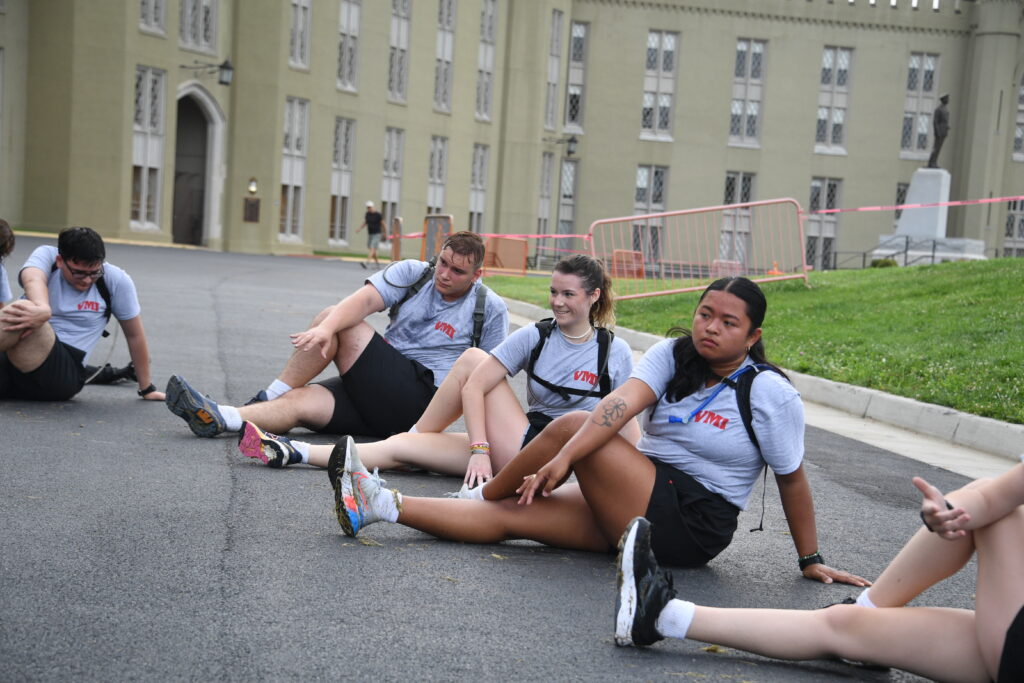
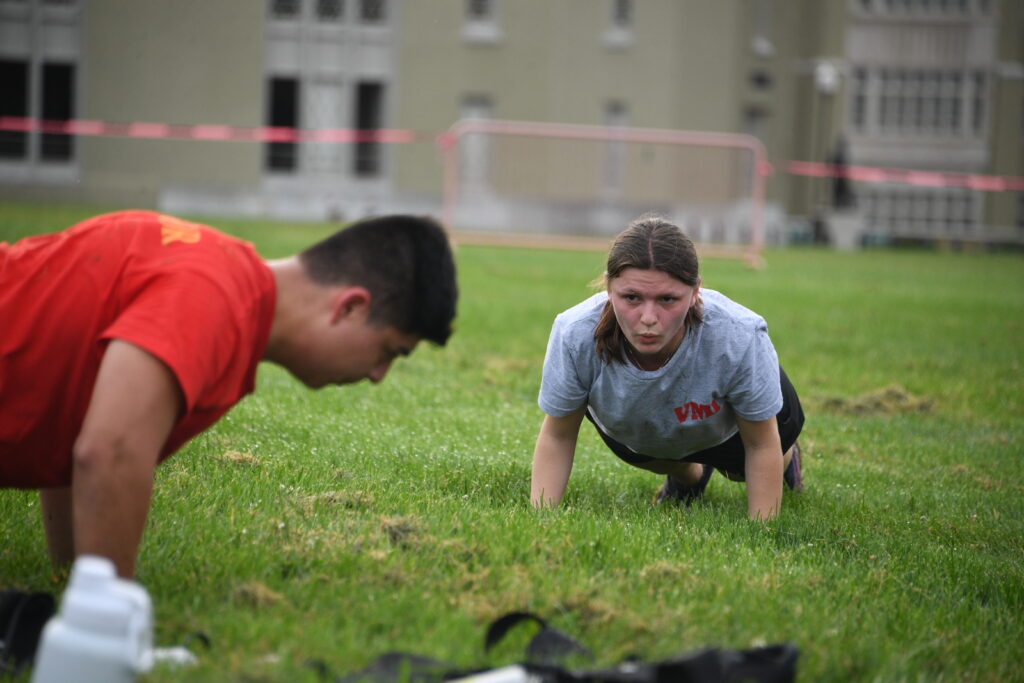
As the summer heats up, so does the intensity of physical training at Virginia Military Institute. July 10 marked the second day of morning physical training (PT) for Summer Transition Program (STP) participants, an essential element in preparing incoming rats for the challenges they will face during their first year at VMI.

STP participants are divided into eight ability groups based on their run times from an initial Army Physical Fitness Test (APFT), then engage in workouts guided by cadet counselors. The groups were strategically spread across different locations on post, including the Parade Ground, track, and North Post, to tackle a variety of circuits and runs.

In the coming weeks, they will rotate through each location to ensure a well-rounded training experience. Each week of the program is thoughtfully designed to provide two days of intense workouts, featuring fast-paced circuits and demanding calisthenics, and one day focused on endurance, with longer distance runs.

The goal is to replicate the physical demands and intensity that incoming rats will encounter during the Rat Line and the APFT — the Corps Physical Fitness Test.

They are learning how to pace themselves for longer runs while also honing their techniques and building strength for push-ups and sit-ups, which are essential components of the APFT. Additionally, they are developing speed endurance for the challenging two-mile run.

Beyond physical conditioning, the program offers valuable insights into the organization and implementation of a structured PT session, encompassing warm-up, main workout, and cool-down phases.

STP serves as a critical transition period for those who may be less physically fit entering VMI, allowing them to gradually build up their physical capabilities and adapt to the demands of the Rat Line. VMI provides a three-week “bridge” physical program that participants can continue independently between the end of STP and Matriculation Day.

This extended preparation period grants them a total of six additional weeks to fortify themselves physically before embarking on the Ratline. Capt. Katie Baur, an instructor in the Department of Human Performance and Wellness, shares that this program is extremely beneficial for incoming rats.

“There is nothing anyone can do to fully prepare for the VMI Rat Line, but this program gives incoming rats the lay of the land,” said Baur. “They have a chance to improve their fitness, build confidence and friendships, and a chance to form relationships with upper-class cadets who serve as their mentors.”

For the cadet counselors, leading the STP participants is not only an opportunity to guide younger students but also a chance to contribute to a program that emphasizes positivity and personal growth.

“For our counselors, it [STP] provides an opportunity to lead younger students in a program that is designed to be purely positive,” said Baur.

The group of counselors involved in this year’s STP has demonstrated exceptional dedication and leadership, paving the way for a successful transition for the incoming Rat Mass.

Preparing for life in and after the military: Katie Lloyd ’23

This article is part of The Next Step series. While the four years at VMI are designed for cadets to push themselves academically, physically, and mentally to tackle the demands of life at a premiere military college, they also prepare cadets for life after graduation. Whether that life be one in the military or one in the private sector, VMI faculty and staff provide guidance to cadets along their journeys. One department specifically dedicated to that endeavor of post-Institute success is the Office of Career Services. In The Next Step series, we sat down with cadets preparing to enter the workforce after graduation, as well as those still in the midst of their cadetship preparing for internships over the summer.

While many cadets enter VMI with the intent of commissioning into the armed forces, academic departments and the Office of Career Services are still vital to laying a path for success in the service as well as after.

For Katie Lloyd ’23, an international studies major from Caroline County, Virginia, commissioning into active duty with the U.S. Marine Corps was always the plan. But her time at VMI was crucial for expanding knowledge and skills and finding her specific area of interest.

“VMI introduced me to both intelligence and regional affairs, particularly in the Arctic. I was able to get my foot in the door with the Arctic in my capstone research. My academic department gave me the confidence to feel like I can apply to these jobs.”

Despite not entering the civilian workforce, Lloyd was still able to work with Career Services to build skills including navigating job applications, refreshing her resume, and networking and making important connections beyond the Institute.

“Career Services helped polish my accomplishments to present them to possible employers.”

When asked where she sees herself in ten years, Lloyd was hopeful to still be in the Marine Corps reserves, focused on the Arctic region. She also plans to work in intelligence as a civilian. She credits her father as her inspiration to embark on her career journey and believes that her experiences as a cadet will help in her career path and future job applications.

“I have tried to always take advantage of opportunities that VMI has given, and I think doing that has given me the edge. There are opportunities that VMI has that other schools simply can’t keep up with, and taking advantage of those opportunities is what sets a VMI graduate apart.”

-VMI-

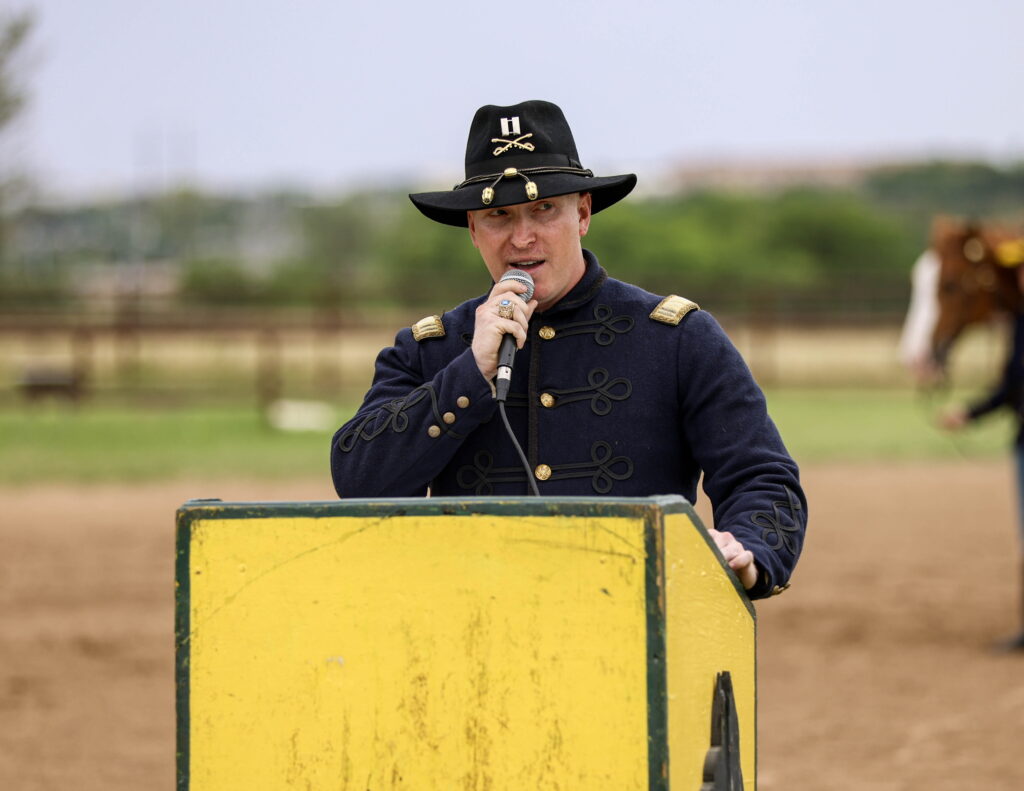
VMI Alumnus Has ‘Best Job Ever’ as Commander in the Cavalry

Capt. Michael Gates’ ’17 former Virginia Military Institute roommate refers to him as the modern-day Teddy Roosevelt. Gates said that was a bit of an exaggeration and joked he could never be at Teddy Roosevelt’s caliber.

Instead, he is the commander of the Horse Cavalry Detachment for the First Cavalry Division in Fort Cavazos, Texas, formerly Fort Hood. He took command of the division at the beginning of June. Prior to that, he was the commander of the horse detachment at the 11th Armored Cavalry Regiment in Fort Irwin, California; a similar role to what he does now, just about a quarter to a third of the size in terms of horses, manpower, and missions, he explained.

VMI alumnus part of the cavalry in the US Army. He says he has the best job ever.

“Being able to represent a piece of military history while you’re in active duty is an honor,” he said. “We get to choose our own team and choose the people who get to continue this, this tradition, this unbelievable tradition that’s just romanticized today, but we get to go live that, not just in day-to-day, but in military ceremonies.”

But how does one with no equestrian experience come to command a mounted cavalry unit?

“I really just stumbled upon this world,” he said.

Capt. Michael Gates’ ’17 the commander of the Horse Cavalry Detachment for the First Cavalry Division in Fort Cavazos, Texas, formerly Fort Hood.

While he was working with 1st Sgt. Chris Stemple in the same company as engineers, Stemple left to become the 1st Sgt. at the horse detachment in the 11th Armored Cavalry and turned to Gates to be a commander.

“I originally turned it down because I didn’t have any horsemanship experience or knowledge or anything,” he said. “And he was like, I just need a competent officer out here, I need a partner, I need somebody who I can rely on. I went out to the unit and I fell in love immediately. So I put my name in for the position.”

The next thing he knew he was given the position and heading out to California just as COVID-19 restrictions were subsiding. Even with his lack of horse experience, he said that, as an officer, he’s more focused on leading and those in that position tend to have less experience than the soldiers.

“I didn’t necessarily need equestrian experience. I needed to understand our mission set and be able to utilize my soldiers and noncommissioned officers in roles that would allow the unit to thrive,” he said.

VMI alumnus part of the cavalry in the US ArmyHe did receive training and won the intermediate level of the National Cavalry competition last year, taking first place in three events, second place in two events, and dominating the class. Events included historic cavalry tasks like mounted sabers, mounted pistols, military field jumping, and dressage.

“So, I’m getting there,” he said, modestly.

His unit is one of seven active duty Army units that work with horses, so it’s a very unique position — with less than 200 soldiers that do it, Gates shared.

“It is an extremely tight-knit community,” he said. “And all of them are hand selected to the teams. So as opposed to the rest of the Army where the team you’re dealt, is the team you got to war with. Out here we take only the best. You have to try out to be on the team. You can’t have any infractions while you’re on the team. It’s a higher level of commitment and discipline. These soldiers give up most of their weekends to go to our traveling events. We also get more face time than 99% of the military does with the public. So they have to be as professional as possible.”

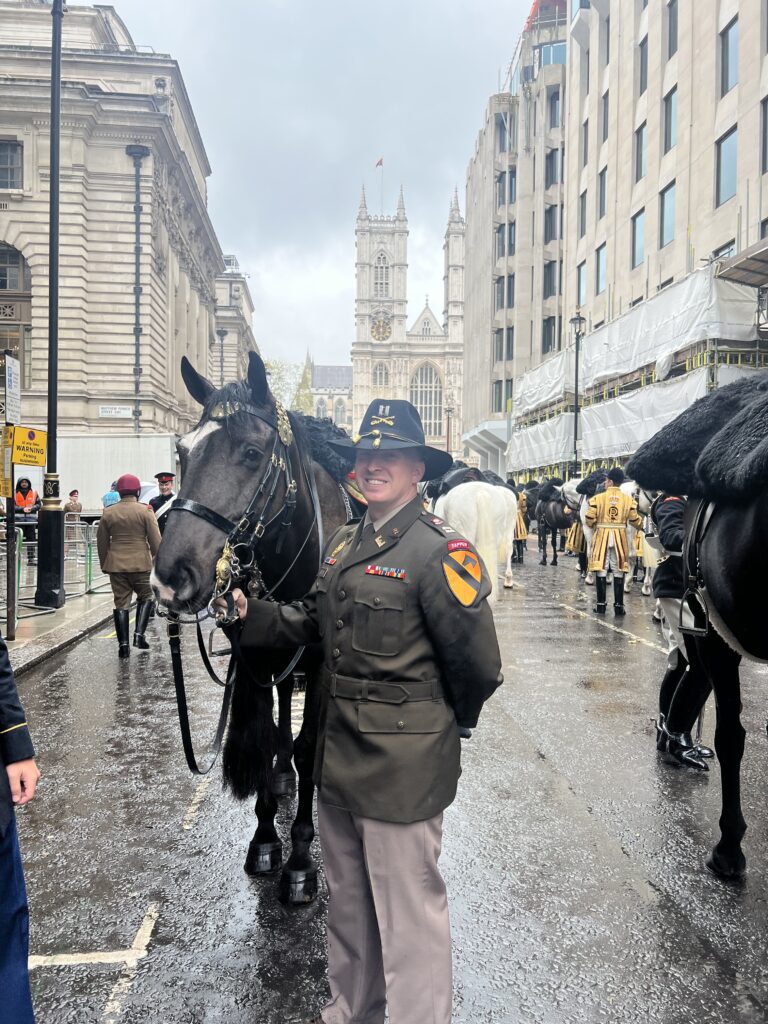
By far the coolest thing about his job so far was leading the envoy for the King of England’s coronation. Within two weeks of receiving his new post, he was asked to represent not only his unit but the United States Army and the cavalry to a foreign military unit. VMI alumnus part of the cavalry in the US Army.

Capt. Michael Gates’ ’17 the commander of the Horse Cavalry Detachment for the First Cavalry Division in Fort Cavazos, Texas, formerly Fort Hood.

“Yeah, of course, it’s in the job description, but the scale varies pretty wildly from local ceremonies to, I mean, that is probably one of the biggest international ceremonies that any of us will ever be able to see in person,” he said. “We were right there with the Household Cavalry mounted regiment, the King’s guard as they were preparing to escort the King to Westminster Abbey.”

Gates said he and others were staged ahead of time and got to watch the King get escorted.

“We were maybe 100 yards from him. It was unbelievable,” he said. “It was so surreal … almost inception-like, dream state. Being there, living in the moment.”

Gates never held rank at VMI but he thinks that benefited him.

“I think it gave me the perspective similar to my soldiers, and it helps me be relatable and be empathetic to what a soldier is going through just from day to day, whether it’s barracks life or standing in formation or you know, waiting for orders or not being in the decision-making process,” he said. “You don’t realize how little gets put out as a leader until you have the perspective of a soldier. And that was incredibly important to my development as a leader. So the information dissemination, understanding motivations of a soldier and priority sets; they helped me in my decision making process as a leader today.”

When in Rome: Excursions for Engineering Summer Study Abroad

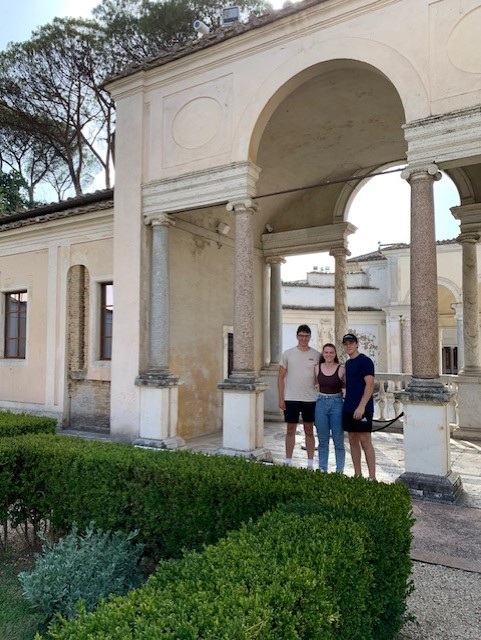
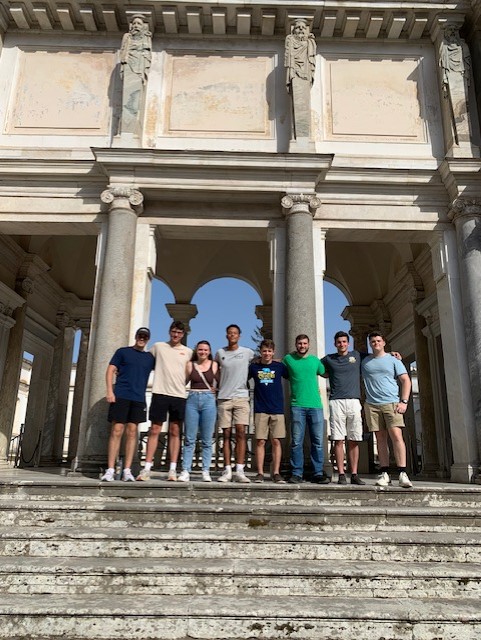
It’s been a busy July already for cadets participating in the VMI Engineering Summer Study Abroad program in Rome. In addition to their coursework, cadets enjoy visits to cultural sites, local companies, and international organizations, extending their learning beyond the traditional classroom. The program was designed by Col. Jon-Michael Hardin, professor and head of the Department of Mechanical Engineering, with the assistance of Patricia Hardin, assistant director of the Office of Global Education.

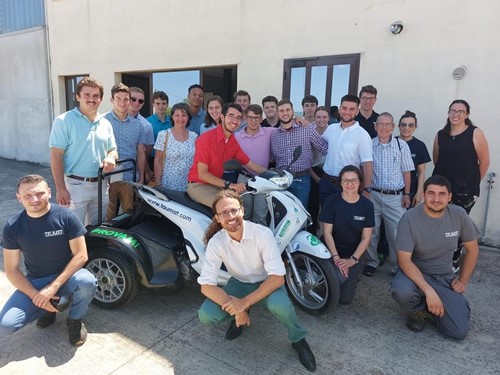
One such excursion was to TAUMAT, a company which specializes in the manufacture of high precision mechanical components. TAUMAT is a family-owned business that was founded in 1987 in Atessa, Abruzzo, Italy. During the visit, cadets learned about the engineering and international business aspects of this small family-owned business and toured the company’s manufacturing facility.

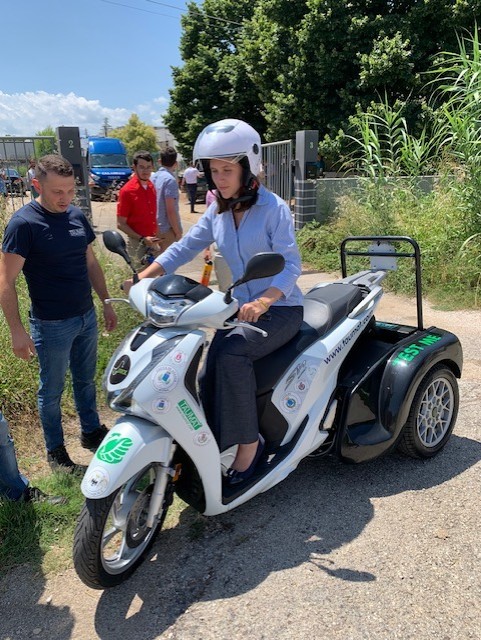
A special treat for cadets was learning about the company’s prototype electric three-wheel vehicle, called the Duck, a vehicle that uses motorcycle parts augmented by an electrical and drive-train component box invented by TAUMAT. A highlight of the visit was cadets being allowed to take the Duck for a spin.

Cadets and instructors on prototype eclectic three-wheel vehicle.

From left to right: Victoria Gurgos ‘25, mechanical engineering major, COL Hardin, and Cadet Ty Swaim ‘24, economics and business major also participating in the program, testing and posing with the Duck. Photos courtesy of Patricia Hardin.

Another trip for the group was to the NATO Defense College (NDC), the Alliance’s premier academic institution. The idea of NDC originated from General Dwight D. Eisenhower, who identified the need for a new international institution with a unique educational mission, making it a perfect location for cadets from VMI, which has its own unique approach to education.

Cadets were able to familiarize themselves with the NDC’s function and activities. The group was welcomed by U.S. Senior National Representative and Faculty Advisor, Colonel Shawn Leonard. Col. Leonard then gave a briefing about the NDC’s history, structure, and activities, followed by an engaging Q&A session. The visit concluded with a tour around the college’s premises.

Cadets and NDC staff outside building and at conference table.

From Left to Right: Cadets with Col. Shawn Leonard outside the college, posing outside by flags, and attending the NDC briefing delivered by Col. Leonard. Photos courtesy of the NATO Defense College (NDC).

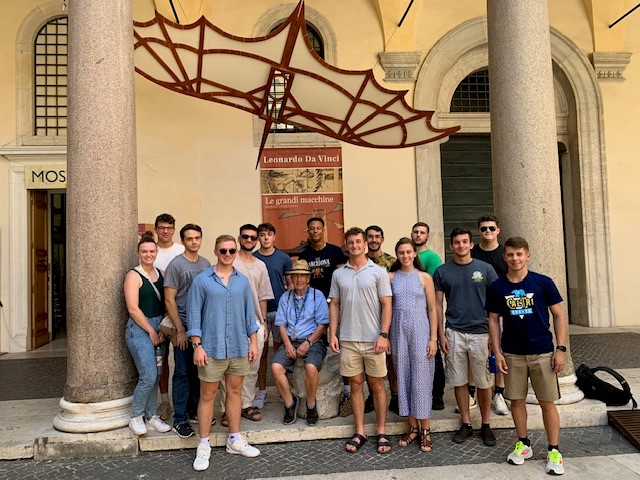
Wrapping up the week, cadets visited the Leonardo da Vinci Museum in Rome as part of their ME 360X Global Engineering course.

VMI cadets with various artifacts at the DaVinci museum.

From left to right: Hampton Wohlford ’26 reading a descriptive plaque, group photo outside the museum, and Louis Wiltenmuth ‘25 testing out interactive model of a DaVinci invention. Photos courtesy of Patricia Hardin.

Learn more about the program in Rome and additional study abroad opportunities at VMI by visiting the Office of Global Education.

SURI: Two VMI Cadets Assist Local United Way

To help ensure the United Way of Rockbridge, Lexington, and Buena Vista (UWR) maintains its resources in a slow-moving economy, its board of directors came to Virginia Military Institute for assistance from cadets. Brijesh Regeti ’24, a biology major, and Talli Tarring ’24, a physics major, worked together on their five-week Summer Undergraduate Research Institute (SURI) project titled, “Data Analysis of United Way Donors” to research ways the organization can attract new donors.

The UWR is a nonprofit that has a robust mission in the community. According to the mission statement, the UWR “provides a leadership role in improving the quality of life of the people in the cities, towns, and unincorporated areas of Rockbridge County by assessing needs, raising and allocating funds for charitable purposes, and ensuring the appropriate use of those resources. These purposes should ensure equity as to education, health, and financial well-being without regard to race, ethnicity, or gender in furtherance of achieving an inclusive community in which there is dignity and equal opportunity for all.”

Regeti and Tarring determined that as older and more generous long-term benefactors pass away, it takes a rigorous and consistent influx of new contributors to maintain the capital assets needed for the UWR to carry on their work. “We found that there was a spike in 2017 of 27 new supporters. Since then, there is an average of 15 to 18 new donors annually,” said Regeti.

Tarring added that another issue they discovered that would aid in increasing donorship is the use of email. “By using data analysis, we found that if the UWR faithfully collected email addresses from all interested subscribers, and use those addresses to disseminate information regularly, that their donations should increase substantially,” she said.

The cadets also created a four-tiered ranking system to encourage patrons to aspire for higher contribution goals.

Maj. Blain Patterson, assistant professor in applied mathematics and project mentor to the two cadets, said, “Tarring and Regeti worked diligently to provide the United Way with insight into their donation revenue. The results of their research may provide the United Way with information to increase donations for years to come.” 

Regeti is from Warrenton, Virginia, where he graduated from Fauquier High School. He is the son of Amy and Srinivasa Regeti.

Tarring is from Warrenton, Virginia, where she graduated from Kettle Run High School. Her parents are Carla Bennett and Tracy Tarring.

SURI: Transformational Leadership Among VMI Cadets and the Psychological Motivation Link

Leadership is one of the foundations of Virginia Military Institute. The concept is something Anthony Cruz Fernandez-Grimes ’25 is exploring for his summer research project.

The Summer Undergraduate Research Institute (SURI) is a program offered by the VMI Center for Undergraduate Research (VCUR), which provides cadets with a unique opportunity to delve into high-level research that relates to their degree path. It consists of cadet-led research under the direction of a faculty advisor.

Fernandez-Grimes’ topic is entitled “The Role of Psychological Capital and Motivation to Lead in Predicting Transformational Leadership Among VMI Cadets.”A student with a professor doing research at VMI, a military college in Virginia

“My SURI project is about understanding what elements make up great leadership,” the psychology major said. “Great leadership gets the goal at hand completed and unites the followers together making it their intrinsic goal rather than completing a task for extrinsic reasons. This is called transformational leadership.”

His project looks to find if a leader has a positive outlook on themselves, psychological capital, and if they want to lead, have the motivation to lead, and the effects if they become transformational leaders. Originating from the leadership scholar James MacGregor Burns, transformational leadership embraces an inspiring vision and encourages followers to engage in positive organizational change, according to Fernandez-Grimes’ advisor Maj. Michael LaRocca.

According to the leadership scholars Bernard Bass and Bruce Avolio, transformational leadership consists of charisma, individualized consideration, intellectual stimulation, and inspirational motivation. Fernandez-Grimes has explored all of these factors in his research. This leadership practice generates more follower satisfaction and perceived leadership effectiveness.

“Whether or not they are considered transformational leaders is graded by their own followers,” Fernandez-Grimes said. “While their psychological capital and motivation to lead are graded by the leaders themselves. This should help in reducing any bias in the leaders considering themselves to be transformational or not.”

According to the leadership researchers Fred Luthans and Avolio, psychological capital can be described by confidence, optimism, hope, and resilience. It’s known to have a positive impact on academic performance, job satisfaction, and job performance, Fernandez-Grimes’ research said. But, overall, there’s little research on how it is correlated to transformational leadership, especially in environments like military institutions. That’s where Fernandez-Grimes comes in.

LaRocca, assistant professor of psychology at VMI, said during his initial meetings with Fernandez-Grimes he expressed interest in learning more about transformational leadership. With his own collection of cadet leadership data, LaRocca encouraged Fernandez-Grimes to explore psychological predictors of transformational leadership.

“When he works on his research after a meeting with me, I’ve found I can be hands-off because he does a great job in seeing his work to completion,” LaRocca said.

Fernandez-Grimes and LaRocca met for an hour daily during the Summer Session I.

Fernandez-Grimes chose the topic at hand to gain research experience to propel his goal of becoming a clinical psychologist.

A student with a professor doing research at VMI, a military college in Virginia“The idea of creating a better understanding of leadership could help many systems in place run smoother. It could validate VMI’s leadership system even more,” he said. “This topic will help further prove the excellent quality of leadership VMI produces and help other cadets and my understanding of how to lead accordingly in the future of our cadetship.”

He hopes to gain a better understanding of research within his field while expanding others’ understanding of the benefits of VMI leadership training.

According to his research, there’s overwhelming evidence that transformational leadership is linked with positive organizational outcomes, but more research is needed on the psychological motives of aspiring transformational leaders in leadership development institutions.

His research will test the correlation between psychological capital and transformational leadership, as well as between the motivation to lead and transformational leadership. He will also explore the motivation to lead as a potential mediator between psychological capital and transformational leadership. He will be using and analyzing data collected from VMI cadet rankers and cadet followers on their experiences and thoughts on their motivation to lead, psychological capital, and other transformational leadership, with the results hoping to advance understanding of transformational leadership and VMI’s leadership production results.

“In my opinion, leadership is always a hot topic,” LaRocca said. “Individuals and organizations are often interested in how to lead effectively, and this especially applies to VMI, which is often described as a leadership laboratory. By understanding how leadership motivation and psychological capital are associated with transformational leadership, we have a better idea of the psychological characteristics of effective leaders. This is especially important given the high volatility and uncertainty faced by many organizations today.”

Working with Fernandez-Grimes, LaRocca said he exhibited a combination of curiosity and hard work. With that, he knew he would excel in the SURI program.

“Anthony works with much energy and enthusiasm because he is naturally interested in the mind, brain, and behavior, including their role in interpersonal effectiveness,” LaRocca said. “He has asked lots of questions and talked about his ideas on the psychological makeup of inspirational leadership. He has indicated that he would like to continue psychology and leadership research with me after SURI.”

The SURI program allows cadets to go beyond the classroom and explore a topic in great depth, during which they gain research, analytic, and writing skills, LaRocca said. The experience allows cadets and faculty at VMI to build valuable relationships.

“The SURI program allows cadets, like me, [who are] interested in proceeding to graduate school to gain research experience,” Fernandez-Grimes said. “It also allows all cadets to produce new findings of what they want to know themselves instead of just learning about it on a daily basis.”

SURI: Exploring the Effects of Nicotine on Antidepressants in Betta Fish

Ellie Pickford ’24 stood before a small glass tank, peering intently at the colorful Betta fish swimming within. Her summer research project was well underway, and she was determined to unlock the mysteries behind the interactions between nicotine and antidepressants.

Pickford, an ambitious cadet at Virginia Military Institute, had chosen this field of research to fuel her passion for psychiatry and neuroscience. She believed that understanding the effects of nicotine and antidepressants on the brain could have a profound impact on the treatment of mood disorders.A student conducting research over the summer at VMI, a military college in Virginia.

With a clear vision of her future as both an M.D. and a Ph.D. holder, Pickford knew that the Summer Undergraduate Research Institute (SURI) at VMI was a valuable opportunity. It allowed her to work closely with her professors, building relationships that would guide her future endeavors.

“I am forming much stronger relationships with my professors than I could possibly during the regular school year,” said Pickford. “I am able to perform fully funded research that directly relates to — and hopefully helps me reach — my future educational and career goals.”

How fish contribute to psychopharmacology

Her project aims to shed light on the interactions between nicotine and commonly prescribed antidepressants, such as fluoxetine, or Prozac, and the effects on individuals who use both substances.

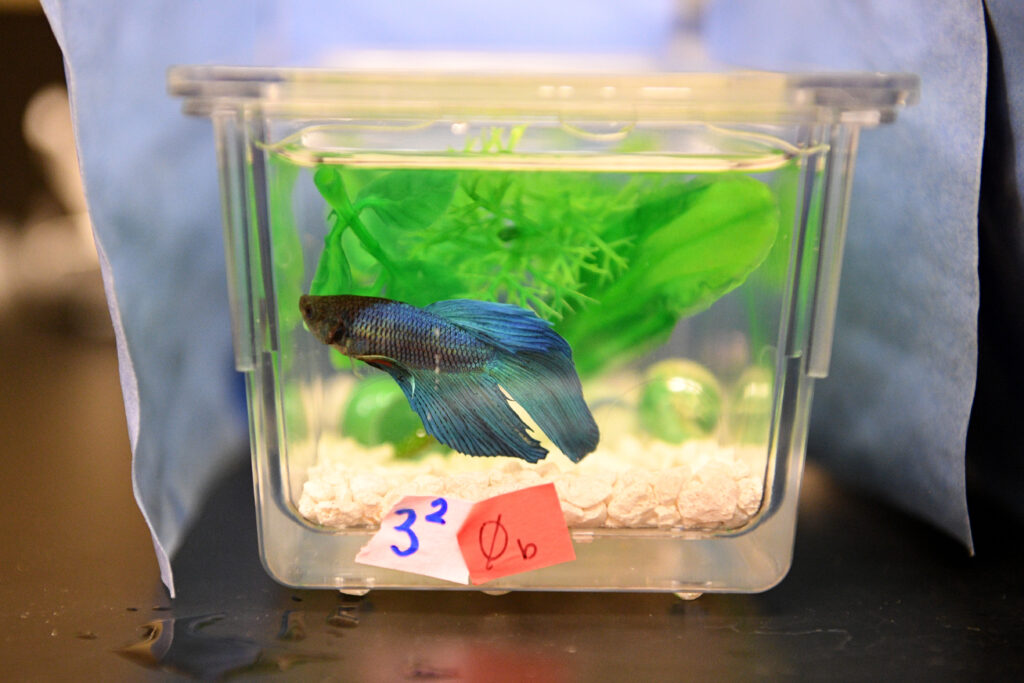
Using Betta fish as a model organism, Pickford is investigating the impact of nicotine on aggression levels and brain chemistry, ultimately hoping to contribute to a better understanding of psychopharmacology.

The statistics Pickford cites are staggering — 80% of adult smokers started during adolescence, and adolescents who smoke daily have a 70% occurrence of psychiatric disorders, with higher rates of comorbidity in adulthood.

Armed with this knowledge, Pickford recognizes the urgency of understanding the effects of nicotine in conjunction with antidepressant use. Her research aims to contribute to the development of more effective treatment strategies and interventions for individuals struggling with mental health disorders.

A student conducting research over the summer at VMI, a military college in Virginia.The SURI program, offered by the VMI Center for Undergraduate Research (VCUR), provided her with a fully funded research experience that directly related to her educational and career goals.

The “s” in SURI stands for Summer, but Pickford’s research began long before her program.

A beta fish in a small aquarium container.

“I began dedicating time to this project before the academic year ended because the first group of 20 fish arrived in the lab,” she said. “Since then, I have been in the lab every single day — checking on the fish and feeding them.”

Immersed in the labs of Maj. Molly J. Kent and Maj. Mary Beth Manjerovic, both assistant professors in the Department of Biology, Pickford not only worked on her project but assisted with other ongoing research. This exposure deepened her understanding of biology and expanded her knowledge of scientific inquiry.

Scientific inquiry extends into adulting

As the days turned into weeks, Pickford’s dedication to her research grew stronger. The structured life of barracks was replaced by the independent existence of an adult.

“I am learning how to live as an independent adult – managing finances, my own time, groceries, and everything else that comes with living in the ‘real world.’”

For Pickford, collaborating with like-minded individuals fueled her passion for research and scientific discovery. She knew that these relationships and the research experience she gained would be invaluable for her resume and future higher education applications.

“I hope to expand my relationships with the various mentors in the biology department … with professors, as well as fellow cadets,” said Pickford.

With the end of Summer Session I approaching, Pickford’s focus has intensified. She aimed to perfect her research and meticulously analyze the results well after the SURI program concluded. The data she’s gathered will form the foundation for her honors week thesis and senior capstone, fulfilling the requirements of the Institute Honor Scholars Program and her biology degree.A student conducting research over the summer at VMI, a military college in Virginia.

Through her dedication, Pickford was not only gaining insights into the effects of nicotine and antidepressants but also solidifying her path toward becoming a compassionate psychiatrist and a knowledgeable neuroscientist.

She dreams of applying her research findings to help her future patients — by providing them with the best possible care.

As the Betta fish continue to swim in their tanks, unaware of the significant role they played in advancing medical knowledge, Pickford remained steadfast in her pursuit of understanding the complexities of the human brain.

The SURI program opened many doors for Pickford — allowing her to explore her passions, grow as a researcher, and make a lasting impact on the world of psychopharmacology.