Post View Unavailable »
New Website Launched »

The Vanguard — Matthew Atienza ’26

The Vanguard series highlights cadets of Virginia Military Institute who exemplify promise, perseverance, and the true spirit of leadership. While they may not be the top-ranking students or those in prestigious positions, these individuals’ dedication, resilience, and growth embody the essence of being a VMI cadet. By sharing their stories, including the challenges they’ve faced and overcome, we shine a spotlight on the diverse paths to success at the Institute, proving that leadership and excellence come in many forms.  

Coming to Virginia Military Institute wasn’t an easy adjustment for Matthew Atienza ’26. He was across the country, in an unfamiliar place, and unsure of it all.  

His original intent was to commission into the Air Force and be an international studies major. But that shifted when Atienza realized he wanted to be a teacher. It took one class during the Summer Transition Program (STP) to win him over and switch to be an English major.

“I loved what we learned. I loved learning about rhetoric in that class,” he explained. “And as I was going through the international studies major, I realized I didn’t really enjoy what I was doing I looked back through my post view, I have an A in every single English class I’ve ever taken. So why not do something I’m not only good at, but passionate about?” 

He was inspired by George Abry, instructor in the Department of English, Rhetoric, and Humanistic Studies, during that STP session. He credits Abry to his switch from international studies to English. Abry said Atienza has a quiet confidence about him, without the need for fanfare or recognition. 

“One thing I remember most about Matthew was the work he put into his essays,” Abry said. “If I recall, at times he struggled with his own writing structurally and at the sentence level, which means he worked hard to improve through conferencing, peer review, and revision. Ultimately, I think his own struggles with writing will make him a stronger teacher.” 

Atienza is the type of person to get things done early. He wants to finish a task the moment it’s assigned.  

“As a student, I always try to get on top of everything as quickly as I possibly can,” he said.  

He feels like he’s evolved, not only as a student, but also as a cadet.  

“I came here when I was 17 years old, skinny, unathletic, pretty lazy, grades were terrible, but I had a lot of good people behind me who supported me,” he admitted. “I think as a rat or as a 4th classman, I didn’t feel like I deserved to be a cadet.” 

Instead of having doubts overtake him, he was able to pick himself up and take control of his own life. By transferring out of Air Force ROTC and changing his major, he made huge life decisions. 
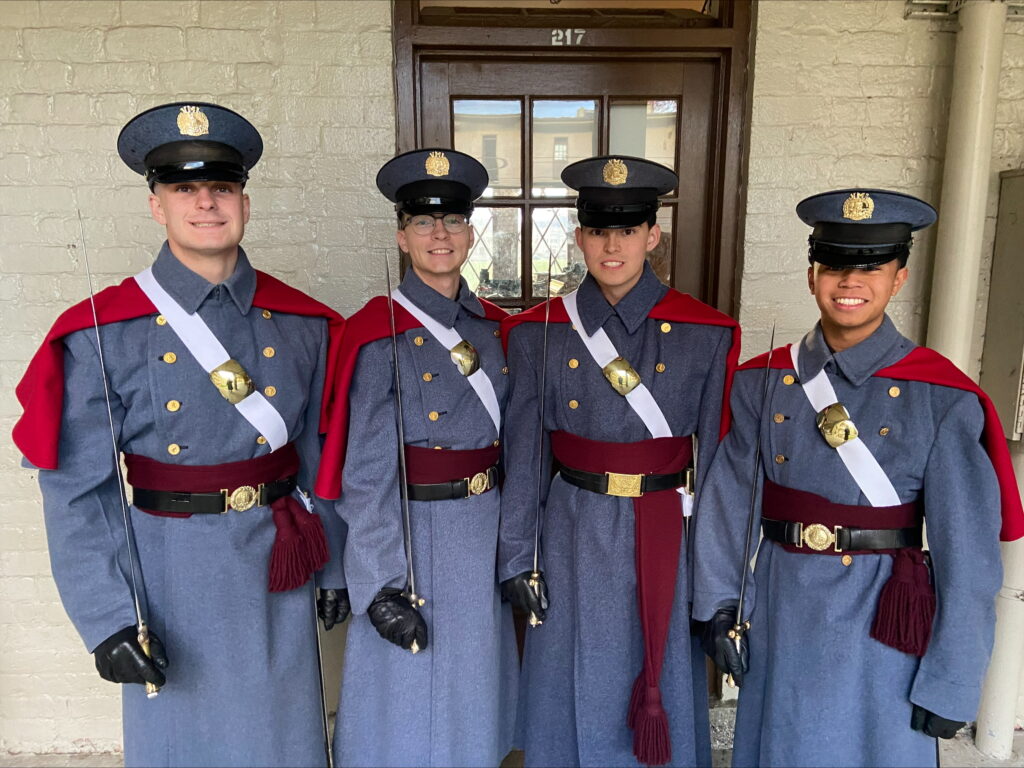
Matthew Atienza with his brother rats at Virginia Military Institute in barracks.

“I really put my career in my own hands. I’m on the Dean’s List now,” he said. “I think as a cadet, I have been very resilient. I faced a lot of hardships here. I am from across the country, so it’s lots of financial challenges and managing relationships from so far away.” 

It took some time, but Atienza can now reflect on his journey of becoming physically and mentally stronger. He remembers from his time on the Rat Line they were learning a drill maneuver called inspection arms, where they’d have to pull the bolt back on a rifle.  

“During that time, I was super weak, and I couldn’t do it. I was one of the only people that couldn’t do it,” he explained. “I remember my first sergeant at the end of training was like, ‘you either need to cut your bolt so it’s easier or get stronger.’” 

Atienza said for about two to three weeks, he practiced. He got stronger. And made sure it was perfect.  

“I remember one day we were supposed to drill outside, but it started raining, and we just did inspection arms for an hour straight, and I executed it perfectly every single time without messing up,” he stated. “I didn’t get any acknowledgement from it, but I was really proud of myself in that moment. And whenever I think I can’t do something, or I’m not as strong enough, or I don’t have the willpower to do this. I remember back when I was only 17 years old here. It seems so small, but it’s very significant.” 

He also had to learn how to live far away from his family. Originally from California’s Bay Area, he said it was a bit of a culture shock when he came to Lexington.  

“I lived in a place with different beliefs, different ideologies, and I guess more diverse,” he said. “I had a really rough time.” 

During his rat year, he said everything kind of fell apart. Two of his neighbors in barracks, who were some of his closest friends, ended up leaving VMI. Plus, all his roommates he had his rat year all left the school. 

“I was the only person left,” he said.  

The one thing that helped was getting rank — he served as part of the color guard. He said it allowed him to connect with more people. 

He also had some humbling moments at VMI. From what was easy in high school for him was shockingly challenging at the Institute.  

“There are levels to education that I was not aware of, and I struggled greatly my rat year to 3rd Class year. My GPA was below 2.5, my grades were bad. But I learned how to not procrastinate. I taught myself how to study. I think most importantly, I taught myself how to ask for help. That’s something I never did. It’s something that I was always scared to do.” 

Last summer, Atienza worked at Breakthrough Silicon Valley, a nonprofit focused on education equity. There he taught students from lower-income homes and immigrant backgrounds to close the education gap.  
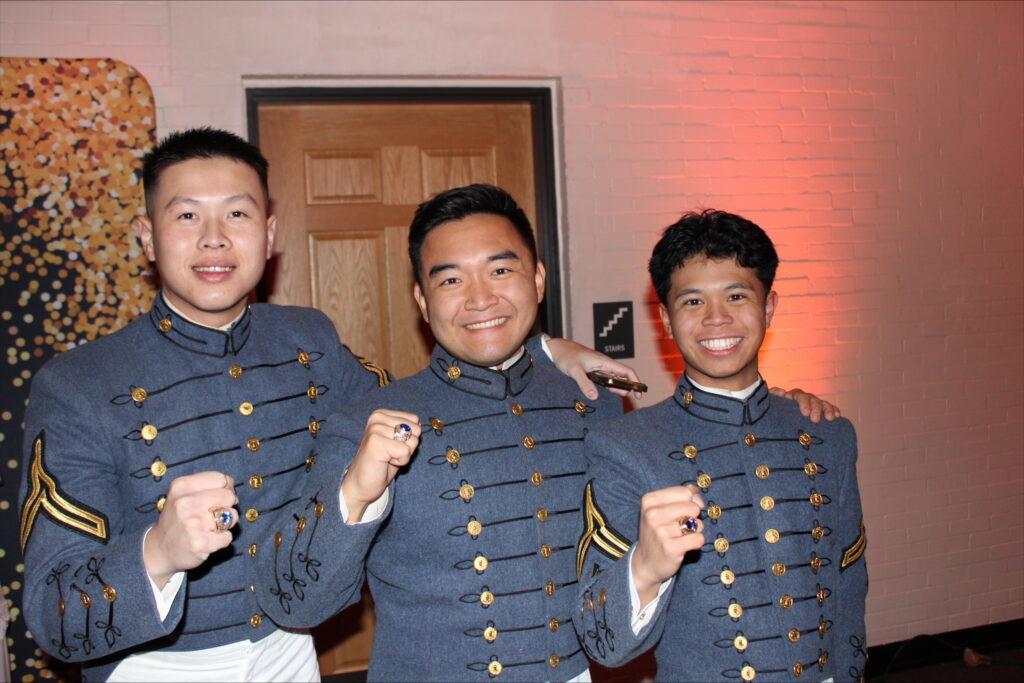
Matthew Atienza with his brother rats at Virginia Military Institute.

“I was a 9th grade teacher and taught two English classes and one public speaking class,” he explained. “Working hands-on with my students opened my eyes to bigger issues in marginalized communities and gave me a new sense of duty. Working at Breakthrough has inspired me to not only continue a career in education, but to also be an active member in my community as an advocate for education equity.” 

At the end of his internship, he received the Americorps Segal Education Award, a scholarship of about $1,500. 

Col. Emily Miller, Professor of English and English, Rhetoric, and Humanistic Studies department head, described Atienza as a conscientious, thoughtful, and reflective student. She said he contributes to class discussion with excellent comments and questions. His writing is strong. Miller cites that his essays explore works of literature in their cultural context. 

“He brings an intellectual curiosity to his classes that makes him a pleasure to have in class. He has a strong commitment to education and a passion to serve others,” she said. “He is an attentive listener, reflective reader, and a mature and independent thinker. He is humble but confident. He also has a great sense of humor.” 

As a 1st Class cadet, Atienza’s advice is to not be afraid of asking for help — or asking anything in general. 

“Don’t be afraid to reach out, in the sense of asking help from your professors. Or reaching out to your brother rat that lives next door to become friends,” he said.  
Detachment 880’s Fall FTX: A Weekend of Camaraderie

Every fall semester, VMI’s AFRTOC cadets gather for their Fall Field Training Exercise (FTX), a weekend designed not just to test their skills but to forge lasting bonds and build the kind of leadership that can only come from a shared challenge. This year’s FTX was no exception, blending rigorous training with moments of teamwork, reflection, and even a little fun.

Friday: Settling In

Excitement was high as cadets arrived on Friday afternoon. Once everyone was settled, the detachment gathered in Mallory Lecture Hall for a briefing to go over the plans for the next few days. The air buzzed with anticipation and nerves as C/Maj Boone explained what lay ahead. After, cadets split into groups for introductory rotations; some tackled the obstacle course, others tried their hand at jiu-jitsu. These early events set the stage for teamwork and mutual support, breaking the ice and building trust among flights.

Saturday: Pushing Limits

Saturday dawned early, with cadets forming up on the parade deck in physical training (PT) gear for an intense flight run. The morning chill was quickly forgotten as flights jogged together, carrying rifles and weighted items, encouraging one another throughout the effort.

After breakfast, the real work began. Cadets rotated through stations across campus, each offering a taste of military life: navigating unfamiliar terrain with land navigation, practicing small unit tactics, learning how to treat injuries under pressure with tactical combat casualty care(TCCC), and clearing rooms in simulated combat scenarios. At every turn, the professional officer training course (POC) cadre challenged Basic Cadet Leaders (BCL) and General Military Course(GMC) cadets to think critically, communicate clearly, and rely on their teammates.

Meals were more than just a chance to refuel; they were opportunities to swap stories, share advice, and laugh about the day’s mishaps. By late afternoon, cadets geared up for a spirited round of room-clearing exercises using Nerf guns, with upperclassmen playing the role of “the enemy.” The laughter and adrenaline underscored the importance of quick thinking and adaptability.

As evening fell, everyone regrouped for “Hot Seats,” a candid debrief where cadets reflected on what went well and where they could improve. It was a moment of honesty and growth, capped off by a well-earned dinner and some much-needed rest.

Sunday: Finishing Strong

Sunday offered a change of pace, with optional religious services and specialized workshops for those interested in pilot careers. The morning activities included boxing and aquatic training led by Cadet Webb. These invigorating yet challenging activities pushed cadets out of their comfort zones and taught new skills in a supportive environment.

After cleaning up and sharing one last meal, cadets headed to Kilbourne classrooms for advanced leadership projects. Here, they practiced room-clearing techniques and learned the value of clear communication and decisive action. The weekend wrapped up with final remarks on the Parade Deck, a chance to celebrate successes, acknowledge challenges, and look forward to future opportunities.

By the end of the FTX, tired smiles and high-fives told the story: this wasn’t just a weekend of drills and checklists. It was a time for cadets to push themselves, lean on each other, and discover what it means to lead. Whether mastering a new skill, overcoming a tough moment, or simply sharing a meal, every experience contributed to the growth of these future Air Force officers. Detachment 880’s Fall FTX remains a highlight of the year, a tradition that shapes not just better cadets, but better citizens of the future.

Behind the Balance: Barrett Callejo ’27 — Keydet Women’s Soccer

Virginia Military Institute’s cadet-athletes have to juggle cadet life, heavy academic course loads, and their NCAA Division I sport. Committed to both academic and athletic pursuits, balancing their rigorous schedule in both sports and school requires a certain level of commitment and discipline. Behind the Balance is a series that focuses on those cadet-athletes and how they handle the hurdles of the day-to-day. 

When Barrett Callejo ’27 arrived for her brother’s matriculation at Virginia Military Institute several years ago, she was still in high school. But the cadets asked her upon arrival if she had a dyke, or senior mentor. Callejo said she was taken aback, and explained it wasn’t her that was matriculating, but instead her brother.  

That moment stuck with her, along with how welcoming and excited the cadets were. “There were these strong, independent women. They were coming up to me and super excited that another female was trying to come to VMI. To me, that was cool seeing that in person,” she explained. 

She was then inspired when she was recruited for soccer to come to VMI to be that example. 

“Being on the soccer team and meeting everybody, it has pushed me to emulate what those other strong, independent women have done as well,” she said.  

Callejo knew she wanted to attend a military college, but it wasn’t until she had a visit with the soccer team that it solidified her decision. 

“The thing that really stuck out the most about VMI, overall, that led me to coming to this team, was their culture on the team,” she admitted. “When I was a recruit and I came in, I remember the team being so incredibly welcoming to me. Even though I wasn’t part of the team yet, they still treated me like I was one of them already, and that was really special to me. I already felt like I was a part of that family.” 

As her time continues at VMI, so does her growth in duties. Shouldering more responsibility, Callejo said it’s been rewarding. She currently serves as part of cadre, specifically a guide sergeant with Foxtrot Company, where she serves as a mentor to those in her company. 

“Being an upperclassman, you take on a lot more responsibilities,” she said. “You look up to all those upperclassmen and all those independent women, but now you are one of them. You’re going to be that person that the freshmen can look up to, whether it be on the team or even up on the hill, because I’m a part of the cadre team. I have a couple girls in my company, and I’m hoping to be a role model for them as well.” 

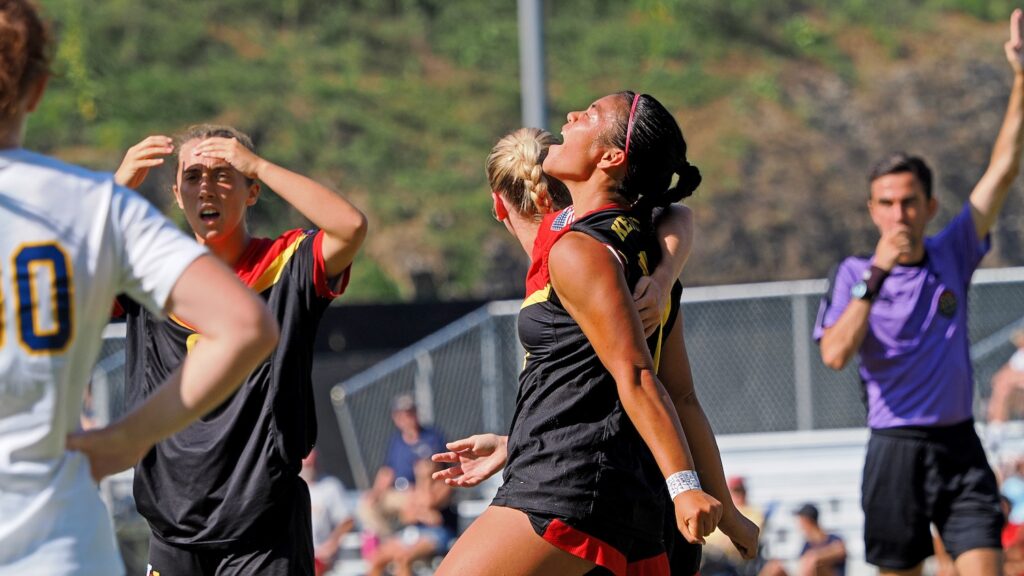
Barrett Callejo rejoicing on the soccer field while playing for Virginia Military Institute.
VMI’s women’s soccer team hosts Emory & Henry University at Patchin Field in Lexington, VA August 24, 2024. First half, VMI up 1-0. (Randall K. Wolf/VMI)

Cadet-athletes at VMI not only have their responsibilities with their selected sport but cadet duties on top of that. Cadets are also required to take physical fitness classes twice a week, participate in ROTC all four years, prepare for room and uniform inspections, practice for parade, guard duty, and more. 

Last year, Callejo served as a corporal on cadre. Serving as a corporal, she found she had a lot of influence on those below her, allowing her to lead while she was being led. She found another female guide sergeant while she was serving as a corporal, who was a big influence on her to continue being on cadre.  

“When you’re a corporal as a 3rd Class cadet, you have a lot of influence upon the rats just because you’re with them so much as a corporal,” she said. 

Having a packed day, Callejo, a biology major, has had to prioritize a couple things this year. With her role on cadre, being on the soccer team, keeping up with athletics, and more, it caused her to drop a class from 19 credit hours to 16 credit hours — primarily because she will be studying for the MCAT (Medical College Admission Test) this semester.  

“I just kept putting a lot of things onto my plate, plus being in season and the traveling,” she explained.  

The way she handles it is by writing everything down at the beginning of the week. Her Sundays consist of coming up with a game plan for her week and how she will tackle it. Whenever she gets overwhelmed, she goes for a run or hangs out with her teammates or friends.  

“Everybody on the team is one of my closest friends,” she commented. “I never thought I would make friends this tight. I’m closer with all of these girls I’ve known for three years now than I have other people that I’ve known for my entire life. But it’s not only just a team. I have some friends that I’ve met just being a cadet here, and they’re my closest friends.” 

She’s not only created bonds with her peers, but also with her professors.  

“Having professors on your side and having good relationships with professors has really helped me and has given me a lot of cool opportunities and positions at school as well,” she said.  

“I’ve had some good bonds with a lot of the professors in the chemistry and biology departments, and they’ve asked me for the past two years to help tutor for their classes. That not only helps the underclassmen who I tutor, but also, it’s helped me personally to go over all the basic stuff.” 

Those opportunities include being part of Tri Beta, a biology honor society and working on Summer Undergraduate Research Institute projects with the potential of being published. 

Her piece of advice: don’t study in barracks, there’s too much distraction. 

“I think studying is the best way to escape from all of the hectic stuff that happens up on the hill,” she said. 

Behind the Balance: Ben Hagerich ’26 — Keydet Cross Country

Virginia Military Institute’s cadet-athletes have to juggle cadet life, heavy academic course loads, and their NCAA Division I sport. Committed to both academic and athletic pursuits, balancing their rigorous schedule in both sports and school requires a certain level of commitment and discipline. Behind the Balance is a series that focuses on those cadet-athletes and how they handle the hurdles of the day-to-day. 

Prestigious people attend Virginia Military Institute, claims Ben Hagerich ’26 — and he was determined to be one of them. That drive, along with the chance to run cross country and track, drew him to the Institute. 

After being offered a scholarship, the computer science major attended an official visit and got to stay in barracks. He said it was an exciting night and got to see a lot of the inner workings of VMI. 

Although coming in as a rat, he said his biggest critic was himself. He wasn’t hitting the times he thought he would while running. He said it was challenging, physically and mentally.  

“As a rat I was, I was probably pretty scared to do a lot of things, whereas now there’s like no cowardice behind anything,” Hagerich admitted. “I would beat myself up a lot as a rat because I wasn’t performing the way I wanted to. It’s hard to expect yourself to do good. Something that’s changed is how I look at performance going to VMI. I’m going have to go through some tough stuff, so you have to be able to balance that with also being able to be an athlete.” 

Cadet-athletes at VMI not only have their responsibilities with their selected sport but cadet duties on top of that. Cadets are also required to take physical fitness classes twice a week, participate in ROTC all four years, prepare for room and uniform inspections, practice for parade, guard duty, and more. 

On top of his responsibilities with athletics, he is also the cadet in charge for the VMI Programming Club and a cyber captain.  

“The number one thing for me when it comes to balancing all that is probably that I’m passionate about all of them, so I really enjoy them,” he explained. “It allows me to sort of cultivate my own schedule. I love doing all these things. I know programming club is always on Wednesday, so I’ll know I’ll be able to lead that and create a lesson for that. While also knowing I’ve got to perform in track or cross country over the weekend. I know I need to eat right on top of that. I take things one step at a time.” 

As a mid-distance runner, he’s averaging about 35-40 miles a week. He got into running at the age of 8. He and his twin brother played baseball. While his twin stayed with baseball, Hagerich found more joy in running the bases. 

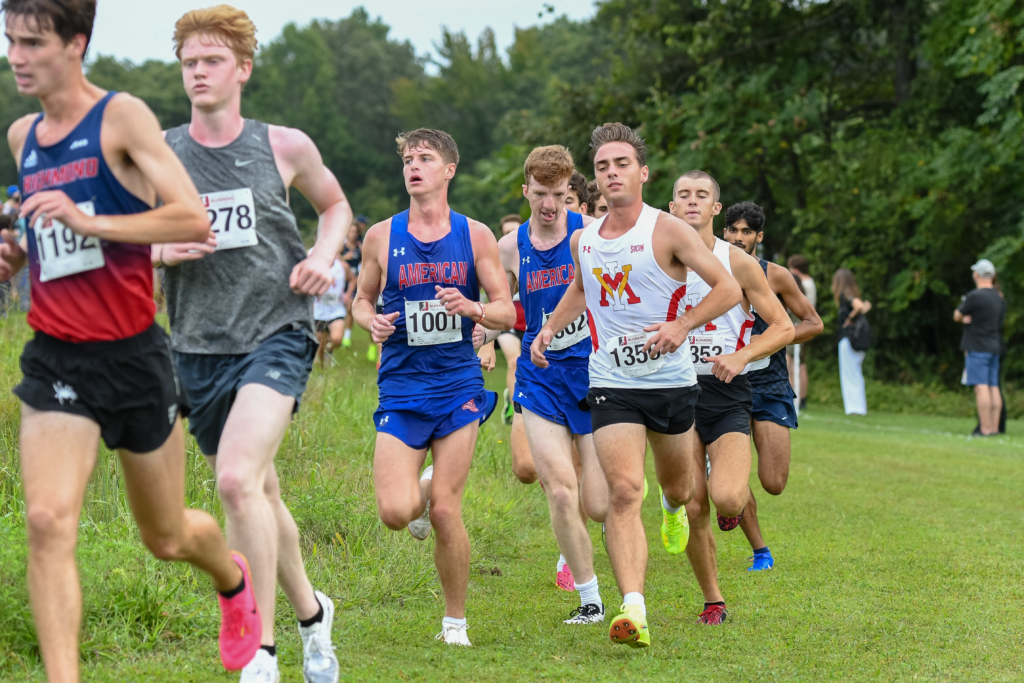
Ben Hagerich running at a cross country meet for Virginia Military Institute.

“I think your teammates make it everything. It’s so much fun. Then the competitiveness … I love the feeling of crossing that line first and scoring points for my team. It makes it so much fun competing against the best people, and being able to say that you gave 100% in a race that lasts for cross country about 25 minutes, and on the track upwards of two minutes … it’s pretty crazy how all that is all tied together,” he said. “Giving your all every single time you step out there and you get one shot at it.” 

He runs by leading by example for his teammates. He tends to be one of the stronger runners on the team, so he hopes he’s able to push others.  

“I always think that everyone behind me … if I can be a good example for everyone ahead of me then I know my teammates behind me are going to be encouraged to either try to keep up with me, or know that if I’m pushing strong, then they can do it as well,” he said.  

Although his days are long and he has a lot of responsibilities, he’s about to juggle it all knowing he has a strong support system around him. He also tends to go with the flow and not let the stresses of the everyday get to him.  

“In high school over four years, I barely knew the other events. I barely knew the sprinters, the jumpers, hurdlers or the throwers,” he admitted. “When I was a rat, in the first four months, I knew basically everyone on the team, and everyone was buddy-buddy. I’d never seen something like that before. Seeing us all at the event groups, we were always rooting for each other. It was so cool to see that everyone was like an actual team and helping each other out. And whether that’s a college thing or a VMI thing, I’m not sure, but I love it.” 

His hope after VMI is to secure a cybersecurity analyst role or go into network engineering with possibly the Department of Defense or another company that branches off the government. He is set to graduate in May.  

Cadets Attend the 2025 Air, Space, and Cyber Conference

Cadets from AFROTC, Detachment 880 attend the 2025 Air, Space, and Cyber Conference at the Gaylord National Resort and Convention Center in National Harbor, MD.

Each year, the Air and Space Forces Association (AFA) hosts the prestigious Air, Space, and Cyber Conference, coinciding with the Air Force Birthday. This event brings together military leaders, industry experts, and innovators to discuss the current state of the Air and Space Forces, future goals, and emerging technologies that will shape the services for years to come.

This year, a distinguished group of cadets from Virginia Military Institute’s Air Force detachment had the honor of attending the conference.

For these cadets, the conference was more than just a series of panels; it was an invaluable learning and networking experience. The sessions were impactful and highly relevant to their current positions within AFROTC, offering insights into leadership, innovation, and the future direction of the Air and Space Forces. The event fostered meaningful discussions and provided practical knowledge that cadets could bring back to their own detachments.

During the formal panels, Cadets had the opportunity to hear profound speeches from distinguished guests such as the honorable Troy Meink, Gen. David Allvin, Brig. Gen. Houston Cantwell, and many more well-informed and established experts in the air and space career fieBeyond the formal panels, the expo hall buzzed with activity. Cadets engaged with representatives from various organizations, including AAR, Acclient, Adacel Systems, ADS Inc., and many more. Attendees were also allowed to explore cutting-edge technology displays and connect with businesses interested in supporting future activities. One of the most significant aspects of the conference was the opportunity to network with other AFROTC units from across the nation. These interactions allowed cadets to exchange ideas and strategies, strengthening their own programs while contributing to the broader AFROTC community.

Davis T. Clanton, one of the attending cadets, reflected on the experience: “I was extremely grateful to have the opportunity to attend the AFA conference in Washington, DC this year. The panels were impactful, energetic, and relevant to where I stand in my AFROTC career today, so I thought they were of great value. Besides the panels, there was so much to learn and do in the rest of the conference, whether it was networking with people in booths staged in the expo hall, conversing with other AFROTC units from across the nation, or finding local-to-VMI businesses that were interested in future activities. More than anything, this experience was a huge networking opportunity. Utilizing the fact that major AFROTC detachments were there was something I wish I had driven into the second I walked in the door. I found that through talking to many of these cadets, I found ways that we could implement their strategies into our detachment, or they found ways they could implement ours inversely. I made many new friends during this trip, some of whom I talk to regularly. I got to chat with some of Arnold Air Society’s leadership again, which was impactful as we discovered our ability to finally wear our AAS crests on our uniform! Regardless, I thoroughly enjoyed the experience; spending time with friends from VMI, making new contacts, and hearing from critically important speakers made this trip memorable. I am extremely grateful to have had the opportunity and will certainly utilize future opportunities to the fullest of my ability.”

The AFA conference continues to serve as a vital forum for professional development, collaboration, and inspiration for the next generation of Air and Space Force leaders. For these cadets, the experience not only broadened their perspectives but also strengthened their commitment to service and excellence.

Behind the Balance: Conner Reid ’27 — Keydet Men’s Soccer

Virginia Military Institute’s cadet-athletes have to juggle cadet life, heavy academic course loads, and their NCAA Division I sport. Committed to both academic and athletic pursuits, balancing their rigorous schedule in both sports and school requires a certain level of commitment and discipline. Behind the Balance is a series that focuses on those cadet-athletes and how they handle the hurdles of the day-to-day. 

A different college experience was what Conner Reid ’27 was searching for. He said that Virginia Military Institute offered that and it’s what attracted him.  

He was looking at the University of Virginia, but he didn’t make it into the soccer program there. So, he broadened his search. 

“I started looking at other schools, and VMI really stood out to me,” he said. “It’s not the typical college experience.” 

But when he started reaching out, he found that the alumni network was exuberant.  

“I’m from Richmond, so the second I brought up VMI, people started coming from everywhere,” he admitted. “I think that really stuck it to me.” 

The economics and business major said VMI has helped shape him for the future.  

I think VMI sets you up best for life compared to other colleges,” he explained. “Regardless of when your classes start, you’re waking up at 6 a.m. and you’re getting your day started just like you would in the real world. Here you have to do a lot of things that you don’t necessarily want to do, but that’s kind of how life is. I’d say mastering discipline and doing things I don’t want to do along with time management here, especially while playing a sport, is a skill I’ve almost perfected. Those are the skills that I’ve really gained from VMI that have prepared me for life.” 

Cadet-athletes at VMI not only have their responsibilities with their selected sport but cadet duties on top of that. Cadets are also required to take physical fitness classes twice a week, participate in ROTC all four years, prepare for room and uniform inspections, practice for parade, guard duty, and more. 

He was used to balancing multiple things in high school by playing two sports — basketball and soccer — while keeping up with his studies.  

“Here I’ve really been able to put it on full display, adding the military aspect on top it,” he said. “I’ve never really traveled for sports, but here you’re on the road half the week during the soccer season, so I’ve honed that in and perfected that here. It’s something I plan to continue to carry on.” 

With an 18-credit hour semester and early mornings and practices bookending his school time, he likes to tackle things the minute he gets them.  

“If I can just knock out assignments as soon as possible, that’s best. I don’t typically do work on the bus just because I get motion sickness really badly. So, whether it’s in the hotel or on weekends, when I can finally catch up or get ahead, that’s where I knock out most of my work. I’ve been able to find a good rhythm,” Reid said. “I just roll with it and take it as it comes. Unless I know I have a test coming up, I’ll try to get ahead so I can just study that week and not have to worry about assignments. Most of the week, I just roll with the punches.” 

Reid also holds rank as an S2 sergeant, which is a front facing person for academics in the Corps. 

“So anytime rats need reminding of what their academic standards are or pairing them up with a tutor, we do a lot of that,” he explained.  

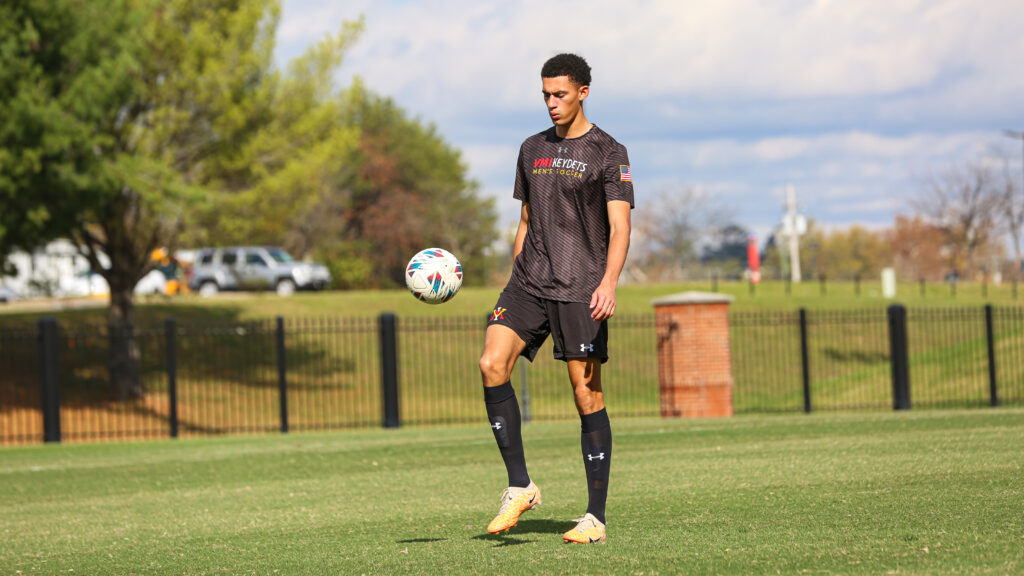
Conner Reid on the soccer field with a ball, playing for Virginia Military Institute.
VMI Men’s Soccer vs. Wofford at SoCon Championship

They also have Miller Academic Center Saturdays, where they meet up with rats and teach them study habits and how to do better in college, to help with the transition from high school. 

“I feel like academics is a strong suit for me, and I want to do my best to help other people succeed in college,” Reid commented. “I know it can be very different moving from high school to college. The workload and the difficulty of the work pick up. I’m trying to help people succeed.”

He’s a part of the Cadet Investment Group, which helps manage part of the school’s endowment. He says as a group of select individuals, they are able to manage real money and pitch stocks to the group and invest.  

“It’s pretty cool getting to actively manage real money and make investment decisions.” 

He jokes that he got a free group of friends when he started at VMI, especially with his teammates.  

“College can be a very daunting place; you meet new people and start all over. But the soccer team coming in from day one, we have these three weeks to a month of pre-season. You just get to meet people and then spend so much time with them during the Rat Line,” he said. “I’ve grown really close with my class. It’s a brotherhood. You’re closest with everybody on your team more than you are probably anybody else in the Corps.” 

His advice coming in? School should be the focus.  

“I know a lot of people here they’ll focus on the Rat Line, or they’ll spend their free time playing video games or something like that. To me, soccer is going to end one day. School is the most important,” he stated. “Prioritize getting your assignments done. Put in as much effort as you would on the soccer field in the classroom.” 

Behind the Balance: Cadee Hegarty ’26 — Keydet Women’s Soccer

Virginia Military Institute’s cadet-athletes have to juggle cadet life, heavy academic course loads, and their NCAA Division I sport. Committed to both academic and athletic pursuits, balancing their rigorous schedule in both sports and school requires a certain level of commitment and discipline. Behind the Balance is a series that focuses on those cadet-athletes and how they handle the hurdles of the day-to-day. 

Cadee Hegarty ’26 wanted to compete at a high level but also was drawn to the organization and discipline that Virginia Military Institute offered. Getting a soccer scholarship to the school allowed her to form a future at VMI.  

Her recruitment was a little different since it was when the coronavirus pandemic was limiting how sports were played. Instead, she attended a soccer camp, which was hosted by former women’s soccer coach Chris Haught-Thompson. From there, all it took was a visit to VMI. 

“I always wanted a team that had girls that were so close and had a bond that wasn’t like anything else,” she explained. “At VMI, it’s something else no one will understand except the people who go here. I was drawn to the school because of them.” 

The biology major is now in her last year and serving as the S9 captain, which includes preparing for pep rallies, company athletics activities, and creating permits. S9 is primarily made up of athletes, so cadets involved must pick up the slack when those on the staff are in season. As the S9 captain, she’s fully responsible for NCAA athletes, especially the rats — moving them around, making sure they’re able to do practice, but also participate in the Rat Line.  

“When it’s S9 time, it’s S9 time, and100% of my energy goes into that,” she said. “But when I’m at practice, or when we’re traveling, or when it’s game day, 100% goes to game day. Then schoolwork or in class, I’m fully dedicated to school. If I have free time during the day before soccer starts, I try to always get my work done early, because getting behind really catches up to you.” 

She was drawn to holding leadership in S9 because of her love of sports.  

“Being an athlete at this school is very different, and one of the biggest reasons of why I wanted this position was to show athletes that we can do it too, and we are just as part of the school as everybody else,” she commented. “Also to show everybody else that athletes can do it too, and I can do the same things that you guys can do. I have kind of one foot in both doors — athlete and non-athlete, with both my responsibilities, showing people there is a balance, it can happen, and everyone’s allowed to do everything.” 

Although she’s taking a lighter load, she’s previously been pulling nearly 19 credit hours per semester.  

“I try to take summer classes too, to kind of make up because in the fall we travel so much and we miss so much school, you can’t afford to get behind,” she said.  

Cadet-athletes at VMI not only have their responsibilities with their selected sport but cadet duties on top of that. Cadets are also required to take physical fitness classes twice a week, participate in ROTC all four years, prepare for room and uniform inspections, practice for parade, guard duty, and more.

Cadee Hegarty kicking a soccer ball on the field, playing for Virginia Military Institute.
NCAA Women’s Soccer: Midshipmen prevail over VMI, 3-2

From early days to traveling each week, Hegarty works on taking each task as it comes. When the team is traveling, she could potentially miss up to three days of class — that means getting assignments ahead of time and working with her professors to make sure her work is done on time. She and her teammates spend a good amount of time while traveling dedicated to their studies. She struggled in her first year at VMI with balancing everything.  

“My rat year, I didn’t do well in school. That was hard for me. I never needed to study in high school. I never needed to, outside of soccer, go through film and read through plays and do stuff like that, but here you have to or else you’re not going to be able to just skate by,” she admitted. “I learned that sometimes you’ve got to cut out the naps. Sometimes you have to wake up a little earlier or stay up a little later to make sure everything you do gets done. I realized getting ahead is just being on time. I would try the best so I could to stay ahead of all my work. So, if I did travel, or if there was a pep rally or a football game or something where I couldn’t dedicate all my time to school, and I fell back a little bit, I was still on track.” 

The discipline that Hegarty has experienced at VMI is something she can take and build for the rest of her life.  

“If something is given to me, I’m one of those people who can’t sleep until it’s done,” she commented. “Prioritizing what’s most important and getting that done first, and putting all your time, all your energy into that … just one task at a time. I feel like a big part of the real world is priorities and discipline with any type of task. Also, integrity. I feel like a lot of workplaces look for someone who they can trust, who they know will get the job done, and who  lives by their word. And that is something VMI just drills into you.” 

Cadets Serve at Major AFROTC Accessions Milestone

Cadets from AFROTC, Detachment 880 served as Cadet Cadre at the Air Force ROTC’s Field Training Event for Summer 2025.

AFROTC Field Training at Maxwell AFB, AL, is a mandatory, boot-camp-style summer program for Air Force ROTC cadets, typically held between their sophomore and junior years, focusing on leadership evaluation through intense physical and mental challenges, military discipline, teamwork, Air Force career indoctrination, and deployment skills to prepare them for becoming Air Force officers. It’s a competitive, high-pressure experience where cadets are assessed on their ability to lead and follow. Cadets who successfully complete field training then go on to enter the next milestone of their journey as a member of the Professional Officer Course of the AFROTC program.

Two Detachment 880 cadets were hand-picked as cadre for Field Training 2025 (FT25). As cadre, they guided BCL cadets through tough field exercises, offering mentorship and setting high standards. Their leadership made a lasting impact on those they mentored throughout the summer.

In vivid detail, Cadet Jada Torrez recounts her experience: “I started Field Training 2025 as a Medical Cadet for approximately the first 2 weeks. I spent around 41 and a half hours over the course of 8 days at the Emergency Room, where I would escort cadets that needed to be seen, and help them with the process of being able to file their information with the Field Training Medical Team. I would also help inform other cadets about the correct processes when it came to needing medical help. I would also attend some of the Field events to include the UXO and Small Unit Tactics at Sim City, and the 3 Mile Run. Additionally, I would also assist when Trainees have symptoms of heat-related injuries by going through the steps to help cool down that cadet. Later, I was switched to be a Cadet MOD 2 Wing Advisor, where I assist/mentor the Expeditionary Cadet Wing Leadership during the second half of Field Training. I advised approximately 860 cadets, with 28 of those cadets being in leadership through Max 4 and 5. In addition to advising cadets, she has also coordinated meeting times for the Chaplain and Form 17 counseling. Lastly, I helped to enforce the standard at the Dining Facility during her free time. Overall, it was a rewarding experience and a great way to experiment with leadership.”

Behind the Balance: Luke Schalow ’26 — Keydet Football

Virginia Military Institute’s cadet-athletes have to juggle cadet life, heavy academic course loads, and their NCAA Division I sport. Committed to both academic and athletic pursuits, balancing their rigorous schedule in both sports and school requires a certain level of commitment and discipline. Behind the Balance is a series that focuses on those cadet-athletes and how they handle the hurdles of the day-to-day. 

It was a goal of Luke Schalow ‘26 to play college football. But he also knew, if he could never play football again, he wanted to go to a school he would be proud to have attended.  

“This was a school that when I visited it was nothing like the high school I had gone through, and I certainly didn’t want to go through high school again,” the economics and business major admitted. 

Cadet-athletes at Virginia Military Institute not only have their responsibilities with their selected sport but cadet duties on top of that. Cadets are also required to take physical fitness classes twice a week, participate in ROTC all four years, prepare for room and uniform inspections, practice for parade, guard duty, and more. 

Schalow is also on the S9 staff, which includes preparing for pep rallies, company athletics activities, and creating permits. S9 is primarily made up of athletes, so cadets involved must pick up the slack when those on the staff are in season. For Schalow, that could mean an early morning remedial PT session or fitness tests. Each morning would be dedicated to S9 or football, he said.  

“Football is always a priority, that’s what I came here to do,” he explained. “S9 can complement that, and it really intertwines with it a lot.” 

He said his duties with football and S9 really go together during Matriculation Week, when he and others on the S9 staff get rats up in the morning, bring them to breakfast and then to train. But sometimes, he will have to choose.  

He’s also part of the Fellowship of Christian Athletes, which meets every Monday, as well as Navigators Bible Study, which meets on Tuesdays.  

His days are planned down to the minute to meet all his obligations. That’s where his time management skills come into play. 

“I really take stuff as it comes. I see kind of what to do and I try to work at what’s in front of me,” he said. “You certainly want to look ahead, but you can’t look too far ahead. I really just handle what’s in front of me and solve that problem. Then we’re moving on to the next.” 

Schalow is usually up at 5 a.m. to weightlift for football. Then it’s on to breakfast and classes. He’s in class from 8 a.m. to 3 p.m. This semester he’s enrolled in 17.5 credits.  

By 3:50 p.m. he’s off to team meetings. That’s followed by a whole slew of different sections of practice that last until 6:45 p.m. He was also elected as captain by his teammates, which means he’s there to lead the team.  

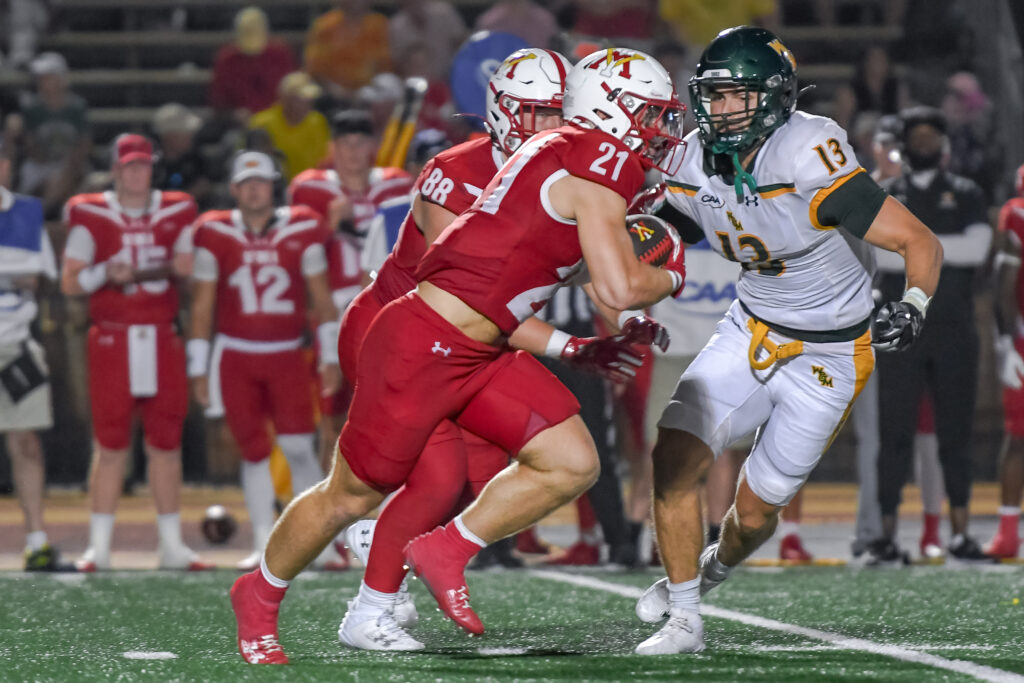
Luke Schalow playing football for Virginia Military Institute.
VMI Football vs. William & Mary Action Shot

“It doesn’t look like just wearing the title and being able to give commands to anybody. That’s not what it is. Instead, it’s to be a servant to them, to figure out what the team needs, and to know the guys on the team and to know what they’re going through, so that you can properly tend to that,” Schalow stated. “Wherever there are problems within the team, or wherever there are problems from the team, to on the hill, that’s where we’re really the liaison.” 

He said he acts as the bridge from the team to other parts of VMI.  

“It’s to solve problems for the team and to keep ourselves to a high standard so that we can be successful on the field. That translates to every aspect of VMI, because how you do anything is how you do everything. As a captain, your job is to set the standard and to encourage others to do the same … to be with them and to help them when they’re struggling to meet that standard,” he said.  

He credits his foundation with God to get him through the day. 

“I’m just not that strong on my own,” he commented. “It’s just the personal relationship with Him that’s really what’s carried me through it all. And then with that as the foundation, I would say that you just need grit. Things are never convenient.” 

Schalow explained that everything at VMI is regimented — time is sectioned off, but there’s always some give and take to be had.  

“You’ve got to be early for things,” he admitted. “There’s no excuse to not be there. There’s no excuse to not make it to something, or to not be in the right uniform or something like that. What you have to do is just manage that. Sometimes you just have to take a deep breath and recognize this is VMI, and it’s just what you have to do.” 

He also leans on his brother rats to get by. 

“The guys on the team are my brothers, especially the guys in my class, we’ve been through everything together,” he said. “The guys on the team, the fellow believers, it’s the bond that we have. Being a Christian, going through VMI, being an athlete at VMI, we understand what each other are going through. 

“Having those guys to carry my burdens and to being able to hopefully carry theirs as well, that’s the way to manage it. That’s been the lifeblood, having fellowship with those guys and leaning on them,” he continued.  

Schalow is set to graduate in December but walk in the May ceremony. He plans to work for Whiting-Turner Contracting Company out of Chesapeake, Virginia. 

Cadets Participate in Officer Development Training During Summer

Cadets from VMI’s Air Force ROTC Detachment 880 completed specialized officer development training programs at the Air Force Academy during Summer 2025.

Intro to Soaring Program

One cadet spent part of her summer in the Intro to Soaring Program, where she learned the fundamentals of flight using glider aircraft. The program combined hands-on flying with lessons in aerodynamics, safety, and teamwork where she approached every challenge with curiosity and determination, gaining valuable insights into what it means to be innovative and disciplined.

Reflecting on her experience, Cadet Alisa Johnson said, “It was an extremely fun experience because the gliders are so maneuverable, and the USAFA glider training squadron has a great culture. I learned how to take off in a glider behind a tow plane, how to fly aerotow (flying while attached to a tow plane), how to fly basic maneuvers, how to fly a traffic pattern, and how to land. Learning all these in only a few weeks was a bit of a learning curve and a fire hose, but the cadet instructor pilots and flight simulators were a great help. My favorite part of the experience was my AMC Flight. During this flight, I flew us up to a designated area in the sky for aerobatics. Then the instructor pilot took the controls and made the glider do loops and clovers. It was extremely exhilarating to see the world upside down and pull 4-5 Gs! The SOAR program greatly solidified my interest in Air Force aviation. I highly recommend this program to any cadet who is even remotely interested in aviation. Gliders are a great way to be introduced to aviation and get the basic feel of an aircraft.”

Freefall Program

For two other cadets, the summer was all about pushing boundaries in the Freefall Program. They trained in advanced parachuting, mastering everything from jump preparation to mid-air maneuvering and safe landings. Their success in this demanding course showed their readiness to face new challenges, both in the air and on the ground.

Cadet Tristan Bannasch shared, “During my Freefall Program, I felt the true feeling of fear and excitement. Being thrown into a situation where you have never experienced the next thing was surreal. Jumping out of a perfectly fine airplane was nerve-racking but doing it with the group of people you had bonded with next to you was amazing. The scariest part by far was watching your friends fall out of the door and then being the next person to step into the door. Earning your wings is a very honorable and rewarding experience.”